Showing posts with label Hepatitis C. Show all posts

Thursday, February 8, 2024

Feds Tell States to Cover Hep C Medications, Regardless of Substance Use

By: Ranier Simons, ADAP Blog Guest Contributor

The right to health is a human right recognized in many international human rights documents, such as the 1966 International Covenant on Economic, Social, and Cultural Rights and the World Health Organization’s (WHO) Constitution.[1,2] According to the WHO, “Countries have a legal obligation to develop and implement legislation and policies that guarantee universal access to quality health services and address the root causes of health disparities, including poverty, stigma and discrimination.”[1] To that end, in recent history, the United States Departments of Justice (DOJ) and Health and Human Services (HHS) have found it necessary to intervene in order to protect citizens’ right to health. 

U.S. Department of Justice
Photo Source: U.S. Department of Justice

The DOJ Civil Rights Division issued a letter to state Medicaid administrators on January 24, 2024, reminding them of their obligation to ensure that their programs allow people who have both Substance Use Disorder (SUD) and Hepatitis C (HCV) to access direct-acting antivirals (DAAs).[3] In the letter, the DOJ and HHS reiterate Medicaid agencies are required to grant this access under the Americans with Disabilities Act (ADA). Under the Act, states cannot discriminate against people with disabilities, which includes SUD. SUD qualifies as a disability because it “substantially limits one or more major life activities and interferes with the operation of key bodily functions.”[5]

In 2022, the DOJ reached a settlement agreement with Alabama Medicaid after an investigation of its Medicaid policy. It was denying access to DAAs for people who had consumed drugs or alcohol six months prior to starting treatment and denying payment if they used any drugs during their treatment. The DOJ accused Alabama Medicaid of “imposing non-medically indicated sobriety restrictions for HCV treatment, in violation of the Americans with Disabilities Act (ADA).”[4] There was no scientifically evidence-based reasoning for the restriction. 

Alabama Medicaid agreed to multiple stipulations and reporting requirements as part of the settlement. They were required to reverse their sobriety policy for HCV treatment and agree not to create any further restrictions, such as requirements for drug or alcohol counseling.[4] Additionally, Alabama Medicaid had to notify Medicaid providers of the change and inform the  Alabama Board of Medical Examiners and the Alabama Department of Public Health.[4] One notable requirement was notification of all Medicaid recipients of the change, thus informing them of their rights. Interestingly, in the settlement, Alabama Medicaid denied any acknowledgment of any violation of the ADA but framed their cooperation as an amicable negotiated resolution to the matter.[4]

Substance Use Disorder
Photo Source: Arkansas Medical Society

The DOJ utilized the ADA in 2020 to reach a settlement with Massachusetts General Hospital.[6] Massachusetts General Hospital denied a cystic fibrosis patient access to be listed on the lung transplant list because he was taking suboxone, a drug used to treat dependence on opioids. The cystic fibrosis damaged his lungs so severely that he needed a lung transplant to live. As part of the settlement, Massachusetts General Hospital paid $170,000 to the patient and $80,000 to his mother.[6] The hospital additionally agreed to give ADA training to its staff and end its discriminatory policy. The patient ended up receiving a lung transplant at the University of Pennsylvania.[6] Selma Medical, Charwell Operating Nursing Facility, Athena Health Care Systems, Alliance Health, New England Orthopedic Surgeons, and King’s Daughters Medical Center are other providers that reached settlements with the DOJ after violating the ADA by denying healthcare to patients taking medication for SUD.[6] 

Utilizing the ADA to ensure health protections for people with SUD is a robust tool. However, under the ADA, protections against discrimination only extend to “a person in recovery who is no longer engaging in the current illegal use of drugs.”[7] Protections from being denied healthcare services is an exception or ‘carve-out’: “A person who is currently engaging in the illegal use of drugs can’t be denied healthcare or rehabilitation services because of their current use if they would otherwise qualify for these services.”[7] 

That is why the letter issued by the DOJ and HHS is important. Amplifying attention to the matter is a way to prevent harm before it happens since widespread understanding of the exception is lacking policy-wise and programmatically. Although people with SUD have rights, having to fight for their rights when denied care results in treatment delays and poor health outcomes. It is better to address and change policy before issues occur. The letter is guidance and an indication to entities that the DOJ can and will actively seek remedy against infractions. Optimistically, the threat of litigation is enough of a deterrent for entities to examine and modify their policies.

[1] World Health Organization. (2023, December 1). Human rights. Retrieved from https://www.who.int/news-room/fact-sheets/detail/human-rights-and-health#:~:text=The%20right%20to%20health%20and,of%20physical%20and%20mental%20health.

[2] Office of the United Nations High Commissioner for Human Rights. n.b. The Right to Health. Retrieved from https://www.ohchr.org/sites/default/files/Documents/Publications/Factsheet31.pdf

[3] Department of Justice. (2024, January). Letter to State Medicaid Administrators. Retrieved from https://www.justice.gov/d9/2024-01/dear_colleague_letter-state_medicaid_coverage_for_people_with_hcv_and_sud.pdf

[4] Settlement Agreement between the United States of America and the State of Alabama's Medicaid Agency. (2022, December 5). Retrieved from https://www.justice.gov/opa/press-release/file/1555501/download

[5] U.S. Department of Justice Civil Rights Divison. (2022, April 5). The ADA and Opioid Use Disorder: Combating Discrimination Against People in Treatment or Recovery. Retrieved from https://www.ada.gov/resources/opioid-use-disorder/#2-does-an-individual-in-treatment-or-recovery-from-opioid-use-disorder-have-a-disability-under-the-ada

[6] Rahim, H. (2023, Decemeber 26). Does the ADA protect people with substance use disorder from health care discrimination? Retrieved from https://blog.petrieflom.law.harvard.edu/2023/12/26/the-ada-as-protection-from-health-care-discrimination-towards-persons-with-substance-use-disorder/

[7] ADA National Network. (2020). The Americans With Disabilities Act, Addiction, and Recovery for State and Local Governments. Retrieved from https://adata.org/factsheet/ada-addiction-and-recovery-and-government

Disclaimer: Guest blogs do not necessarily reflect the views of the ADAP Advocacy Association, but rather they provide a neutral platform whereby the author serves to promote open, honest discussion about public health-related issues and updates. 

Thursday, January 11, 2024

Harm Reduction Key to HIV Prevention

By: Ranier Simons, ADAP Blog Guest Contributor

Harm reduction is defined as “a set of practical strategies and ideas aimed at reducing negative consequences associated with drug use.”[1] Adverse outcomes of drug use include the spread of transmissible infectious diseases, such as HIV and Hepatitis C, as well as overdose, injury, and death. Effective harm reduction is compassionate and meets people where they are in their journey of drug use.[2] Evidence-based harm reduction does not require the populations being served to stop their drug use.[1] The goal is to enable them to deal with their addiction safely, work towards reducing their drug dependence, and educate and guide users into treatment options as they desire. 

Why Harm Reduction Works
Photo Source: New Hampshire Harm Reduction Coalition

Removing barriers to tools and assistance is an integral part of harm reduction. Organizations engaged in harm reduction are community-based, engaging directly with people who use illicit drugs. Harm reduction tools include needle exchange programs, safer-sex kits, home testing kits for viral hepatitis and HIV, substance testing kits such as fentanyl test strips, and even naloxone kits to prevent drug overdose.[2] The population in direst need of harm reduction services does not frequent traditional healthcare centers. When available in the community, harm-reduction organizations usually have limited hours and are poorly funded.

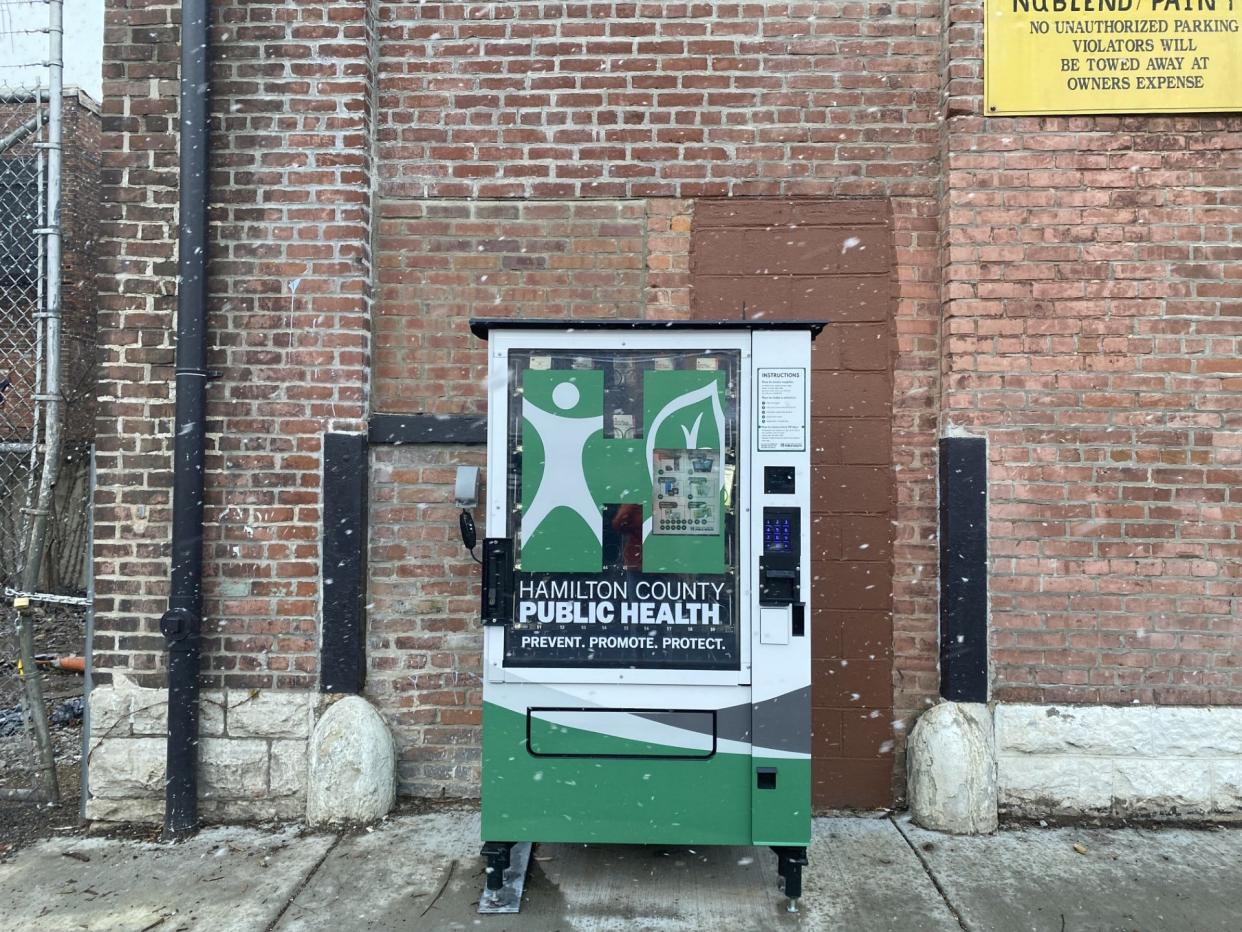
One innovative way to effectively lower the barrier to access harm reduction services is neighborhood vending machines. In December of 2023, in Cincinnati, Ohio, the Hamilton County Health Department installed two life-saving harm reduction vending machines on the streets where people need them.[3] One is located at a downtown Fire Station, and another is located in an alley near a NeighborHub Integrated Health Clinic. NeighborHub Health is a Federally Qualified Health Center (FQHC) exclusively focused on providing integrated medical and behavioral care to those who are homeless and/or living with HIV/AIDS.

These vending machines contain naloxone spray, fentanyl test strips, and condoms. Naloxone spray is used to treat suspected opioid overdoses. Fentanyl test strips empower substance abusers to know if the drugs they are using contain the deadly drug fentanyl in order to prevent death and overdoses. They are small strips of paper that can detect fentanyl in many different kinds and forms of drugs, whether they are injectable, powder, or pills.[4] Condoms are provided to prevent the spread of HIV and other infectious diseases. Substance abuse has been shown to result in people engaging in riskier sexual behavior. Thus, providing condoms along with harm-reduction supplies is a means of accessible, holistic public health intervention. 

Harm Reduction vending machine
Photo Source: Yahoo News

These two vending machines are additions to Ohio's first harm reduction machine, which was installed in Northside, a community in Cincinnati, in 2021. Caracole, a nonprofit HIV/AIDS organization in Cincinnati, operates and placed the machine outside of its office. This machine contains injection kits for safer drug injections, kits for safer substance smoking, safe sex kits, pregnancy tests, naloxone, bandages, and even containers with which to carry needles and syringes until they can be safely disposed of.[5]

Vending machines are examples of no-contact harm reduction. The vending machines are accessible 24/7 and do not require face-to-face contact. The supplies are free and are accessible via a code obtained by calling a special confidential number, which connects to a trained person who obtains non-identifying information and gives a code. Having on-contact harm reduction resources available on the street with 24/7 access increases accessibility. Some of those in need are uncomfortable with going into centers that may have the supplies or may be unable to get to them during hours of operation. Additionally, no-contact accessibility means that people can get what they need at all hours without judgment or fear of arrest such as sex workers and transient unhoused dealing with substance abuse.

A study published in the Journal of the American Pharmacists Association proved that the Caracole vending machine resulted in increased accessibility of harm reduction products and services and was associated with a lower countywide incidence of unintentional overdose death and HIV.[6] This is important to note since harm-reduction efforts in Hamilton County started in 2014 in response to increased HIV cases. In 2014, the Cincinnati Exchange Project dispensed sterile syringes to drug users to protect them from HIV and Hepatitis C. Vending machines are a practical addition to harm reduction strategies already in use, such as mobile health vans that travel to neighborhoods also providing safer drug use supplies, safe-sex supplies and information concerning healthcare services and treatment.

Harm reduction, in its various forms, is drug overdose and injury prevention, as well as HIV and infectious disease prevention. It should be supported in public policy to innovate and increase funding for modalities already in place, to educate the public and health professionals who sometimes demonize harm reduction efforts due to misinformation, and for research to create new pathways. Harm reduction acknowledges the dignity and humanity of those in need, improves public health outcomes, and can supportively lead people into substance abuse treatment and cessation.

[1] Sue, K., & Fiellin, D. A. (2021). Bringing Harm Reduction into Health Policy — Combating the Overdose Crisis. The New England Journal of Medicine, 384(19), 1781–1783. https://doi.org/10.1056/nejmp2103274

[2] SAMHSA.(2023). Harm Reduction. Retrieved from https://www.samhsa.gov/find-help/harm-reduction

[3] DeMio, T., Kim, R. (2024, January 3). Drugs, sex and harm reduction: New vending machines could reduce spread of HIV. Retrieved from https://news.yahoo.com/drugs-sex-harm-reduction-vending-033416611.html

[4] CDC. (2022, September 30). Fentanyl Test Strips: A Harm Reduction Strategy. Retrieved from https://www.cdc.gov/stopoverdose/fentanyl/fentanyl-test-strips.html

[5] DeMio, T. (2021, March 8). Ohio's first harm reduction vending machine helps promote safer sex, safer smoking, safer injection. Retrieved from https://www.cincinnati.com/story/news/2021/03/08/vending-machine-safer-sex-drug-use-supplies-overdose-hiv-prevention-ohio/4592675001/

[6] Arendt, D. (2023). Expanding the accessibility of harm reduction services in the United States: Measuring the impact of an automated harm reduction dispensing machine. Journal of the American Pharmacists Association, 63(1), 309–316. https://doi.org/10.1016/j.japh.2022.10.027

Disclaimer: Guest blogs do not necessarily reflect the views of the ADAP Advocacy Association, but rather they provide a neutral platform whereby the author serves to promote open, honest discussion about public health-related issues and updates.

Thursday, January 27, 2022

What is 100-100-100?

By: Ranier Simons, ADAP Blog Guest Contributor

The ongoing Covid-19 pandemic is a glaring reminder of the importance of the global efforts to address other epidemics and pandemics. After over 30 years of such efforts, worldwide there has been success with polio. Wild poliovirus was virtually extinct in 2020 with only about 140 cases remaining.[1] However, two serious remaining global disease crises are HIV/AIDS and Hepatitis C (HCV).

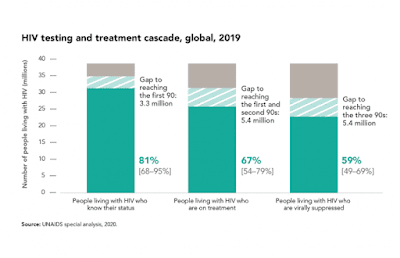
In 2020, it was estimated that there were 37.7 million people living with HIV/AIDS, and an estimated 58 million people with chronic Hepatitis C.[2][3] The strongest two-pronged approach to fight both is testing and treatment. In 2014, UNAIDS, the Joint United Nations Programme on HIV/AIDS, came up with a target known as 90-90-90. The goal was to have 90% of all persons living with HIV/AIDS aware of their status, 90% of all diagnosed on sustained antiretroviral treatment, and for 90% of those on treatment to have an undetectable viral load by 2020. 

The WHO, World Health Organization, proposed a similar target for HCV in 2016. They pledged to globally eliminate HCV by 2030. This elimination included a target of 80% those with HCV to be in treatment, a 90% reduction in new infections, and a 65% reduction in liver-associated deaths as a result of hepatitis C.[4] 

HIV testing and treatment cascade global, 2019
Photo Source: UNAIDS

The 90-90-90 goal was not met in 2020 and it is not likely that HCV will be eradicated by 2030. Were the goals too ambitious or was there something missing in the execution of the efforts? 

The focus has always been on testing and treatment. It is of the utmost importance to have widespread testing to identify those that need treatment in order to get them into treatment. However, what had previously been missing was discourse on barriers to testing and treatment. In 2021, the UNAIDS Global AIDS Strategy acknowledged the existence of structural barriers to HIV and HCV testing and services. 

The challenge has been that solving the problem of these hurdles has not been included in the system of testing and treatment. The structural hurdle of lack of fulfilment of basic needs should be a systemic part of treatment. Human nature prioritizes stable shelter, food, and safety over seeking out testing and adherence to treatment regimens.

This is especially true in the population of people who inject drugs (PWID). Intravenous drug users are 29% more at risk to contract HIV and 40% of new HCV infections worldwide.[5]

HIV 1 & 2 test, HCV test
Photo Source: Yahoo!

In response to understanding the importance of including the effective meeting of basic needs as part of disease prevention, a new target, 100-100-100 is being discussed in global health circles. It is initially being considered through the lens of PWID regarding HIV and HCV. The goal is to have stable housing for 100% of PWID who have housing instability, offering substance abuse treatment to 100% of PWID that desire treatment, and giving 100% of PWID access to harm reduction services.

Stable housing means safe and consistent shelter. It means having a stable place to eat and prepare meals. Having stable housing provides a place for self-care and identity.  Stress is lowered when one has a safe stable place to live as well allowing focus on other needs. A sense of community results from stable housing as well. When groups of PWID have stable housing, they can create a sense of belonging and care for each other communally. 

Having a stable place to live and rest also facilitates successful substance abuse treatment. Taking away stressors of basic survival allows a person to redirect their energies towards bettering their lives. Coupled with substance abuse treatment is harm reduction. Harm reduction services come in many forms.[6] Most importantly it is acknowledging the complicated etiology of drug use. It is the realization that drug use does happen, and it is necessary to help people along the continuum of complete abstinence from drug use to the other end of safer and “responsible” drug use starting at whichever stage PWID find themselves.

Reaching this 100-100-100 goal, along with aggressive strides toward testing and treatment, is the growing discourse that is providing hope towards the eradication of HIV and HCV. Removing the inequalities of lack of basic needs will help not just PWID but the greater population at large living with HIV and HCV as well.

[1] Kaiser Family Foundation. (2021, Oct 29). The U.S. Government and global polio efforts. Retrieved from https://www.kff.org/global-health-policy/fact-sheet/the-u-s-government-and-global-polio-efforts/
[2] UNIADS. Global HIV and AIDS statistics fact sheet. Retrieved from https://www.unaids.org/en/resources/fact-sheet
[3] World Health Organization. (2021, Jul 27). Hepatitis C. Retrieved from https://www.who.int/news-room/fact-sheets/detail/hepatitis-c
[4] World Health Organization. (‎2016)‎. Global health sector strategy on viral hepatitis 2016-2021. Towards ending viral hepatitis. World Health Organization. Retrieved from https://apps.who.int/iris/handle/10665/246177
[5] UNAIDS. (2017, Jan 1) 90–90–90: an ambitious treatment target to help end the AIDs epidemic. Retrieved from https://www.unaids.org/en/resources/documents/2017/90-90-90
[6] Principles of harm reduction. National Harm Reduction Coalition. Retrieved from https://harmreduction.org/about-us/principles-of-harm-reduction/ 

Disclaimer: Guest blogs do not necessarily reflect the views of the ADAP Advocacy Association, but rather they provide a neutral platform whereby the author serves to promote open, honest discussion about public health-related issues and updates.
Thursday, May 27, 2021

Co-Infection: HIV & Hepatitis C Therapies Under State AIDS Drug Assistance Programs

By: Brandon M. Macsata, CEO, ADAP Advocacy Association

According to amfAR, The Foundation for AIDS Research, there are an estimated 1.2 million people living with HIV/AIDS in the United States, with as many as 150,000 unaware of their status.[1] The U.S. Centers for Disease Control & Prevention (CDC) estimates one percent of the adult population, or nearly 2.4 million Americans, are living with Hepatitis C (HCV).[2] The intersection between these dual epidemics continues to place significant strain on the nation's public health system. In 2009, approximately one in five of the HIV-infected adults who were tested for past or present HCV infection tested positive.[3] It is unknown how the ongoing Covid-19 pandemic is influencing HIV/HCV co-infection.

HIV-HCV Co-Infection Red-Yellow Ribbon
Photo Credit: iStock (rights purchased)

What we do know is people living with HIV-infection face a higher risk of long-term liver failure as a result of co-infection with HCV. In fact, HCV-related liver failure has become the leading non-AIDS-related cause of death among people living with HIV-infection in the United States – and as such, treating HCV is of paramount importance.[4]

HIV/HCV co-infection remains a growing and evolving epidemic. Advances in HIV medication since the introduction of highly-active anti-retroviral therapy in 1996 has increased a detection of sexually transmitted HCV infection. Dating back to 2011, sexual transmission of HCV is becoming a growing concern amongst men-who-have-sex-with-men (MSM).[5] 

The HIV/HCV Co-Infection Watch — a program of the Community Access National Network (CANN) — delivers relevant information from a “patient-centric” perspective on access to care and treatment. The three primary groups best suited for this information include patients, healthcare providers, and community-based AIDS Service Organizations.

Of particular importance to the ADAP Advocacy Association are the patients who frequently rely on coverage provided by state- and federally-funded programs – such as the AIDS Drugs Assistance Program (ADAP). According to the National Alliance of State & Territorial AIDS Directors (NASTAD), "While ARVs represent 95% of all CY2018 ADAP drug expenditures, 0.4% and 1% were expended on hepatitis B and C treatment, respectively."[6]

Dating back to the passage of the Affordable Care Act, NASTAD has detailed the availability of testing, care and treatment for individuals who are mono-infected with HCV and co-infected with HCV and HIV, in light of newly available curative treatments for HCV.[7]  NASTAD has also made available an interactive map highlighting the important work of health department HIV and viral hepatitis programs.

Additionally, CANN's HIV/HCV Co-Infection Watch includes detailed information on States whose ADAP drug formularies cover HCV therapies. Summarized Jen Laws, Project Director for the HIV/HCV Co-Infection Watch, “For purposes of our monitoring, coverage is broken down into ten categories - Basic Coverage, Sovaldi, Harvoni, Zepatier, Epclusa, Vosevi, Mavyret, Pegasys, Harvoni (generic), and Epclusa (generic). This will be expanded as newer treatment options become available."

Photo Source: HIV/HCV Co-Infection Watch

While 47 of the country's 56 state and territorial ADAPs provide some form of HCV coverage, only 44 provide coverage for direct acting agents matching with the standards of care provided for by American Association for the Study of Liver Diseases and the Infectious Diseases Society of America. The quarterly report monitors for changes in HCV medication coverage. Most recently published in April 2021, it notes several changes with regard to HCV treatment coverage among ADAPs, primarily as a result of budget impacts due to COVID-19. For example, Texas's program has ceased coverage of any HCV therapies except for Epclusa (brand only), and Georgia's ADAP has stopped paying for all HCV therapies, while maintaining them as drugs on the formulary.

Laws further reflected, "Program information can be challenging to navigate and the Watch is an invaluable as a tool to help patients navigate what's available to help them, when they need it." Laws added, "As far as HCV treatment coverage, given the significant rate of HCV coinfection with HIV, it's unfortunate to see some ADAPs treat access to and coverage of HCV medications as optional or fail to adopt medication coverage in alignment with standards of care because we know treating the medical needs of PLWH holistically leads to a higher rate of positive health outcomes."

The HIV/HCV Co-Infection Watch list-serve sign-up form is available online: https://www.tiicann.org/signup_listserv.php.

[1] amfAR, The Foundation for AIDS Research (June 2020). Statistics: United States. Retrieved online at https://www.amfar.org/about-hiv-and-aids/facts-and-stats/statistics--united-states/#:~:text=An%20estimated%201.1%20million%20people%20in%20the%20United,15%25%20of%20those%20don’t%20know%20they%20are%20infected.

[2] Centers for Disease Control & Prevention (2018, November 18). CDC Estimates Nearly 2.4 Million Americans Living with Hepatitis C. U.S. Department of Health & Human Services. Retrieved online at https://www.cdc.gov/nchhstp/newsroom/2018/hepatitis-c-prevalence-estimates-press-release.html. 

[3] Centers for Disease Control & Prevention (2020, September 21). People Coinfected with HIV and Viral Hepatitis. U.S. Department of Health & Human Services. Retrieved online at https://www.cdc.gov/hepatitis/populations/hiv.htm. 

[4] Community Access National Network (April 2021). HIV/HCV Co-Infection Watch – About. Retrieved online at https://www.hiv-hcv-watch.com/about.

[5] U.S. Centers for Disease Control & Prevention, MMWR Vol. 60 No.28, July 22, 2011.

[6] National Alliance of State & Territorial AIDS Directors (2020, August 10). NATIONAL RYAN WHITE HIV/AIDS PROGRAM (RWHAP) PART B AND ADAP MONITORING PROJECT: 2020 ANNUAL REPORT. Retrieved online at https://www.nastad.org/PartBADAPreport.

[7] National Alliance of State & Territorial AIDS Directors (2014, December 4). Access to Care and Treatment for HCV Mono-Infection and HIV/HCV Co-Infection. Retrieved online at https://www.nastad.org/sites/default/files/resources/docs/HCV-HIV-Care-Access-Webinar-December-2014.pdf.

Disclaimer: Guest blogs do not necessarily reflect the views of the ADAP Advocacy Association, but rather they provide a neutral platform whereby the author serves to promote open, honest discussion about public health-related issues and updates.
Thursday, March 5, 2020

I Benefit from HIV Co-pay Assistance Programs; CMS Wants to Change That

By: Guy Anthony, President/CEO, Black, Gifted & Whole Foundation, and Board Member, ADAP Advocacy Association

I found myself both shocked and appalled when reviewing the latest Notice of Benefit and Payment Parameters (NBPP) for 2021 issued by the Centers for Medicare and Medicaid Services (CMS) recently. The proposed NBPP, which is released annually, attempts to exclude manufacturer coupons from being counted towards a patient's annual deductible on cost-sharing.

As someone that has been living with HIV for over a decade, and a direct beneficiary of the drug manufacturer co-pay assistance program, I have an intimate understanding of the far-reaching and potentially devastating effects this decision could have on those in the HIV and HCV community.

Co-Payment
Photo Source: Sermo

How Many People Will Be Affected by the Changes?

Over one million people in the U.S. live with HIV and over three million live with chronic HCV. Those who have these conditions come from all walks of life. They're certainly not limited to the LGBTQIA+ community. However, those from disadvantaged backgrounds are much more likely to have the disease than those that hail from affluent socioeconomic backgrounds.

According to the Centers for Disease Control and Prevention (CDC), HIV prevalence in U.S. poverty areas matches those of countries designated as having a generalized HIV epidemic such as Burundi, Ethiopia, and Haiti. What's more, HIV prevalence rates in urban poverty areas are inversely related to annual household income – the lower the income, the higher the HIV prevalence rate.

In other words, the poorer you are, the more at risk you are of contracting the disease. Furthermore, due to the nature of chronic diseases such as HIV, those living with these conditions find it much harder to secure long-term work due to issues surrounding immunodeficiency. This is something I have experienced myself, and employment with HIV is not easy to maintain.

Since a great deal of HIV and HCV cases are found in lower-income households, these changes are going to have a dramatic impact on a considerable proportion of those one million-plus people living with the condition.

How Does Co-Pay Assistance Help Those with HIV?

As you know, those with chronic conditions such as HIV and HCV have had the financial burden of the disease reduced thanks to co-pay assistance programs provided by drug manufacturers in conjunction with additional support from the AIDS Drug Assistance Program (ADAP). Co-pay assistance ensures that financially-challenged individuals can receive the drugs they need to live with the disease.

Everyone living with HIV and HCV knows and appreciates how important these programs are to the community. I've long advocated as part of my awareness campaigns that co-pay assistance and ADAP are pretty much the reason why HIV is no longer a death sentence, since many patients can better "afford" to stay alive. But this move to exclude manufacturers coupons by the CMS is going to hit those who need financial relief the most.

What is the Likely Fallout from These Proposed Changes?

The most immediate ramification will come in the form of reduced medication adherence. Suddenly those that enjoyed financial relief will have to deal with the impact of high deductibles and high cost-sharing expenses. Most individuals living with HIV and HCV need to take at least two antiretroviral drugs every single day. It doesn't matter who you are; anyone can see that these changes will force some people to choose between money and medication. It makes me sick that we live in a country that people with chronic conditions such as HIV might not be able to get access to necessary drugs, as prescribed by their doctor, as a result of a lack of financial means.

I know of individuals who potentially face a situation of not being able to afford the medication they need to live a normal life. One of those people happens to be me. It seems that the constitutional right to life and liberty has been thrown out the window. I think this has a lot to do with the continued stigmatization of conditions such as HIV and HCV. I am no less of a person because I have HIV, no one chooses to have this disease, so why have the rights of individuals within this community being gradually eroded?

Novartis
Photo Source: Novartis

Help Us to Creat Change!

The CMS proposal to exclude manufacturer coupons would have genuinely concerning effects on the affordability of many medications within the regimens of HIV and HCV patients, including myself. In many cases, those living with these diseases will have to bear the financial burden as a result. For some, that burden will be too much.

As is the case for a lot of situations in life, it's going to be those without sufficient means that are going to find themselves the most adversely affected.

We need your help to stop this becoming a reality. Please contact your member of Congress and ask them to help stop this from happening to our community.

References:
  • Denning, MD, MPH, Paul, and Elizabeth DiNenno PhD (2019, December 11). Communities in Crisis: Is There a Generalized HIV Epidemic in Impoverished Urban Areas of the United States? Centers for Disease Control & Prevention. Retrieved online at https://www.cdc.gov/hiv/group/poverty.html.
  • McManus, K. A., Engelhard, C. L., & Dillingham, R. (2013). Current challenges to the United states' AIDS drug assistance program and possible implications of the affordable care act. AIDS research and treatment, 2013, 350169. https://doi.org/10.1155/2013/350169
Disclaimer: Guest blogs do not necessarily reflect the views of the ADAP Advocacy Association, but rather they provide a neutral platform whereby the author serves to promote open, honest discussion about public health-related issues and updates.

Thursday, June 6, 2019

2019 HealthHCV State of HCV Health National Survey!

By: Brian Hujdich, Executive Director, HealthHIV

HealthHCV is fielding the 2019 HealthHCV State of HCV Care National Survey(TM). This annual survey reaches providers nationwide, including hepatologists, gastroenterologists, infectious disease specialists, HIV care providers, primary care providers, and others screening for and/or treating hepatitis-C. The 2019 survey, developed with input from viral hepatitis advocacy groups, payers, and HCV care providers, builds on the findings from HealthHCV’s inaugural Report on the State of HCV Care, based on a survey of almost 200 prescribing providers involved in HCV care. The inaugural survey formed some of the first data points regarding the provision of HCV care and treatment in the U.S.

2019 HealthHCV State of HCV Care National Survey

While advances in HCV cure therapy have led to improved survival rates for patients with cirrhosis, reduced health care costs, and a reduced need for liver cancer surveillance, a more comprehensive approach to HCV care is needed to curb the epidemic, especially as the opioid crisis continues to fuel increases in new infections.

The State of HCV Care is integral to understanding and improving current HCV care and prevention efforts, as well as shaping advocacy and policy needs. There are currently few efforts to collect information on hepatitis C (HCV) care and treatment in the U.S., and these survey results serve as some of the first national data points regarding provision of HCV care. The data collected from this survey provides an opportunity for those on the front lines of HCV care to cite challenges and barriers to providing necessary services. This year’s survey will evaluate the latest impacts on HCV screening practices, treatment access and reimbursement, barriers to care, provider training needs, and integration and coordination of HCV services with behavioral health and substance use treatment.  

Your feedback is critical to shape national HCV advocacy, education, and training in 2019 and beyond that contribute to ending the HCV epidemic! In order to take the survey please press HERE.

About HealthHCV: HealthHCV’s unique role in evaluating national provider needs helped shape a robust suite of current education offerings on HCV, including the 20x20 Initiative: Increasing HCV Screening and Linkage to Care by 2020 and Addressing the Evolving Opioid and HCV Epidemics Through Community Engagement and Education.


Disclaimer: Guest blogs do not necessarily reflect the views of the ADAP Advocacy Association, but rather they provide a neutral platform whereby the author serves to promote open, honest discussion about public health-related issues and updates.

Thursday, April 25, 2019

CANN Hosts 3rd Annual Community Roundtable on Correctional Hepatitis

By: Marcus J. Hopkins, Policy Consultant

Reprinted with Permission from the Community Access National Network (CANN)

LOGO: Community Access National Network

On Wednesday, April 17th, the Community Access National Network (CANN) hosted its 3rdAnnual Community Roundtable on Viral Hepatitis in Correctional Settings at the Pharmaceutical Research and Manufacturers of America (PhRMA) headquarters in Washington, DC. Their panel included three presenters: yours truly, along with Wayne  Turner (Senior Attorney at the National Health Law Program), and Todd Schwartz (National Account Director at Gilead Sciences, Inc.). Each presented touched on some facet of the myriad issues faced by inmates living in state correctional facilities, as well as various research efforts, funding mechanisms, and opportunities for improvement.

Prisoner

I presented on viral hepatitis in Correctional Settings, during which I focused on CANN’s two-year research effort focusing on HIV, Hepatitis B (HBV), and Hepatitis C (HCV) testing protocols in state prisons, as well as the declining per inmate cost of HCV treatments, and the state of HCV-related Class-Action lawsuits winding their ways through various courts.

Since 2017, I have been reaching out to Department of Corrections (DOCs) in every state and the District of Columbia on behalf of both CANN and the ADAP Advocacy Association to determine what are the state protocols for testing: Is testing compulsory (required), upon request, or based upon clinical criteria, is it conducted during or after the intake process, can inmates refuse to be tested, and is testing offered using an Opt-In (“informed consent”) or an Opt-Out (“informed refusal”) model of delivery. This research represents only a handful of national efforts to identify state correctional testing protocols and to determine whether or not these protocols will help the U.S. towards reaching its established goals of reaching elimination of HIV and HCV (both by 2030).

As of March 2019, all but seven states either responded to inquiries or had the protocols publicly posted on their respective states’ DOC websites (only 14 states, including two that responded, publicly post their testing protocols). Our findings determined that, while most states (n=34) do a good job of making HIV testing compulsory, only 11 states require HBV testing, and only 22 require HCV testing (Hopkins, 2019).

What is concerning about these findings is that, in Arizona, Alaska, Florida, Kentucky, Maine, and Massachusetts – all areas of the country where Injection Drug Use (IDU) is high, HIV testing is performed only upon request.

For HBV, the testing landscape is, for lack of a better word, “bleak.” Despite having a commercially available vaccine for HBV since 1981 (and recombinant vaccines since 1986), only 50 million adults and 70 million babies in America have received at least one dose of the vaccine since 1982 – roughly 37% of the American population (Immunization Action Coalition, 2017). Because, HBV is transmissible via sexual contact, as well as by IDU, the vaccination recommendations are considerably broad, but because the disease was so rare, physicians in more rural parts of the nation never bothered to vaccinate many Americans. As a result, the U.S. is seeing an increase in new HBV infections in places where the virus was largely absent. With only 11 states requiring HBV testing in state prisons, inmates face a greater risk of encountering this entirely avoidable, yet incurable disease.

For HCV, as the rates of new infections continue to climb, in all ten of the states with the highest rates of new infections, testing is either not compulsory, or there are no protocol data made available.

You can find my report at the following link: Viral Hepatitis in Correctional Settings.

Wayne Turner, Senior Attorney at the National Health Law Program (NHLP), presented on the various ways state Medicaid programs can and cannot be utilized to help cover to cost of treating incarcerated individuals. He discussed the various intricacies of how the Medicaid program defines “inmate” and “incarceration,” as well as issues surrounding eligibility during and after incarceration, linkage to Medicaid during the reentry process, and how Medicaid is structured.

You can find Mr. Turner’s report at the following link: Medicaid, Incarcerated Persons, and Hepatitis C Treatment.

Todd Schwarz, National Account Director at Gilead Sciences, Inc., provided us with an overview of the corrections system, Gilead’s efforts to help with education, HIV and HCV resource location services, education efforts, and statistics related to new infections and prevalence rates within the state correctional healthcare systems.

You can find Mr. Schwartz’s presentation at the following link: Community Roundtable on Linkages to Care for Incarcerated Citizens Living with Hepatitis C – Gilead Focus on Hepatitis C in Corrections.

Contact CANN to learn more.

References:
  • Hopkins, M.J. (2019, April 17). Viral Hepatitis in Correctional Settings. Washington, DC: Community Access National Network. Retrieved from: http://www.tiicann.org/urls/2019_CANN_Presentation_1_Hepatitis_Corrections_04-17-19_HOPKINS.pdf
  • Immunization Action Coalition. (2017, December). Hepatitis B: Questions and Answers. St. Paul, MN: Immunization Action Coalition: Handouts: Vaccine Index: Hepatitis B. Retrieved from: http://www.immunize.org/catg.d/p4205.pdf
  • Schwartz, T. (2019, April 17). Community Roundtable on Linkages to Care for Incarcerated Citizens Living with Hepatitis C – Gilead Focus on Hepatitis C in Corrections. Foster City, CA: Gilead Sciences, Inc. Retrieved from: http://www.tiicann.org/urls/2019_CANN_Presentation_3_Hepatitis_Corrections_04-17-19_SCHWARTZ.pdf
  • Turner, W. (2019, April 17). Medicaid, incarcerated persons, and hepatitis C treatment. Washington, DC: National Health Law Program. Retrieved from: http://www.tiicann.org/urls/2019_CANN_Presentation_2_Hepatitis_Corrections_04-17-19_TURNER.pdf


Disclaimer: Guest blogs do not necessarily reflect the views of the ADAP Advocacy Association, but rather they provide a neutral platform whereby the author serves to promote open, honest discussion about public health-related issues and updates.

Thursday, February 28, 2019

NASTAD Releases Updated 2019 ADAP Formulary Database

By: Tim Horn, Director, Medication Access and Pricing, NASTAD

The National Alliance of State & Territorial AIDS Directors ("NASTAD") has released an updated 2019 Online AIDS Drug Assistance Program ("ADAP") Formulary Database ("the Database"), which may be accessed via the accompanying User’s Guide. The Database provides an online, searchable, publicly available resource detailing state-by-state ADAP coverage of medications both individually and by drug class including HIV antiretroviral (ARV) treatments, “A1” Opportunistic Infections (A1 "OI") medications, treatments for hepatitis B and C, mental health and substance use treatment medications, and various vaccines and laboratory tests and includes ADAP formulary coverage for all 50 states, the District of Columbia, Guam, Puerto Rico, and the U.S. Virgin Islands as of December 31, 2018.

NASTAD logo

 Key findings from the updated 2019 ADAP Formulary Database include:
  • 11 ADAPs have “open formularies” in which all FDA-approved medications are included, excluding designated exceptions
  • 42 ADAPs cover one or more hepatitis B treatment medication
  • 41 ADAPs cover one or more hepatitis C treatment medication
    • 39 ADAPs cover one or more of the curative direct acting antiviral ("DAA") hepatitis C ("HCV") treatment medications
      • 27 cover daclatasvir (Daklinza)
      • 35 cover elbasvir and grazoprevir (Zepatier)
      • 36 cover glecaprevir and pibrentasvir (Mavyret)
      • 33 cover ledipasvir and sofosbuvir (Harvoni)
      • 30 cover sofosbuvir (Sovaldi)
      • 31 cover sofosbuvir, velpatasvir (Epclusa)
      • 22 cover sofosbuvir, velpatasvir, and voxilaprevir (Vosevi)
      • 48 ADAPs cover one or more of the most frequently prescribed mental health treatment medications
      • 30 ADAPs cover one or more substance use treatment medication
NASTAD thanks state ADAP coordinators who provided the important data that comprises the ADAP Formulary Database. Questions regarding the Database may be directed to Amanda Bowes, Manager, Health Care Access.

Thursday, February 21, 2019

Simplify the Search for Financial Assistance with FundFinder

By: Ayesha Azam, Senior Director of Medical Affairs, Patient Access Network (PAN) Foundation

We often hear that the road to financial assistance is difficult to navigate. Thousands of people living with life-threatening, chronic and rare diseases depend on financial assistance from charitable foundations to start and stay on treatment. These foundations provide a much-needed safety net for people—including those living with Hepatitis C and HIV/AIDS.

Until recently, people looking for charitable assistance had to manually monitor the status of disease funds across multiple organizations to find an available program. This placed an additional burden on patients, their families and healthcare teams.

To ease this burden, my colleagues at the Patient Access Network (PAN) Foundation developed FundFinder, a web-based app that streamlines the search for financial assistance by instantly notifying users when a program opens.

FundFinder

In addition to the PAN Foundation, FundFinder tracks information on program availability from the websites of seven other charitable foundations: CancerCare, Good Days, HealthWell, Leukemia and Lymphoma Society, Patient Advocate Foundation, Patient Services, Inc. and The Assistance Fund. The app is updated hourly to provide the most up-to-date information.

Users can access the free app from any web browser, tablet or smartphone by visiting fundfinder.panfoundation.org. After creating an account, users may subscribe to email or text message notifications and select specific disease funds to follow. When a followed fund opens, users will receive an alert indicating which foundation has available funding.

At PAN, we understand that a diagnosis often puts priorities in perspective. FundFinder helps simplify the search for financial assistance so patients can spend more time focusing on their health and wellbeing. I invite you to join the 4,500 FundFinder users who are saving time for what matters most. Sign up for FundFinder today.


Disclaimer: Guest blogs do not necessarily reflect the views of the ADAP Advocacy Association, but rather they provide a neutral platform whereby the author serves to promote open, honest discussion about public health-related issues and updates.

Thursday, November 1, 2018

HIV Patients Co-Infected With HCV Face Higher Mortality Rates

Guest Blog By: Marcus J. Hopkins, Consultant, Community Access National Network (CANN)

Reprinted with Permission from the Community Access National Network

A ten-year follow-up study has found that people living with HIV who are co-infected with Hepatitis C (HCV) face an increased risk of mortality by 4.3%, even when receiving treatment for HIV (Bender, 2018). The same study found that treatment with HCV Direct-Acting Antivirals (DAAs) resulted in a lower risk of mortality than those whose HCV went untreated, but that the harm caused by HCV still resulted in increased risk.

'Sensational' Hep C Response Rates in HIV Coinfection Trial
Photo Source: medscape.com

One of the primary consequences of untreated HCV infections is damage to the liver – damage that is no immediately repair itself once the virus is successfully treated. Liver fibrosis – scarring of the liver that prevents the organ from properly functioning – is not healed by HCV treatment, and depending upon the severity of the scarring, the liver may never completely regenerate. Those whose livers are cirrhotic – those with late-stage liver scarring – will likely never fully recover optimum liver function and may become dependent upon other prescription medications and dietary restrictions to aid in liver functions such detoxifying substances in the body, purifying blood, and making vital nutrients (Welch, 2017).

This issue is one that receives far less attention than it deserves and is part of why there is so much opposition against including Fibrosis Scoring in treatment determinations. While it may seem financially prudent in the short-term to limit treatment of HCV to those who are “sick enough” to be treated, the long-term negative health impacts of liver scarring are far costlier in the long-term. For those living with HIV, liver function is of critical concern as that is where most HIV medications are metabolized. If liver function is impaired, the drugs may not properly metabolize, making the treatment of HIV less effective.

References:


Disclaimer: Guest blogs do not necessarily reflect the views of the ADAP Advocacy Association, but rather they provide a neutral platform whereby the author serves to promote open, honest discussion about public health-related issues and updates.

Thursday, September 27, 2018

Ryan White HIV/AIDS Program Funding Raided, Again

By: Brandon M. Macsata, CEO, ADAP Advocacy Association

Over the summer the Trump Administration raided previously unspent Ryan White HIV/AIDS Program funding from Fiscal Years 2015-2016 to pay for its controversial "zero-tolerance" immigration policy. The ADAP Advocacy Association sounded the alarm not once, but actually two times over concern about the dangerous precedent established by transferring these funds. We warned if funding budgeted to provide supports and services to people living with HIV/AIDS could be diverted on one occasion, then what would prevent it from happening again? Unfortunately, our concerns were validated because more money is being taken away from these important programs to fund the immigration child detention centers on our southern borders.

Insert the phrase: "We were right!"

Hands off my healthcare
Photo Source: virginiainterfaithcenter.org

The Trump Administration, rather than asking how we can ensure these funds are better spent as they were intended...to help meet the needs of the people living with HIV/AIDS more readily...has decided the epidemic is of less a public health concern than putting kids in cages.

We applaud AIDS United once again for leading the charge and holding the Trump Administration accountable for this thievery! We encourage you to read their recent action alerts in The Body:
Among other vital program funding being raided again, State AIDS Drug Assistance Programs ("ADAP") stand to lose $5.75 million in unspent funding from the current Fiscal Year. This isn't so-called "fake news" either. A letter to Congress from Alex M. Azar II, Secretary of the U.S. Department of Health & Human Services ("HHS"), spells it out in plain language.

Think about it; there was over $2.6 million taken from HIV prevention programs. Like we still don't have people at risk for contracting HIV, right?

Think about it; there was over $6.3 million taken from mental health and substance abuse programs. Like untreated mental illness isn't an ongoing issue, right? Or like there isn't an ongoing opioid epidemic, right?

Think about it; there was over one million dollars taken from viral hepatitis programs. Like we don't have an emerging Hepatitis C crisis, right?

The fact remains that the people living with HIV/AIDS who reply on ADAP — and who rely on other HIV-related programs being impacted by this move  are PISSED OFF! Let me repeat, they are PISSED OFF!

Whereas HIV-infection can now be characterized as a chronic illness, nearly 20,000 people annually receive an AIDS diagnosis.[1] And yes, people still die of AIDS in this country, including some who cannot access life-saving treatments. People living with HIV/AIDS are watching their brothers and sisters struggle to endure the challenges present with this illness, all while their government appears hell-bent on undermining the progress made under the previous four Presidents!

Mike Pence
Photo Source: accidentallygay.com|

Putting aside the inhumane nature of these immigration child detention centers (if that is even remotely possible, mind you), there is plenty of evidence available for people living with HIV/AIDS to be concerned over ongoing raiding of the funding from the Ryan White HIV/AIDS Program. The Trump Administration is infested with right wing, religious ideologues who frown upon people who are different from their WASP (White Anglo-Saxon Protestant) culture. Such evidence was on full display this week.

The sad reality is starring our HIV community squarely in the face. The Trump Administration doesn't care about people living with HIV/AIDS. There are simply too many examples to site, too. And far worse, there is no reasoning with the right-wing, religious ideologues who are pulling the strings behind the scenes. It's hard for our people to be tactful when their being punched in the face by bigots.

__________
[1] U.S. Centers for Disease Control & Prevention (2018, August 6). HIV in the United States: At A Glance (AIDS Diagnoses). Retrieved from https://www.cdc.gov/hiv/statistics/overview/ataglance.html.


Thursday, September 13, 2018

3rd Annual National Monitoring Report on HIV/HCV Co-Infection

By: Marcus J. Hopkins, Consultant, Community Access National Network

The Community Access National Network (CANN) will be hosting its 3rd Annual National Monitoring Report on HIV/HCV Co-Infection on Wednesday, September 19th, beginning at 2:00 p.m. EST. This annual report provides valuable information on the state of Hepatitis C (HCV) treatment coverage, harm reduction measures to prevent transmission of HIV and HCV, and, new to this year, a brief focus on HIV and HCV testing and treatment for individuals currently incarcerated and post-incarceration.


Returning this year are yours truly (as the Project Director for the HIV/HCV Co-Infection Watch and Medicaid Watch), and Amanda Bowes, Manager on the National Alliance for State and Territorial AIDS Directors’ (NASTAD) Health Care Access Team. New presenters for 2018 include Ayesha Azam, Senior Director of Medical Affairs at the Patient Access Network (PAN) Foundation, and Jack Rollins, Senior Policy Analyst at the National Association of Medicaid Directors.

At last year’s National Monitoring Report, I focused on the increase in coverage options for both the Ryan White and Medicaid programs, showing how treatment options have expanded across the country since 2015 (when the HIV/HCV Co-Infection Watch began). Mrs. Bowes provided more detailed information available about coverage, as well as NASTAD’s efforts to expand coverage for Hepatitis C (HCV) Direct-Acting Antivirals (DAAs) within the nation’s AIDS Drug Assistance Programs (ADAPs).

This year’s event is sponsored by the ADAP Advocacy Association, Gilead Sciences, Merck, Quest Diagnostics, Walgreens, and the Pharmaceutical Research and Manufacturers of America (PhRMA).

The 3rdAnnual National Monitoring Report on HIV/HCV Co-Infection can be attended either in person at PhRMA Headquarters in Washington, DC, or remotely for non-DC residents. Registration is free and can be done online. While registration is free, there is limited seating for those attending in person and advanced registration is required to attend.

Learn more at http://www.tiicann.org/events.html#091918cr.


Disclaimer: Guest blogs do not necessarily reflect the views of the ADAP Advocacy Association, but rather they provide a neutral platform whereby the author serves to promote open, honest discussion about public health-related issues and updates.

Thursday, July 19, 2018

UPDATE: Hey Trump! Hands Off Our Ryan White HIV/AIDS Program!

By: Brandon M. Macsata, CEO, ADAP Advocacy Association

The ADAP Blog last week addressed troubling news that the U.S. Department of Health & Human Services ("HHS") planned to divert funds from existing programs to pay for the rising cost associated with the Trump Administration's controversial "zero-tolerance" immigration policy. This statement was indeed true (as fact checked by Snopes),[1] though fortunately the impact is debatable since none of the diverted funding came from the current year's program. What it did accomplish was to ignite a firestorm among many in the HIV grassroots community.

Snopes: True

The good news, especially for the HIV grassroots community, is none of the transferred funding will impact Ryan White-funded supports or services to people living with HIV/AIDS for the current program year. The transfer included expired Ryan White funds from FY 2016, which hadn't been spent and was due to be returned to the U.S. Treasury. Basically the news is still bad, but not nearly as bad as initially thought.

Though news about HHS transferring funds only broke last week by Slate, it has subsequently been determined that the transfer request was made in January 2017. As reported by POLITICO, nearly $200 million in funds were moved to address the refugee crisis, including "at least $17 million in unspent funds on the Ryan White HIV/AIDS program."[1]

Emily Holubowich, executive director of the Coalition for Health Funding, raised an excellent point in the POLITICO article when she argued, "If there’s leftover money from Ryan White, it should go to support programs for poor people with HIV and AIDS, not this outrageous separation policy."[3]

This point is exactly why the flames are still burning among many grassroots activists at the state and local levels. It begs the question, couldn't those Ryan White dollars have been used to expand drug formularies under the AIDS Drug Assistance Programs ("ADAP") to pay for anti-diarrhea medications, or Hepatitis C ("HCV") therapies for people co-infected with HCV, or lipodystrophy treatments? These concerns were spelled out in a blog earlier this year.

Donald J. Trump
Photo Source: NY Magazine

Furthermore, at what point does the HIV community draw a red line with the Trump Administration and its Family-Research Council ("FRC") cronies known for their anti-immigrant, racist, homophobic, and misogynistic views? This Administration has been attacking people living with HIV/AIDS for the last eighteen months by proposing harsh federal budgetsdemonstrating a flagrant disregard for the public health systemignoring key leadership postssanctioning discrimination by healthcare workersundermining the Patient Protection and Affordable Care Act, and most recently deleting 20 years of critical medical guidelines. Make no mistake...Trump and the FRC have brought the fight to people living with HIV/AIDS.

Overall the Ryan White program, in general, and ADAPs, specifically, are extremely well-run programs. This is a message that the community should embrace, and not run away from out of fear. The best defense is a good offense!

__________

[1] Garcia, Arturo (2018, July 13). Are Federal HIV Treatment Funds Being Used for Immigrant Internment? Snopes. Retrieved from: https://www.snopes.com/fact-check/hiv-treatment-funds-immigrants/.

[2] Diamond, Dan (2018, July 18). Trump’s migrant fiasco diverts millions from health programs. POLITICO. Retrieved from: https://www.politico.com/story/2018/07/18/trump-migrants-health-programs-692955.
[3] Diamond, Dan (2018, July 18). Trump’s migrant fiasco diverts millions from health programs. POLITICO. Retrieved from: https://www.politico.com/story/2018/07/18/trump-migrants-health-programs-692955.

Thursday, July 5, 2018

Linkages to Care During Post-Incarceration

By: Jonathan J. Pena, intern, ADAP Advocacy Association, and rising junior in social work, North Carolina State University

The ADAP Advocacy Association late last year announced its Correctional Health Project, which aims to raise awareness about issues confronting formerly incarcerated populations living with HIV/AIDS (and/or Hepatitis C) who also access care and treatment (or whom could benefit from such care and treatment) under the AIDS Drug Assistance Program ("ADAP"), as well as provide useful resources and tools to the communities serving them. A subsequent blog also focused on the issue. While this approach is an effort to sharpen the scope and need for access to care and treatment for HIV-infection (and/or HCV) among formally incarcerated populations, it is equally important to widen to the lens just for a minute in order to see where we stand globally on the issue of incarceration.

Incarceration rates are highest in the United States out of any country, which translates to 910 per 100,000 adults.[1] When you factor in the 1.2 million people living with HIV in the U.S, a sixth of this population are entering prisons and jails and also transitioning back into their communities.[2] This sets the stage for an enormous request to address the needs of these populations so that the public health system may begin to seal the cracks that they fall through by utilizing accurate assessments and combining it with proactive case management in order to link them to care.

Programs do exist, such as State ADAPs, which are designed to assist these individuals. But the most recent National ADAP Monitoring Project demonstrates that ADAPs are assisting some of these individuals, it is also clear more can be done to assist them. The National AIDS Strategy also provides some guidance to help formerly incarcerated populations achieve viral suppression.

Viral suppression is crucial for HIV-positive ex-offenders during post-incarceration but the challenges that they face can seem monstrous and when faced with so many immediate competing needs like housing, food and transportation, continuity of viral suppression may fall by the waste side. Very often the linkage to care is lost for these populations due to poor discharge planning and thus limited access to quality based community programs. As a result the natural onset of vulnerability that is placed on an HIV-positive ex-offender is amplified when re-entering their communities that the possibility for them to engage in risky behavior like drug use, and transactional unprotect sex to maintain goods increases. These negative affects of poor discharge planning not only hurts the ex-offender but also hurts those within their community with other possible new cases of infection if they are not adherent to their medication.

Staying Strong Inside
Photo Source: SERO

Jails and prison systems are such dynamic institutions that they face additional compounding challenges to providing heath services other than HIV. With such a revolving door, these institutions have to tackle issues like addiction and mental illness. However, what seems to be alarming is the rate of HCV infections. A team of researchers at the National Drug and Alcohol Research Centre at the University of New South Wales in Sydney pooled together a series of data from 196 countries spanning from 2005 through 2015 that aimed at determining the number of inmates with HIV, hepatitis B virus, hepatitis C virus, and TB. This data indicated that out of 10 million inmates, HCV ranked at the top with 15.1% of infections and with HIV estimated at 3.8% of infections.[3]

As the ADAP Advocacy Association's Correctional Health Project continues to take shape, it is important to convey some of the needs driving our interest behind it. Important community resources will be made available in a few months.

__________

[1]  The Lancet HIV. (2017, November 27). Predictors of linkage to HIV care and  suppression after release from jails and prison: a retrospective cohort study. Retrieved from: https://www.thelancet.com/journals/lanhiv/article/PIIS2352-3018(17)30209-6/fulltext?code=lancet-site
[2] The Lancet HIV. (2017, November 27). Predictors of linkage to HIV care and  suppression after release from jails and prison: a retrospective cohort study. Retrieved from: https://www.thelancet.com/journals/lanhiv/article/PIIS2352-3018(17)30209-6/fulltext?code=lancet-site
[3] HIVandHepatitis. (2016, September 07). AIDS 2016: Neglect of Infectious Disease in Prisons Highlighted at Conference. Retrieved from: http://www.hivandhepatitis.com/hiv-epidemiology/5845-aids-2016-neglect-of-infectious-disease-in-prisons-highlighted-at-conference


Disclaimer: Guest blogs do not necessarily reflect the views of the ADAP Advocacy Association, but rather they provide a neutral platform whereby the author serves to promote open, honest discussion about public health-related issues and updates.

Thursday, June 28, 2018

2018 National Ryan White HIV/AIDS Program Part B & ADAP Monitoring Project Annual Report

By: Brandon M. Macsata, CEO, ADAP Advocacy Association

The National Alliance of State & Territorial AIDS Directors ("NASTAD") earlier this year released its annual report on the AIDS Drug Assistance Program ("ADAP"), 2018 National Ryan White HIV/AIDS Program (RWHAP) Part B and ADAP Monitoring Project Annual Report. It includes state-level program-related major findings, tables, with data, and thus it provides the most comprehensive snapshot on all 50 states, District of Columbia, Puerto Rico, U.S. Virgin Islands, and the six U.S. Pacific Territories. It is a must-read for ADAP stakeholders!

2018 National Ryan White HIV/AIDS Program (RWHAP) Part B and ADAP Monitoring Project Annual Report
Photo Source: NASTAD

Upon releasing the 2018 National Ryan White HIV/AIDS Program (RWHAP) Part B and ADAP Monitoring Project Annual Report, NASTAD issued the following statement:
"Building on the 22-year history of reporting on the AIDS Drug Assistance Program (ADAP), the National ADAP Monitoring Project, including the Annual Report, has evolved to include the program under which ADAP falls – the Ryan White HIV/AIDS Program (RWHAP) Part B program.  The Annual Report has thus been renamed and reimagined.  The 2018 National RWHAP Part B and ADAP Monitoring Project Annual Report (The Report) includes narrative and findings that span the totality of the RWHAP Part B program and reflect the reality that the achievements of ADAPs and other elements of the RWHAP Part B programs are inextricably linked."[1]
The report includes relevant information about ADAP's funding and structure, as well as key programmatic details  such as number of clients served, viral load suppression rates, and medical program expenditures. This year's report also includes important sections on structural inequities and the changing health care landscape. Infographics once again accompanied this year's report. In addition, a glossary of key ADAP terms can be found on the NASTAD website.

In FY2017, Congress appropriated $1.4 billion for RWHAP Part B programs, with $898.8 million appropriated to ADAP specifically. Funding was also allocated to 24 Part B Supplemental grants, 9 Part B ADAP Supplemental Treatment grants, and 9 ADAP Emergency Relief grants. Additional funding sources included Part A contribution allocated to Part B (2), State contributions (31), drug rebates (46), and other State/Federal funds (23).[2]

Some key findings include:
  • Fourth open enrollment period via Affordable Care Act insurance marketplace ended on April 30, 2017[3]
  • Part B estimated drug rebates = $193,335,704[4]
  • ADAP estimated drug rebates = $723,825,912[5]
  • $398.2 million in estimated expenditures insurance purchasing/continuation[6]
  • 48% ADAP clients served by full-pay prescription program only[7]
  • 38% ADAP clients served by ADAP-funded insurance program only[8]
  • 14% ADAP clients served by ADAP-funded insurance and full-pay prescription programs[9]
  • 273,680 RWHAP Part B & ADAP clients enrolled[10]
Other key component of the report include valuable information about clients co-infected with HIV and Hepatitis C ("HCV"), incarcerated and formerly incarcerated populations, aging populations (and related morbidity and mortality), and clients impacted by substance use. As is customary, NASTAD should be applauded for their amazing work on pulling together all of this information for ADAP stakeholders.

To download the 2018 National Ryan White HIV/AIDS Program (RWHAP) Part B and ADAP Monitoring Project Annual Report, go to https://www.nastad.org/PartBADAPreport.

__________

[1] National Alliance of State & Territorial AIDS Directors (2018, May). 2018 National Ryan White HIV/AIDS Program (RWHAP) Part B and ADAP Monitoring Project Annual Report. Retrieved from https://www.nastad.org/PartBADAPreport.
[2] National Alliance of State & Territorial AIDS Directors (2018, May). 2018 National Ryan White HIV/AIDS Program (RWHAP) Part B and ADAP Monitoring Project Annual Report (p. 9). Retrieved from https://www.nastad.org/PartBADAPreport.
[3] National Alliance of State & Territorial AIDS Directors (2018, May). 2018 National Ryan White HIV/AIDS Program (RWHAP) Part B and ADAP Monitoring Project Annual Report (p. 11). Retrieved from https://www.nastad.org/PartBADAPreport.
[4] National Alliance of State & Territorial AIDS Directors (2018, May). 2018 National Ryan White HIV/AIDS Program (RWHAP) Part B and ADAP Monitoring Project Annual Report (p. 15). Retrieved from https://www.nastad.org/PartBADAPreport.
[5] National Alliance of State & Territorial AIDS Directors (2018, May). 2018 National Ryan White HIV/AIDS Program (RWHAP) Part B and ADAP Monitoring Project Annual Report (p. 15). Retrieved from https://www.nastad.org/PartBADAPreport.
[6] National Alliance of State & Territorial AIDS Directors (2018, May). 2018 National Ryan White HIV/AIDS Program (RWHAP) Part B and ADAP Monitoring Project Annual Report (p. 25). Retrieved from https://www.nastad.org/PartBADAPreport.
[7] National Alliance of State & Territorial AIDS Directors (2018, May). 2018 National Ryan White HIV/AIDS Program (RWHAP) Part B and ADAP Monitoring Project Annual Report (p. 27). Retrieved from https://www.nastad.org/PartBADAPreport.
[8] National Alliance of State & Territorial AIDS Directors (2018, May). 2018 National Ryan White HIV/AIDS Program (RWHAP) Part B and ADAP Monitoring Project Annual Report (p. 27). Retrieved from https://www.nastad.org/PartBADAPreport.
[9] National Alliance of State & Territorial AIDS Directors (2018, May). 2018 National Ryan White HIV/AIDS Program (RWHAP) Part B and ADAP Monitoring Project Annual Report (p. 27). Retrieved from https://www.nastad.org/PartBADAPreport.
[10] National Alliance of State & Territorial AIDS Directors (2018, May). 2018 National Ryan White HIV/AIDS Program (RWHAP) Part B and ADAP Monitoring Project Annual Report (p. 30). Retrieved from https://www.nastad.org/PartBADAPreport.