Showing posts with label drugs. Show all posts

Thursday, January 11, 2024

Harm Reduction Key to HIV Prevention

By: Ranier Simons, ADAP Blog Guest Contributor

Harm reduction is defined as “a set of practical strategies and ideas aimed at reducing negative consequences associated with drug use.”[1] Adverse outcomes of drug use include the spread of transmissible infectious diseases, such as HIV and Hepatitis C, as well as overdose, injury, and death. Effective harm reduction is compassionate and meets people where they are in their journey of drug use.[2] Evidence-based harm reduction does not require the populations being served to stop their drug use.[1] The goal is to enable them to deal with their addiction safely, work towards reducing their drug dependence, and educate and guide users into treatment options as they desire. 

Why Harm Reduction Works
Photo Source: New Hampshire Harm Reduction Coalition

Removing barriers to tools and assistance is an integral part of harm reduction. Organizations engaged in harm reduction are community-based, engaging directly with people who use illicit drugs. Harm reduction tools include needle exchange programs, safer-sex kits, home testing kits for viral hepatitis and HIV, substance testing kits such as fentanyl test strips, and even naloxone kits to prevent drug overdose.[2] The population in direst need of harm reduction services does not frequent traditional healthcare centers. When available in the community, harm-reduction organizations usually have limited hours and are poorly funded.

One innovative way to effectively lower the barrier to access harm reduction services is neighborhood vending machines. In December of 2023, in Cincinnati, Ohio, the Hamilton County Health Department installed two life-saving harm reduction vending machines on the streets where people need them.[3] One is located at a downtown Fire Station, and another is located in an alley near a NeighborHub Integrated Health Clinic. NeighborHub Health is a Federally Qualified Health Center (FQHC) exclusively focused on providing integrated medical and behavioral care to those who are homeless and/or living with HIV/AIDS.

These vending machines contain naloxone spray, fentanyl test strips, and condoms. Naloxone spray is used to treat suspected opioid overdoses. Fentanyl test strips empower substance abusers to know if the drugs they are using contain the deadly drug fentanyl in order to prevent death and overdoses. They are small strips of paper that can detect fentanyl in many different kinds and forms of drugs, whether they are injectable, powder, or pills.[4] Condoms are provided to prevent the spread of HIV and other infectious diseases. Substance abuse has been shown to result in people engaging in riskier sexual behavior. Thus, providing condoms along with harm-reduction supplies is a means of accessible, holistic public health intervention. 
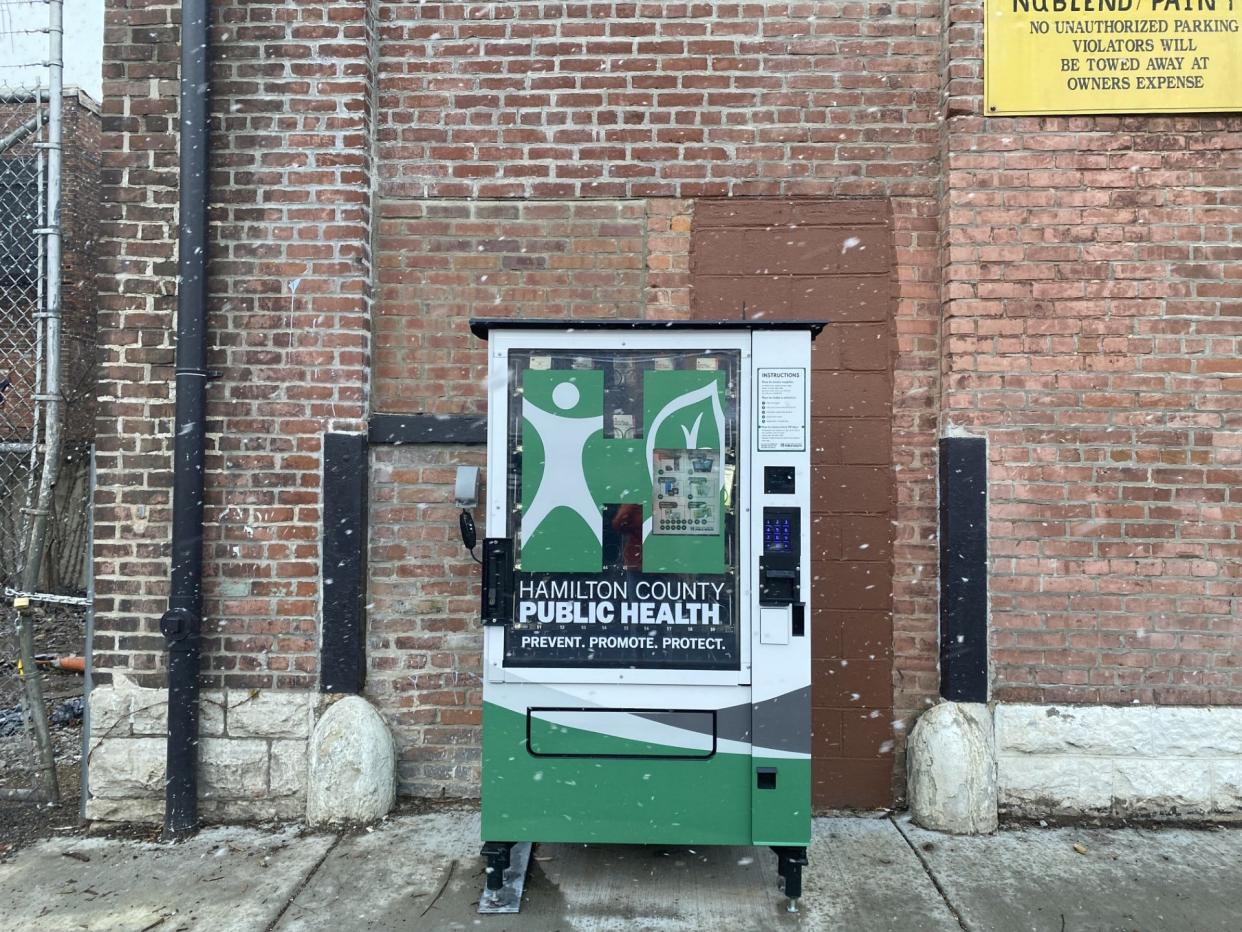
Harm Reduction vending machine
Photo Source: Yahoo News

These two vending machines are additions to Ohio's first harm reduction machine, which was installed in Northside, a community in Cincinnati, in 2021. Caracole, a nonprofit HIV/AIDS organization in Cincinnati, operates and placed the machine outside of its office. This machine contains injection kits for safer drug injections, kits for safer substance smoking, safe sex kits, pregnancy tests, naloxone, bandages, and even containers with which to carry needles and syringes until they can be safely disposed of.[5]

Vending machines are examples of no-contact harm reduction. The vending machines are accessible 24/7 and do not require face-to-face contact. The supplies are free and are accessible via a code obtained by calling a special confidential number, which connects to a trained person who obtains non-identifying information and gives a code. Having on-contact harm reduction resources available on the street with 24/7 access increases accessibility. Some of those in need are uncomfortable with going into centers that may have the supplies or may be unable to get to them during hours of operation. Additionally, no-contact accessibility means that people can get what they need at all hours without judgment or fear of arrest such as sex workers and transient unhoused dealing with substance abuse.

A study published in the Journal of the American Pharmacists Association proved that the Caracole vending machine resulted in increased accessibility of harm reduction products and services and was associated with a lower countywide incidence of unintentional overdose death and HIV.[6] This is important to note since harm-reduction efforts in Hamilton County started in 2014 in response to increased HIV cases. In 2014, the Cincinnati Exchange Project dispensed sterile syringes to drug users to protect them from HIV and Hepatitis C. Vending machines are a practical addition to harm reduction strategies already in use, such as mobile health vans that travel to neighborhoods also providing safer drug use supplies, safe-sex supplies and information concerning healthcare services and treatment.

Harm reduction, in its various forms, is drug overdose and injury prevention, as well as HIV and infectious disease prevention. It should be supported in public policy to innovate and increase funding for modalities already in place, to educate the public and health professionals who sometimes demonize harm reduction efforts due to misinformation, and for research to create new pathways. Harm reduction acknowledges the dignity and humanity of those in need, improves public health outcomes, and can supportively lead people into substance abuse treatment and cessation.

[1] Sue, K., & Fiellin, D. A. (2021). Bringing Harm Reduction into Health Policy — Combating the Overdose Crisis. The New England Journal of Medicine, 384(19), 1781–1783. https://doi.org/10.1056/nejmp2103274

[2] SAMHSA.(2023). Harm Reduction. Retrieved from https://www.samhsa.gov/find-help/harm-reduction

[3] DeMio, T., Kim, R. (2024, January 3). Drugs, sex and harm reduction: New vending machines could reduce spread of HIV. Retrieved from https://news.yahoo.com/drugs-sex-harm-reduction-vending-033416611.html

[4] CDC. (2022, September 30). Fentanyl Test Strips: A Harm Reduction Strategy. Retrieved from https://www.cdc.gov/stopoverdose/fentanyl/fentanyl-test-strips.html

[5] DeMio, T. (2021, March 8). Ohio's first harm reduction vending machine helps promote safer sex, safer smoking, safer injection. Retrieved from https://www.cincinnati.com/story/news/2021/03/08/vending-machine-safer-sex-drug-use-supplies-overdose-hiv-prevention-ohio/4592675001/

[6] Arendt, D. (2023). Expanding the accessibility of harm reduction services in the United States: Measuring the impact of an automated harm reduction dispensing machine. Journal of the American Pharmacists Association, 63(1), 309–316. https://doi.org/10.1016/j.japh.2022.10.027

Disclaimer: Guest blogs do not necessarily reflect the views of the ADAP Advocacy Association, but rather they provide a neutral platform whereby the author serves to promote open, honest discussion about public health-related issues and updates.

Thursday, January 26, 2023

Intersection between Substance Use Disorder & HIV

By: Ranier Simons, ADAP Blog Guest Contributor

Drug use and drug abuse intersect many aspects of the health journey of substance users and those with substance use disorders. This includes HIV. The complex intersection of HIV and drug use affects HIV acquisition, treatment, and spread. To create solutions with the goal of better health outcomes for those dealing with HIV and substance abuse issues, it is necessary to research and understand how drug use affects the HIV trajectory. It is equally important to understand the barriers in place that hinder effective outreach and care.

The Intersection of Prevention and Harm Reduction Efforts
Photo Source: Recovery Research Institute

Past and present research indicates a higher level of drug use and drug abuse in the population of those living with HIV than to those who are not infected.[1] The drugs include alcohol, crack cocaine, methamphetamines, prescription opioids, and heroin.[2] There is a distinction between drug use and drug abuse. Drug use is more episodic, whereas drug abuse or substance use disorder is consistent and chronic. Regardless of the level of use or addiction, drug use results in suboptimal HIV outcomes.

Substance abuse affects the entire continuum of the HIV care cycle, starting with acquiring infection. Drug use and abuse have been shown to increase the odds of engaging in risky behaviors that lead to infection.[2,3,4] Research shows that being under the influence lowers inhibitions, can result in a higher prevalence of multiple sex partners, and poor judgment resulting in unprotected sex.[2,4] Moreover, injectable drug usage can be a direct path to infection when needle sharing is involved.

A good deal of research has been focused on HIV in MSM (men who have sex with men), given that the rate of HIV infection is higher in this group than in the general population. It is observed that the usage of amyl nitrites, methamphetamine, and club drugs is higher in this group as well.[4] Thus, it is imperative to target this group to curb the transmission of HIV within. Intervention would also benefit the general population since there are MSM who have sex with women. 

Recreational or episodic drug use can lead to substance disorders or drug abuse. HIV-positive people dealing with substance disorders have additional challenges. One substance abuse group research has focused on is injection drug abusers. Injectable drug users tend to inject opiates, like heroin, alone or in combination with other drugs, even stimulants such as cocaine.[4] Not only are injectable drug users at a higher risk of contracting and spreading HIV, but they are also more likely to contract other infections.

People who inject drugs (PWID) should get tested for HIV at least once a year
Photo Source: CDC

Regardless of the drug, drug use and abuse exacerbate poor HIV outcomes because it causes additional damage to the body. The drugs are taxing on organs such as the liver, heart, and kidneys. Illicit drug use has also been shown to suppress the immune system.[6] Having a decreased immune response is detrimental to drug users living with HIV. This can lead to a faster progression to adverse HIV outcomes, especially for HIV-positive addicts not on antiretroviral therapy.

Treatment adherence is another intersection of HIV and drug abuse. Research shows that substance abusers on ART have lower treatment adherence. A study from 2007 showed that drug use resulted in a fourfold greater risk of medication adherence failure.[5] Drug use affects cognitive functioning and psychosocial conditioning. Drug addiction makes it difficult to focus on the importance of consistent and timely taking of medication, especially when multiple pills and times are involved. Poor medication adherence can result in subpar treatment response or complete drug resistance.

To improve the outcomes of HIV-positive people with substance abuse issues, it is paramount to remove the stigma of drug use. It should be treated just as any other chronic medical condition. Encouraging a cultural change to remove stigma would result in treating substance abusers with dignity, which could result in self-motivated behavior modification. Stigma against drug abusers sometimes results in medical professionals not dealing with the addiction with compassion and prohibiting infected individuals from seeking consistent care. Stigma also creates policy that hinders people from getting the help they need.

Medication pill box in front of a clock
Photo Source: Wellthy

Anecdotal and evidence-based research shows that it is best to reach drug-addicted HIV-positive individuals where they are in their journey. They should be treated without the expectation of stopping drug use. Ongoing drug use is not a contraindication for antiretroviral therapy.[3] Educating drug users to understand they can still be on ART while still being on drugs could increase adherence. Reducing stigma could also affect policy change. For example, many politicians are against needle exchange programs. However, needle exchange programs are places that drug-addicted people living with HIV are more likely to visit regularly. They are places where additional services can be provided, including treatment. Handing out clean needles, cookers, and pipes would lower the risk of transmission while also creating a space to meet other needs.

Navigating the intersection of HIV and drug use starts by acknowledging they do not exist in separate vacuums. Drug treatment programs should include HIV testing, and HIV treatment should involve screening for substance abuse.

[1] Shiau, S., Arpadi, S. M., Yin, M. T., & Martins, S. S. (2017). Patterns of drug use and HIV infection among adults in a nationally representative sample. Addictive behaviors, 68, 39–44. https://doi.org/10.1016/j.addbeh.2017.01.015

[2] CDC. (2021, April). HIV and substance abuse. Retrieved from https://www.cdc.gov/hiv/basics/hiv-transmission/substance-use.html

[3] HIV.GOV. (2021, June 3) Considerations for antiretroviral use in special patient populations. Retrieved from https://clinicalinfo.hiv.gov/en/guidelines/hiv-clinical-guidelines-adult-and-adolescent-arv/substance-use-disorders-and-hiv

[4] Strathdee, S., Patterson, T. (2006) Behavioral interventions for HIV-Positive and HCV-Positive drug users. AIDS and Behavior, 10(2), 115-130

[5] Hinkin, C. et al. (2007) Drug use and medication adherence among HIV-1 infected individuals. AIDS and Behavior, 11(2), 185-194

[6] Nnorom-Dike, O., Ekwebelem, O., Ofielu, E., Attah, M., Ekwe, D. (2020, December 9). Long term immunologic consequences of illicit drug abuse. Retrieved from https://www.heraldopenaccess.us/openaccess/long-term-immunologic-consequences-of-illicit-drug-abuse

Disclaimer: Guest blogs do not necessarily reflect the views of the ADAP Advocacy Association, but rather they provide a neutral platform whereby the author serves to promote open, honest discussion about public health-related issues and updates.