Showing posts with label World Health Organization. Show all posts

Thursday, March 2, 2023

HIV Cure: Trial and Error Sheds New Light

By: Ranier Simons, ADAP Blog Guest Contributor

According to the World Health Organization (WHO), at the end of 2021, about 38.4 million people globally were living with HIV/AIDS.[1] Medical science has advanced through the years, creating novel treatments for many illnesses, eradicating diseases from the global population, and finding cures for others. However, a permanent cure for HIV remains elusive. Researchers have recently announced a fifth person that has been cured of HIV. While the news is exciting and further adds to knowledge about the virus, the mechanism of the cure is not scalable. Additionally, it is important to note that a promising HIV-vaccine also recently failed advanced-stage clinical trials. 

A Cure for HIV?
Photo Source: Scientific Scarsdalian

A 53-year-old man, known as the "Dusseldorf patient", is the fifth and latest person to be cured of HIV due to a blood stem cell transplant.[2] This is the exact mechanism by which four other people have been cured of HIV. This man and the others received a blood stem cell transplant as an aggressive late-stage effort to treat leukemia. 

In 2013, doctors destroyed the patient's cancerous bone marrow and subsequently healthy bone marrow as well and replaced it with donor stem cells from a person who had a mutation that rendered them resistant to HIV infection.[3] The mutation was in the genes for the CCR5 receptor, a receptor HIV needs to enter immune cells. The mutation prevents the CCR5 receptor from being expressed on the surface of immune cells. The transplanted stem cells grew and replaced the old bone marrow, giving the patient a new HIV-resistant immune system. In 2018, the Dusseldorf patient stopped taking ART and has remained HIV-virus-free.[3]

The first person to be cured of HIV/AIDS as a result of a stem-cell transplant to treat blood cancer was Timothy Ray Brown in 2007. He was known as the "Berlin patient", and his cure was confirmed in 2009. Another patient, the "London patient", was reported as being cured in 2019. A 63-year-old man known as the "City of Hope" patient and a woman known as the "New York patient" were reported in scientific literature in 2022 as being cured. The "City of Hope" patient, thus far, has been the person who has lived with HIV the longest. At one point in his HIV journey, he had an AIDS diagnosis, having had HIV since 1998.[4] 

Unfortunately, blood stem cell transplantation is not a scalable solution, and it is only used in extreme cases for people battling blood cancers with no other options. It cannot be used as a cure for all patients living with HIV because the risks are too significant. It is not guaranteed to work and is very dangerous since it requires wiping out a person's entire immune system, and that state leaves a patient open to infections with no protection. Additionally, it is possible a person's body could reject the donor stem cells as well.

Pathways to a Cure
Photo Source: POZ Magazine

January 2023 also brought news of a failed HIV-vaccine clinical trial. The Mosaico Study, a phase 3 clinical trial conducted by the HIV Vaccine Trials Network(HVTN), was ended due to the results of an interim review.[5] The Mosaico Study vaccine was what is known as a 'mosaic vaccine.' This means that it contains genetic material from a variety of HIV strains prevalent worldwide to trigger a broad immune response.[5] The study focused on cisgender men and transgender people who have sex with cisgender men and/or transgender people from around the world. The failure of the trial was reported when it was found that the vaccine was ineffective in preventing infections compared with the placebo.[6]  Over the past 40 years, clinical trials on HIV vaccines have reached phase 3 only eight times.[6] All have failed.

A significant factor in why HIV is so challenging to cure is how it operates. When HIV enters the body, some of the immune cells it infects are long-lived immune cells that soon become latent. Those sleeping cells can stay dormant for years. While those infected immune cells are dormant, they are not replicating HIV. Antiretroviral therapies target infected cells that are actively replicating new copies of HIV. Thus, the "sleeping cells" are not being targeted. The latent or "sleeping" cells are what scientists refer to as HIV reservoirs in the body. Those infected cells can wake up and become active at any time. That is why it is essential to be consistent with antiretroviral adherence. 

We may not have a cure for HIV/AIDS. However, the disappointing vaccine trials and the science learned from the extreme stem cell transplants are still valuable and push us closer to conquering the virus. Trial and error will eventually produce powerful tools to beat HIV/AIDS.

[1] World Health Organization. (2023). HIV. Retrieved from https://www.who.int/data/gho/data/themes/hiv-aids#:~:text=Globally%2C%2038.4%20million%20%5B33.9%E2%80%93,considerably%20between%20countries%20and%20regions

[2] Sathyakumar, K. (2023, February 20). 5th person confirmed to be cured of HIV. Retrieved from https://abcnews.go.com/Health/5th-person-confirmed-cured-hiv/story?id=97323361

[3] Reardon, S.(2023, February 21). Third patient free of HIV after recieving virus-resistant cells. Retrieved from https://www.nature.com/articles/d41586-023-00479-2

[4] Marquez, L.(2022, July 27). Patient achieves HIV and blood cancer remission three decades after HIV diagnosis through stem cell transplant at City of Hope. Retrieved from  https://www.cityofhope.org/patient-achieves-hiv-and-blood-cancer-remission-three-decades-after-hiv-diagnosis-through-stem-cell#:~:text=Known%20as%20the%20City%20of,is%20now%2066%20years%20old

[5] Fred Hutchinson Cancer Center. (2023, January 27). Phase 3 Mosaic-Based Investigational HIV Vaccine Study Discontinued Following Disappointing Results of Planned Data Review. Retrived from https://www.hvtn.org/news/news-releases/2023/01/phase-3-mosaic-based-investigational-hiv-vaccine-study-discontinued-following-disappointing-results-planned-data-review.html

[6] Loewy, M. (2023, February 13). Researchers Voice 'Frustration' at Failed HIV Vaccine Trial. Retrieved from https://www.medscape.com/viewarticle/988191#vp_1

Disclaimer: Guest blogs do not necessarily reflect the views of the ADAP Advocacy Association, but rather they provide a neutral platform whereby the author serves to promote open, honest discussion about public health-related issues and updates.  

Wednesday, July 27, 2022

Spike in Monkeypox Disease Among MSM Causes Alarm, Too

By: Ranier Simons, ADAP Blog Guest Contributor

On Saturday, July 23, 2022, the World Health Organization (WHO) declared monkeypox a PHEIC, public health emergency of international concern.[1] Internationally, the number of cases has reached over 16,000 in over 75 European countries, North and South America, the Middle East, South Asia, Australia, and other parts of Africa not previously exposed.[1] In the United States, there have been roughly 2,900 cases. 

It is important to note that anyone can contract monkeypox. Monkeypox was first identified in 1958 in a colony of research monkeys.[2] Since 1970 human outbreaks have been reported in 11 African countries. The first outbreak outside of Africa was in 2003 in the United States. It occurred in several midwestern states and was linked to infected prairie dogs that people had as pets. Those pets likely contracted the disease from being housed with infected rats and door mice shipped from Ghana.

Monkeypox on hands
Photo Source: National Institute for Communicable Diseases

Although anyone can contract the disease, the recent outbreak disproportionately affects gay, bisexual, and men who have sex with men (MSM).[2] The U.S. Centers for Disease Control & Prevention (CDC), the media, and health professionals have consciously not labeled monkeypox a gay disease. It indeed is not a gay disease. However, given that the current outbreak mainly affects gay men, it is essential to clarify that explicitly. The award-winning blogger Mark S. King points out, "Gay men are getting monkeypox and suffering greatly. When gay men understand the threat, we are more likely to take precautions, get vaccinated, or be informed about treatment”.[3]

Concerns about stigma are valid. Gay men historically have and continue to face stigma and apathy in the healthcare arena and public opinion regarding healthcare issues. But, King also points out that it is dangerous to bury facts with vague and evasive messaging.[3] Vague messaging leads the general public to think that their present odds of contracting the disease are higher than the reality of the numbers. Conversely, labeling monkeypox a gay illness would make the public complacent about being mindful of their activities and being tested when they should be. 

The Washington Post’s Benjamin Ryan points out that “…public health experts know well, epidemiology is less concerned with whether someone could contract an infection; instead, the much more vital questions focus on which groups of people are most likely to be exposed to a pathogen, to contract it and why.”[4] There need to be targeted education and prevention efforts aimed at gay men to emphasize the specifics that make them more susceptible to the spread of monkeypox. Facts show that the sexual and social networks of gay men are why it is hitting the population hard. There have been clusters of infections traced back to events such as large circuit parties, nightclub events, and pool parties. Bathhouses are the settings of some clustered outbreaks, as well. Gay men need to be informed of the statistical fact of gay men having an increased incidence of multiple sex partners, especially in combination with certain events and travel, which also increases the likelihood of the spread of monkeypox amidst their demographic.

Monkeypox is contracted through close skin-to-skin contact. Transmission comes from exposure to broken skin, mucus membranes, respiratory droplets, infected bodily fluids, and even contact with contaminated linens. It is not airborne like Covid-19. Rubbing, kissing, and physical contact are enough to cause infection. Sexual intercourse is not necessary. Seven to fourteen days after infection is when symptoms usually appear. Fever, chills, exhaustion, headaches, and muscle weakness are typically initial signs.[2] Progression includes the swelling of lymph nodes and widespread body rash that can include the mouth, hands, and feet. Then fluid-filled painful pox can appear on the body, surrounded by red circles. There is increased reporting that some infected individuals only see some rash and painful pox sores in the genital and anal regions instead of all over the body.

Monkeypox tests
Photo Source: PBS

Over 190,000 doses of the two-dose Jynneos vaccine have been pulled from the Strategic National Stockpile. Jynneos is used for the prevention of monkeypox and smallpox. There is still not enough in circulation to meet the demand for vaccination nor to vaccinate all those in the highest risk categories. There is also an antiretroviral effective against monkeypox named TPOXX (tecovirimat), approved by the U.S. Food & Drug Administration (FDA) for use against smallpox in 2018.[5] Unfortunately, TPOXX was only authorized for smallpox because it is deadly and can be considered a possible bioterrorism weapon. Monkeypox is not fatal like smallpox. Thus obtaining TPOXX requires many pages of paperwork to get it from the Strategic National Stockpile. Additionally, protocol requires doctors to submit pictures of a patient's lesions to the local health department or CDC and a folio of pages of detailed information to get TPOXX. After getting the drug, patients are required to keep a daily journal while they are taking it.[5]

Presently, monkeypox prevention is paramount as vaccination and treatment options are scarce. Effectively educating gay, bisexual, and men who have sex with men with the unadulterated details of their demographics’ statistically documented behaviors put them at high risk is the best weapon against the spread of the disease. Targeted explicit information delivered with respect and dignity is the best way to avoid stigma while undergirding the importance of the information.

[1] Branswell, H. (2022, July 23). WHO declares monkeypox outbreak a public health emergency. Retrieved from https://www.statnews.com/2022/07/23/who-declares-monkeypox-outbreak-a-public-health-emergency/
[2] Howard, J. (2022, July 21). Monkeypox spreading in 'cluster events,' but vaccines can help stop it, local health officials say. Retrieved from https://www.cnn.com/2022/07/21/health/monkeypox-clusters-local-officials/index.html
[3] 
King, M. (2022, July 19). Monkeypox is a gay thing. We must say it. Retrieved from https://marksking.com/my-fabulous-disease/monkeypox-is-a-gay-thing-we-must-say-it/
[4] Ryan, B. (2022, July 18). You are being misled about monkeypox. Retrieved from https://www.washingtonpost.com/opinions/2022/07/18/monkeypox-gay-men-deserve-unvarnished-truth/
[5] 
Walsh, D. (2022, July 21). There Is a monkeypox antiviral. But try getting it. Retrieved from https://nymag.com/intelligencer/2022/07/tpoxx-is-a-monkeypox-antiviral-but-try-getting-it.html

Disclaimer: Guest blogs do not necessarily reflect the views of the ADAP Advocacy Association, but rather they provide a neutral platform whereby the author serves to promote open, honest discussion about public health-related issues and updates.   

Thursday, January 27, 2022

What is 100-100-100?

By: Ranier Simons, ADAP Blog Guest Contributor

The ongoing Covid-19 pandemic is a glaring reminder of the importance of the global efforts to address other epidemics and pandemics. After over 30 years of such efforts, worldwide there has been success with polio. Wild poliovirus was virtually extinct in 2020 with only about 140 cases remaining.[1] However, two serious remaining global disease crises are HIV/AIDS and Hepatitis C (HCV).

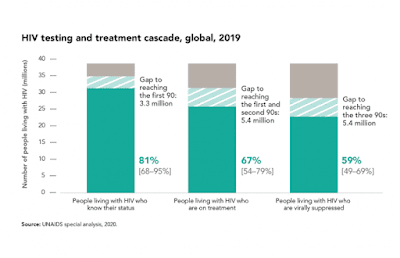
In 2020, it was estimated that there were 37.7 million people living with HIV/AIDS, and an estimated 58 million people with chronic Hepatitis C.[2][3] The strongest two-pronged approach to fight both is testing and treatment. In 2014, UNAIDS, the Joint United Nations Programme on HIV/AIDS, came up with a target known as 90-90-90. The goal was to have 90% of all persons living with HIV/AIDS aware of their status, 90% of all diagnosed on sustained antiretroviral treatment, and for 90% of those on treatment to have an undetectable viral load by 2020. 

The WHO, World Health Organization, proposed a similar target for HCV in 2016. They pledged to globally eliminate HCV by 2030. This elimination included a target of 80% those with HCV to be in treatment, a 90% reduction in new infections, and a 65% reduction in liver-associated deaths as a result of hepatitis C.[4] 

HIV testing and treatment cascade global, 2019
Photo Source: UNAIDS

The 90-90-90 goal was not met in 2020 and it is not likely that HCV will be eradicated by 2030. Were the goals too ambitious or was there something missing in the execution of the efforts? 

The focus has always been on testing and treatment. It is of the utmost importance to have widespread testing to identify those that need treatment in order to get them into treatment. However, what had previously been missing was discourse on barriers to testing and treatment. In 2021, the UNAIDS Global AIDS Strategy acknowledged the existence of structural barriers to HIV and HCV testing and services. 

The challenge has been that solving the problem of these hurdles has not been included in the system of testing and treatment. The structural hurdle of lack of fulfilment of basic needs should be a systemic part of treatment. Human nature prioritizes stable shelter, food, and safety over seeking out testing and adherence to treatment regimens.

This is especially true in the population of people who inject drugs (PWID). Intravenous drug users are 29% more at risk to contract HIV and 40% of new HCV infections worldwide.[5]

HIV 1 & 2 test, HCV test
Photo Source: Yahoo!

In response to understanding the importance of including the effective meeting of basic needs as part of disease prevention, a new target, 100-100-100 is being discussed in global health circles. It is initially being considered through the lens of PWID regarding HIV and HCV. The goal is to have stable housing for 100% of PWID who have housing instability, offering substance abuse treatment to 100% of PWID that desire treatment, and giving 100% of PWID access to harm reduction services.

Stable housing means safe and consistent shelter. It means having a stable place to eat and prepare meals. Having stable housing provides a place for self-care and identity.  Stress is lowered when one has a safe stable place to live as well allowing focus on other needs. A sense of community results from stable housing as well. When groups of PWID have stable housing, they can create a sense of belonging and care for each other communally. 

Having a stable place to live and rest also facilitates successful substance abuse treatment. Taking away stressors of basic survival allows a person to redirect their energies towards bettering their lives. Coupled with substance abuse treatment is harm reduction. Harm reduction services come in many forms.[6] Most importantly it is acknowledging the complicated etiology of drug use. It is the realization that drug use does happen, and it is necessary to help people along the continuum of complete abstinence from drug use to the other end of safer and “responsible” drug use starting at whichever stage PWID find themselves.

Reaching this 100-100-100 goal, along with aggressive strides toward testing and treatment, is the growing discourse that is providing hope towards the eradication of HIV and HCV. Removing the inequalities of lack of basic needs will help not just PWID but the greater population at large living with HIV and HCV as well.

[1] Kaiser Family Foundation. (2021, Oct 29). The U.S. Government and global polio efforts. Retrieved from https://www.kff.org/global-health-policy/fact-sheet/the-u-s-government-and-global-polio-efforts/
[2] UNIADS. Global HIV and AIDS statistics fact sheet. Retrieved from https://www.unaids.org/en/resources/fact-sheet
[3] World Health Organization. (2021, Jul 27). Hepatitis C. Retrieved from https://www.who.int/news-room/fact-sheets/detail/hepatitis-c
[4] World Health Organization. (‎2016)‎. Global health sector strategy on viral hepatitis 2016-2021. Towards ending viral hepatitis. World Health Organization. Retrieved from https://apps.who.int/iris/handle/10665/246177
[5] UNAIDS. (2017, Jan 1) 90–90–90: an ambitious treatment target to help end the AIDs epidemic. Retrieved from https://www.unaids.org/en/resources/documents/2017/90-90-90
[6] Principles of harm reduction. National Harm Reduction Coalition. Retrieved from https://harmreduction.org/about-us/principles-of-harm-reduction/ 

Disclaimer: Guest blogs do not necessarily reflect the views of the ADAP Advocacy Association, but rather they provide a neutral platform whereby the author serves to promote open, honest discussion about public health-related issues and updates.

Thursday, July 22, 2021

Hope for Now: Addressing Suicide Among PLWHAs

By: Jonathan J. Pena, MSW, Licensed Clinical Social Work Associate (LCSWA)

“This highway's dark and empty.
Just miles and miles of endless road.
I've got a sickness pounding in my head.
I'm at the mercy of the ghost.”[1]
A diagnosis of being HIV positive back when this epidemic began, was synonymous with death. This, now dark road, was paved with unfathomable fear as more questions arose than answers. The virus was no longer the only infection that had occurred, as despair took form and occupied more mental space than hope. While receiving a diagnosis of being HIV positive no longer is a death sentence thanks to antiretroviral medication, people living with HIV/AIDS can sadly still face this type of mental darkness as a part of their lived experiences that leads to suicide ideation and successful suicide attempts.

Photo Source: Getty Images / tadamichi

Annually, an estimated 800,000 people die worldwide from suicide according to the World Health Organization.[2] In looking at the general population who have suicidal ideation, 1 out of 3 will attempt to commit suicide and one death will result from 286 attempts.[3] When compared to the general population, one in every two people living with HIV/AIDS experiences suicidal ideation and one attempt at suicide will occur according to a study conducted by the Penn State University College of Medicine.[4] Additionally, data analysis from 185,000 people living with HIV/AIDS indicated that this population were 100 times more likely to die from attempted suicide in contrast to the general population.[5] 
“I sought after, after reasons to stay
I was lost, I was lost”[6]
People living with HIV/AIDS experience risk factors that can contribute to the strong sentiments of feeling lost within their diagnosis. One of the most profound sources that impacts healthy experiences of happiness is the connectivity we received from other people. People serve as the bridge and catalyst of shared experiences across time and locations. Societal stigma towards HIV/AIDS works to sever these dynamic and powerful human connectivity by devaluing basic human respect and compassion. Society often labels people living with HIV/AIDS as other within communities and this population quickly become outcasts. Through this process, shame and guilt can be fostered and become increasingly hard to overcome if we are not effectively targeting and addressing mental illness within this population. Dr. Paddy Ssentongo, a researcher and epidemiology doctoral student stated that “there is an urgent need to prioritize mental health screening and care into all HIV testing and treatment settings.”[7] As a social worker within mental health, I really resonate with this statement. Targeting HIV testing and treatment settings can help clinicians to target people who may be suffering with trying to find reasons to stay in this world because the darkness they feel from society as a result of their diagnosis. Additionally, this population faces other risk factors like neurological changes, poverty, lack of access to care and advanced disease.[8] 
“How can I instill such hope, but be left with none of my own?
What if I could sing just one song and it might save somebody’s life?”[9]
When we shift our perspective of HIV/AIDS from an individual issue to community healing, we usher in hope that may have been lost with a positive diagnosis. We need to strengthen and revitalize our approach to HIV/AIDS treatment and prevention to include mental health screening. Effective patient centered care isn’t solely about the diagnosis and approaching it as such would greatly diminish our ability to make effective, long lasting changes when it comes to treatment as a whole. We need to incorporate more of the human component to HIV treatment and care because it is within that sphere that we get to learn about the lived experiences that are occurring. Again, remember that people are LIVING with HIV/AIDS, so we need to understand how the various aspects of their lives intersect with one another. This provides invaluable information that can useful in targeting mental health screening across areas like healthcare, poverty, childcare, employment, and education, just to name a few. 

Living with HIV/AIDS doesn’t need to become a dark and empty pathway that extinguishes the hope of a continued happy and fulfilled life. Modern medicine has changed the landscape of HIV treatment and care opening up the road of this population to live long and healthy lives. Now, in order to strengthen this approach to longevity, we need to remember our own humanity and incorporate that element of strength in order to give hope to those of us sitting in the dark.

Disclaimer: Guest blogs do not necessarily reflect the views of the ADAP Advocacy Association, but rather they provide a neutral platform whereby the author serves to promote open, honest discussion about public health-related issues and updates. 

[1] Song Lyrics by City of Colour, “Hope for Now”.
[2] Cox, T. (2021). People living with HIV/AIDS have a significantly higher risk of suicide. Penn State News. Retrieved from: https://news.psu.edu/story/661753/2021/06/28/research/people-living-hivaids-have-significantly-higher-risk-suicide#.YOhQh_nmJ0Z.twitter.
[3] Cox. People living with HIV/AIDS have a significantly higher risk of suicide.
[4] Cox. People living with HIV/AIDS have a significantly higher risk of suicide.
[5] Cox. People living with HIV/AIDS have a significantly higher risk of suicide.
[6] City of Colour. Hope for Now.
[7] Cox. People living with HIV/AIDS have a significantly higher risk of suicide.
[8] Cox. People living with HIV/AIDS have a significantly higher risk of suicide.
[9] City of Colour. Hope for Now.

Thursday, March 12, 2020

Coronavirus & Living with HIV

By: Brandon M. Macsata, CEO, ADAP Advocacy Association

The World Health Organization ("WHO") this week declared the novel coronavirus ("COVID-19") a global health pandemic, which is a designation given to a global disease outbreak. Previously, such designations were given to the Spanish Flu in 1918, Asian Flu in 1957, and HIV/AIDS in 1981 (History.com). Increasingly, many people living with HIV are asking if they should be concerned about the coronavirus? This week's blog includes several important resources.

Photo Source: ABC57 - South Bend, Indiana

The U.S. Centers for Disease Control & Prevention ("CDC") website is making available real-time information about COVID-19, which is being made available online from the White House Coronavirus Task Force.
If social distancing isn't an option to reduce exposure to COVID-19, then please follow the WHO's basic protective measures against the new coronavirus.

Disclaimer: Guest blogs do not necessarily reflect the views of the ADAP Advocacy Association, but rather they provide a neutral platform whereby the author serves to promote open, honest discussion about public health-related issues and updates.

Thursday, September 12, 2019

Implications of Health Stigma, Mental Health and HIV/AIDS

By: John Williamson, intern, ADAP Advocacy Association, and candidate for Masters in Social Work

Over decades, we have made considerate advances to turn HIV into a chronic but manageable condition. Despite these advances, people living with HIV/AIDS (PLWHA) continue to endure discrimination and stigma from their communities, families, and professionals. Consequently, millions of PLWHA are impeded from accessing preventative and treatment services (World Health Organization, 2011). In 2014, UNAIDS cited the fear of stigma and discrimination as the primary reason individuals were reluctant to have an HIV test, take HIV medications such as antiretroviral treatments (ART) and disclose their HIV status. As researchers continue to explore the effects of stigma on the mental well-being of PLWHA, they have found significant evidence of the association between HIV related stigma and social outcomes such as heterosexism, racism, and poverty (Earnshaw, V., Bogart, L., Dovidio J., Williams, D., 2013).

For PLWHA, mental health conditions are among the most common obstacles regardless of ethnicity or gender and can impact behaviors related to accessing healthcare services and thereby effecting ones health and overall quality of life (Yi, S., Chhoun, P., Suong, S., Thin, K., Brody, C., & Tuot, S., 2015). According to HIV.gov (2019), people who are HIV positive are at an increased risk of developing an anxiety, cognitive or mood disorder, and depression. A multi-site cross sectional study estimated that individuals who are receiving care for a mental health condition are four times as likely to be living with HIV as compared to the general population (M.Blank et al., 2014). In South Africa, researchers conducted a national survey and found that 44 % of PLWHA had a diagnosable mental health condition; depression accounted for 30 %, major depressive disorder 11 %, and alcohol abuse disorder for 12 % (Freeman M, Nkomo N, Kafaar Z, Kelley K., 2008). The American Psychiatric Association and Office of HIV Psychiatry reported results from a study that found 19% of males involved in psychiatric care were HIV positive and of 320 patients between the ages of 20 and 40, AIDS was the leading cause of death (2012).

HIV stigma refers to negative beliefs, feelings, and attitudes toward PLWHA while HIV discrimination refers to the unfair and unjust treatment based on one’s real or perceived HIV status (Centers for Disease Control and Prevention, 2019). According to UNAIDS (2015), in a study conducted across 35% of countries with available data, more than 50% of people reported that they held discriminatory attitudes toward PLWHA. In 2012, researchers conducted surveys to identify attitudes toward PLWHA and found that many still associated HIV/AIDS with things such as death, fear, promiscuity, and irresponsibility while the majority of participants also admitted to actively avoiding PLWHA (Herek, Capitanio, & Widaman, 2002).

Perceived fear of stigma and discrimination is one of the primary reasons people avoid getting an HIV test. With reluctance to taking an HIV test, people are placed at an increased risk of being diagnosed late meaning the virus may have progressed to AIDS making treatments more difficult as well as increasing the chance of transmitting the infection to others. Being diagnosed with HIV/AIDS involves many lifestyle changes including strict medical treatments, changes in nutrition, and learning how to navigate the medical and social aspects of being HIV positive. These changes can act as a consistent reminder to PLWHA of their status and the stigma associated with the illness making it difficult to adjust. Research has found that PLWHA are diagnosed with depression at a rate of two to five times higher than individuals who are HIV negative and are diagnosed with generalized anxiety disorder almost eight times the rate of someone who is HIV negative (Bing, et al., 2001).

HIV Word Cloud
Photo Source: National Minority AIDS Council

During the early years of the epidemic many false beliefs such as HIV/AIDS is the result of moral fault or personal irresponsibility, its only transmission is through sex, and an association of death were developed (Varni et al., 2012). Regardless of advances in medical treatments and public education, many of these perceptions are still found throughout communities. According to the People Living with HIV Stigma Index, findings from 50 countries indicated that about one in every eight PLWHA is being denied health services due to discrimination or stigma (UNAIDS, 2017). In South Africa, a group of women were given access to Vaginal gels and pills as a means of HIV prevention. Many of the young women involved in the study reported fear of using these products because they may be perceived as HIV positive (The Well Project, 2016). Another study, conducted in Mexico found a strong correlation between self-stigma and having never been tested for HIV which included the perception of HIV testing as being associated with homosexuality (Pines, Meza, EV, et al., 2016).

Stigma against PLWHA can be seen in hospitals, communities, families and in our court system. Currently, there are thirty-three states and two U.S. territories that have HIV-specific statutes criminalizing the nondisclosure of one’s HIV status and exposing others to the virus (Lehman, Carr, Nichol, Ruisanchez, Knight, Langford, et al., 2014). Many of the statutes include severe punishments including 25 years to life in prison for being accused of nondisclosure. While many states have included enhancements adding time in prison or additional punishments for people who have already been imprisoned such as exposing a public safety officer to bodily fluids and in some cases, this extends to urine and saliva (Harsono et al., 2017).

Although many states passed HIV exposure laws in the 1980’s, the passing of the Ryan White Care Act in 1990 was pivotal in developing US HIV exposure laws (Harsono, Galletly, O’Keefe, & Lazzarini, 2017). In order to receive federal funds, one of the conditions of the Ryan White Care Act was to require that all US states have a legal mechanism to prosecute individuals who were knowingly exposing others to the virus.

For countries with laws, rules, or policies that discriminate against PLWHA there is the risk of further alienating and excluding individuals and therefore reinforcing stigmatization surrounding HIV/AIDS. UNAIDS (2014) has reported that there are currently 72 countries with laws aimed at prosecuting PLWHA. There are currently 17 countries where upon discovering one’s positive status, individuals are at risk for deportation, in 35 countries there are laws that restrict one’s entry and residency for PLWHA, and in 5 countries PLWHA are completely banned from entry (UNAIDS, 2015).

Many of these laws undermine public health efforts to prevent further exposure to HIV by increasing stigma and discrimination. Through the criminalization of HIV, we are perpetuating a stigma that deters people from getting tested and we are placing the responsibility of prevention on the persons living with HIV/AIDS. Research on the efficacy of HIV exposure laws have repeatedly found little evidence of any protective benefits of these laws. In one study, researchers found that awareness of states HIV exposure laws was not associated with any HIV prevention related behaviors while another study found no association between one’s residence in a state with HIV exposure laws and the number of unprotected sexual partners or sex without prior HIV status disclosure (Harsono, et al., 2017). Delvande, Goldman, and Sood (2010) conducted a multi-state sample that found evidence to support the concern that HIV exposure laws actually inadvertently deter PLWHA from disclosing their HIV status and for people living in states with a greater than average number of HIV related prosecutions, they were less likely to disclose their positive status to their partners. Many not for profit organizations throughout the United States such as Lambda Legal have been working diligently to impact public policy at a local, state, and federal level to help protect and advance the rights of PLWHA. In their publication “15 Ways HIV Criminalization Laws Harm Us All” they outline the way these laws harm public health, resulting in unjust prosecutions, and primarily serve to stigmatize and oppress PLWHA.

Man standing with shoulders down
Photo Source: Equip Health

Recognizing that HIV-related stigma acts as a barrier to both engagement and prevention, Turan, Hatcher, Weiser, et al., (2017) designed a conceptual framework that highlights the dimensions of HIV related stigma to identify the mechanisms by which stigma leads to worse health outcomes for PLWHA. Turan et al. found that stigma can have negative impacts on the health of PLWHA both directly (physiologically) and indirectly (engagement in care behaviors). The researcher’s framework recognizes the effects of stigma at both a structural level and an individual level.  For example, if students decide to specialize in less stigmatized diseases or work in more affluent neighborhoods we loose a great amount of resources at a structural level; whereas, at an individual level through internalized stigma and micro level mechanisms such as depression, PLWHA are at a higher risk for negative health outcomes. Understanding the dimensions of stigma and its effects on populations can assist healthcare professionals in treating their consumers more effectively and recognize new areas for care.

Limited attention has been given to research on the linkage between HIV related stigma and discrimination and the mental well being of PLWHA. By furthering research, we can learn how to develop more effective community-based interventions that aim at reducing stigma and discrimination and assist PLWHA to cope with obstacles facing their physical and mental health. Increasing the quality of HIV care, revising health policies and legal protections, as well as reviewing strategies for reducing stigma are just some of the ways we can we can begin working to reduce false perceptions of PLWHA and create a more inclusive atmosphere. We must also work to address the stigmatizing and oppressive laws that create an environment where they can be used as coercive tools, where a false accusation is used to manipulate the PLWHA, or where confidentiality is compromised when your partner or healthcare professional share your status (Lambda Legal, 2006). Like the framework posed by Turan et al. (2017), we must address it structurally and individually.

References:
  • Bing, E., Burnam, M., Longshore, D., Fleishman, J., Sherbourne, C., London, A., et al. (2001). Psychiatric disorders and drug use among human immunodeficiency virus infected adults in the United States. Archives of General Psychiatry, 58, 721-728
  • Centers for Disease Control and Prevention. (2019). Dealing with stigma and discrimination. Retrieved from: https://www.cdc.gov/hiv/basics/livingwithhiv/stigma-discrimination.html
  • Delvande, A., Goldman, D., Sood, N. (2010). Criminal prosecution and HIV related risky behaviors. Journal of Law and Economics, 53 (4): 741-782
  • Earnshaw, V., Bogart, L., Dovidio J., Williams, D.(2013). Stigma and racial/ethnic HIV disparities: moving toward resilience. American Psychology, 68: 225–236. 10.1037/a0032705
  • Freeman M., Nkomo N., Kafaar Z., & Kelley K. (2008). Mental disorder in people living with HIV/AIDS in South Africa. South African Journal of Psychiatry, 38: 480–500.
  • Harsono, D., Galletly, C, O’Keefe, E., and Lazzarini, Z. (2017). Criminalization of HIV Exposure: A review of empirical studies in the United States. AIDS Behavior, (1): 27-50 
  • Herek, G., Capitanio, J., & widaman, K. (2002). HIV related stigma and knowledge in the United States: Prevalence and trends. American Journal of Public Health, 92, 371-377
  • HIV.gov (2019). US Statistics: Fast facts. Retrieved: https://www.hiv.gov/hiv- basics/overview/data-and-trends/statistics
  • Lambda Legal (2006). 15 Ways HIV criminalization laws harms us all. Retrieved from: https://www.lambdalegal.org/sites/default/files/publications/downloads/15-ways-hiv- criminalization-laws-harm-us-all.pdf
  • Lehman, J., Carr, M., Nichol, A., Ruisanchez, A., Knight, D., Langford, A., et al. (2014). Prevalence and public health implications of state laws that criminalize potential HIV exposure in the United States. AIDS Behavior, 18(6): 997-1006
  • Mogga, S., Prince, M., Alem, A., Kebede, D., Stewart, R., Glozie,r N., Hotopf, M.(2006). Outcome of major depression in Ethiopia: population-based study. British Journal of Psychiatry, 189, 241-6
  • Pines, H., Goodman-Meza, D., Pitpitan, E., et al (2016). HIV testing among men who have sex with men in Tijuana, Mexico: A cross-section study. Doi: 10.1136/bmjopen-2015-010388
  • PLHIV Stigma Index (2015). We are the change: Dealing with self-stigma and HIV/AIDS: An experience from Zimbabwe. Retrieved from: http://www.stigmaindex.org/sites/default/files/reports/Zimbabwe%20People%20Living% 20with%20HIV%20Stigma%20Index%20Report_15-12-14pdf.pdf
  • Steward W, Herek G, Ramakrishna J, Bharat S, Chandy S, Wrubel J, Ekstrand M.(2008).HIV-related stigma: Adapting a theoretical framework for use in India. Social Science and Medicine, 67(8):1225-35
  • Turan, B., Hatcher, A., Johnson, M., Rice, W., Turan, J. (2017). Framing mechanisms linking HIV related stigma, adherence to treatment, and health outcomes. American Journal of Public Health, 107(6): 863-869
  • UNAIDS (2015). On the fast-track to end AIDS by 2030: Focus on location and population. Retrieved from: https://aidsdatahub.org/sites/default/files/publication/World_AIDS_Day_report_2015.pdf
  • UNAIDS(2017). Make some noise for zero discrimination on 1 March 2017. Retrieved from: https://aidsdatahub.org/sites/default/files/publication/UNAIDS_zero-discrimination_2017.pdf
  • Varni, S., Miller, C., Mccuin, T., and Solomon, S. (2012). Disengagement and engagement coping with HIV/AIDS stigma and psychological wellbeing of people with HIV/AIDS. Journal of Social and Clinical Psychology, 31(2): 123-150
  • The Well Project (2016). Stigma and discrimination against women living with HIV. Retrieved from: https://www.thewellproject.org/hiv-information/stigma-and-discrimination-against- women-living-hiv
  • World Health Organization (2011). Global HIV/AIDS response: Epidemic update and health sector progress towards universal access: Progress report 2011. Retrieved from: https://www.who.int/hiv/pub/progress_report2011/summary_en.pdf?ua=1
  • Zhao, G., Li, X., Zhao, J., Zhang, L, and Stanton, B. (2012) Relative importance of various measures ofHIV related stigma in predicting psychological outcomes among children affected by HIV. Journal of Community Mental Health, 48: 275-283


Disclaimer: Guest blogs do not necessarily reflect the views of the ADAP Advocacy Association, but rather they provide a neutral platform whereby the author serves to promote open, honest discussion about public health-related issues and updates.

Thursday, July 18, 2019

AIDS Survivor Syndrome & Understanding the Linkages between Mental Health and HIV/AIDS

By: John Williamson, intern, ADAP Advocacy Association, and candidate for Masters in Social Work

In the early years of monotherapy treatment, a person living with HIV at the age of 20 had an additional life expectancy of 11.8 years (Gueler, A., Moser, A., Egger, M. et al., 2017). Gueler et al. (2017) reports that since the introduction of the combination antiretroviral treatment, that number has risen to a life expectancy of 54.9 years. As medical treatments continue to increase the survival rate among people living with HIV/AIDS, we must continue working to understand the psychological challenges the infection has on ones mental well being. We are often familiar with the physical and medical aspects associated with HIV/AIDS, however, the social and psychological factors are equally important as they can shape the experience of what it is like to be a person living with HIV (Roger, K., Mignone, J., & Kirkland, S., 2013).

According to HIV.gov (2019), people who are HIV positive are at an increased risk of developing an anxiety, cognitive or mood disorder, and depression. During a cross sectional survey in 2003 researchers found that more than 1 in 3 people who are living with an HIV infection have also been diagnosed with Major Depressive Disorder. While there is a significant amount of individuals who are diagnosed with a co-occurring mental health condition and HIV/AIDS fewer than one half of depression cases get recognized clinically in people with HIV (Asch, S., Kilbourne A., Gifford A., et al., 2003). Asch et al.,(2003) also found that individuals with a co-occurring mental health diagnosis of depression and an HIV infection only get treated 18% of the time for their depression, 7% get treated adequately, and only 5% achieve remission. This means that 82% of people who are dually diagnosed with HIV and depression do not receive treatment for their depression.

There are 1.6 million people in the United States living with HIV/AIDS with over half of them aged 50 or older and an expectation that  it will rise to 70% by 2020 (T.Anderson, 2016). Tez Anderson (seen below), Founder of Let’s Kick ASS, an AIDS Survivor Advocacy Group coined the term AIDS Survivor Syndrome (ASS) to describe the “spectrum of sustained trauma survivorship resulting from living through the AIDS pandemic.” People who are living with HIV/AIDS face a historically unique set of barriers including complicated bereavement, trauma, guilt, loss of relationships or community, and increased risk of depression, suicidality, and social withdrawal (Nord, 1996). One of the factors that distinguishes the trauma of someone living with HIV/AIDS from other tragedies or disasters, is the ongoing impact the infection has on a survivor, ultimately leading to further traumatization. Many people living with HIV/AIDS encounter losses that impact their sense of identity such as assumptions about life, future expectations, self-esteem, and security (Nord, 1997).

Tez Anderson appearing on NBC's Today Show
Photo Source: NBC's Today Show

Many long term survivors report differing beliefs about why they outlived their peers including the will to live, a healthy lifestyle, support from others, particular treatments, and clinical interventions such as psychotherapy (Sally, 1994). Researchers conducted an 8 site US study consisting of 803 people living with HIV and a co-occurring mental health condition and found that only 59% of individuals were receiving any mental health treatment (Weaver, Conover, Proescholdbell, Arno, Ang, Ettner, 2008). In the same study, Weaver et al. (2008) found that among their participants who were dually diagnosed with a mood disorder, only 40% of them were taking an antidepressant. People who are living with HIV are 2 to 3 times more likely to have depression and anxiety (Mascolini, 2016). Results from the US Women’s Interagency HIV Study (WIHS) (2005) found that women with chronic depressive symptoms had a 70% higher risk of AIDS related death than women with who expressed little to no symptoms of depression. WIHS (2005) also found that receiving mental health services halved the risk of AIDS related deaths in participants.

Through the integration of mental health into HIV/AIDS programs and initiatives, we have the opportunity to improve the overall health and outcomes of people living with HIV/AIDS. Direct care professionals are often not skilled in identifying symptoms of a mental health condition nor are they prepared to take action for referrals, management, or additional assessment. Training healthcare providers in the assessment and treatment of common mental health and substance use disorders as well as completing referrals to specialized services must be a part of the infrastructure of our healthcare system. By combining routine depression screening, provider training, proper supervision, and a closer relationship between mental health, substance use, and HIV/AIDS services we can work toward stabilizing the medical and physical symptoms while beginning to address the long term effects of living with HIV/AIDS.

Organizations such as Let’s Kick ASS, Elizabeth Taylor 50 Plus Network, and The Liberation Institute are taking a proactive step in providing services and research for long term survivors of HIV. Tez Anderson, founder of Let’s Kick ASS has led the way to understanding and treating ASS by working to increase research, dedicating June 5th as Long Term Survivors Awareness Day, and offering networking and wellness events in both Miami and New York as well as other cities. Elizabeth Taylor 50 Plus Network in San Francisco also offers support groups to both HIV positive and negative bisexual, gay, and transgender men over 50. They also offer weekly social events, health and wellness learning events, and community service projects. The Liberation Institute is another great example of organizations who are taking a stand for long term survivors of HIV/AIDS. They are a  not for profit mental health organization that offers psychotherapy, professional counseling, yoga, and meditation as well as other groups on a sliding scale basis.

National HIV/AIDS Long-Term Survivors Awareness Day
Photo Source: POZ.com

While offering in person services is incredibly important, it is also important to increase as much access to support and information related to HIV/AIDS as possible. That’s why organizations such as the Well Project have created interactive online communities to increase awareness and access to support and information about HIV/AIDS. The Well Project is a not for profit organization that focuses on women and girls with the mission to change the course of the HIV/AIDS pandemic. They offer free online accounts where members can develop a profile and interact with other members through developing communities, joining/creating groups, sharing research/information, and connection to further in-person and online resources as well as group and private chats. Understanding the unique needs of the aging population living with HIV is crucial to developing effective treatments that will increase both life expectancy and overall well being.  HealthHIV has recently developed the Inaugural HealthHIV State of Aging and HIV Survey in order to assess the needs of people living with HIV/AIDS that are over 50 years of age. This survey will allow researchers to create informed medical and consumer education while also addressing the coordination of care for people living with HIV/AIDS.

For people who are HIV positive or are in need of testing or services, HIV.gov offers many tools to identify and connect you with providers and organizations within your zip code. You can find your state HIV/AIDS hotline, a toll free hotline connecting you with local agencies that can help identify what services you are eligible for and assist you in attaining them. HIV.gov also offers a link to the American Academy of HIV Medicines Referral list where one can search a directory of healthcare providers that specialize in HIV management and prevention while also identifying the different types of care settings.

According to the World Health Organization (2019) more than 70 million people have been infected with HIV since the beginning of the epidemic and about 35 million have died of HIV. The challenges surrounding HIV/AIDS are complex and they will take a unified effort to overcome. We can each play a part in the battle of HIV, whether that is by joining your local AIDS walk, participating in research such as the HealthHIV State of Aging and HIV survey, or joining community awareness and prevention projects.

References:
  • Anderson, T. (2016). What is AIDS survivor syndrome? Retrieved: https://letskickass.hiv/what-is-aids-survivor-syndrome-dc0560e58ff0
  • Asch SM, Kilbourne AM, Gifford AL, et al. (2003) Underdiagnosis of depression in HIV: Who are we missing? Journal of  General Internal Medicine. (18); 450-460
  • Bacon, M., Viktor, W [...], and Mary A. Young. (2005)The women's interagency HIV Study (WIHS): An observational cohort brings clinical sciences to the bench. American Society for Microbiology, (9), 1013 - 1019
  • Cook, J., Grey, D., Burke, J., et al. (2004). Depressive symptoms and AIDS related mortality among a multi site cohort of HIV positive women. American Journal of Public Health. (94) 1133 – 1140
  • Gueler A, Moser A, Calmy A, Günthard H, Bernasconi E, Furrer H, Fux C, Battegay M, Cavassini M, Vernazza P, Zwahlen M, Egger M.(2017). Swiss HIV Cohort Study, Swiss National Cohort. Life expectancy in HIV-positive persons in Switzerland: Matched comparison with general population. US National Library of Medicine. 31(3):427-436. doi: 10.1097/QAD.0000000000001335
  • HIV.GOV (2019). US Statistics: Fast facts. Retrieved: https://www.hiv.gov/hiv-basics/overview/data-and-trends/statistics
  • Horberg MA, Silverberg MJ, Hurley LB, et al. (2008) Effects of depression and selective serotonin reuptake inhibitor use on adherence to highly active antiretroviral therapy and on clinical outcomes in HIV-infected patients. Journal of Acquired Immune Deficiency Syndrome.47, 384-390
  • Mascolini, M. (2016). High depression rates with HIV and its scathing clinical impact. Retrieved: https://www.thebodypro.com/article/high-depression-rates-with-hiv--and-its-scathing-c
  • Murrell , D. (2019). Facts about HIV: Life expectancy and long-term outlook. Retrieved:  https://www.healthline.com/health/hiv-aids/life-expectancy
  • Nord, D. (1997). Threats to identity in survivors of multiple AIDS related losses. American Journal of Psychotherapy, 51 (3)
  • Nord, D. (1996). Issues and implications in the counseling of survivors of multiple AIDS related loss. Death Studies. 20, 389 - 414
  • Roger, K., Mignonette, J., & Kirkland, S. (2013). Social aspects of HIV/AIDS and Aging: A thematic review. Canadian Journal on Aging. 32 (3), 298 – 306 doi: 10.1017/S0714980813000330
  • Sally, J.(1994). Psychosocial issues of AIDS long term survivors. Families in Society. 75, 6, 324
  • Weaver, M., Conover, C., Proescholdbell, R., Arno, P., Ang, A., Ettner, S. (2008). Utilization of mental heath and substance abuse care for people living with HIV/AIDS, chronic mental illness, and substance abuse disorders. Journal of Acquired Immune Deficiency Syndrome. 447, 449 – 458
  • Weber, R., Ruppik, M., Rickenbach, M., Spoerri, A., Furrer, H., Battegay, M., Cavassini, M., Calmy, A., Bernasconi, E., Schmid, P., Flepp, M., Kowalska, J., Ledergerber, B., et al. (2012) . Decreasing mortality and changing patterns of causes of death in the Swiss HIV Cohort Study. Retrieved: https://doi.org/10.1111/j.1468-1293.2012.01051.x
  • World Health Organization. (2019). Global health observatory (GHO) data. Retrieved: https://www.who.int/gho/hiv/en/


Disclaimer: Guest blogs do not necessarily reflect the views of the ADAP Advocacy Association, but rather they provide a neutral platform whereby the author serves to promote open, honest discussion about public health-related issues and updates.

Thursday, March 14, 2019

How Americans could unknowingly end up taking black market drugs

By: Brandon M. Macsata, CEO, ADAP Advocacy Association

Senators Chuck Grassley (R-IA) and Amy Klobuchar (D-MN) recently introduced a bill that would permit Americans to import pharmaceuticals from Canada. The two lawmakers believe their bill will reduce drug costs.[1] But their effort begs the question: at what cost?

The bill would instead expose patients to potentially dangerous counterfeit drugs. Lawmakers would be wise to vote against it.

Photo Source: impactlab.net

Americans currently have the safest pharmaceutical supply chain in the world. In large part, that's thanks to the Food and Drug Administration, which strictly supervises the manufacturing and transport of medicines. About 60 percent of our drugs are manufactured at high-tech, ultra-safe facilities right here in the United States.[2] The remainder are made in foreign factories but shipped into the United States through trusted vendors, who never allow the medicines to leave their control.

Sens. Grassley and Klobuchar's bill would allow people to purchase drugs that didn't go through this tightly controlled supply chain. That's worrying. No matter its rigorous safety precautions at home, the FDA can't vouch for the safety and efficacy of foreign-made and supervised drugs. That’s a pretty high price to pay for cheaper drugs.

This is particularly concerning when it comes to drugs coming in from Canadian pharmacies, which often resell drugs imported from India, Turkey, and other countries with subpar safety standards.[3][4]  In fact, one FDA investigation found that 85 percent of packages imported to the United States from online Canadian pharmacies contained potentially counterfeit drugs.[5] One in 10 drugs from low and middle-income countries is fake or substandard, according to the World Health Organization.[6] Some are laced with deadly ingredients, like boric acid and fentanyl.[7]

I've experienced firsthand the dangers of foreign drug imports. I was diagnosed with HIV just shy of my 30th birthday.[8] That day, I found out I was destined to undergo antiretroviral therapy for the rest of my life.[9]

But when my out-of-pocket costs hit $1,300 in just my second month of treatment, I started looking for a cheaper option. I began ordering my medicine from an online pharmacy in Canada.[10]

It never crossed my mind that I might have been taking counterfeit medicine, or that the medicines meant to control my HIV could be compromising my immune system. So when my doctor found out, she told me to stop immediately. She warned me that online pharmacies often sell counterfeit drugs.

Government officials have long opposed importation policies for the same reason.

Infographic on drug importation
Photo Source: The Partnership for Safe Medicines


Former FBI Director Louis J. Freeh warns that "importation proposals would do nothing but shift the costs and burden to law enforcement and open up the U.S. drug supply to adulterated and counterfeit drugs."[11]

Former FDA associate commissioner Peter Pitts, meanwhile, opposes the Grassley-Klobuchar proposal for the same reason. He adds that the bill "could endanger American lives by opening the floodgates to harmful counterfeit drugs."[12]

Four other past FDA commissioners penned a letter to Congress explaining that importation would "harm patients" and "compromise" the United States' "carefully constructed system."[13]

And former HHS Secretary Mike Leavitt echoed similar concerns, writing that, while in office, it was "impossible… to certify that importation of medicines from unregulated sellers is safe."[14]

They're all right.

For nearly two decades, liberal and conservative officials have warned against the dangers of drug importation. Not a single FDA commissioner or HHS secretary has been able to verify that it's safe.  Let's listen to the experts -- importation is not a risk worth taking.

This opinion piece was also published in the March 6th edition of the Times of Northwest Indiana.

__________
[1] https://www.grassley.senate.gov/news/news-releases/grassley-klobuchar-introduce-legislation-permit-personal-importation-rx-drugs 
[2] https://www.consumerreports.org/cro/news/2014/04/are-generic-drugs-made-in-india-safe/index.htm:  "About 40 percent of the medications Americans use everyday are made outside the U.S."
[3] https://www.safemedicines.org/2015/10/5-secrets-canadian-pharmacies-dont-want-you-to-know.html 
[4] http://www.safemedicines.org/wp-content/uploads/FDA-Operation-Reveals-Many-Drugs-Promoted-as-_Canadian_-Products-Really-Originate-From-Other-Countries-captured-January-2017.pdf 
[5] https://www.hivplusmag.com/treatment/2016/7/01/how-avoid-black-market-hiv-drugs 
[6] https://www.reuters.com/article/us-pharmaceuticals-fakes/tens-of-thousands-dying-from-30-billion-fake-drugs-trade-who-says-idUSKBN1DS1XJ 
[7] https://www.safemedicines.org/2015/11/poisons.html 
[8] https://www.washingtonblade.com/2017/08/11/opinion-buying-medicines-online/ 
[9] https://aidsinfo.nih.gov/understanding-hiv-aids/fact-sheets/21/51/hiv-treatment--the-basics 
[10] https://www.washingtonblade.com/2017/08/11/opinion-buying-medicines-online/ 
[11] https://storage.googleapis.com/m1738/20170605_Report%20on%20Counterfeit%20Drugs.pdf (page 5)
[12] https://www.safemedicines.org/2019/01/importation-is-too-risky-warns-former-fda-associate-commissioner.html and https://thehill.com/opinion/healthcare/426615-proposed-drug-importation-bill-would-expose-americans-to-counterfeit-meds
[13] https://www.washingtonpost.com/news/to-your-health/wp/2017/03/17/four-former-fda-commissioners-denounce-drug-importation-citing-dangers-to-consumers/?utm_term=.c21f7b053dab 
[14] https://morningconsult.com/opinions/drug-importation-flawed-policy/ 
[15] https://www.safemedicines.org/2018/07/who-opposes-drug-importation-every-head-of-the-fda-and-hhs-since-2000.html 

Friday, August 11, 2017

Drug Importation Policy is a Hard Pill to Swallow

By: Brandon M. Macsata, CEO, ADAP Advocacy Association

When I first heard the news that Congress was considering legislation that would allow prescription drugs to be imported from abroad, I was honestly quite shocked. I know firsthand how such policy can negatively impact consumers who decide to purchase drugs from abroad. The potential consequences are quite daunting.

In 2002 (just shy of my 30th birthday), I was diagnosed with HIV. When my doctor told me the news, a hundred questions came to mind all at once. What was my long-term prognosis? What types of medications would I have to take? Who could I turn to with my questions about life with HIV?


(Editor's Note: The photo of me was taken in 2002 on Easter Sunday during the time that I was importing my HIV medications. At the time, I was still quite sick after experiencing my acute seroconversion. In fact, in this photo my two best friends are literally helping me stand up, and they made me look "presentable" with some make-up. The benefits of rooming with two wonderful women who took care of me.)

What happened next directly shaped my viewpoint of the dangers associated with importation.

I ordered medications from an online Canadian pharmacy. To this day, I have no way of knowing where the drugs were made or if they contained the active ingredients I needed to effectively treat my condition.

At the time, I opted not to consult my physician in the process. Due to my insurance coverage, my out-of-pocket cost was $1,300 during the second month of treatment. For two months, I received medications via mail from Canada. Honestly, I didn’t even entertain the idea of whether the medicines were real or fake.

Fortunately, my doctor intervened and advised me of the reality of what I was doing. She told me that drugs purchased through online channels are often counterfeit and most likely do not contain any ingredients that help patients. In many cases, the ingredients can be deadly. Without even knowing it, I was rolling the dice with my health and safety. It was an eye opening intervention and one that too few patients ever experience before irreparable damage has been done.

Without question, we need to address the issue of rising health care costs in the United States, which greatly contributes to patients buying medicines online. However, legalizing importation isn’t the solution we need. It will undoubtedly lead more patients to risk their health and, ultimately, their lives through online drug purchases.

Consider the following: The World Health Organization estimates that 10 percent of medicines across the world are fake. In some parts of the world, this number is as high as 30 percent. In 2015, Interpol confiscated nearly 21 million fake medicines, a significant increase over the previous year.

As a society, why would we take our guard down when the threat is so high? As someone who is informed on health care issues (even at the time of my diagnosis), my search for Canadian pharmacies did little to warn me against the dangers. I had little knowledge or available information when I ordered medications from Canada.

Rather than open the floodgates to unregulated medicines, we should be doing more to ensure the safety and integrity of our drug supply. Last month, former FBI Director Louis Freeh released a report highlighting the incentives that drug importation would create for criminals who are actively marketing to consumers in the U.S. and the burden it would place on law enforcement who protect our drug supply.

Among his recommendations to be proactive on the issue, Mr. Freeh urges policymakers to conduct a detailed assessment of law enforcement’s readiness and ability to get in front of the threat that exists. I completely agree with Mr. Freeh - this should be our focus.

As we strengthen our defenses, we must also prioritize patient education and engagement initiatives to ensure that we’re deterring importation from the moment of diagnosis. The reality is that a number of online pharmacies with a Canadian flag attached to them are merely front doors for smugglers operating in countries across the globe.

There are viable ideas to combat the rising cost of healthcare – including prescription medications – but importation is not one of them.

Over the past two decades, we’ve made significant progress against HIV/AIDS. Today, there are medications available that we didn’t have just a few years ago. In fact, recent studies have shown that people in North America and Europe who are infected with HIV and who begin treatment with a triple-drug cocktail can expect to live nearly as long as people who aren’t infected by the virus.

Having lived with HIV for nearly 15 years, I know how important medicine is in achieving a sense of normalcy again. If we embrace drug importation, we’re sending a signal to patients across the country that their health and safety don’t matter. Lawmakers should not be playing a game of chance when patient lives hang in the balance.

This opinion piece was also published in the August 11th edition of the Washington Blade.