Thursday, June 6, 2024

Perspectives on SYNC’ing

By: Ranier Simons, ADAP Blog Guest Contributor

Synchronicity 2024, referred to as SYNC 2024, was held last week in Arlington, Virigina May 29th to May 31st. It is a national conference for HIV, HCV, STIs, Harm Reduction, LGBTQ Health, and Health Equity. This is the tenth year this unique conference has been held, bringing together a diverse audience of participants. SYNC is one of few spaces where clinicians, state and local health department directors, students, researchers, social workers, community activists, patient advocates, policymakers, and even D.C. government officials are all under the same roof with access to each other. The value of creating such a space is the reason companies like Gilead Sciences, ViiV Healthcare, and Merck are sponsors. I was asked to share my personal perspectives in this week’s blog, as my attendance represented my first time SYNC’ing.

SYNC 2024
Photo Source: HealthHIV

According to the SYNC 2024 event website the SYNC 2024 theme, “Bringing SYNChronicity to Life: SYNCing the Elements of Life with Health,” reflects aligning the fundamental elements of life — earth, water, air, and fire — with the sphere of HIV, HCV, STIs, Harm Reduction, and LGBTQ health, according to the event website. Its objective was elevating health and harmony, and now I better understand why ADAP Advocacy's CEO, Brandon M. Macsata, advised me that this event was the best national conference for advocates living with HIV/AIDS.

My two primary activities at SYNC were to present data associated with the 9th National Annual Monitoring Report on HIV/HCV Co-Infection and help facilitate a panel discussion regarding Prescription Drug Advisory Boards (PDABs). Both were indelible experiences. I presented data for the National Annual Monitoring Report on behalf of Community Access National Network (CANN) in collaboration with HealthHIV. The presentation informed the audience about current issues surrounding HIV, HCV, and Harm Reduction. The collaboration resulted in an empowering and complimentary dissemination of a great deal of valuable data that was well received by the audience. The PDAB discussion was eye-opening in how a prepared slide presentation by a panel evolves into organic discussions among the panelists and audience, which adds even more value.

The wealth of opportunities for learning, networking, and inspiration at SYNC was almost overwhelming, but in a good way. The first day was filled with very focused institutes of different subjects, some of which even offered opportunities to achieve or renew certifications in things such as PrEP Navigation. The institutes covered critical problems such as HIV Criminalization, Healthy Aging, and Black Women in HIV Prevention. The Annual Monitoring Report, where I presented data, was one of those institutes. 

The remaining days were filled with extensive plenary sessions where all the participants met to learn from experts and even members of government agencies on topics such as the state of government agencies' activities surrounding healthcare delivery, health equity, syndemics, and advocacy. Outside of the large plenary sessions were many different track sessions. Upon choosing your track of interest, you could attend multiple learning sessions on various topics associated with the track. 

Bringing SYNChronicity to Life
Photo Source: HealthHIV

For example, there was an STI track. I attended session One of that track, which included presentations on black women’s sexuality and PrEP, the severe crisis of STIs like syphilis, the importance of rapid point of care (POC) testing and educating providers about effective HIV and STI testing. The speakers in that session included the Vice President of Clinical Operations at Adagio Health and the HIV Clinical Director for Baltimore Medical System, Inc. It was amazing to experience exposure to the perspectives from such varied backgrounds, all in the same room. Most importantly, I feel that they usually would all not be exposed to each other. Not only was it an unmatchable opportunity for learning for the audience, but it was an opportunity for collaboration and learning between their institutions.

Another track session I attended was a part of the LGBTQ Health Track. I decided to participate in that track session as an opportunity to be exposed to subject matter outside of usual knowledge consumption. I frequently read and research topics involving HIV treatments, prevention, and social determinants of health issues. However, I don’t often explore LGBTQ-specific health issues that are unique from the general population. The panels in this session discussed the utilization of social media to reach young men of color for HIV prevention, advocacy for transgender healthcare, and the unique lived experience of Black men who have sex with men (MSMs). 

This session was very enlightening. Until then, I was not aware of the actual number of legislative bills and other efforts nationally being put forth that are directly anti-trans. I had also never heard of GLMA. GLAM was formerly known as the Gay and Lesbian Medical Association but is now identified as GLMA: Health Professionals Advancing LGBTQ+ Equality. GLMA presented the anti-trans legislation discussion. It was equally fascinating to learn of community health groups' investments in using social media apps such as Grindr to engage in HIV prevention and education. Notably, at the end of that session, local community groups were educating panelists on ways they could be more effective in their outreach and vice-versa.

Regrettably, I did not end up spending much time perusing the poster presentations that were present. Yet, I still learned a great deal, and the lens through which I view many issues has been widened. One of the most vital themes that encompassed the entire conference is the necessity of health equity and the importance of inclusive representation in health policy as well as in medical treatment and intervention. SYNC is undoubtedly a conference full of meaning and value.

Collage of photos from SYNC 2024
Photo Source: HealthHIV

Disclaimer: Guest blogs do not necessarily reflect the views of the ADAP Advocacy Association, but rather they provide a neutral platform whereby the author serves to promote open, honest discussion about public health-related issues and updates.  

Tuesday, May 28, 2024

Ending the HIV Epidemic Data Shows Hits, and Misses

By: Ranier Simons, ADAP Blog Guest Contributor

Numbers may be boring, but when it comes to matters of life and death, numbers are essential, and quality data is indispensable. The Centers for Disease Control and Prevention (CDC) last week released its most recent HIV Incidence and Prevalence report.[1,2] The report is based on data from 2018-2022, with the data gathering completed in December 2023. The U.S. is not currently on track to reach Ending the HIV Epidemic (EHE) 2025 and 2030 prevention goals.[3] While progress is being made, there remains much work that needs to be done.

HIV Surveillance Report Cover
Photo Source: HIV.gov

Overall, estimated new HIV infection rates declined 12% in 2022 in comparison to 2018 among people 13 years of age or older.[2] The overall rate of decline encompasses higher levels of decline of specific groups. Bear in mind that the 12% decrease is attributed to a decline among men. No statistically significant change was observed among females. It is important to note the data is based on the sex assigned at birth (SAAS).[2] Although there was an overall decrease in the rate of new HIV infections, it is important to note that in 2022, 81% of all new infections were among males.[2]

A notable decrease, giving optimism for future trends occurred among young people. The largest reduction in HIV infections in 2022 compared to 2028 was among men ages 13-24, at 30%. The decrease was predominately among gay and bisexual men. The CDC suggests the data shows efforts to reach that demographic are working regarding testing, treatment, and PrEP uptake.

Concerning race and ethnicity, the new report indicated an 18% decrease in the HIV infection rate among people identifying as Black/African American.[2] In 2022, 37% of all new infections were among Black/African American persons, and the highest rate of infection was observed among the same group. The 18% decrease is undoubtedly a positive progression. However, people identifying as Black/African American are only 12% of the general population. Thus, the high infection rate informs the existence of factors causing disparities that need to be examined and corrected. The highest rates of new infection in 2022 in the US (per 100,000 people) were Black/African Americans at 34.1, those identifying as multiracial at 21.6, and Hispanic/Latino persons at 20.7.[2]

Surveillance report
Photo Source: CDC

Regionally, data indicates a welcome improved trend in the South. Even though 49% of new infections in 2022 were in the South, the region experienced a 16% decrease in new infection rate.[2] Regional rates were 14.5 South, 11.0 West, 8.9 Northeast, and 7.4 Midwest.[2] The South historically has a heavy burden of HIV in comparison to the rest of the country. Much of that has been driven by socioeconomic factors. The region has the highest poverty rate and lowest household median income.[2,5] The South is also characterized as having the highest knowledge gap of HIV status in the US. In 2022, the report indicates that 14 out of 100 people 13 years of age and older in the South were unaware of their HIV status.[2] Lack of knowledge of status could mean untimely receipt of medical care and treatment.

The category of transmission was another positive area showing a decrease. There was a 10% decrease in new infections attributed to male-to-male sexual contact (MMSC) and a 27% decrease when grouping together MMSC and injection drug use (IDU).[2] There were no changes detected regarding heterosexual contact and IDU, nor infections among females. In 2022, 67% of all new HIV infections were a result of MMSC. Among male new infections, 83% were attributed to MMSC. Thus, the 10% decrease is a step in the new direction.

These trends are just a few of the positive highlights revealed in the latest CDC HIV surveillance report. While positive, statistics show that the US is not on track with EHE goals and lags improvements made in other developed countries. Hopefully, this new data will continue to drive optimism as well as drive continued scientific, financial, legislative, and social bolstering of the multifaceted fight to eradicate HIV.

[1] CDC. (2024, May 21). Estimated HIV Incidence and Prevalence. Retrieved from https://www.cdc.gov/hiv-data/nhss/estimated-hiv-incidence-and-prevalence.html?CDC_AAref_Val=https://www.cdc.gov/hiv/library/reports/hiv-surveillance/vol-28-no-3/index.html

[2] CDC. (2024, May 21). HIV Surveillance Supplemental Report: Estimated HIV Incidence and Prevalence in the United States, 2018–2022. Retrieved from https://stacks.cdc.gov/view/cdc/156513.

[3] CDC. (2024, March 30). Ending the HIV Epidemic in the US Goals. Retrieved from  https://www.cdc.gov/ehe/php/about/goals.html

[4] Carson-Holt, E. (2024, May 2024). HIV transmissions down by 12%. One age group in particular is bringing those numbers down. Retrieved from https://www.lgbtqnation.com/2024/05/hiv-transmissions-down-by-12-this-age-group-in-particular-is-bringing-those-numbers-down/

[5] AIDSVU. (2024). Deeper Look: HIV in the South. Retrieved from https://aidsvu.org/resources/deeper-look-south/#:~:text=The%20heavy%20burden%20of%20HIV,factors%20like%20poverty%20and%20unemployment.

Disclaimer: Guest blogs do not necessarily reflect the views of the ADAP Advocacy Association, but rather they provide a neutral platform whereby the author serves to promote open, honest discussion about public health-related issues and updates.  

Thursday, May 23, 2024

U=U Principles Now Includes Breast Feeding

By: Ranier Simons, ADAP Blog Guest Contributor

The phrase ‘undetectable equals untransmittable’, commonly referred to as U=U, originated from the efforts of the Prevention Access Campaign in 2016.[1] This phrase explains the current scientific consensus that a person living with HIV (PLWHA) who has undetectable levels of the virus in their blood does not pose an infection risk and will not sexually pass the virus on to their partners.[2] Medical research is proving that U=U extends past sexual activities. A recent May 2024 clinical report released by the American Academy of Pediatrics (AAP) indicates evidence shows it is acceptable for HIV-positive mothers to breastfeed.[3] This is a reversal of previous guidance banning the activity.

Mother breastfeeding child
Photo Source: CNN.com

Recommendations against breastfeeding by PLWHA date as far back as 1985, following the start of the HIV pandemic. This was well before the advent of modern antiretrovirals (ART). Before ART, about 30 percent of maternal-to-infant HIV transmission occurred during breastfeeding. In the early 1990s, there were about 2000 breastmilk-related transmissions annually in the US. Presently, the risk of maternal-to-infant HIV transmission from a parent who is on ART and is virally suppressed is less than one percent.[3]

The recently updated guidelines from the AAP follow 2023 updated recommendations by an advisory panel to the U.S. Department of Health and Human Services (HHS). That panel recommendation stated, “People with HIV should receive evidence-based, patient-centered counseling to support shared decision-making about infant feeding…individuals with HIV who are on ART with a sustained undetectable viral load and who choose to breastfeed should be supported in this decision”.[4] In order to allow PLWHA to breastfeed safely, the AAP updated guidance lists specific requirements. ART must be initiated early in or before the pregnancy, sustained viral suppression must be maintained along with consistent access to ART, and infant prophylactic medication must be administered.[3] The guidelines also recommend regular monitoring of the parent’s viral load. Additionally, research indicates that if PLWHA are going to breastfeed, they must exclusively breastfeed for the first six months of the infant’s life without switching back and forth to formula.[3] Switching could increase transmission risk due to interruptions in the infants’ gut environment.

About 5,000 PLWHA give birth annually.[5] The new guidelines end the history of denying PLWHA the bond created between parent and child with breastfeeding. 

How can parents living with HIV help keep their babies HIV-negative while breast/chestfeeding
Photo Source: The Well Project

Bruce Richman, the Executive Director of the Prevention Access Campaign, explains, “This is incredible news for the rights, choice, and autonomy of people living with HIV and the joy and intimacy of parenthood! Too many people living with HIV faced criminalization and having their infants removed by child protective services if they chose to breastfeed or chestfeed despite this being a safe method when undetectable." 

Richman further stated the updates to guidance for pediatricians complement the recent HHS and Centers for Disease Control & Prevention [CDC] guidelines updates and further support people living with HIV in making healthy reproductive choices for themselves and their infants.” 

Breastfeeding has health-related benefits for both parent and infant in addition to the familial bond. Breastmilk provides optimal infant nutrition and protection from morbidity and mortality from infectious diseases, allergic conditions, obesity, diabetes, autoimmunity, and sudden infant death syndrome.[3] Breastfeeding protects the parent from breast and ovarian cancer, hypertension, and type 2 diabetes.[3]

Pediatricians and physicians receive their clinical guidance from groups such as the CDC, HHS, and AAP. It is crucial that these new guidelines be widespread and utilized to change the current paradigm of many medical professionals. Unfortunately, many clinicians still hold outdated attitudes regarding HIV as well as they are not up to date on evidence-based science. The new AAP guidelines will enable clinicians to support PLWHA in their decision to breastfeed and empower them to be partners in their care instead of just being told what they can and cannot do with their bodies and infants. The AAP plans to have webinars for clinicians concerning the new guidelines in hopes of effecting widespread adoption of the latest evidence-based recommendations.

Infant Feeding for Persons Living With and at Risk for HIV in the United States: Clinical Report
Photo Source: American Academy of Pediatrics

Not only is U=U positively affecting breastfeeding, but it is enabling freedoms for PLWHA concerning conception. In the United Kingdom, laws are changing that will now allow heterosexual and same-sex couples with non-transmissible HIV to become parents.[6,7] Amendments to the Human Fertilization and Embryology Act will allow PLWHA with undetectable viral status to donate eggs or sperm to their partners. 

Current IVF law only allows male PLWHA to donate sperm to their female partners exclusively. This means that before the law changed, they could not donate to family or friends. Additionally, the law amendment will allow female same-sex couples undergoing shared motherhood IVF treatment to conceive. In the shared IVF treatment, one partner of the sero-discordant couple provides the egg, and the other carries the embryo.[6] The stipulations for PLWHA wishing to donate under the new law are: they have to have a sustained undetectable viral load, have to prove they have been on ART for at least six months prior to donation, and the person receiving the gamete consents and is aware of the donor’s HIV status.[6]

Not only have medical advancements changed an HIV diagnosis from a death sentence to a matter of chronic disease management, but they are continually taking the shackles off PLWHA's ability to live their lives. HIV stigma still exists. However, the more the understanding of U=U spreads, the easier the lives of PLWHA will become. Moreover, as medical advancements continue, U=U and future achievements will allow PLWHA to live as wholly integrated members of society defined by their humanity and not their disease.

[1] Third Amended Class Action Complaint. (2023, October 24) ). Retrieved from https://consumerwatchdog.org/wp-content/uploads/2023/11/2023-10-24-241_Third-Amended-Complaint.pdf

[2] John Doe One et al. v. CVS Pharmacy Ruling. (2024, April 18). Retrieved from https://www.courthousenews.com/cvs-medication-program-discriminates-against-hiv-aids-patients-judge-says/john-doe-one-et-al-v-cvs-pharmacy-et-al-mtd-ruling/

[3] Doe One et al. v. CVS Health Corporation et al. (2018, March 21). Retrieved from https://dockets.justia.com/docket/ohio/ohsdce/2:2018cv00238/211764

[4] Faul, A. (2018, March 29). CVS Health unintentionally revealed HIV status of 6,000 customers: Lawsuit. Retrieved fromhttps://abcnews.go.com/Health/cvs-health-unintentionally-revealed-hiv-status-6000-customers/story?id=54095674

[5] Schladen, M. (2018, June 29). State, CVS sued over HIV mailing. Retrieved from https://www.dispatch.com/story/news/politics/elections/2018/06/29/state-cvs-sued-over-hiv/11624806007/

[6] AIMED Alliance. (2020, May 15). CVS Health to Settle Lawsuit for Revealing HIV Status of Over 4,500 Patients. Retrieved fromhttps://aimedalliance.org/cvs-health-to-settle-lawsuit-for-revealing-hiv-status-of-over-4500-patients/

[7] Accetta, L. (2021). Expanding therapies, indications and implications for payors: Pipeline trends that will drive change in 2022. Retrieved from https://business.caremark.com/insights/2021/expanding-therapies-indications-and-implications-payors.html   

Disclaimer: Guest blogs do not necessarily reflect the views of the ADAP Advocacy Association, but rather they provide a neutral platform whereby the author serves to promote open, honest discussion about public health-related issues and updates.  

Thursday, May 16, 2024

Federal Court Sides with Patients Over CVS Health's Attempt to Gut Non-Discrimination Protections

By: Ranier Simons, ADAP Blog Guest Contributor

The increasing consolidation of corporate health entities is of significant concern because of the vast number of lives affected. When companies control a substantial market share of services and products, every business practice has pervasive outcomes since so many end users are dependent on them. This is especially notable in the arena of prescription drug benefit management, where CVS Health is one of the most prominent players. CVS Health has a history of actions and practices that have proven to be problematic in the lives of many patients and consumers. Moreover, their practices have habitually adversely affected people living with HIV/AIDS (PLWHA). Recently, CVS unsuccessfully tried to evade a discrimination lawsuit due to their practices.

CVS Pharmacy sign
Photo Source: TheBody

In 2018, seven plaintiffs filed a class action lawsuit against CVS Health Corporation, claiming CVS discriminated against PLWHA based on their prescription plans' design and denying them meaningful access to their health benefits.[1] The employer-sponsored health plan the patients utilized, whose pharmacy benefits were managed by CVS, required them to use mail-order specialty pharmacy services or CVS chain pharmacy services to obtain their HIV medication and receive the in-network pricing. They could not use their preferred in-network community pharmacies without incurring significantly higher out-of-pocket costs.

Utilizing preferred in-network pharmacies results in optimal patient care and utilization of services. Local pharmacies allow face-to-face interactions with pharmacists familiar with patients’ medical histories and related needs. Additionally, they are often geographically more accessible than the CVS chain pharmacies. Mail-order dispensing can result in delayed medication, lost or stolen medication, damage to medicines due to exposure to the elements, and even privacy concerns.

Repeatedly, the plaintiffs petitioned both their employer and CVS to ‘opt-out’ to be able to use their preferred in-network pharmacy choices, which were considered in-network for non-HIV medications. Despite repeated communications and requests, neither CVS nor their employers allowed them to opt out.[1] As such, they brought the lawsuit alleging that CVS was engaged in discrimination based on HIV disability under the Affordable Care Act. CVS moved to have the case dismissed on several grounds.[2] Firstly, they argued that the case had no merit because several of the plaintiffs are now deceased. They also argued the case should be dismissed because a couple of plaintiffs are now on different plans not currently associated with the problematic CVS benefit issue in question. Most notably, they claimed that they were not aware that their policies directly affected the rights of a federally protected class. Additionally, they argued that the employers were responsible for not allowing the plaintiffs to opt-out, not CVS.

Hands raising
Photo Source: Chronic Disease Coalition

In April 2024, U.S. District Judge Edward Chen ruled that CVS’ request for dismissal would not be granted.[2] He ruled that CVS’s actions fulfilled the requirements of proving deliberate indifference. The legal term means that CVS was fully aware of the damage the benefit plan specifically had on the PLWHA’s medically necessary access to HIV medications but failed to act on it by making reasonable accommodations.[2] In addition to the well-documented communications between the plaintiffs and CVS, CVS internal reports indicated that CVS had been given previous legal guidance that their benefit design could be deemed discriminatory to a protected class. 

Judge Chen also ruled that CVS could not blame the employer. CVS was fully able to modify a plan structure whenever it wanted. Moreover, the plans CVS presented to employers to select for coverage contained financial incentives for forcing the use of mail-order and CVS-specific branded pharmacies for HIV medication and other specialty drugs.[2] It was proven that CVS had other plans that allowed patients to opt out but did not make those options available for the employers in question. Unfortunately, Judge Chen ruled against the plaintiffs, stating they could not sue for monetary damages from the thousands of dollars they had paid out of pocket to get their medications from their preferred community pharmacies. Regardless, the plaintiffs legally have standing for the case to proceed because of Chen’s denial of the dismissal. 

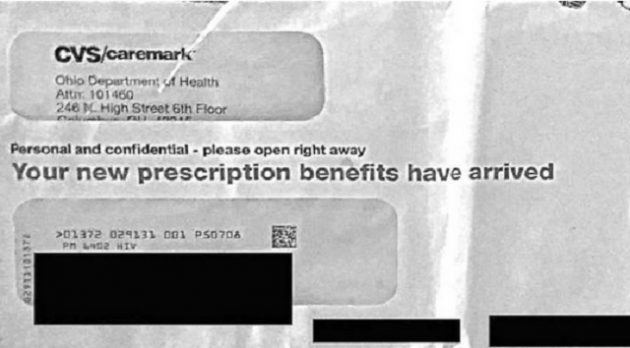
As a result, CVS was sued in a separate lawsuit in 2018 for errantly publicly disclosing the HIV status of over 6,000 Ohio residents.[3] The Ohio AIDS Drug Assistance Program (OhDAP) had a contract with CVS where CVS provided HIV medications to OhDAP clients and handled communications with those members. The suit alleged that in the third quarter of 2017, CVS mailed out a letter containing membership cards, information about how to obtain HIV medications, and other program information to 6,000 clients. This mailing was in an envelope with a clear plastic window with a short reference code for the mailing list, ‘PM 6402 HIV’ printed above the recipient’s name. The plaintiffs sought legal remedy because the mailer "resulted in the potential or actual disclosure of recipients' HIV status to numerous individuals, including their families, friends, roommates, landlords, neighbors, mail carriers, and complete strangers."[4]

CVS Caremark mailer
Photo Source: KRSO

The mailing was not only negligent in its handling of protected health information but was seemingly profit-driven. At the time of the mailing, many of the recipients did not have an established relationship with CVS. The mailer was sent regardless of whether the recipients were active CVS pharmacy customers. It was a way to market the usage of not only CVS pharmacy benefit products but also its general health care delivery services.[5] In 2020, CVS agreed to settle the lawsuit for $4.35 million.[6]

CVS is not the only problematic player in the corporate healthcare arena. However, their actions and core paradigms are consistently antagonistic to the best interests of PLWHA and others utilizing specialty drugs. In a briefing presented to payors in 2021, CVS Caremark listed strategies it would employ to save money. Regarding activities in response to new drugs in the market, some of its planned actions included: initially blocking coverage of new drugs, reviewing for clinical appropriateness and cost-effectiveness prior to formulary decision, applying aggressive clinically appropriate utilization management criteria with rigorous approval requirements, strongly favoring generic use requiring objective evidence of need for newer agents, and selecting preferred agents generating lowest net cost option in each category.[7]

Jen Laws, CEO of Community Access National Network, summarily describes CVS, stating: “CVS engages in aggressive self-dealing practices and anti-competitive contract efforts to eliminate competition, drive patients to their own pharmacies (including by way of under reimbursement to independent, non-chain pharmacies and higher cost-sharing for patients utilizing their trusted pharmacies), and roundly limit access to care by weaponizing their PBM.” It seems that keeping a continued focus on CVS will be necessary to highlight and act against present and future practices that harm patients.

[1] Third Amended Class Action Complaint. (2023, October 24) ). Retrieved from https://consumerwatchdog.org/wp-content/uploads/2023/11/2023-10-24-241_Third-Amended-Complaint.pdf

[2] John Doe One et al. v. CVS Pharmacy Ruling. (2024, April 18). Retrieved from https://www.courthousenews.com/cvs-medication-program-discriminates-against-hiv-aids-patients-judge-says/john-doe-one-et-al-v-cvs-pharmacy-et-al-mtd-ruling/

[3] Doe One et al. v. CVS Health Corporation et al. (2018, March 21). Retrieved from https://dockets.justia.com/docket/ohio/ohsdce/2:2018cv00238/211764

[4] Faul, A. (2018, March 29). CVS Health unintentionally revealed HIV status of 6,000 customers: Lawsuit. Retrieved fromhttps://abcnews.go.com/Health/cvs-health-unintentionally-revealed-hiv-status-6000-customers/story?id=54095674

[5] Schladen, M. (2018, June 29). State, CVS sued over HIV mailing. Retrieved from https://www.dispatch.com/story/news/politics/elections/2018/06/29/state-cvs-sued-over-hiv/11624806007/

[6] AIMED Alliance. (2020, May 15). CVS Health to Settle Lawsuit for Revealing HIV Status of Over 4,500 Patients. Retrieved fromhttps://aimedalliance.org/cvs-health-to-settle-lawsuit-for-revealing-hiv-status-of-over-4500-patients/

[7] Accetta, L. (2021). Expanding therapies, indications and implications for payors: Pipeline trends that will drive change in 2022. Retrieved from https://business.caremark.com/insights/2021/expanding-therapies-indications-and-implications-payors.html   

Disclaimer: Guest blogs do not necessarily reflect the views of the ADAP Advocacy Association, but rather they provide a neutral platform whereby the author serves to promote open, honest discussion about public health-related issues and updates.  

Thursday, May 9, 2024

NASTAD Releases 2024 Monitoring Project Annual Report

By: Marcus J. Hopkins, Guest Contributor

The National Alliance of State and Territorial AIDS Directors (NASTAD) has released its 2024 National RWHAP Part B ADAP Monitoring Project Annual Report documenting key trends, challenges, and successes faced by state and territorial AIDS Drug Assistance Programs (ADAPs). This report is developed using information provided to NASTAD by state and territorial ADAPs through information requests, and the 2024 report includes information from 49 states, the District of Columbia, and Puerto Rico. No fiscal or programmatic data were provided by West Virginia, the U.S. Virgin Islands, or the Pacific Island Jurisdictions, including American Samoa, Guam, the Northern Mariana Islands, the Marshall Islands, Palau, and the Federated States of Micronesia.

Key finding from this year’s report include:

  • Ryan White Part B programs saw an increase of 1.6% in their Congressional appropriation from Fiscal Year (FY) 2021 to FY2022, from $1.27 billion to $1.29 billion, while ADAP-specific funding provided by the Health Resources Services Administration (HRSA) remained flat at $900m. As NASTAD notes, federal awards alone are not sufficient to meet the needs of Part B programs or their clients;
  • Pharmaceutical rebates constituted the largest proportion of the overall ADAP budget for FY2022 at 47%, compared to federal ADAP earmark funding at 34% (Figure 1);

Figure 1 - Total ADAP Budget, By Source, FY1996–FY2022

Photo Source: NASTAD

Note: Rebates are tracked separately from front-end discounts and account for both repayment to ADAP from a manufacturer for a drug expenditure and any additional savings generated. 

Retrieved from National Alliance of State and Territorial AIDS Directors, 2024.

  • Reporting ADAPs served a total of 235,615 clients in Calendar Year (CY) 2022, with California serving the most clients at 29,774;
  • The percentage of ADAP clients served by ADAP-funded insurance programs increased from 42% in CY2021 to 44% in CY2022, matching for the first time the percentage of ADAP clients served by full-pay medication programs (also 44% in CY2022);
  • The age demographics of clients served by ADAPs has shifted slightly as patients age, with clients aged 25-44 increasing from 39% to 40%, those aged 65+ increasing from 12% to 13% from CY2021 to CY2022. Adults aged 45-64 continue to represent the largest percentage of ADAP clients, at 44%, down from 46% in CY2021;
  • A majority of the 51 ADAPs that provided information (34, n=67%) have opted to eliminate the six-month recertification requirement. The programs that have left that in place include: Alaska, Indiana, Kansas, Kentucky, Maryland, Massachusetts, Nevada, New Hampshire, North Carolina, Ohio, Oklahoma, Rhode Island, Texas, and Wyoming (NASTAD, 2024);
  • 84% of clients served by the ADAPs achieved viral suppression of their HIV (i.e., they achieved viral loads of <200 replicating copies). Clients who received ADAP-funded insurance only or a combination of ADAP-funded insurance and full-pay medication program services were more likely to achieve viral suppression than those who received only full-pay medication program services (Figure 2).

Figure 2 - ADAP Clients Served by Program, by Viral Load, CY2022

Figure 2 - ADAP Clients Served by Program, by Viral Load, CY2022
Photo Source: NASTAD

Note: Retrieved from NASTAD, 2024.

  • 17 of the 51 responding ADAPs reported that less than 80% of their enrolled clients had achieved viral suppression—Alabama, Alaska, Arkansas, Colorado, Connecticut, the District of Columbia, Florida, Georgia, Kentucky, Minnesota, Mississippi, New Jersey, Palau, Pennsylvania, Texas, Vermont, and Wyoming (Figure 3).

Figure 3 - ADAP Viral load Suppression Rate, by Clients Served, CY2022

Figure 3 - ADAP Viral load Suppression Rate, by Clients Served, CY2022
Photo Source: NASTAD

Note: Retrieved from NASTAD, 2024.

Discussion

State and territorial ADAPs continue to serve as a vital component of HIV care and treatment in the United States, serving nearly a quarter-million Persons Living with HIV/AIDS (PLWHA). While the nation’s PLWHA population, as a whole, suffers from astonishingly low rates of HIV viral suppression, with just 57% of PLWHA achieving viral suppression—one of the lowest rates of viral suppression among comparable high-income countries (Figure 4).

Figure 4 - HIV Viral Suppression Rate in U.S. Lowest Among Comparable High-Income Countries, 2020 or Latest Year


Figure 3 - ADAP Viral load Suppression Rate, by Clients Served, CY2022
Photo Source: KFF

Note: Retrieved from KFF, 2022.

The consistent component of these comparable countries that PLWHA do not enjoy in the United States is that PLWHA enjoy Universal Healthcare coverage in each of them. The AIDS Drug Assistance Program is one of the few programs that provides relatively comprehensive medication coverage for PLWHA, and if the findings in the NASTAD annual report are any indication, the provision of those programmatic services is highly successful in helping patients achieve viral suppression compared to patients who are not beneficiaries of those services.

Each of these nations also provides significantly more permissive and generous social support systems that include relatively easily accessible housing, nutrition, and financial assistance programs, whereas PLWHA in the United States continue to face barriers to viral suppression.

Among adults who reported feeling that they did not receive enough HIV care, nearly all (95.6%) reported experiencing at least one barrier to accessing care and treatment, and nearly two-thirds (62.6%) reported more than one barrier (Dasgupta, Tie, Beer, Fagan, & Weiser, 2021). 50% of respondents in the Dasgupta study indicated having life circumstances that impeded their ability to access care, and 34.5% of those respondents indicated that they faced problems with money or insurance coverage.

It is further interesting that viral suppression rates amongst ADAP recipients in most of the Deep South fall below 80% of ADAP clients. There are several potential factors that may contribute to these lower levels of success among ADAPs, most of which have little to do with the programmatic services, themselves, including (but not limited to):

  • The accessibility of HIV care and treatment providers local to patients, including hours of operations, proximity to patients, and the quality of care patients receive;
  • A lack of reliable public or private transportation to and from appointments;
  • Geographic or weather barriers that may make treatment inaccessible during storm seasons;
  • Poverty-driven barriers, including unstable or unaffordable housing, the inability to afford food, or the inability to afford utilities that forces patients to choose between affording to live and affording medications.

Equally interesting are the low suppression rates of ADAP recipients in northeastern states, such as Connecticut, New Jersey, Pennsylvania, and Vermont, while every other surrounding state boasts suppression rates of 80% or higher, with Connecticut and Vermont surrounded by states boasting 90% suppression rates or higher.

It is possible that lower suppression rates in these states may be the result of transportation or accessibility issues, but patients in those states generally experience fewer physical and transportation barriers than those living in the Deep South, which tends to be more rural, have fewer and less accessible public transportation options, and higher patient-to-provider ratios compared to the northeast.

Finally, while it is normal for some jurisdictions to not respond to NASTAD’s annual survey requests, the Pacific Island Jurisdictions seem to almost never respond. An examination of NASTAD reports dating back to 2019 showed that Americans Samoa, the Federated States of Micronesia, Guam, Marshall Islands, Northern Mariana Islands, and the Republic of Palau have failed to respond to survey requests every year. While the footprint of ADAP in these territories is relatively small compared to the contiguous states and Puerto Rico, it is still vital that we be able to gain insight into the operations and efficacy of ADAP programs in those jurisdictions.

This issue is not unique to NASTAD. In attempting to gather timely data about programs in those territories, ADAP Advocacy has encountered similar challenges when attempting to access government websites, eligibility requirements, and contact information for the Pacific Island Jurisdictions.

ADAP Advocacy will continue to monitor state and territorial ADAP reports.

References:

Dasgupta, S., Tie, Y., Beer, L. Fagan, J., & Weiser, J. (2021, October). Barriers to HIV care by viral suppression status among US adults with HIV: Findings from the Centers for Disease Control and Prevention Medical monitoring project. Journal of the Association of Nurses in AIDS Care, 32(5): 561-568. https://doi.org/10.1097%2FJNC.0000000000000249

KFF. (2022, June 03). HIV viral suppression rate in U.S. lowest among comparable high-income countries, 2020 or latest year. San Francisco, CA: KFF: HIV/AIDS: Slide. https://www.kff.org/hivaids/slide/hiv-viral-suppression-rate-in-u-s-lowest-among-comparable-high-income-countries-2020-or-latest-year/

National Alliance of State and Territorial AIDS Directors. (2023). 2023 national RWHAP Part B ADAP monitoring project annual report: Section 3: Meeting the need: Ensuring access to essential medicines for People Living with HIV/AIDS. Washington, DC: National Alliance of State and Territorial AIDS Directors. https://nastad.org/2023-rwhap-part-b-adap-monitoring-report/section-3

National Alliance of State and Territorial AIDS Directors. (2024). 2024 national RWHAP Part B ADAP monitoring project annual report. Washington, DC: National Alliance of State and Territorial AIDS Directors. https://nastad.org/2024-rwhap-part-b-adap-monitoring-report

National Alliance of State and Territorial AIDS Directors. (2024). 2024 national RWHAP Part B ADAP monitoring project annual report: Section 1. Washington, DC: National Alliance of State and Territorial AIDS Directors. https://nastad.org/2024-rwhap-part-b-adap-monitoring-report/section1

National Alliance of State and Territorial AIDS Directors. (2024). 2024 national RWHAP Part B ADAP monitoring project annual report: Section 2: Meeting the need: Ensuring access to essential medicines for People Living with HIV/AIDS. Washington, DC: National Alliance of State and Territorial AIDS Directors. https://nastad.org/2024-rwhap-part-b-adap-monitoring-report/section2

Disclaimer: Guest blogs do not necessarily reflect the views of the ADAP Advocacy Association, but rather they provide a neutral platform whereby the author serves to promote open, honest discussion about public health-related issues and updates.

Thursday, May 2, 2024

Fireside Chat Retreat in Charleston, SC Tackles Pressing Public Health Issues

By: Brandon M. Macsata, CEO, ADAP Advocacy

ADAP Advocacy hosted its Health Fireside Chat retreat in Charleston, South Carolina among key stakeholder groups to discuss pertinent public health issues facing patients in the United States. The Health Fireside Chat convened Thursday, April 25th through Saturday, April 27th. An analysis of the collaborative relationships between patient advocacy organizations and drug manufacturers, patient perspectives about long-acting injectables for HIV treatment and prevention, and the dark side of state-sanctioned prescription drug affordability boards were evaluated and discussed by the 21 diverse stakeholders.

FDR Fireside Chat
Photo Source: Getty Images

The Health Fireside Chat included moderated white-board style discussion sessions on the following issues:

  • Patient Insights: How Patient-Industry Collaboration Can Elevate Healthcare Reform — moderated by Brandon M. Macsata, CEO, ADAP Advocacy
  • Patient Perspectives: How Long-Acting Injectables Can Improve Access to Care —moderated by Riley Johnson, Project Lead, Long-Acting Injectables Project, ADAP Advocacy
  • Patient Context: How Prescription Drug Affordability Boards Impact Access to Care — moderated by Jen Laws, President & CEO, Community Access National Network (CANN)

The discussion sessions were designed to capture key observations, suggestions, and thoughts about how best to address the challenges being discussed at the Health Fireside Chat. The following represents the attendees:

  • Maggie Blunk, Communications Manager, North Carolina AIDS Action Network
  • La’Donna Boyens, Patient Advocate
  • Erin Bradshaw, EVP for the Advancement of Patient Services and Navigation, Patient Advocate Foundation
  • Jeffrey S. Crowley, Distinguished Scholar & Program Director at the Infectious Disease Initiatives, O'Neill Institute for National and Global Health Law, Georgetown Law
  • Erin Darling, Associate Vice President and Counsel, Federal Policy, Merck
  • Hunter Fasanaro, Director of Strategic Partnerships & Healthcare Initiatives, Archo Advocacy
  • Hilary Hansen, Global Public Affairs Head, Oncology, Sanofi
  • Patrick Ingram, Community Outreach and Prevention Programs Supervisor, Hennepin County 
  • Lisa Johnson-Lett, Peer Support Specialist, AIDS Alabama
  • Riley Johnson, Founder, RAD Remedy
  • Jen Laws, President & CEO, Community Access National Network
  • Michael Luciano, Peer Treatment Educator, Palmetto Community Care
  • Brandon M. Macsata, CEO, ADAP Advocacy
  • Judith Montenegro, Program Director, Latino Commission on AIDS
  • Necaela Penn, Patient Advocate
  • Kalvin Pugh, Senior Advisor on Community Engagement, International Association of Providers of AIDS Care
  • Donna Sabatino, Director State Policy & Advocacy, The AIDS Institute
  • Larry Scott-Walker, Executive Director, THRIVE SS Inc
  • Dafina Ward, Executive Director, Southern AIDS Coalition
  • Katie Willingham, Blogger, The Well Project
  • Marcus Wilson, Senior Director, Community Engagement and Patient Advocacy, Gilead Sciences
Health Fireside Chat

ADAP Advocacy is pleased to share the following brief recap of the Health Fireside Chat.

Patient-Industry Collaboration:

The first policy session was Patient Insights: How Patient-Industry Collaboration Can Elevate Healthcare Reform, which was led by ADAP Advocacy's CEO, Brandon M. Macsata. With both patients, patient advocacy organizations, and industry partners all in the room, it represented an opportunity to discuss their collaboration. Macsata provided some background on why such collaborative relationships exist, as well as how they are perceived – including how some characterized the relationships through a negative lens. In general, and not speaking specifically to drug manufacturers money, Macsata noted several commonly accepted reasons why donors give money to organizations or causes. Donors are purpose-driven; donors trust your organization; donors understand their impact; donors have a personal connection to your purpose; donors want to be part of something meaningful; donors are engaged; and donors appreciate tax benefits.[1] He further noted industry partners providing memberships, sponsorships, or charitable grants to nonprofit patient advocacy organizations are no different.

Whereas the group agreed an fair examination of these relationships is a good thing, characterizing the support from industry partners as "dark money" or "tainted money" or "bribes" is disingenuous to the patient advocacy groups who receive it. The implied "quid pro quo" narrative is nothing more than "guilt by association" smear tactic that completely discounts the valuable work being done on public policy. The reality is often time the interests of the patient advocacy community and the interests of the drug manufacturers align, as has been the case numerous times over the years pushing back against attempts to weaken Medicare's six protected classes of drugs. 

Industry partners participating in the discussion shared their perspectives on the difference between transactional support and transformative support. The latter is designed to impact systems change, rooted in further empowering patients to end the HIV epidemic. Without industry partner support, it would be even more challenging – if not impossible – to advocate for greater access to HIV long-acting injectables, or repealing draconian HIV criminalization. All of the impudent exposes published by the likes of the KFF Health News or Axios failed to recognize that fact.

The group concluded with a lengthy assessment of the status of patient advocacy, which included calls for more transparency among these groups.

The following materials were shared with retreat attendees:

ADAP Advocacy would like to also call attention to how this very conversation is happening among academia, evidenced by the recent report featured in The Crimson: ‘Deal with the Devil’: Harvard Medical School Faculty Grapple with Increased Industry Research Funding.

Long-Acting Injectables:

Riley Johnson, who serves as ADAP Advocacy's Long-Acting Injectables (LAIs) Project, presented initial themes and findings from the project's research methods – including a quantitative survey, a qualitative focus group, and an examination of data – across two populations – those who are HIV-positive (the use of LAIs for treatment) and those who are HIV-negative (the use of LAIs for prevention). This project was made possible by support from Gilead Sciences, Merck, and ViiV Healthcare. A final report will be issued in May 2024.

ADAP Advocacy’s LAIs Treatment Survey had 262 respondents and the focus group had 8 participants, whereas the Prevention Survey had 184 respondents and the focus group had 8 participants. Key themes in the focus groups included provider barriers, supply chain issues, medical mistrust (both historical accounts/community trauma as well as current individual feelings), and insurance coverage barriers.

Discussion at the Fireside Chat focused on patients’ ability to navigate health environments and insurance processes as well as Fireside Chat participants sharing best practices for wraparound services that help patients address some of the more tangible issues they face when pursuing LAIs (e.g. providing documentation to assist with Family and Medical Leave Act (FMLA) requests, transportation assistance, etc.)  The final report of this iteration of the Long-Acting Injectables Project is slated for release later this month.

The following materials were shared with retreat attendees:

ADAP Advocacy would like to publicly acknowledge and thank Riley for facilitating this important discussion.

PDABs:

The Community Access National Network (CANN) action center on Prescription Drug Affordability Boards (PDABs) served as a focal point for this discussion, which was led by CANN's President & CEO, Jen Laws. While there are ten states with established boards, each operates slightly differently, with some of those including power to establish an "upper payment limit" (reimbursement ceiling) for selected medications. Because of a variety of public health funding mechanisms, specifically rebates utilized to fund Medicaid programming, federally qualified health centers and other 340B grantee entities, and State AIDS Drug Assistance Programs, these reimbursement caps are a threat to the sustainability of certain programming and efforts supporting health equity and tackling health disparities. The value of these rebates are found in the "spread" between the reduced acquisition cost and the reimbursement rate — meaning the lower the reimbursement rate the lower the value of the rebate and the fewer dollars 340B grantee entities have to reinvest in programs and services. Further, federal matching dollars for the Medicaid program are based upon reimbursement rates. Reduce the reimbursement rate and the federal matching dollars are therefore reduced.

Additional conversation centered on what medications were being reviewed for selection by PDABs, and who the target beneficiaries of any action should be (patients vs. systems). Laws pointed out that while the political marketing behind PDABs focuses language on patients and "commonly used" medications, those medications being selected are those treating rare and chronic conditions, some of which have no alternative or for which there is a contraindication for any alternatives (ie. genotype specific ARVs), and discussion is increasingly focused on so-called "savings" for the systems, rather than patients. The bait and switch on actions from the "sales point" raises serious alarms.

Further still, other layers of complication include the regular and routine concerns voiced by non-chain, independent pharmacies already facing under-reimbursement threatening their ability to serve their communities and the fact that wholesalers and distributors are often located outside of a particular state, meaning the acquisition is very likely to remain the same, regardless of reimbursement rate, threatening access to care for patients in multiple ways.

These varied concerns are ultimately why several states ended up not taking on PDAB legislation this year. Effective advocacy both pre- and post-legislation is necessary to inform these boards and ensure patients guide in a process that's supposed to be about patients. One last tidbit: all board establishing legislation contain conflict of interest provisions which otherwise prevent patient representation on these boards. In HIV, there is a commonly-accepted theme, "nothing about us without us", and yet, that's exactly what these boards are premised on doing.

The following materials were shared with retreat attendees: 

ADAP Advocacy would like to publicly acknowledge and thank Jen for facilitating this important discussion.

Additional Fireside Chats are planned for 2024 in Houston, New Haven, and New York City.

[1] Bonterra (2022, February 20). 7 reasons why donors give + how to appeal to their motives. Retrieved online from https://www.bonterratech.com/blog/7-reasons-why-donors-give

Disclaimer: Guest blogs do not necessarily reflect the views of the ADAP Advocacy Association, but rather they provide a neutral platform whereby the author serves to promote open, honest discussion about public health-related issues and updates.

Thursday, April 25, 2024

Fraudsters Target Medicine being Reimbursed at a Loss for Counterfeit Crime

By: Ranier Simons, ADAP Blog Guest Contributor

Pharmacy Benefit Managers (PBMs) don’t make medicine or dispense medicine, but their business decisions determine what medicines you have access to. Some of those decisions are now creating openings for drug counterfeiters to enter the legitimate supply chain, according to a report by the Partnership for Safe Medicines (PSM) and subsequent analysis by the Community Access National Network (CANN). This is a pressing matter because counterfeit drugs can result in adverse side effects, treatment failure, resistance, toxicity, and death.[1]

Fake pill
Photo Source: Center for Medical Economics & Innovation

The U.S. market value for PBMs in 2023 was $523.9 billion.[2] PBMs have always been marketed to reduce drug expenditures for payers and lower drug costs for patients, but historically, that has not happened. The $523 billion results from questionable practices that bring in sizable profits for PBMs while shortchanging insurance payers with opaque contracts and to the detriment of patients.  Some patient advocacy groups have argued PBMs are harmful to patients’ health. One common PBM practice, below-cost pharmacy reimbursement, creates supply chain contamination opportunities.

Insurance companies reimburse pharmacies for the medications they dispense to patients. A pharmacy purchases medication from a wholesaler and then submits a claim to a patient’s insurance to be paid for the medication. PBMs handle the payments to the pharmacies on behalf of insurance companies. In 2023, 332 million people in the U.S. had health insurance, and 275 million of them were served by Pharmacy Benefit Managers (PBMs) via commercial insurance, Medicare Part D, Managed Medicaid, and Medicaid Fee-For-Service.[3] Thus, pharmacies are forced to deal with PBMs. In order to dispense medications to patients with insurance, pharmacies must sign contracts with PBMs that are agreements to accept whatever price the PBM dictates for reimbursement. Currently, three PBMs control 75% of the health insurance market; thus, there is no competition.[4] 

The predicament is that PBMs are reimbursing pharmacies below cost. This means that PBMs are paying pharmacies less money than the pharmacies spent to acquire the drugs. Effectively, pharmacies are dispensing drugs at a loss to serve patients. A real-world example of one of the big three PBMs' contracts with a pharmacy for brand-name drugs listed reimbursement of the average wholesale price (AWP) minus 25.5% + $0.00. The same contract listed AWP minus 57% + $0.00 for generics. 

The following examples are actual claims submitted by pharmacies and their resulting losses based on the PBM contracts. For Biktarvy, a pharmacy acquired a 30-day wholesale supply of the drug for $3700.36, but the PBM only reimbursed $3661.75, resulting in a loss of $38.61. For Genvoya, a pharmacy paid $3,534.78 and was only reimbursed $2,852.92, resulting in a loss of $681.86. A pharmacy in Florida purchased a 30-day supply of roflumilast for $43.86 and was reimbursed by a PBM for $11.22, resulting in a $32.64 loss. PSM has many other examples of losses on other various pharmaceuticals here. 

How to Spot Fake HIV Medicines
Photo Source: Partnership for Safe Medicines

The situation is dire, as indicated by a statement given by a pharmacist from an independent pharmacy in Weatherford, Texas: 

“I spent hours on the phone with my wholesaler and even the drug manufacturer trying to explain that we simply cannot sustain such drastic underpayment on this critical medication and every time my concerns fell on deaf ears. After years of trying to affect some kind of change on either the cost or the reimbursement, we simply could not take losses of any kind on a drug that has a price tag of $3000.00. Our losses ranged from $17.46 to $572.30, and we were expected to accept this arrangement from day one. We were a safe haven and trusted health partner for these patients; however, we were forced to notify our patients that we would no longer be able to provide this life-saving medication.”

This pharmacist decided to stop providing the referenced medication. However, all pharmacists do not make that decision, which creates opportunities for criminal exploitation. 

Pharmacists want to do what they can to provide the medicines people need. When they cannot source medications through their prime wholesalers, they turn to the secondary wholesaler market. Secondary wholesalers are also licensed by the state, and many are secure and reputable channels, but this is also where criminals operate. Criminal counterfeiters take advantage of the situation and set up marketplaces for popular, expensive drugs, using black-market diverted or counterfeit products at prices lower than traditional wholesale sources.

Pharmacies do not haphazardly search for and purchase lower-cost medications. They do their due diligence to make sure they are sourcing proper supplies. However, counterfeit criminals have sophisticated and elaborate systems to perpetrate fraud. They sell through companies with legitimate state-issued wholesale licenses and use forged Drug Supply Chain Security Act (DSCSA) transaction tracing histories. A deep dive into the paperwork can reveal the forgery. However, it takes significant resources of time and effort to dig into that kind of tracing. Resources that pharmacies do not have. Thus, when things have the appearance of propriety, pharmacists get duped by criminals, and patients get sold fraudulent medication. 

A loss of $142 on life-saving HIV medicine The pharmacist paid $6,088.72 for a 90-count bottle of Descovy pills and was reimbursed $5,946.21, costing the pharmacy $142.51.
Photo Source: Partnership for Safe Medicines

In 2022, the U.S. District Court unsealed documents of a civil case in which Gilead Sciences sued a group of criminals. The criminal enterprise distributed over $230 million of counterfeit drugs, some of which were HIV antiretroviral medications.[5] Some of the drugs were diverted, meaning they were purchased from people who had obtained them legitimately and resold on the black market. Some of the drugs were bottles containing medication that did not match what was on the label. Diverted medication indicates that patients were not adhering to their treatment regimens since they were selling their medications. The mislabeled medication bottles meant patients could have been ingesting medications not meant for them, in improper dosages, and possibly contaminated. Situations such as PBM below-cost reimbursement contribute to creating a demand for cheaper medications in an artificially created predatory pricing-induced supply scarcity.

Low PBM reimbursement not only endangers the drug supply chain but also puts independent pharmacies out of business. Pharmacies cannot operate under fiscal loss. In addition to low reimbursement rates, PBMs give pharmacies very low or often zero dispensing fees, which pharmacies need for operating costs. Moreover, PBMs saddle pharmacies with many other opaque fees, audits, and clawbacks, adding to their financial burden. When pharmacies go out of business, patients lose access. This is especially true in areas with very few pharmacies for a large geographical region. If a pharmacy closes, entire communities lose familiar and convenient continuity of care.

A group named Pharmacists United for Truth and Transparency wrote a letter to one of the big three PBMs. A quote from this letter explains what needs to be done: “Reimburse independent pharmacies the full drug acquisition cost and eliminate the practice of reimbursing above some and below other drug costs. Make a fair and universal reimbursement policy the unbreakable operating principle of the PBM-independent pharmacy partnership.” PBM reform is not just fiscally sound; for patients, it indeed could mean the difference between life and death.

[1] Williams, L., McKnight, E. (2014, June 19). The real impact of counterfeit medications. Retrieved from https://www.uspharmacist.com/article/counterfeit-meds#:~:text=The%20use%20of%20substandard%20drugs,enforced%20to%20prevent%20this%20crime

[2] Fortune Business Insights. (2024, April 19). Pharmacy benefit management market. Retrieved from https://www.fortunebusinessinsights.com/pharmacy-benefit-management-pbm-market-103496

[3] Mikulic, M. (2023, May 22). Number of Americans served by PBMs by insurance type 2023. Retrieved from https://www.statista.com/statistics/1172652/pbms-number-of-served-us-persons/

[4] The Partnership for Safe Medicines. (2023) Are below cost reimbursement practices by Pharmacy Benefit Managers creating opportunity for criminals to enter the legitimate supply chain?. Retrieved from https://www.safemedicines.org/2024/02/pbmblackmarket.html

[5] Gilead Sciences, Inc. et al v. Safe Chain Solutions, LLC et al. Retrieved from https://fingfx.thomsonreuters.com/gfx/legaldocs/dwpkrodwdvm/gileand-amended-2022-09-28.pdf?utm_source=Sailthru&utm_medium=newsletter&utm_campaign=daily-docket&utm_term=DailyDocket-MailingList%20v2

Disclaimer: Guest blogs do not necessarily reflect the views of the ADAP Advocacy Association, but rather they provide a neutral platform whereby the author serves to promote open, honest discussion about public health-related issues and updates.