Showing posts with label advocacy. Show all posts

Thursday, December 18, 2025

2025: A Look Back on Our Advocacy

By: Brandon M. Macsata, CEO, ADAP Advocacy

ADAP Advocacy inches toward the conclusion of an active year in advocacy, one defined by chaos, perseverance, and targeted success. At the outset of 2025, we issued a call to serve for grassroots patient advocates. The MAGA movement's return to power set the stage for upheaval. Still, very few advocates could have predicted the scope of the damage being done to the nation's public health system, ranging from vaccine skeptics driving misinformation into the mainstream to dangerous price control schemes, or draconian cuts to both prevention and treatment services for people living with HIV/AIDS. ADAP Advocacy was among the first national advocacy organizations to warn that cuts were coming to popular programs, like the Ryan White HIV/AIDS Program, despite the widely accepted belief these programs were "safe" from ideological attacks.

ADAP Advocacy Warns Advocates Potential HIV Funding Cuts Loom

Our contribution to fighting the Trump Administration's dangerous policies was to re-engage our grassroots network, which had last been deployed during the ADAP Crisis in 2008-2012. It's older now, with even more ailments, but still vibrant and committed enough to deliver effective patient advocacy. At no time was it more necessary than when the bombshell hit that HIV prevention funding was being gutted at the Centers for Disease Control & Prevention. When these critical HIV prevention programs faced elimination, ADAP Advocacy, like so many other organizations, stepped up and warned lawmakers about the negative repercussions. These cuts were only exacerbated by the One Big Beautiful Bill Act (OBBBA) and its steep cuts to Medicaid, which our grassroots efforts also opposed. Whereas far too many funding cuts have occurred this year, they have also sparked a renewed call for patient advocates to be more vocal about the policy decisions that could affect them.

There is no greater example of the need for patient advocates to engage than the 340B Drug Pricing Program. In 2025, ADAP Advocacy launched its 'Too Big To Fail?' national advocacy campaign, comprised of blogs, television commercials, fact sheets, policy papers, and op-eds. Our commercial calling out hospitals for aggressive debt collection garnered over half a million views on YouTube, alone. Our op-ed in POZ Magazine, "Why the 340B Rebate Model Puts Patients Before Profits", added the patient perspective to this important policy debate.

Why the 340B Rebate Model Puts Patients Before Profits
Photo Source: POZ Magazine

As long-overdue reforms to the program appear within reach, primarily designed to improve access to care and treatment through better accountability and transparency, special interest groups are turning up the heat. These paternalistic ableist voices are a growing threat to silence patient advocates. Provider groups with executives making hundreds of thousands of dollars in compensation packages, and in some cases, exceeding $1 million, telling patients who cannot afford their copayments what is "best" for them is something even the best Hollywood screenwriter couldn't dream up. Starting this year, we're calling a spade a spade when it comes to this behavior.

One key area of success was on long-acting injectables. Despite more state AIDS Drug Assistance Programs (ADAP) following in the footsteps of their state Medicaid programs and covering Cabenuva on their drug formularies, there remain some holdouts. Until 2025, Texas's HIV Medication Program (THMP) had refused to offer Cabenuva...that is, until Texas advocates mobilized and relentlessly pushed for change. ADAP Advocacy, to the extent it was asked to help, chimed in on several occasions. But it was the local voice that brought about real change for people living with HIV/AIDS in their state. We've long embraced the need for national organizations to lead on federal policy, leaving state and local policy debates to the folks who call them home. National groups "meddling" in state policy affairs are rarely successful.

Texas HIV Advocates at the State Capitol
Photo Source: Prism Health North Texas

Our collaborative work was highlighted with the Partnership for Safe Medicines, combating counterfeit drugs, with PlusInc, about the patient perspective on prior authorization, with the Global Coalition on Aging, safeguarding innovation and access for older adults, or spearheading 37 organizations seeking an HIV carveout from the harmful impacts of the Inflation Reduction Act. We hosted key stakeholders for Health Fireside Chats in Minneapolis, Minnesota, and Atlanta, Georgia. Our three patient advisory committees engaged throughout the year to ensure that the voice of persons living with HIV/AIDS shall always be at the table and the center of the discussion.

As ADAP Advocacy enters 2026, patient-centered advocacy resources and tools will become even more critical, and our organization is eagerly preparing to deliver some new ideas. A look back at our advocacy has to focus on the future, mainly by improving access and addressing affordability. 

Disclaimer: Guest blogs do not necessarily reflect the views of the ADAP Advocacy Association, but rather they provide a neutral platform whereby the author serves to promote open, honest discussion about public health-related issues and updates.

Thursday, January 9, 2025

A Call to Serve: Patient Advocates Must Step-Up During T2

By: Brandon M. Macsata, CEO, ADAP Advocacy

In December 2024, ADAP Advocacy hosted its final Health Fireside Chat of the year as part of a broader Health Policy Retreat held in collaboration with the Community Access National Network. Despite hopes that the country's better angels would be reflected at the ballot box, both organizations had been preparing for what once seemed impossible: Trump Two (T2). POSITIVELY AWARE captured the sentiments shared by members of several national and state-level HIV advocacy and policy organizations from across the country prior to the Election. But now the rubber meets the road...

ADAP Advocacy CEO Brandon M. Macsata on The Morning Meeting, 12/09/24

At the Health Fireside Chat, political commentator Mark Halperin, editor-in-chief of 2WAY Interactive and host of The Morning Meeting podcast, pointedly dished out some straight talk about how patient advocates need to view the election as a call to serve. During the 2024 presidential election, Halperin scooped that President Joe Biden was dropping out of the presidential race days before the news broke, as well as three weeks prior to the election sounding the alarm that the Harris-Walz campaign was in big trouble in the swing states' suburbs. Agreeing to disagree in a few areas, most attendees in the room understood the merits of the advice being given by a political insider.

In fact, Halperin's message echoed the words of the late Bill Arnold (former President & CEO of the Community Access National Network and former founder and board co-chair of the ADAP Advocacy Association): leave your personal politics at the door! Halperin challenged the patient advocates and other stakeholders in the room to fight for a seat at the preverbal table. Ironically, it sounds awfully similar to The Denver Principles and the "Nothing About Us Without Us" principle!

To that end, ADAP Advocacy is returning some of its targeted advocacy efforts back to the very roots of the organization's founding some seventeen years ago...GRASSROOTS, that is. Back in 2010 during the height of the ADAP Crisis that landed over 1,300 people living with HIV/AIDS in thirteen states on waiting lists under the State AIDS Drug Assistance Program (ADAP), including a couple reported deaths, ADAP Advocacy helped to galvanize state grassroots networks to raise awareness and demand action by lawmakers. It is time to re-activate these state grassroots networks to push back against those dark forces seeking to gut the social safety-net, spread misinformation about science and vaccine efficacy, and perpetuate hate and stigma against marginalized communities...many of whom are disproportionately impacted by HIV.

ADAP Advocacy CEO Brandon M. Macsata at Florida town hall in 2010

Patient advocates are encouraged to contact ADAP Advocacy at info@adapadvocacy and indicate which state they're residing in, and how they might help with advocacy efforts. Aside from targeting federal lawmakers with constituent visits to better educate them, there will be plenty of opportunity for patient advocates to influence their state legislatures on many HIV-related issues.

Additionally, ADAP Advocacy leverages patient advocates and other public health stakeholders to serve on numerous patient advisory committees. This is a call to serve!

  • ADAP State Drug Formulary Patient Advisory Committee

RE: Drug Formularies

Committee Chair: Rev. Alexander Garbera (Connecticut)

ADAP Advocacy works to improve access to timely, appropriate care and treatment for people living with HIV/AIDS being served by the State AIDS Drug Assistance Programs (ADAPs) under the Ryan White HIV/AIDS Program, including promoting robust drug formularies to best serve the needs of clients. Whenever feasible, ADAP Advocacy strongly supports "open" drug formularies. Approximately 20 seats need to be filled for this committee.

Learn more about the ADAP State Drug Formulary Patient Advisory Committee.

  • ADAP Long-Acting Injectables Patient Advisory Committee

RE: Long-Acting Injectables

Committee Chair: Joey Wynn (Florida)

ADAP Advocacy strives to identify best practices on how to improve patient access to long-acting injectable therapies for the treatment of (and prevention of) HIV/AIDS. As general guidelines, they would be designed to help State AIDS Drug Assistance Programs (ADAPs), and other relevant payers, remove the barriers to accessing injectable HIV-related therapies, as well as other non-ARV, health-related injectable therapies. Three seats need to be filled for this committee.

Learn more about the ADAP Long-Acting Injectables Patient Advisory Committee.

  • Ryan White Grantee 340B Patient Advisory Committee

RE: 340B Drug Pricing Program

Committee Chair: Guy Anthony

ADAP Advocacy ensures the voice of people living with HIV/AIDS shall always be at the table and the center of the discussion, including on how supports and services are financed under the Ryan White HIV/AIDS Program. To that end, reforming the 340B Drug Pricing Program is of paramount concern by returning the program to its original legislative intent: putting the patient first. Two seats need to be filled for this committee.

Learn more about the Ryan White Grantee 340B Patient Advisory Committee.

ADAP Advocacy has long prided itself on using its Values Statements to define its advocacy work. Among these values, that the voice of persons living with HIV/AIDS shall always be at the table and the center of the discussion. Patient advocates must step-up during T2, so join the fight!

Stock Image: Encourage employee voice, advocacy or support opinion, assistance or help, listen to ideas or communication, staff encouragement concept, businessman hand offer megaphone for employee to speak out.
Photo Source: shutterstock.com

Thursday, December 12, 2024

Fireside Chat Retreat in Washington, DC Tackles Pressing Public Health Issues

By: Brandon M. Macsata, CEO, ADAP Advocacy, and Ranier Simons, ADAP Blog Guest Contributor

ADAP Advocacy hosted its Health Fireside Chat retreat in Washington, DC, as part of a broader health policy retreat convened collaboratively with the Community Access National Network (CANN) and its Industry Advisory Group. Board members from both organizations, as well as respective consultants and funders, assembled to discuss pertinent public health issues facing patients in the United States. The Health Fireside Chat convened on Friday, December 6th. The 27 diverse stakeholders discussed Trump Two, one-party rule returning to the nation’s capital, Inflation Reduction Act, 340B Drug Pricing Program, Prescription Drug Affordability Boards (PDABs), AIDS Drug Assistance Program’s drug formularies, and long-acting injectables. 

President FDR sitting by a fireplace
Photo Source: Getty Images

The Health Fireside Chat kicked off with a political recap from political commentator Mark Halperin, editor-in-chief - 2WAY Interactive. During the 2024 presidential election, Halperin had scooped that President Joe Biden was dropping out of the presidential race days before the news broke, as well as three weeks prior to the election sounding the alarm that the Harris-Walz campaign was in big trouble in the swing states' suburbs. 

Halperin shared his perspectives on what a second Trump Administration might look like, both from a potentially positive viewpoint, as well as a not-so-positive one. He offered some predictions on the Cabinet nominations, again noting where some could serve as potential change agents to improve public health – but also emphasized the unpredictability behind some of those same nominees if confirmed by the U.S. Senate. Halperin offered strong advice on the need to “get in the room” for the important conversations, which he argued won’t happen by merely attacking the incoming administration. Despite the extremes of both parties gaining more power, he offered examples whereby the “center” still holds a lot of weight over the legislative process to do good. Halperin took questions about what Trump Two and the GOP-led Congress might do for HIV, sharing even more advice on how to navigate those waters.

Mark Halperin discusses political landscape and public health
Mark Halperin discusses political landscape and health policy

The day-long strategy session was designed to capture key observations, suggestions, and thoughts about how best to address the challenges being discussed at the Health Fireside Chat. The following represents the attendees:

  • Guy Anthony, President & Founder, Black, Gifted & Whole Foundation
  • Donna Christensen, former Member of Congress
  • Erin Darling, Associate Vice Pres. & Counsel, Federal Policy, Merck
  • Amy Dempster, Director, Issue Advocacy and Alliances, Genentech
  • Robert Dorsey, Chief of Staff, DC Department of Small & Local Business Development
  • Alexander Garbera, Member, New Haven Mayor’s Task Force on AIDS, City of New Haven, CT
  • Dusty Garner, Patient Advocate
  • Patrick Ingram, Implementation Project Manager, Midwest AETC
  • Ashley John, Director, Issue Advocacy, Novartis
  • Lisa Johnson-Lett, Peer Support Specialist, AIDS Alabama
  • Amanda Kornegay, President, Kornegay Consulting
  • Jen Laws, President & CEO, Community Access National Network
  • Darnell Lewis, Patient Advocate
  • Brandon M. Macsata, CEO, ADAP Advocacy
  • Travis Manint, Policy Consultant, Community Access National Network
  • Maria Mejia, Patient Advocate
  • Judith Montenegro, Program Director, Latino Commission on AIDS
  • Theresa Nowlin, Patient Advocate
  • Kassy Perry, President & CEO, Perry Communications Group
  • Amanda Pratter, Director, Policy Advocacy, Gilead Sciences
  • Kalvin Pugh, Policy Consultant, Community Access National Network
  • Josh Roll, Director, Strategic Alliances & Issue Advocacy, Bristol Myers Squibb
  • Ranier Simons, Policy Consultant, Community Access National Network
  • Cindy Snyder, Retired
  • David Spears, Creatives Consultant, ADAP Advocacy
  • Jennifer Vaughan, Patient Advocate
  • Joey Wynn, Grants & Contract Manager, Holy Cross Hospital

Health Fireside Chats

ADAP Advocacy is pleased to share the following brief recap of the Health Fireside Chat.

This particular Fireside chat did not have its standard format of specific formal presentations followed by discussion. It was more free flowing, consisting of an exchange of ideas surrounding many sub-topics and all surrounding public policy strategies. One of the most important threads of discourse was navigating policy and advocacy work in dealing with the incoming Trump Administration. A significant concern is figuring out how to manage hostile spaces in order to effect needed change.

The reality is that Trump is the president-elect. Moreover, albeit narrow, Republicans do have majority control across the board. This potentially makes it harder to achieve policy and advocacy goals because effecting change requires being in the room at the table when things are being done. A prevailing sentiment is that those rooms and tables are not welcome to racially and ethnically diverse, sexually diverse, and vulnerable communities that traditionally are adversely affected by and targeted by right-wing conservative ideology and policies. Yet, on some issues, Republican interests could be better aligned with patient interests on things like access to therapies (i.e., right-to-try), or reforming the abuses by big hospital systems and mega service providers under the 340B Drug Pricing Program.

An important focus of group discourse surrounded staying true to marginalized communities while speaking truth to power. The consensus is “wins” can be scored in unfriendly spaces by focusing on common ground, and in doing so doesn’t negate the deeply rooted concerns in other policy or political areas. As the late Bill Arnold often argued, “In this space, you have to leave your personal politics at the door if you’re going to achieve anything meaningful.” One example that was cited was the success in harm reduction policies by the North Carolina Harm Reduction in the Tarheel State.

diverse group of people at table
Photo Source: JazzHR.com

Similarly, it is essential to not leave certain groups behind when broader community discussions are happening around legislation. It is necessary for advocates to figure out how to strategically call out grievances without compromising opportunities to access the players required to effect change. Sometimes, it is a matter of identifying the appropriate messenger for a specific audience. This does not mean the sociologically identified middle-aged white woman or cis-gendered heterosexual white male must be the vehicle to get a seat at every table. It does mean it’s wise to navigate relationships and understand the parties involved to determine the best messengers for different steps of strategic processes. The group had strong consensus that more women of color need to be invited to these proverbial tables. If for nothing else, t requires trust between the messengers and the communities they represent. The most effective messengers for an issue may not always look like or have the lived experience of some of the people for which they are representing. Thus, trust must be built in that they are effectively representing the needs and interests of affected communities when messengers are operating in hostile spaces. Humanizing issues with policymakers is a way to work through the muck and mire of ideological toxicity.

Another significant portion of this Fireside Chat discourse revolved around federal versus state issues. ADAP Advocacy collaborates with CANN to effect change on state and federal matters, as both have specific inroads of expertise. It is increasingly likely that more issues will be impacted at the state level more so than at the federal level. For example, there is a lot 340B-related activity and PDAB (Prescription Drug Affordability Board) legislation occurring on the state level. On the federal level, PEPFAR, Ending the HIV Epidemic, and the possibility of a Ryan White reauthorization are several issues of concern. There is strong evidence to suggest that the new incoming Republican majority in Congress plans to take a hard look at all the sunset programmatic laws as a way to achieve "savings" in the federal budget.

CANN shared a recently released video on PDABs, and how these boards are embarking on inadvertently creating a service delivery crisis for patients living with HIV. The video can be viewed online, here. Additionally, ADAP Advocacy shared a sneak peek of its new patient-centric advocacy tool highlighting why the 340B Program needs reform. Some discussion centered around California's Proposition 34, and embracing what voters achieved to bring better accountability and transparency to the 340B program. 

PDAB video showing business man climbing up a ladder rested again coins stacked-up very high, with a percentage sign sitting on top of them.
Photo Source: CANN

HIV is the tip of the spear that opens the door to conversation that makes room for navigating other community issues. Group discourse emphasized the need to strengthen the “Grassroots-to-Capitol Hill” pipeline of advocacy and influence. It was deemed necessary to enhance communication among major advocacy organizations such that there is a commonality of messaging on major issues when Capitol Hill interests inquire for guidance about community concerns. Additionally, it is necessary to identify members, such as some in the House, who can be ‘allies’ knowingly or unknowingly, to help influence the influencers to target things in a bipartisan manner to move the needle in favor of vulnerable and marginalized communities. Most importantly, it is imperative to open their eyes to how positively affecting change for these communities is beneficial to the general population as well.

ADAP Advocacy’s Health Fireside Chats are deeply rooted in the diverse voices who contribute valuable insight from various spaces of their expertise and lived experiences, all focused on the same issue of effecting positive change. In addition to lively and productive group discussion, individual spontaneous conversations occur between people who would otherwise not be in the same room. Virtual meetings are effective and have their place. However, there are times when the power and value of being physically present is undeniable.

Additional Fireside Chats are planned for 2025.

Disclaimer: Guest blogs do not necessarily reflect the views of the ADAP Advocacy Association, but rather they provide a neutral platform whereby the author serves to promote open, honest discussion about public health-related issues and updates. 

Thursday, September 12, 2024

Fireside Chat Retreat in New Haven, CT Tackles Pressing Public Health Issues

By: Brandon M. Macsata, CEO, ADAP Advocacy

ADAP Advocacy hosted its Health Fireside Chat retreat in New Haven, Connecticut among key stakeholder groups to discuss pertinent public health issues facing patients in the United States. The Health Fireside Chat convened Thursday, September 5th through Saturday, September 7th. An analysis of the negative impact pharmacy benefit managers (PBMs) are having on the nation's drug supply chain, how state prescription drug "affordability" boards (PDABs) are threatening to undermine the 'Ending the HIV Epidemic' initiative, and the explosive growth in executive compensation among Covered Entities participating in the 340B Drug Pricing Program were each evaluated and discussed by the 31 diverse stakeholders.

FDR Fireside Chat
Photo Source: Getty Images

The Health Fireside Chat kicked-off with a stakeholders reception. The retreat also featured three moderated white-board style discussion sessions on the following issues:

  • Ripple Effect: How PBMs and Counterfeit Drugs Threaten Patients — moderated by Shabbir Imber Safdar, Executive Director at Partnership for Safe Medicines (PSM) 
  • Prescription Drug Affordability Boards: A Threat to Ending the HIV Epidemic — moderated Jen Laws, President & CEO at Community Access National Network (CANN)
  • 340B Greed: Rising Revenues, Rising Executive Compensation, Rising Medical Debt...but Lower Charity Care — moderated by Brandon M. Macsata, CEO at ADAP Advocacy & Marcus J. Hopkins, Executive Director, Appalachian Learning Initiative (APPLI)

The discussion sessions were designed to capture key observations, suggestions, and thoughts about how best to address the challenges being discussed at the Health Fireside Chat. The following represents the attendees:

  • Tez Anderson, Executive Director, Let's Kick ASS (AIDS Survivor Syndrome)
  • Guy Anthony, President & Founder, Black, Gifted & Whole Foundation
  • Ninya Bostic, National Policy and Advocacy Director, IDV, Johnson & Johnson
  • Erin Bradshaw, EVP, Advancement of Patient Services & Navigation, Patient Advocate Fndn.
  • Caleb Brown, Patient Advocate, and Research Associate, Yale University 
  • De’Shea Coney, Vaccine Access and Equity Coordinator, Iowa Department of Health
  • Brady Etzkorn-Morris, Patient Advocate
  • Earl Fowlkes, President & CEO, Center for Black Equity — unable to attend
  • Vanessa Gannon, Head, Issue Advocacy, Genentech — unable to attend
  • Alexander Garbera, Member, New Haven Mayor’s Task Force on AIDS, City of New Haven, CT
  • Dusty Garner, Patient Advocate
  • Kelsey Haddow, Patient Engagement, Rare Access Action Project (RAAP) 
  • Marcus J. Hopkins, Founder & Executive Director, Appalachian Learning Initiative
  • Lisa Johnson-Lett, Peer Support Specialist, AIDS Alabama
  • Ben Kelly, Senior Vice President of Pharmacy Management, Maxor National Pharmacy Services — unable to attend
  • Jax Kelly, President, Let's Kick ASS (AIDS Survivor Syndrome) Palm Springs
  • Karen King, Harm Reduction Specialist
  • Kamaria Laffrey, Co-Executive Director, The SERO Project
  • Jen Laws, President & CEO, Community Access National Network
  • Kevin Lish, Patient Advocate, and Finance Director, SERO Project
  • Brandon M. Macsata, CEO, ADAP Advocacy
  • Judith Montenegro, Program Director, Latino Commission on AIDS
  • Steve Novis, Director, Community Alliances & Government Relations, ViiV Healthcare
  • Warren O'Meara-Dates, Founder & CEO, The 6:52 Project Foundation — unable to attend
  • David Pable, Patient Advocate
  • Kalvin Pugh, Patient Advocate
  • Shabbir Imber Safdar, Executive Director, Partnership for Safe Medicines
  • Dmitri Siegel, Alliance Development Director, Bristol-Myers Squibb
  • Ranier Simons, Policy Consultant, Community Access National Network
  • Jonathan Sosa, Patient Advocate
  • Robert Suttle, Patient Advocate
  • Nicole Tomassetti, Government Affairs Associate, Capitol Strategies Group
  • Jeremy Toney, Patient Advocate, and Research Coordinator, Henry Ford Health
  • Denise Tucker, Executive Director, State Policy, Merck
  • Olivier Viel, Associate Director, Policy & Government Affairs, Merck

Health Fireside Chat

ADAP Advocacy is pleased to share the following brief recap of the Health Fireside Chat.

Pharmacy Benefit Managers:

The first policy session was Ripple Effect: How PBMs and Counterfeit Drugs Threaten Patients, which was led by the Partnership for Safe Medicine's (PSM) Executive Director, Shabbir Imber Safdar. PSM is committed to the safety of prescription drugs and protecting consumers against counterfeit, substandard or otherwise unsafe medicines. Shabbir shared some general background on PBMs, and what they have to do with the cost of medicines. In doing so, Shabbir also dissected the role PBMs play in the cost a pharmacy pays for and gets reimbursed for medicine they dispense you? Using several attendees as props, attendees witnessed how pharmacies often lose money on filling high-cost prescriptions, as well as how patients unknowingly put other patients at risk by selling their prescriptions to criminal counterfeiter rings pretending to be "Buyers Clubs" trying to help patients. The discussion also did a deep dive on online pharmacy-only marketplaces, and how these criminal rings get these diverted and counterfeit medicine.

Be on the lookout for profiles and chats like these

Earlier this year, PSM published a report unveiling how criminal entities exploit vulnerabilities in the supply chain, made worse by PBMs, whose reimbursement policies often leave pharmacies on the edge of financial viability. According to that report, "Over the past decade, PBMs have been cutting the reimbursements pharmacies receive for the medicine they dispense to insured patients into smaller and smaller amounts. In many places, those reimbursements don’t fully cover the acquisition cost of medicine. Pharmacies now routinely dispense medication that they lose money on."

The discussion also largely centered around how the problem is being exacerbated by these criminal rings are using dating apps, such as Grindr, to targeted unsuspecting patients. Earlier this year, ADAP Advocacy, in collaboration with PSM, issued an important safety alert warning Grindr's users to stop selling their HIV and other medications on the popular gay dating App. Medicine buyback schemes falsely claim to be "Buyers Clubs" making medicine available to people who cannot afford them. In reality criminals buy medicine, and sometimes empty bottles, from patients and sell them at a discount to unsuspecting pharmacies who dispense it to patient victims. The safety alert urged Grindr's users to be more mindful of patient safety.

The following materials were shared with retreat attendees:
ADAP Advocacy would like to publicly acknowledge and thank Shabbir for facilitating this important discussion.

PDABs:

The discussion, Prescription Drug Affordability Boards: A Threat to Ending the HIV Epidemic, was led by the Community Access National Network's (CANN) President & CEO Jen Laws. CANN focuses on public policy issues relating to HIV/AIDS and viral hepatitis. Previously characterizing PDABs as "price control wolves in sheep's clothing", Jen once again stressed the potential dangers behind these entities making potentially life and death decisions without having all of the facts and real-world implications of how those decisions could adversely impact patient care. Aside from cancer drugs, antiretroviral therapies for HIV are disproportionally being targeted by PDABs in numerous states. The mechanism being eyed by these boards to "control" drug costs is what is known as the Upper Payment Limit (UPL), which is the maximum reimbursement rate above which purchasers throughout the state may not pay for prescription drug products.

Prescription Drug Affordability Boards: A Threat to Ending the HIV Epidemic?
Photo Source: CANN

Earlier this year, CANN untangled the warnings and concerns regarding PDABs. On the surface, they are presented as a simple solution to a complex issue. As further background, Jen pointed to an analysis done by CANN's State Policy Consultant, Ranier Simons, in which he summarized: "The complex problem is the extremely high healthcare expenditure in the United States. Accessing modern healthcare results in high amounts of spending from costs associated with hospitals and other facilities, medical technology creation and utilization, and even prescription drugs. Although prescription drug expenditures are only a small part of the billions spent annually on healthcare, the price of prescriptions is the low-hanging fruit that PDABs aim to attack. The money patients pay for prescription drugs is assuredly a financial burden for many. However, while PDABs aim to expressly lower the direct cost of prescription drugs for patients, their trajectory does not achieve that goal. Their actions have the potential to cause access issues in addition to potentially increasing out-of-pocket costs to consumers. This is especially true since the primary means PDABs lean toward to lower costs is the upper payment limit. Moreover, while CANN has a focus on PDAB potential outcomes regarding HIV drugs, all drugs are of concern, given that people living with HIV (PLWH) have multiple co-morbidities. Any threat to any drug utilized by vulnerable chronic disease communities is a threat to all."  

Jen walked attendees through how 340B rebates, often the lifeline for smaller, community-based providers, could be drastically reduced as a result of the "affordability determinations" being made by PDABs. He noted how CANN has routinely pushed back against the fast-paced approach in some states to rush into making affordability determinations, including submitting testimony to the PDABs in both Colorado and Maryland. Jen outlined why UPL adjustments won’t address patient access or affordability, nor will is save patients a dime. He demonstrated his point with a fictitious provider and the 340B rebates it would receive under current law, as compared to the amount after UPL adjustments. Most providers would be forced to cut services, layoff staff, and potentially cease operations.

The following materials were shared with retreat attendees: 

ADAP Advocacy would like to publicly acknowledge and thank Jen for facilitating this important discussion.

340B:

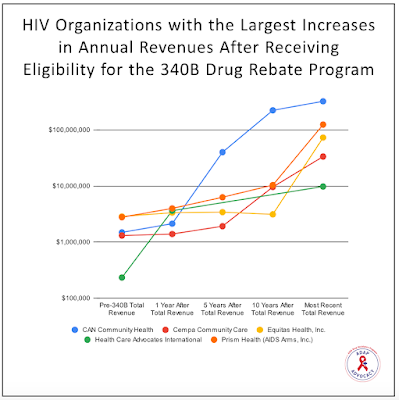
Marcus J. Hopkins, Founder & Executive Director, Appalachian Learning Initiative, concluded the retreat with a discussion focused on the 340B Drug Pricing Program and its potential impacts on the annual revenues and executive compensation amounts at Covered Entities that are eligible to receive rebates from the program, as well as the provision of charity care at cost by hospital entities who qualify. There has been an exponential increase in the number of Covered Entities from 1992 to 2021, increasing from just ~1,000 entities in 1992 to over 50,000 in 2021 (increasing from 12,700 in 2020 as a result of relaxed standards and enforcement due to the COVID-19 pandemic), which Jen Laws, President & CEO of the Community Access National Network, explained, along with additional insights from other attendees with professional knowledge of the program, that the first major increase that occurred in 2010 happened because the Health Resources Services Administration (HRSA)—the federal agency in charge of administering the program—lifted the cap on the number of contract pharmacies with which covered entities could provide medications. This decision essentially allowed organizations that did not have an on-site pharmacy to contract with external pharmacies to provide their services either at another in-person location or via mail delivery, which was becoming a more popular way to provide medications in the late-2000s and early-2010s.

HIV Organizations with the Largest Increases in Annual Revenues After Receiving Eligibility for the 340B Drug Rebate Program

The discussion brought attention to many of the barriers encountered when attempting to access information about 340B revenues from Covered Entities other than those that qualified as an AIDS Drug Assistance Program (ADAP) entity, including (but not limited to):

  • The total lack of transparency required by HRSA for non-ADAP covered entities to disclose the amount of revenues received from the program or how those revenues are utilized;
  • The numerous methods through which hospitals are able to legally create multiple other legal entities to shift funds, profits, and losses away from the primary hospital, and;
  • The ability of hospitals to purchase other hospitals and private practices and counting those purchases as both revenues increases and losses on separate line items in the federal and state tax filings.

This brought up the issue of vertical integration—the practice of a company purchasing and controlling different stages within a chain of goods or services. For example, large hospital systems across the United States have spent much of the last two decades purchasing regional hospitals, local private practices, and private pharmacies, essentially making themselves the largest single employers in many states. This benefits the hospital system by increasing their revenues through ensuring that they are essentially the only providers of healthcare services and medications in a region. This allows them to absorb the 340B revenues from many of these entities, as each entity they purchase (known as "child sites") then fall under their 340B eligibility. Major hospital systems, such as Bon Secours Mercy Health based in Virginia, have been accused of using 340B revenues (which are supposed to be utilized to increase the availability and affordability of care for lower-income patients) to open new locations in more affluent areas in order to decrease the amount of uncompensated care and increase the amount of paid services, further driving up annual revenues.

Questions centered around how ADAP Advocacy (and CANN) can better elucidate abuses in the 340B program by hospital entities and mega service providers, but also highlighting good faith actors—Covered Entities who are using the program as it was intended to be used—in order to better compare and contrast the difference between Covered Entities.

The following materials were shared with retreat attendees:

ADAP Advocacy would like to publicly acknowledge and thank Marcus for facilitating this important discussion.

Additional Fireside Chats are planned for 2024 in New York City (December).

Disclaimer: Guest blogs do not necessarily reflect the views of the ADAP Advocacy Association, but rather they provide a neutral platform whereby the author serves to promote open, honest discussion about public health-related issues and updates.

Thursday, June 20, 2024

Fireside Chat Retreat in Houston, TX Tackles Pressing Public Health Issues

By: Brandon M. Macsata, CEO, ADAP Advocacy

ADAP Advocacy hosted its Health Fireside Chat retreat in Houston, Texas among key stakeholder groups to discuss pertinent public health issues facing patients in the United States. The Health Fireside Chat convened Thursday, June 13th through Saturday, June 15th. An analysis of the collaborative relationships between patient advocacy organizations and drug manufacturers (continued from the previous retreat), patient perspectives about reforming the 340B Drug Pricing Program, and the disproportionate impact HIV is having on Latinos living in the South were each evaluated and discussed by the 23 diverse stakeholders.

FDR Fireside Chat
Photo Source: Getty Images

The Health Fireside Chat kicked-off with a stakeholders reception sponsored by the Alliance to Save America’s 340B Program (ASAP 340B), of which ADAP Advocacy is an active member. The retreat also featured three moderated white-board style discussion sessions on the following issues:

  • Patient Advocacy & Industry: HIV State of the Union — moderated by Matt Toresco, CEO at Archo Advocacy LLC
  • Congress Eyes 340B Reform: Why Comprehensive Solutions Outweigh Incremental Steps —moderated by Brandon M. Macsata, CEO, ADAP Advocacy & Jen Laws, President/CEO, Community Access National Network (CANN)
  • Latinos in the South: An Invisible HIV Epidemic — moderated by Judith Montenegro, Program Director at Latinos in the South and Latino Commission on AIDS

The discussion sessions were designed to capture key observations, suggestions, and thoughts about how best to address the challenges being discussed at the Health Fireside Chat. The following represents the attendees:

  • Grant Cale, Senior Director, Strategic Alliance Liaison, Bristol Myers Squibb
  • De’Shea Coney, Vaccine Access and Equity Coordinator, Iowa Department of Health
  • Tori Cooper, Director of Community Engagement, Human Rights Campaign Foundation
  • Hunter Fasanaro, Director of Strategic Partnerships & Healthcare Initiatives, Archo Advocacy
  • Ramon Gardenhire, VGR, ViiV Healthcare
  • Rick Guasco, Editor-in-Chief, POSITIVELY AWARE
  • Ashley John, Director, Issue Advocacy, Novartis
  • Lisa Johnson-Lett, Peer Support Specialist, AIDS Alabama
  • Marsha Jones, Executive Director, The Afiya Center
  • Jax Kelly, President, Let's Kick ASS (AIDS Survivor Syndrome) Palm Springs
  • Kamaria Laffrey, Co-Executive Director, The SERO Project
  • Jen Laws, President & CEO, Community Access National Network
  • Darnell Lewis, Patient Advocate
  • Brandon M. Macsata, CEO, ADAP Advocacy
  • Judith Montenegro, Program Director, Latino Commission on AIDS
  • David Pable, Patient Advocate
  • Frank Rosas, Consumer Vice-Chair HIV Medication Advisory Committee, Texas Department of Health
  • Ranier Simons, Policy Consultant, Community Access National Network
  • Matt Toresco, CEO at Archo Advocacy LLC
  • Denise Tucker, Executive Director, State Policy, Merck
  • Steven Vargas, Executive Committee Member, National HIV and Aging Advocacy Network
  • Jennifer Vaughan, Patient Advocate
  • Marcus Wilson, Senior Director, Community Engagement and Patient Advocacy, Gilead Sciences
Health Fireside Chat

ADAP Advocacy is pleased to share the following brief recap of the Health Fireside Chat.

Patient-Industry Collaboration:

The first policy session was Patient Advocacy & Industry: HIV State of the Union, which was led by Archo Advocacy LLC's CEO, Matt Toresco. Archo Advocacy seeks to build the foundation, strategy, and execution plans to drive the patient to the center of all decision-making. Matt presented a detailed summary of his recently-completed research, which is designed to bridge the gap between patient advocacy and the biotech and pharmaceutical industries. Key Insights from the “ELAVAY: Patient Insights. Elevated Healthcare.” included data, analysis, and anecdotes on what biotech and drug manufacturers are doing well, and where they can do better to support patient advocacy. His presentation offered a better understanding of the myriad of internal issues that often drive their decisions on what to support and what they cannot support. He noted that the leadership of biotech and drug manufacturers think in terms of quarterly and annual profits (as businesses), but advocacy doesn't operate on the same schedule.

According to Archo Advocacy's statement upon releasing the report: "These findings highlight significant areas where patient needs are evolving and provide actionable strategies for addressing these changes. We encourage you to reflect on these insights and consider how they can be integrated into your current and future strategies to meet patient expectations better and improve overall healthcare delivery. These findings are being shared with pharmaceutical, biotechnology, medical device companies, and even payers/PBMs so that they can adjust how they interact with your organization and bring patients into the dialog to maximize patient outcomes."

The research's findings yielded interesting dialogue on health equity and social determinant of health (SDOH), as this area serves as an extension of the typical programmatic support initiatives supported by the biotech and pharmaceutical industries. Some of the things advocacy is often seeking to influence is affordable housing, food insecurity, social/economic inequalities, social support networks, transportation, just to name a few. Matt also addressed some of the limitations, in part, brought about by the historical transactional relationships between industry and the nonprofit world, as well as restrictions placed on them by the federal government. He did also note an unintended consequence of the Inflation Reduction Act, namely it is causing more organizations to "reorganize" and reallocate budgets into areas that drive revenues.

The following materials were shared with retreat attendees:

340B:

For the discussion focused on reforming the 340B Program, Congress Eyes 340B Reform: Why Comprehensive Solutions Outweigh Incremental Steps, ADAP Advocacy (yours truly) was joined by Jen Laws, who serves as CANN's President/CEO. This co-facilitated discussion didn't hold back any punches on highlighting the ongoing abuses by hospitals, as well as some very large Ryan White Grantees. It also provided an opportunity to reveal a teaser to the forthcoming final report being issued by ADAP Advocacy's Ryan White Grantee 340B Advisory Committee on 340B Program Eligibility, Executive Compensation, and Charity Care.

The conversation weaved back-and-forth between the federal and state levels, with discussion around several pieces of legislation before the U.S. Congress, as well as state-driven initiatives. States lack the statutory authority to legislate the 340B Program, but that hasn't stopped state legislatures from diving into it. Arguably, most state legislators are ill-equipped to understand the nuances of this massive federal program and their actions are driving it toward insolvency.  

At the federal level, lawmakers are finally catching-up with the growing chorus of stakeholders pushing for reform including the introduction of the bipartisan 'Supporting Underserved and Strengthening Transparency, Accountability, and Integrity Now' ("SUSTAIN 340B Act"), and the Republican-led '340B Affording Care for Communities & Ensuring a Strong Safety-net Act' ("ACCESS Act"). Another less notable piece of legislation introduced was the ‘340B Pharmaceutical Access To Invest in Essential, Needed Treatments & Support Act of 2024’ ("340B PATIENTS Act"). It was introduced by Rep. Doris Matsui (D-Calif.), a known drug industry antagonist and a favorite of the American Hospital Association. Despite the legislation's short title, it appears to be more concerned with providers than patients.

340B: What About Me?
Photo Source: CANN

Jen reviewed high-level expected similarities between each proposal and some anticipated differences. Similarly, he touched on the direction of state actions regarding reporting requirements and the debate over contract pharmacies...though both ADAP Advocacy and CANN have argued that isn't where reform is most needed. Focused on addressing statutory vagueness, and the status of current litigation is "where the fight is", as Laws noted. There was a broader conversation on the ecosystem impacts of 340B, including consolidation concerns as they pertain to healthcare costs and patient access to care. Emphasizing the importance of both stabilizing the program and ensuring the program appropriately serves patient interests as opposed to other stakeholder groups like the Ryan White Clinics for 340B Access, which seems more driven by protecting provider coffers than helping patients. Specifically, Laws mentioned the need to address conflated interests: hospital administrators are not providers and provider voices are not a substitute for patient voices.

One important note was ADAP Advocacy's and CANN's calling for model language used for contract pharmacy arrangements as provided for under AIDS Drug Assistance Programs as a "gold standard" of the program directly serving its legislative intent - helping patients access life-saving medications.

The following materials were shared with retreat attendees:

ADAP Advocacy would like to publicly acknowledge and thank Jen for co-facilitating this important discussion.

Latinos in the South:

Judith Montenegro, Program Director at Latinos in the South and Latino Commission on AIDS, concluded the retreat with a discussion reflective of the host city and state and how the HIV/AIDS epidemic is currently disproportionately impacting Latinos in the South. Latinos in the South: An Invisible HIV Epidemic started with an overview of realities Latinos living with and impacted by HIV in the South, often complicated by the ongoing anti-immigrant sentiments in the public discourse. 

The invisibility in healthcare access in Latine Southern Communities presents a significant barrier to accessing timely, appropriate care and treatment. For example, among Latinx patients diagnosed with HIV in Texas, approximately 25% received a late diagnosis. People living with HIV/AIDS diagnosed prior to 1996 make up about 10% of  Texas' current HIV prevalence; nationally, it's about 25%. 

Judith asked, "How can health care providers and policymakers develop and implement culturally competent strategies to engage Latinx communities, particularly in rural and migrant populations, in HIV prevention and treatment programs?"

That question yielded a passionate conversation about the very real challenges faced by Latinx communities in the South, including check-points, restricted access to federally-funded public health programs, vaccine hesitancy, lack of culturally-competent healthcare settings (hospital visitation policies, for example), and the inability to access healthcare information in Spanish. Whereas it was acknowledged there are very unique barriers faced by undocumented Latinx patients, it remains a crisis among all Latinx communities in the South. Judith acknowledged the purposeful invisibility and systems of fear perpetrated on Latinx communities, such as deportation, disclosure, criminalization, and public charge.

Now, Latinx communities are the target of political and public health misinformation. "Healthcare for Illegal Immigrants" is a political advertisement running in numerous media markets. The ad is financed by the right-wing group Building America's Future, which is the same group that ran the anti-immigrant ad the night of the 2024 State of the Union. The ongoing misinformation campaign claims the 340B Program is providing "free healthcare for illegal immigrants" and it is designed to make Republican voters angry about "those people" getting free stuff from taxpayers. Aside from the ad being factually inaccurate, it fuels the rising tide of anti-immigration, thus making it even harder to serve Latinos living with HIV.

The following materials were shared with retreat attendees: 

ADAP Advocacy would like to publicly acknowledge and thank Judith for facilitating this important discussion.

Additional Fireside Chats are planned for 2024 in New Haven (September), and New York City (December).

Disclaimer: Guest blogs do not necessarily reflect the views of the ADAP Advocacy Association, but rather they provide a neutral platform whereby the author serves to promote open, honest discussion about public health-related issues and updates.

Thursday, May 2, 2024

Fireside Chat Retreat in Charleston, SC Tackles Pressing Public Health Issues

By: Brandon M. Macsata, CEO, ADAP Advocacy

ADAP Advocacy hosted its Health Fireside Chat retreat in Charleston, South Carolina among key stakeholder groups to discuss pertinent public health issues facing patients in the United States. The Health Fireside Chat convened Thursday, April 25th through Saturday, April 27th. An analysis of the collaborative relationships between patient advocacy organizations and drug manufacturers, patient perspectives about long-acting injectables for HIV treatment and prevention, and the dark side of state-sanctioned prescription drug affordability boards were evaluated and discussed by the 21 diverse stakeholders.

FDR Fireside Chat
Photo Source: Getty Images

The Health Fireside Chat included moderated white-board style discussion sessions on the following issues:

  • Patient Insights: How Patient-Industry Collaboration Can Elevate Healthcare Reform — moderated by Brandon M. Macsata, CEO, ADAP Advocacy
  • Patient Perspectives: How Long-Acting Injectables Can Improve Access to Care —moderated by Riley Johnson, Project Lead, Long-Acting Injectables Project, ADAP Advocacy
  • Patient Context: How Prescription Drug Affordability Boards Impact Access to Care — moderated by Jen Laws, President & CEO, Community Access National Network (CANN)

The discussion sessions were designed to capture key observations, suggestions, and thoughts about how best to address the challenges being discussed at the Health Fireside Chat. The following represents the attendees:

  • Maggie Blunk, Communications Manager, North Carolina AIDS Action Network
  • La’Donna Boyens, Patient Advocate
  • Erin Bradshaw, EVP for the Advancement of Patient Services and Navigation, Patient Advocate Foundation
  • Jeffrey S. Crowley, Distinguished Scholar & Program Director at the Infectious Disease Initiatives, O'Neill Institute for National and Global Health Law, Georgetown Law
  • Erin Darling, Associate Vice President and Counsel, Federal Policy, Merck
  • Hunter Fasanaro, Director of Strategic Partnerships & Healthcare Initiatives, Archo Advocacy
  • Hilary Hansen, Global Public Affairs Head, Oncology, Sanofi
  • Patrick Ingram, Community Outreach and Prevention Programs Supervisor, Hennepin County 
  • Lisa Johnson-Lett, Peer Support Specialist, AIDS Alabama
  • Riley Johnson, Founder, RAD Remedy
  • Jen Laws, President & CEO, Community Access National Network
  • Michael Luciano, Peer Treatment Educator, Palmetto Community Care
  • Brandon M. Macsata, CEO, ADAP Advocacy
  • Judith Montenegro, Program Director, Latino Commission on AIDS
  • Necaela Penn, Patient Advocate
  • Kalvin Pugh, Senior Advisor on Community Engagement, International Association of Providers of AIDS Care
  • Donna Sabatino, Director State Policy & Advocacy, The AIDS Institute
  • Larry Scott-Walker, Executive Director, THRIVE SS Inc
  • Dafina Ward, Executive Director, Southern AIDS Coalition
  • Katie Willingham, Blogger, The Well Project
  • Marcus Wilson, Senior Director, Community Engagement and Patient Advocacy, Gilead Sciences
Health Fireside Chat

ADAP Advocacy is pleased to share the following brief recap of the Health Fireside Chat.

Patient-Industry Collaboration:

The first policy session was Patient Insights: How Patient-Industry Collaboration Can Elevate Healthcare Reform, which was led by ADAP Advocacy's CEO, Brandon M. Macsata. With both patients, patient advocacy organizations, and industry partners all in the room, it represented an opportunity to discuss their collaboration. Macsata provided some background on why such collaborative relationships exist, as well as how they are perceived – including how some characterized the relationships through a negative lens. In general, and not speaking specifically to drug manufacturers money, Macsata noted several commonly accepted reasons why donors give money to organizations or causes. Donors are purpose-driven; donors trust your organization; donors understand their impact; donors have a personal connection to your purpose; donors want to be part of something meaningful; donors are engaged; and donors appreciate tax benefits.[1] He further noted industry partners providing memberships, sponsorships, or charitable grants to nonprofit patient advocacy organizations are no different.

Whereas the group agreed an fair examination of these relationships is a good thing, characterizing the support from industry partners as "dark money" or "tainted money" or "bribes" is disingenuous to the patient advocacy groups who receive it. The implied "quid pro quo" narrative is nothing more than "guilt by association" smear tactic that completely discounts the valuable work being done on public policy. The reality is often time the interests of the patient advocacy community and the interests of the drug manufacturers align, as has been the case numerous times over the years pushing back against attempts to weaken Medicare's six protected classes of drugs. 

Industry partners participating in the discussion shared their perspectives on the difference between transactional support and transformative support. The latter is designed to impact systems change, rooted in further empowering patients to end the HIV epidemic. Without industry partner support, it would be even more challenging – if not impossible – to advocate for greater access to HIV long-acting injectables, or repealing draconian HIV criminalization. All of the impudent exposes published by the likes of the KFF Health News or Axios failed to recognize that fact.

The group concluded with a lengthy assessment of the status of patient advocacy, which included calls for more transparency among these groups.

The following materials were shared with retreat attendees:

ADAP Advocacy would like to also call attention to how this very conversation is happening among academia, evidenced by the recent report featured in The Crimson‘Deal with the Devil’: Harvard Medical School Faculty Grapple with Increased Industry Research Funding.

Long-Acting Injectables:

Riley Johnson, who serves as ADAP Advocacy's Long-Acting Injectables (LAIs) Project, presented initial themes and findings from the project's research methods – including a quantitative survey, a qualitative focus group, and an examination of data – across two populations – those who are HIV-positive (the use of LAIs for treatment) and those who are HIV-negative (the use of LAIs for prevention). This project was made possible by support from Gilead Sciences, Merck, and ViiV Healthcare. A final report will be issued in May 2024.

ADAP Advocacy’s LAIs Treatment Survey had 262 respondents and the focus group had 8 participants, whereas the Prevention Survey had 184 respondents and the focus group had 8 participants. Key themes in the focus groups included provider barriers, supply chain issues, medical mistrust (both historical accounts/community trauma as well as current individual feelings), and insurance coverage barriers.

Discussion at the Fireside Chat focused on patients’ ability to navigate health environments and insurance processes as well as Fireside Chat participants sharing best practices for wraparound services that help patients address some of the more tangible issues they face when pursuing LAIs (e.g. providing documentation to assist with Family and Medical Leave Act (FMLA) requests, transportation assistance, etc.)  The final report of this iteration of the Long-Acting Injectables Project is slated for release later this month.

The following materials were shared with retreat attendees:

ADAP Advocacy would like to publicly acknowledge and thank Riley for facilitating this important discussion.

PDABs:

The Community Access National Network (CANN) action center on Prescription Drug Affordability Boards (PDABs) served as a focal point for this discussion, which was led by CANN's President & CEO, Jen Laws. While there are ten states with established boards, each operates slightly differently, with some of those including power to establish an "upper payment limit" (reimbursement ceiling) for selected medications. Because of a variety of public health funding mechanisms, specifically rebates utilized to fund Medicaid programming, federally qualified health centers and other 340B grantee entities, and State AIDS Drug Assistance Programs, these reimbursement caps are a threat to the sustainability of certain programming and efforts supporting health equity and tackling health disparities. The value of these rebates are found in the "spread" between the reduced acquisition cost and the reimbursement rate  meaning the lower the reimbursement rate the lower the value of the rebate and the fewer dollars 340B grantee entities have to reinvest in programs and services. Further, federal matching dollars for the Medicaid program are based upon reimbursement rates. Reduce the reimbursement rate and the federal matching dollars are therefore reduced.

Additional conversation centered on what medications were being reviewed for selection by PDABs, and who the target beneficiaries of any action should be (patients vs. systems). Laws pointed out that while the political marketing behind PDABs focuses language on patients and "commonly used" medications, those medications being selected are those treating rare and chronic conditions, some of which have no alternative or for which there is a contraindication for any alternatives (ie. genotype specific ARVs), and discussion is increasingly focused on so-called "savings" for the systems, rather than patients. The bait and switch on actions from the "sales point" raises serious alarms.

Further still, other layers of complication include the regular and routine concerns voiced by non-chain, independent pharmacies already facing under-reimbursement threatening their ability to serve their communities and the fact that wholesalers and distributors are often located outside of a particular state, meaning the acquisition is very likely to remain the same, regardless of reimbursement rate, threatening access to care for patients in multiple ways.

These varied concerns are ultimately why several states ended up not taking on PDAB legislation this year. Effective advocacy both pre- and post-legislation is necessary to inform these boards and ensure patients guide in a process that's supposed to be about patients. One last tidbit: all board establishing legislation contain conflict of interest provisions which otherwise prevent patient representation on these boards. In HIV, there is a commonly-accepted theme, "nothing about us without us", and yet, that's exactly what these boards are premised on doing.

The following materials were shared with retreat attendees: 

ADAP Advocacy would like to publicly acknowledge and thank Jen for facilitating this important discussion.

Additional Fireside Chats are planned for 2024 in Houston, New Haven, and New York City.

[1] Bonterra (2022, February 20). 7 reasons why donors give + how to appeal to their motives. Retrieved online from https://www.bonterratech.com/blog/7-reasons-why-donors-give

Disclaimer: Guest blogs do not necessarily reflect the views of the ADAP Advocacy Association, but rather they provide a neutral platform whereby the author serves to promote open, honest discussion about public health-related issues and updates.