Showing posts with label counterfeit medicines. Show all posts

Wednesday, November 26, 2025

Counterfeit Drug Rings Increasingly Peddling Fraudulent HIV, Cancer, and GLP-1 Medications

By: Ranier Simons, ADAP Blog Guest Contributor

Healthcare expenditures remain a significant source of contention for many Americans. A recent West Health-Gallup poll indicated 47% of adults fear they will not be able to afford their healthcare next year, with 37% specifically citing prescription drug expenses as the issue (Lovelace, 2025). Unfortunately, counterfeit drug activity has been on the rise, taking advantage of people in need who live with severe chronic and life-threatening conditions. Counterfeit drug rings peddling fraudulent HIV drugs, cancer treatments, and weight loss GLP-1 medications are increasingly coming to light. Convictions of ill-intentioned players in these rings are positive steps to bolster public health. However, what appears to be an international network endangers the lives of many Americans and sometimes kills.

A 2014 photo of Patrick Boyd (left) and Charles Boyd, who co-founded Safe Chain Solutions in 2011. CONTRIBUTED PHOTO
Photo Source: The Star Democrat

Last month, following a history of pharmaceutical malfeasance, brothers Patrick and Charles Boyd (as seen above in a 2014 photo of Patrick Boyd (left) and Charles Boyd, who co-founded Safe Chain Solutions in 2011), in business partnership as Safe Chain Solutions, were convicted of trafficking over $90 million of counterfeit drugs (Weaver, 2025). The brothers operated their wholesale drug company primarily by unlawfully buying and distributing counterfeit HIV medications. Knowingly, they purchased black market HIV drugs at very low cost from illegitimate suppliers, then sold them to legitimate pharmacies and patients, unaware of the dangerous, mislabeled products.

Court documents indicate that one of their suppliers obtained HIV medication by soliciting vulnerable patients on the street (Weaver, 2025). This particular supplier removed the labels from the bottles and shipped them to the Boyd brothers in improperly secure packaging, such as discarded diaper boxes from the trash. Storing and shipping prescription drugs improperly can reduce the efficacy of the medication or even render them hazardous to use due to contamination (Sykes, 2018). Moreover, buying the HIV drugs from vulnerable people on the street means that those people will break their medication adherence. Consistent antiviral adherence is necessary to reach and maintain an undetectable viral load. People on the street selling their medications are already in a precarious socioeconomic position. Lack of medication adherence translates into adverse health outcomes, including HIV disease progression, compounding negative social determinants of health.

In some other instances, the counterfeit drugs sourced and sold by the Boyds were sealed in bottles labeled as HIV medications, but were not HIV drugs. In one of the cases highlighted during the court case, a patient was rendered unconscious for 24 hours after taking what they thought were HIV antiretrovirals but turned out to be anti-psychotic medication (Levi, 2025). This is not only dangerous regarding maintaining an undetectable viral load, but is medically dangerous due to the possibility of overdose or adverse reactions to ingesting medications that are not compatible with patients’ medical conditions. As a result of their conviction, the Boyds could face over 40 years in prison while they await sentencing. 

Authentic Biktarvy and Descovy
Photo Source: Medical Professionals Reference

Popular weight loss drugs are another lane in which counterfeiters are operating. There has been a 40-fold increase in the use of GLP-1 drugs from 2017 to 2021, with a 700% increase in non-diabetic prescriptions for them from 2018 to 2022 (Logan, 2024). With insurance, patients pay in the range of $25-$150 per month for GLP-1 drugs. But without insurance, the cost could range from $800 to $1000 (Resbiotic, 2025). Although in high demand, many are unable to have their insurance cover the medications because insurance typically only covers GLP-1 medications for diabetes unless weight is a significant health concern. This leads many to pay out of pocket, creating demand for more affordable options.

The rapid proliferation of online sales of counterfeit weight-loss medications has even prompted the U.S. Food and Drug Administration (FDA) to issue an official alert about their dangers. Counterfeit GLP-1 drugs could contain the wrong medications, could contain too much or too little of the active ingredients, could be contaminated with pathogens, and much more. People desiring GLP-1 medications are lured by counterfeit marketers advertising offering GLP-1 drugs with no prescriptions at low prices. It is important to note that these are prescription drugs, which makes procurement from legitimate channels impossible without a prescription (ABC News, 2025).

This Sleazy GLP-1 Prescription Site Is Using Deepfaked "Before-and-After" Photos of Fake Patients, and Running Ads Showing AI-Generated Ozempic Boxes
Photo Source: Yahoo News

Cancer drugs, which literally can make the difference between life and death, are also lining counterfeiters’ pockets. In February of this year, two brothers from India, Kumar and Rajnish Jha, were extradited to the United States after being arrested in Singapore for selling counterfeit Keytruda in the United States (Sutich, 2025). Keytruda is a treatment for late-stage cancer developed by Merck. A coordinated operation between the Office of Criminal Investigations (OCI), Food and Drug Administration (FDA), U.S. Immigration and Customs Enforcement (ICE), and Homeland Security Investigations (HSI) confirmed the Jha brothers were selling fake Keytruda that contained none of the ingredients of the real product. One of the undercover agents received a bottle of Keytruda from the Jha brothers’ company, Dhrishti Pharma International, which contained heartburn medication (Sutich, 2025).

The brothers were convicted and sentenced to 30 months in prison, as well as fined thousands of dollars. However, this does not remedy the fact that people suffering from terminal cancers were sold drugs that not only did not benefit them, allowing their cancer to progress, but also exposed them to additional harm.

More fake cancer drugs
Photo Source: Partnership for Safe Medicines

The Jha brothers’ enterprise is indicative of the organization and sophistication of counterfeit drug markets. Counterfeit medications are an international racket that not only increases the danger of the products but also makes it harder to detect. The Jha brothers had U.S. co-conspirators who processed and packaged their drugs and retrieved cash payments to maintain stealth (Sutich). Some counterfeit drugs, referred to as grey market medications, are drugs that are approved for markets outside of the United States (ABC News, 2025). Even though grey-market medications may contain the correct ingredients, they are sourced, labeled, and handled in ways that are not compliant with the strict standards established in the safe U.S. supply chain.

The Boyd brothers, having knowledge of the operations of the safe U.S. drug supply chain, falsified documents to deceive pharmacists. The United States has strict rules regarding drug product tracing under the Drug Supply Chain Security Act. Part of that includes maintaining paperwork, called T3s/pedigrees (Weaver, 2025). These documents are intended to verify the movement of drugs from the original manufacturer to the final point of sale. This is how many well-meaning pharmacies were fooled into purchasing counterfeit drugs after reading falsified documentation. Some of the drugs were sold in bottles that were immediately identifiable as suspect. However, the ones that were not obvious, coupled with fake documentation, slipped under the radar.

According to the World Health Organization, counterfeit medications result in approximately one million deaths globally annually (Health First, 2025). Not only are counterfeit drugs dangerous for patients, but they also defraud the manufacturers who develop them. The U.S. biopharmaceutical industry loses between $37.6 billion and $162.1 billion in revenue annually due to counterfeit products (Pritchett, 2025). Counterfeits translate into lower sales, damaged reputation from being associated with drugs that have had adverse outcomes, and expenses from investigations and fighting associated legal battles.

The current trajectory of U.S. healthcare policy is poised to exacerbate medication affordability issues. Criminals are gaining sophistication in the way they infiltrate and manipulate what is supposed to be a safe U.S. Drug Supply system. Because counterfeit malfeasance is on an international scale, it will be harder to educate the public and medical professionals on how to avoid becoming victims.

[1] ABC News. (2025, October 9). What to know about the world of counterfeit weight loss drugs sold online. Retrieved from https://abcnews.go.com/GMA/Wellness/world-counterfeit-weight-loss-drugs-sold-online/story?id=126365574

Health First. (2025, March 19). Counterfeit Drugs: A Global Problem. Retrieved from https://www.healthfirst.com/articles/counterfeit-drugs-a-global-problem/

[2] Logan, P. (2024, June 27). On the Increase in Use of GLP-1s. Retrieved from https://medicine.iu.edu/blogs/bioethics/on-the-increase-in-use-of-glp-1s#:~:text=GLP%2D1s%20are%20seemingly%20miracle,from%20the%20FDA%20in%202013.

[3] Lovelace,B. (2025, November 10). A record number of Americans are anxious about health care costs going into next year. Retrieved from https://www.nbcnews.com/health/health-news/gallup-poll-record-number-adults-anxious-health-costs-2026-rcna244358

[4] Miller, L. (2025, November 18). Maryland Siblings Found Guilty in $92M Misbranded HIV Meds Scam, Facing Decades Behind Bars. Retrieved from https://hoodline.com/2025/11/pharma-bros-busted-maryland-siblings-found-guilty-in-92m-misbranded-hiv-meds-scam-facing-decades-behind-bars/

[5] Pritchett, A. (2025, November 19). RAI Explainer: How Counterfeit Drugs Threaten U.S. Health and Innovation. Retrieved from https://www.csis.org/blogs/perspectives-innovation/rai-explainer-how-counterfeit-drugs-threaten-us-health-and-innovation

[6] Resbiotic. (2025). How much is GLP-1 without insurance?. Retrieved from https://resbiotic.com/blogs/news/how-much-is-glp-1-without-insurance

[7] Sutich, J. (2025, July 10). Brothers from India sentenced in Seattle for selling fake, contaminated medicine to U.S. patients. Retrieved from https://mynorthwest.com/crime-blotter/indian-brothers-fake-drugs/4108899

[8] Weaver, J. (2025, October 30). Two brothers convicted of selling black-market HIV drugs to pharmacies, patients. Retrieved from https://www.miamiherald.com/news/local/article312679531.html

Disclaimer: Guest blogs do not necessarily reflect the views of the ADAP Advocacy Association, but rather they provide a neutral platform whereby the author serves to promote open, honest discussion about public health-related issues and updates.    

Thursday, July 17, 2025

Fake HIV Medicine Finds Its Way into NYC Pharmacies

By: Ranier Simons, ADAP Blog Guest Contributor

Counterfeit medication is a serious threat to public health in 2025. There have been numerous warnings issued over fake cancer drugs, fake Botox, and more recently, counterfeit GLP-1s. While obscure online pharmacies and other non-traditional sources remain easy access points for fake drugs, they are increasingly infiltrating the legitimate supply chain. On several occasions in recent years, the HIV drug supply chain has been at the center of counterfeit drug schemes, often perpetrated by nefarious actors using gay dating apps, like Grindr and Jack'd. And now, according to an alert by the Partnership for Safe Medicines, alleged fake HIV medicines have been found in a New York City pharmacy.

Counterfeit Drugs: A Growing Public Health Threat
Photo Source: American Medical Women's Association

Gilead Sciences has been a repeat victim of counterfeit drug schemes over the past few years. In 2021, taking advantage of the COVID-19 pandemic, counterfeiters targeted Gilead’s remdesivir. The investigation revealed that a significant portion was coming from Mexico and Turkey (Gilead Sciences, n.d.). In 2022, Gilead filed a lawsuit against a ring of counterfeiters selling over 85,000 fraudulent bottles of its HIV antiretrovirals Biktarvy and Descovy (Walker & Ramey, 2022). Although Gilead has seized thousands of bottles of counterfeit drugs from unauthorized distributors and won lawsuits, the harm continues. A U.S. District court in New York recently unsealed another complaint filed by Gilead Sciences.

A patient contacted Gilead because the bottle of Biktarvy they purchased from their local pharmacy was short by eight pills. Upon investigating the bottle, Gilead discovered that the label was a high-quality fake. The lot number on the bottle was outdated, and the expiration date was falsified. The packaging was a well-done counterfeit, as it contained only a minor typo, and the print resolution of the branding was only moderately off. Alarmingly, the patient had already consumed all the pills; thus, it was impossible to know if the pills in the bottle were Biktarvy or some other substance (Gilead vs. City Plus, 2025). Notably, evidence showed that the contents were filled by the counterfeiters, not Gilead. In past counterfeit transgressions involving Gilead medications, bottles were filled with medications other than the ones intended to be in them. Taking medications not prescribed to a patient could result in adverse effects ranging from overdoses of unnecessary medications to the advancement of disease states because of non-treatment with the proper drug.

A retail pharmacy and its principals, were caught red-handed dispensing fake BIKTARVY
Photo Source: Partnership for Safe Medicines

The most pertinent issue of the lawsuit Gilead is filing against the pharmacy that sold the counterfeit drug is that the pharmacy’s owner and operators will not voluntarily reveal the source of the fraudulent medication (Gilead vs. City Plus, 2025). As Gilead points out in the complaint, “Any legitimate pharmacy would be horrified to learn it had dispensed counterfeit HIV medicine and would do all in its power to identify the source of the counterfeit and stop it from happening again. The Defendants here instead obstructed Gilead’s investigation and refused to provide any information about the counterfeit they sold” (Gilead vs. City Plus, 2025). The fake packaging is very sophisticated and requires expensive equipment. Thus, Gilead explains that the elaborate effort indicates a larger counterfeit manufacturing scheme. Gilead accuses the pharmacy of participating in the counterfeiting and distribution of fraudulent medications, not just Biktarvy, but also others, given the sophistication of the machinery necessary to create the fake packaging.

Gilead Sciences is poised to suffer significant monetary losses due to the sale of counterfeit medications, as well as potential damage to its brand and reputation. However, the most alarming issue is the danger to public health (Gilead vs. City Plus, 2025). Hiding the source of the counterfeit medications delays the stoppage of the flow of harmful medications into the drug supply. The investment necessary to procure the labeling and printing equipment used to create the fake Biktarvy means that other medications are likely being counterfeited on a large scale. In addition to the cessation of selling any Gilead-branded medications, whether legitimate or counterfeit, and punitive damages, Gilead Sciences demands the destruction and impounding of the pharmacy’s Gilead-branded supply. It also demands that the offending pharmacy turn over all documentation associated with the purchase and sale of Gilead-labeled medications.

Counterfeiters target expensive and widely utilized medications, other than just HIV antiretrovirals. "This is another benefit of the Drug Supply Chain Safety Act (DSCSA) for patient safety. The DSCSA created a standard way to trace medicine, and a standard way for honest pharmacies to prove their innocence," said Shabbir Imber Safdar, Executive Director of the Partnership for Safe Medicines. He added, “This standardization of documentation means that a supply chain member who has strayed from the safe supply chain cannot stall investigators for weeks hiding their crime." Popular targets are painkillers, antibiotics, and ‘lifestyle’ drugs. In April 2025, the FDA issued a warning about several hundred units of counterfeit Ozempic it had seized (Lovelace, 2025). Previously, thousands of counterfeit Ozempic 1 milligram injections had been seized by the FDA from warehouses outside of Novo Nordisk’s authorized supply chain in 2023 (Reuters, 2023). Additionally, a group of patients in Australia were harmed by fake Ozempic. The patients experienced hypoglycemia and seizures, indicating the counterfeit injections contained insulin instead of Ozempic’s semaglutide (Burger & Murray 2023). The adverse effects could have been deadly. The counterfeit injection pens had been obtained online. The European Medicines Agency (EMA) confirmed that none of the fake Ozempic had reached retail pharmacies.

Counterfeit Drugs on the Rise Globally
Photo Source: Statista

The cost of prescription medication remains a trending topic in the news cycle as well as a financial concern for many Americans. Legislation, such as parts of the Inflation Reduction Act, in addition to pharmacy benefit manager (PBM) operations, currently places pharmacies, especially independent ones, under financial strain. This creates an environment for counterfeit drug manufacturers to find inroads to circulate fraudulent products in the legitimate supply chain. The pharmacy in the recent Gilead suit appears to be a willing participant in the fraud (Gilead vs. City Plus, 2025). Safdar adds, "if true, these allegations of dispensing counterfeit medications reveal a deep betrayal of patients and a violation of patient safety. American patients should never have to worry if they are receiving real medicine when dealing with licensed bricks and mortar pharmacies." However, given the growing sophistication of counterfeit drug production, in an attempt to stay financially sound, unknowing pharmacies could fall victim to improperly sourced products. Counterfeiters create false sourcing documentation in addition to fake products and packaging. 

The World Health Organization estimates the global counterfeit pharmaceutical market value to be between $75 billion and $200 billion (Izgi & Altunay, 2025). It is imperative for the United States to propagate policies that strengthen the drug supply chain and bolster pharmacy support. It is not hyperbole to say that counterfeit medications are a matter of life and death. They are both an international and a domestic issue, given that pharmaceuticals are global products. It would be beneficial for the Department of Justice to take an interest in the current Gilead Sciences complaint, as well as the broader issue of counterfeit pharmaceuticals.

[1] Burger, L., Murray, M. (2023, October 24). Suspected fake Ozempic puts several in hospital in Austria. Retrieved from https://www.reuters.com/world/europe/several-people-taken-hospital-austria-after-taking-suspected-fake-ozempic-2023-10-24/

[2] Gilead Sciences vs. City Plus Care Pharmacy. 2025, March 17). Case 1:25-cv-01469-RER-RML. Retrieved from https://www.safemedicines.org/wp-content/uploads/2019/09/Heal-the-World-Complaint-as-filed.pdf

[3] Izgi, G., Altunay, M. (2025, June 2). Counterfeit pharmaceuticals: innovative strategies for combatting global health threats. Retrieved from https://www.ibanet.org/counterfeit-pharmaceuticals-innovative-strategies 

[4] Lovelace, B. (2025, April14). FDA warns about fake Ozempic in U.S. supply chain. Retrieved from  https://www.nbcnews.com/health/health-news/fda-warns-fake-ozempic-us-supply-chain-rcna201184

[5] Reuters. (2023, December 22). US FDA warns about counterfeit versions of Novo's diabetes drug Ozempic. Retrieved fromhttps://www.reuters.com/business/healthcare-pharmaceuticals/us-fda-warns-about-counterfeit-versions-novos-diabetes-drug-ozempic-2023-12-21/

[6] Walker, J, Ramey, C. (2022, January 18). Drugmaker Gilead Alleges Counterfeiting Ring Sold Its HIV Drugs. Retrieved from https://www.wsj.com/health/pharma/drugmaker-gilead-alleges-counterfeiting-ring-sold-its-hiv-drugs-11642526471

Disclaimer: Guest blogs do not necessarily reflect the views of the ADAP Advocacy Association, but rather they provide a neutral platform whereby the author serves to promote open, honest discussion about public health-related issues and updates.   

Thursday, August 8, 2024

Fraudsters are Using Grindr to Buy HIV Meds

By: Brandon M. Macsata, CEO, ADAP Advocacy; Shabbir Imber Safdar, Executive Director, Partnership for Safe Medicines

Earlier this year, ADAP Advocacy, in collaboration with the Partnership for Safe Medicines (PSM),  issued an important safety alert warning Grindr's users to stop selling their HIV and other medications on the popular gay dating App. Medicine buyback schemes falsely claim to be "Buyers Clubs" making medicine available to people who cannot afford them. In reality criminals buy medicine, and sometimes empty bottles, from patients and sell them at a discount to unsuspecting pharmacies who dispense it to patient victims. The safety alert urged Grindr's users to be more mindful of patient safety.

Screenshots of fraudster profiles on Grindr
Photo Source: ADAP Advocacy

Grindr, as well as potentially other dating Apps, are being used as a platform for fake user profiles operating under counterfeit drug rings to buy prescription medications. This seemingly innocent practice is not only illegal, but it is jeopardizing the drug supply chain and putting the health of patients at risk for health complications, severe illness, and even death. It often targets high-cost drugs – because the potential profit spread is higher – often associated with the treatment of cancer, diabetes, and HIV (and others).

This is not a theoretical patient danger: over the past five years, hundreds of millions of dollars of HIV medicine has been diverted and counterfeited in the drug supply this way, resulting in some patients getting fake medicines

ADAP Advocacy and PSM potentially uncovered one such counterfeit drug ring in New Orleans Parish earlier this year and immediately alerted both the U.S. Food & Drug Administration, as well as Gilead Sciences. Earlier this year, Gilead Sciences uncovered a criminal enterprise centered in Florida distributing over $230 million of counterfeit drugs, some of which were their HIV antiretroviral medications.

In response to the Florida fraudsters, ADAP Advocacy and PSM aired a public service announcement sharing some important steps patients can take to combat counterfeit drugs. Additionally, PSM hosted an online briefing focused on recent breaches in the United States drug supply chain that put patients living with HIV at risk.

If you see people trying to buy medicine on dating apps, please report them to us.

Additional collaboration on patient safety in the fight against counterfeit drug rings is warranted in this space. Download the safety alert, here.

Photo Source: ADAP Advocacy

Disclaimer: Guest blogs do not necessarily reflect the views of the ADAP Advocacy Association, but rather they provide a neutral platform whereby the author serves to promote open, honest discussion about public health-related issues and updates.

Thursday, April 25, 2024

Fraudsters Target Medicine being Reimbursed at a Loss for Counterfeit Crime

By: Ranier Simons, ADAP Blog Guest Contributor

Pharmacy Benefit Managers (PBMs) don’t make medicine or dispense medicine, but their business decisions determine what medicines you have access to. Some of those decisions are now creating openings for drug counterfeiters to enter the legitimate supply chain, according to a report by the Partnership for Safe Medicines (PSM) and subsequent analysis by the Community Access National Network (CANN). This is a pressing matter because counterfeit drugs can result in adverse side effects, treatment failure, resistance, toxicity, and death.[1]

Fake pill
Photo Source: Center for Medical Economics & Innovation

The U.S. market value for PBMs in 2023 was $523.9 billion.[2] PBMs have always been marketed to reduce drug expenditures for payers and lower drug costs for patients, but historically, that has not happened. The $523 billion results from questionable practices that bring in sizable profits for PBMs while shortchanging insurance payers with opaque contracts and to the detriment of patients.  Some patient advocacy groups have argued PBMs are harmful to patients’ health. One common PBM practice, below-cost pharmacy reimbursement, creates supply chain contamination opportunities.

Insurance companies reimburse pharmacies for the medications they dispense to patients. A pharmacy purchases medication from a wholesaler and then submits a claim to a patient’s insurance to be paid for the medication. PBMs handle the payments to the pharmacies on behalf of insurance companies. In 2023, 332 million people in the U.S. had health insurance, and 275 million of them were served by Pharmacy Benefit Managers (PBMs) via commercial insurance, Medicare Part D, Managed Medicaid, and Medicaid Fee-For-Service.[3] Thus, pharmacies are forced to deal with PBMs. In order to dispense medications to patients with insurance, pharmacies must sign contracts with PBMs that are agreements to accept whatever price the PBM dictates for reimbursement. Currently, three PBMs control 75% of the health insurance market; thus, there is no competition.[4] 

The predicament is that PBMs are reimbursing pharmacies below cost. This means that PBMs are paying pharmacies less money than the pharmacies spent to acquire the drugs. Effectively, pharmacies are dispensing drugs at a loss to serve patients. A real-world example of one of the big three PBMs' contracts with a pharmacy for brand-name drugs listed reimbursement of the average wholesale price (AWP) minus 25.5% + $0.00. The same contract listed AWP minus 57% + $0.00 for generics. 

The following examples are actual claims submitted by pharmacies and their resulting losses based on the PBM contracts. For Biktarvy, a pharmacy acquired a 30-day wholesale supply of the drug for $3700.36, but the PBM only reimbursed $3661.75, resulting in a loss of $38.61. For Genvoya, a pharmacy paid $3,534.78 and was only reimbursed $2,852.92, resulting in a loss of $681.86. A pharmacy in Florida purchased a 30-day supply of roflumilast for $43.86 and was reimbursed by a PBM for $11.22, resulting in a $32.64 loss. PSM has many other examples of losses on other various pharmaceuticals here

How to Spot Fake HIV Medicines
Photo Source: Partnership for Safe Medicines

The situation is dire, as indicated by a statement given by a pharmacist from an independent pharmacy in Weatherford, Texas: 

“I spent hours on the phone with my wholesaler and even the drug manufacturer trying to explain that we simply cannot sustain such drastic underpayment on this critical medication and every time my concerns fell on deaf ears. After years of trying to affect some kind of change on either the cost or the reimbursement, we simply could not take losses of any kind on a drug that has a price tag of $3000.00. Our losses ranged from $17.46 to $572.30, and we were expected to accept this arrangement from day one. We were a safe haven and trusted health partner for these patients; however, we were forced to notify our patients that we would no longer be able to provide this life-saving medication.”

This pharmacist decided to stop providing the referenced medication. However, all pharmacists do not make that decision, which creates opportunities for criminal exploitation. 

Pharmacists want to do what they can to provide the medicines people need. When they cannot source medications through their prime wholesalers, they turn to the secondary wholesaler market. Secondary wholesalers are also licensed by the state, and many are secure and reputable channels, but this is also where criminals operate. Criminal counterfeiters take advantage of the situation and set up marketplaces for popular, expensive drugs, using black-market diverted or counterfeit products at prices lower than traditional wholesale sources.

Pharmacies do not haphazardly search for and purchase lower-cost medications. They do their due diligence to make sure they are sourcing proper supplies. However, counterfeit criminals have sophisticated and elaborate systems to perpetrate fraud. They sell through companies with legitimate state-issued wholesale licenses and use forged Drug Supply Chain Security Act (DSCSA) transaction tracing histories. A deep dive into the paperwork can reveal the forgery. However, it takes significant resources of time and effort to dig into that kind of tracing. Resources that pharmacies do not have. Thus, when things have the appearance of propriety, pharmacists get duped by criminals, and patients get sold fraudulent medication. 

A loss of $142 on life-saving HIV medicine The pharmacist paid $6,088.72 for a 90-count bottle of Descovy pills and was reimbursed $5,946.21, costing the pharmacy $142.51.
Photo Source: Partnership for Safe Medicines

In 2022, the U.S. District Court unsealed documents of a civil case in which Gilead Sciences sued a group of criminals. The criminal enterprise distributed over $230 million of counterfeit drugs, some of which were HIV antiretroviral medications.[5] Some of the drugs were diverted, meaning they were purchased from people who had obtained them legitimately and resold on the black market. Some of the drugs were bottles containing medication that did not match what was on the label. Diverted medication indicates that patients were not adhering to their treatment regimens since they were selling their medications. The mislabeled medication bottles meant patients could have been ingesting medications not meant for them, in improper dosages, and possibly contaminated. Situations such as PBM below-cost reimbursement contribute to creating a demand for cheaper medications in an artificially created predatory pricing-induced supply scarcity.

Low PBM reimbursement not only endangers the drug supply chain but also puts independent pharmacies out of business. Pharmacies cannot operate under fiscal loss. In addition to low reimbursement rates, PBMs give pharmacies very low or often zero dispensing fees, which pharmacies need for operating costs. Moreover, PBMs saddle pharmacies with many other opaque fees, audits, and clawbacks, adding to their financial burden. When pharmacies go out of business, patients lose access. This is especially true in areas with very few pharmacies for a large geographical region. If a pharmacy closes, entire communities lose familiar and convenient continuity of care.

A group named Pharmacists United for Truth and Transparency wrote a letter to one of the big three PBMs. A quote from this letter explains what needs to be done: “Reimburse independent pharmacies the full drug acquisition cost and eliminate the practice of reimbursing above some and below other drug costs. Make a fair and universal reimbursement policy the unbreakable operating principle of the PBM-independent pharmacy partnership.” PBM reform is not just fiscally sound; for patients, it indeed could mean the difference between life and death.

[1] Williams, L., McKnight, E. (2014, June 19). The real impact of counterfeit medications. Retrieved from https://www.uspharmacist.com/article/counterfeit-meds#:~:text=The%20use%20of%20substandard%20drugs,enforced%20to%20prevent%20this%20crime

[2] Fortune Business Insights. (2024, April 19). Pharmacy benefit management market. Retrieved from https://www.fortunebusinessinsights.com/pharmacy-benefit-management-pbm-market-103496

[3] Mikulic, M. (2023, May 22). Number of Americans served by PBMs by insurance type 2023. Retrieved from https://www.statista.com/statistics/1172652/pbms-number-of-served-us-persons/

[4] The Partnership for Safe Medicines. (2023) Are below cost reimbursement practices by Pharmacy Benefit Managers creating opportunity for criminals to enter the legitimate supply chain?. Retrieved from https://www.safemedicines.org/2024/02/pbmblackmarket.html

[5] Gilead Sciences, Inc. et al v. Safe Chain Solutions, LLC et al. Retrieved from https://fingfx.thomsonreuters.com/gfx/legaldocs/dwpkrodwdvm/gileand-amended-2022-09-28.pdf?utm_source=Sailthru&utm_medium=newsletter&utm_campaign=daily-docket&utm_term=DailyDocket-MailingList%20v2

Disclaimer: Guest blogs do not necessarily reflect the views of the ADAP Advocacy Association, but rather they provide a neutral platform whereby the author serves to promote open, honest discussion about public health-related issues and updates.  

Thursday, October 26, 2023

A Growing Problem, which is Potentially Contributing to Overdose Deaths

By: Marcus J. Hopkins, ADAP Blog Guest Contributor, and Founder & Executive Director of the Appalachian Learning Initiative (APPLI)

In September 2023, alarming data on overdose deaths was published in the Morbidity and Mortality Weekly Report (MMWR). In response, ADAP Advocacy and the Partnership for Safe Medicines (PSM) issued a press release, ADAP Advocacy Calls for More Awareness on Counterfeit Medicines, calling attention to an increase in the infiltration of counterfeit medications into both the legitimate pharmaceutical marketplace and the illicit drug markets. “Unlike counterfeit opioid pills which often kill instantly, counterfeit HIV medications will victimize patients silently and slowly. Treatment failure, with a whole host of health events, will be the only clue a patient and their physician will notice,” stated Brandon Macsata, ADAP Advocacy’s CEO.

Morbidity and Mortality Weekly Report
Photo Source: HHS

There have been two recent very high-profile examples of counterfeit drugs entering the marketplace: Janssen’s Symtuza (darunavir/ cobicistat/ emtricitabine/ tenofovir alafenamide) and Gilead’s Biktarvy (bictegravir/ emtricitabine/ tenofovir alafenamide) and Descovy (emtricitabine/ tenofovir alafenamide).

The Janssen case came to light on December 24th, 2020, when the company released a statement warning patients, providers, and pharmacists that counterfeit versions of their highly effective HIV drug, Symtuza, had entered the consumer market through pharmacies that had purchased their drugs from distributors that were not authorized by Janssen. In an effort to alert consumers, Janssen began distributing information to providers, patients, and pharmacists with pictures and descriptions of authentic Symtuza pills and informing providers and pharmacists to reach out to patients to alert them to be on the lookout for counterfeits.

Similarly, Gilead Sciences announced on August 5th, 2021, that counterfeit versions of Biktarvy and Descovy had made their way to pharmacy shelves, again via unauthorized distributors, and again provided images of authentic pills and packaging to allow patients to better identify counterfeit products.

Both companies responded in similar ways—attempting to educate the consumer population about authentic products while simultaneously working to address unauthorized distributors. Gilead went further in 2022 by announcing that they were working to identify and sue two individuals responsible for leading and orchestrating the scheme. Their investigation found that these two individuals had directed the initial sale through suppliers created solely to sell counterfeit products. Further action was taken when an asset freeze order was unsealed revealing that 50 defendants were added to the suit. Janssen followed shortly after by announcing its own lawsuit.

And then, there’s the illicit drug market…

A September 1st, 2023, MMWR found evidence that the evidence of overdose deaths resulting from counterfeit pills increased from 2.0% in July-September 2019 to 4.7% in October-December 2021. Fentanyl was the only drug involved in 41.4% of deaths with evidence of counterfeit pill use and 19.5% of deaths without evidence.

The issue, here, isn’t that patients are purchasing counterfeit prescription drugs from pharmacies, but that they’re purchasing them from illicit sources (e.g., illicit drug dealers). And yet, these are still counterfeit versions of legitimate pharmaceutical drugs, each designed to look roughly identical to their authentic counterparts—in these cases, primarily oxycodone (the generic version of OxyContin, a powerful and highly addictive pain medication) and alprazolam (the generic version of Xanax, a drug used primarily to treat anxiety or panic attacks, and one of the most addictive benzodiazepine medications on the market).

Fake Oxy
Photo Source: Drug Enforcement Administration

Unlike HIV or specialty medications that have very specific, patented designs, both oxycodone and alprazolam have generic equivalents that can make spotting counterfeit versions more difficult. In September 2021, the U.S. Department of Justice's Drug Enforcement Administration (DEA) put out a fact sheet with an image showing the similarities between authentic and counterfeit oxycodone, and the reality is that, unless someone is actively examining each pill they take, the differences are hard to spot. At first glance, the counterfeit version looks like it’s more authentic than the real M30 tablet because the markings are clearer and easier to read.

A bigger concern, here, is that the pills that are shown to have the highest likelihood of being counterfeited are ones to which people may be highly addicted, making them less likely to check pills for authenticity, rather than to just take the pills, either orally or via smoking, the most common non-ingestion drug use route among deaths with evidence of counterfeit drug use (39.5%). This can be exceptionally dangerous, particularly among younger people who are less likely to have experience identifying and avoiding counterfeit drugs. Moreover, those with severe addictions may be driven more by the need to satiate their need than any concerns about potential overdose risks.

Two of the findings from the MMWR report were that overdose deaths with evidence of counterfeit pill use were significantly more likely to occur among young people, with 57.1% of said overdoses occurring in people aged younger than 35 and were more often to occur in Hispanic or Latino populations (18.7%). If these young people are anything like I was in my twenties, they’re not likely to check the provenance of their drugs, rather than just take them.

Additionally, this increase in overdoses impacts a region that has traditionally seen relatively few fentanyl-based overdose deaths compared to the South, Midwest, and New England: the West (Hernandez, 2023). When looking at states in the West, the rate of overdose deaths with evidence of counterfeit pill use surged from 4.7% to 14.7% in the time period examined. Researchers indicate that the type of heroin prevalent in the West—black tar heroin—is difficult to mix with white powder fentanyl, which has made it less likely to be found in Western states. Counterfeit medications, however, make it easier to introduce fentanyl into the market.

Drug Overdose Deaths with Evidence of Counterfeit Pill Use — United States, July 2019–December 2021
Photo Source: CDC

Note. Retrieved from O’Donnell et al., 2023.

Outside of the United States, it was announced on October 24th, 2023, that several people living in Austria were hospitalized after using suspected counterfeits of the blockbuster diabetes and weight loss drug Ozempic (semaglutide). Ozempic, made by Danish company Novo Nordisk, has been shown to drastically improve weight loss outcomes and was approved by the U.S. Food & Drug Administration (FDA) for that purpose under the brand name Wegovy. The drug’s popularity for weight loss purposes has exacerbated supply chain issues, causing worldwide shortages of the drug for patients living with diabetes. Counterfeiters are recognizing these shortages as an opportunity to bring fake versions of the injector pens to the market packaged in official boxes. Authorities in Germany and Britain have been investigating cases where a wholesaler in Austria sold these counterfeits to Germany and to two additional wholesalers in Britain. Here in the United States, similar reports of counterfeit Ozempic were reported in August 2023.

What makes counterfeit pills so dangerous is that people have come to trust in the security of pills. We assume that medications in pill form are guaranteed to be safe, even when we purchase them from illicit sellers, and we do so because we’ve been told by numerous agencies that they are safe, from the FDA who approves them to the manufacturers, providers, and pharmacists who sell them. We also assume, when we buy pills from illicit sources, that they have procured those pills from legitimate sources and are just reselling them. When counterfeit pills enter the market, whether credible-looking fakes of specialty medications or convincing fakes of generic drugs, patients begin to lose trust in the system that fails them…assuming they’re still alive to lose that faith..

Disclaimer: Guest blogs do not necessarily reflect the views of the ADAP Advocacy Association, but rather they provide a neutral platform whereby the author serves to promote open, honest discussion about public health-related issues and updates.

Thursday, January 5, 2023

HIV/AIDS Patient Advocacy: 2023 Insights

By: Brandon M. Macsata, CEO, ADAP Advocacy Association

The New Year is here! Our patient advocacy work is likely to be influenced by numerous mitigating factors that fall completely outside of our control, most of which will make meaningful public health policy changes unlikely. A narrowly divided, partisan federal government, an indictment of a former president (pick a crime), an increase in anti-science rhetoric fueled by right-wing media and Internet-fueled conspiracies, and the ongoing economic uncertainty will all muddy the legislative agenda. But that is no reason to remain idle.

2023
Photo Source: FreePik.com

The Covid-19 pandemic isn't over, especially here in the United States. According to the Kaiser Family Foundation, as of December 22, 2022, over 400 people in this country are still perishing daily to this virus. Aside from the human toll of the cumulative effect of the infections, hospitalizations, and deaths, Covid-19 has upended public health in so many ways. Its impact on our own HIV community cannot be overstated, as we outlined last year. Covid-19 also further exposed the significant gaps that remain in our HIV care delivery system. It has also defined the shape of the broader public health advocacy over the last three years.

Lest we forget there are still nefarious forces at play trying to undermine our drug supply chain with counterfeit medicines, evidenced by numerous high-profile cases involving fake HIV medicines. With our partners, we will continue to advise patients on how to spot fake HIV medicines. It is imperative that patient advocates resist ongoing attempts to reshape the national dialogue on drug pricing with faux policies, such as drug importation. The reality is drug importation won't lower the cost of prescription drugs for patients, but it could very well weaken the world's safest drug supply system. Look no further than the drug importation plans in Florida and Colorado

Our focus will also remain on improving access to care and treatment, expanding it as much as possible while fending off threats to the Ryan White HIV/AIDS Program (RWHAP). We fully anticipate another attempt by mega service providers and special interests to push for raiding RWHAP funding for PrEP-related rebates under the 340B Drug Pricing Program. Robbing Peter to pay Paul is never the solution, because the result is restricting access. We stand firm with people living with HIV/AIDS.

Long-acting agents for HIV therapy (LAAs) represents probably the single greatest opportunity to expand access, reduce community viral load, and further the U=U Gospel ("undetectable equals untransmittable"). The recent news by the U.S. Food & Drug Administration (FDA) to approve a new HIV drug for adults with limited treatment options is big news! It builds on the momentum already established with new LAAs, such as Cabenuva and Trogarzo

As the chaos continues to unfold in our nation's capitol, it is imperative for patient advocates to be armed with the resources and tools to influence public policy on HIV/AIDS. Our organization is eager to engage our community to meet any challenge head-on.

Disclaimer: Guest blogs do not necessarily reflect the views of the ADAP Advocacy Association, but rather they provide a neutral platform whereby the author serves to promote open, honest discussion about public health-related issues and updates.

Thursday, December 8, 2022

Why a Secure Drug Supply Chain Matters

By: Brandon M. Macsata, CEO, ADAP Advocacy Association
       Shabbir Imber Safdar, Executive Director, Partnership for Safe Medicines

Since the start of the AIDS crisis, people living HIV (PLWHA) have looked forward to a day when medicines could allow them to live a life in which their HIV is undetectable and untransmittable (otherwise known as, “UequalsU). Today, PLWHA with access to treatment and adherent to their antiretroviral therapy are expected to live well into their 80’s. There is so much promise in the fight to end the epidemic. 

PLWHA can be confident of the security of those medications from fraudsters because they are protected by the Drug Supply Chain Security Act (DSCSA). This medication protection system, originally created in 2013, completes its rollout next year in 2023. It assigns a number to each package of medicine at time of manufacture, and that number is tracked at every change of ownership from factory to distributor to pharmacist. “Track and trace” is the name associated with this drug supply safety system.

Pharmacist scanning Rx medicines
Photo Source: Pharmaceutical Technology

Though criminals never stop trying to defraud patients and pharmacists, we know the DSCSA works because it has been tested. A pharmacist in Texas who checked the serial numbers on “too-cheap-to-be-true” HIV medicine discovered fraud and returned that medicine to the seller without dispensing it to patients. Furthermore, because these kinds of serial numbers allow very fine-grained tracking of medicine in the supply chain, no broad recalls were necessary which might have taken perfectly good medicine off the market and endangered patient access.

DSCSA has protected PLWHA and all patients in the United States, but as with any system, it needs support. There are two key places where the federal government needs to help:

  • Charge people who forge DSCSA paperwork with DSCSA fraud
Criminals, such as the recent spate of HIV counterfeit criminals, have yet to be charged with criminal offenses for DSCSA fraud. In fact, to-date there is no record of anyone ever having been charged with DSCSA fraud. To protect patients there must be a deterrent to forging DSCSA paperwork, and to do that, the DOJ must ensure that this crime draws a criminal charge.

There are currently 140 defendants in the existing civil litigation brought by Gilead Sciences and Johnson and Johnson Healthcare Systems against the criminals trafficking in counterfeit and diverted HIV and Hepatitis C (HCV) medications. Not even one has drawn a criminal charge of forging DSCSA paperwork. 

The Biden Administration’s Department of Justice needs to make prosecution of criminals who violate the DSCSA a priority with resources and training.

  • Do not undermine the DSCSA for political expediency
For decades it has been in vogue to suggest buying medicine from other countries to make it cheaper. However, countries suggested, like Canada, don’t have a system like DSCSA and we cannot provide this same level of safety assurance to patients and pharmacists. Regulations that intentionally break the DSCSA, like the regulations that govern bulk importation of drugs from Canada that break the DSCSA will endanger HIV, HCV, and many other categories of American patients.

The Administration’s Department of Health & Human Services needs to revoke the rules governing bulk importation until Canada has an interoperable DSCSA system to protect medicine imported.

Ensure broad understanding of DSCSA features for physicians

As the DSCSA finishes its rollout, one part of the dispenser community unlikely to get the message is physicians who administer long-acting HIV injectables. These injectables, which can control HIV with just two shots every month or two months, are an enormous innovation.

However recent history includes a few failures of physicians to understand the dangers of criminals in the supply chain, including:

Unlike pills taken by PLWHA, which can be examined by the pharmacist and patient, injectables administered by physicians don’t necessarily have this protection. Additional steps are needed to ensure patients can participate in medication verification safety. All too often, patients never see touch the injectable, and likely never see the packaging it came in. Physicians, who are not typically trained to check pharmaceutical wholesaler licenses or verify DSCSA safety features, have repeatedly been the targets for criminals. PLWHA need to be empowered to involve themselves more in this process.

How to Spot Fake HIV Medicines
Download Infographic

As the DSCSA rollout proceeds, we urge the Biden Administration to resource the U.S. Food & Drug Administration (FDA) so they can prioritize education of physicians about the new security features of the DSCSA and the risks to their patients and their practice if they ignore them.

People living with HIV in the United States have witnessed significant progress in managing their condition. The advent of new medicines has greatly improved their quality of life greatly, and equally the safety of their drug supply has been enhanced by the Drug Supply Chain Security Act. It’s critical that we do everything possible to support it.

Disclaimer: Guest blogs do not necessarily reflect the views of the ADAP Advocacy Association, but rather they provide a neutral platform whereby the author serves to promote open, honest discussion about public health-related issues and updates.  

Thursday, October 13, 2022

Fireside Chat Retreat in Chicago, IL Tackles Pressing Public Health Issues

By: Brandon M. Macsata, CEO, ADAP Advocacy Association

The ADAP Advocacy Association hosted its "Fireside Chat" retreat in Chicago, Illinois among key stakeholder groups to discuss pertinent public health issues facing patients in the United States. The Fireside Chat took place on Thursday, September 29th, and Friday, September 30th. Counterfeit Drugs, 340B Drug Pricing Program, and Covid-19 were evaluated and discussed by the 22 diverse stakeholders.

FDR Fireside Chat
Photo Source: Getty Images

The Fireside Chat included moderated white-board style discussion sessions on the following issues:

  • Counterfeit Medicines: What Can We Do to Protect the US Drug Supply Chain from Nefarious Activities — moderated by Shabbir Imber Safdar, Executive Director, Partnership for Safe Medicines (PSM)
  • 340B Drug Discount Program: The Issues Spurring Discussion, Stakeholder Stances, and Possible Resolutions — moderated by Brandon M. Macsata, CEO, ADAP Advocacy Association
  • Covid-19: What is its Impact on HIV, Viral Hepatitis, Sexually Transmitted Infections (STIs), and Substance Use Disorder — moderated by Jen Laws, President & CEO, Community Access National Network (CANN) & Board Member, ADAP Advocacy Association

The discussion sessions were designed to capture key observations, suggestions, and thoughts about how best to address the challenges being discussed at the Fireside Chat. The following represents the attendees:

  • Tez Anderson, Executive Director, Let’s Kick ASS – AIDS Survivor Syndrome
  • Jeff Berry, Executive Director, The Reunion Project
  • Tori Cooper, Director of Community Engagement, Human Rights Campaign
  • Jeffrey S. Crowley, Distinguished Scholar & Program Director at the Infectious Disease Initiatives, O'Neill Institute for National and Global Health Law, Georgetown Law
  • Erin Darling, Associate Vice-President and Counsel, Federal Policy, Merck
  • Heather Eagleton, Director, Government Relations (Midwest), ViiV Healthcare
  • Karen King, fierce Patient Advocate
  • Lisa Johnson-Lett, Peer Support Specialist, AIDS Alabama
  • Jen Laws, President & CEO, Community Access National Network
  • Darnell Lewis, Patient Advocate
  • Brandon M. Macsata, CEO, ADAP Advocacy Association
  • Mike Maginn, HIV Prevention Director, Illinois Public Health Association
  • Aisha McKenzie, Consultant – Event Producer and Administrative Project Management
  • Judith Montenegro, Program Director, Latino Commission on AIDS
  • Murray Penner, Executive Director, North America, Prevention Access Campaign
  • Glen Pietrandoni, Chief Advocacy Officer, Avita Pharmacy
  • Kalvin Pugh, Sr. Manager, Community Engagement at International Association of Providers of AIDS Care
  • Shabbir Imber Safdar, Executive Director, Partnership for Safe Medicines (PSM)
  • Larry Scott-Walker, Executive Director, THRIVE Support Services
  • Sara Stevens, Head, U.S. Issue Advocacy, Novartis
  • Scott Suckow, Senior Consultant, Perry Communications Group
  • Varela, Milani, Patient Advocate, Getting to Zero-Illinois Community Advisory Board

The Covid-19 pandemic is still ongoing. Covid-19 has killed at least 1,051,277 people and infected about 95.4 million in the United States since January 2020, according to data by Johns Hopkins University (CNN, 2022).

With that in mind, the ADAP Advocacy Association implemented strong Covid-19 safety protocols for the Fireside Chat, which included proof of vaccination/booster, robust self-administered testing (prior to travel, upon arrival, and after returning home), complimentary rapid self-test kits and hand sanitizer for each of the attendees, as well as guidelines for masks on commercial travel to the event, and optional masks during the sessions (which some attendees exercised without feeling shunned). 

September 29th marked the one year anniversary of Bill Arnold's passing, so Brandon M. Macsata took a few moments to reflect on his life and his dedication to improving access to care and treatment for all patients, regardless of their ability to pay. 

Bill Arnold standing at Cape Agulhas, South Africa
Bill Arnold standing at Cape Agulhas, South Africa

The ADAP Advocacy Association is pleased to share the following brief recap of the Fireside Chat.

Counterfeit Medicines:

Shabbir Imber Safdar provided a basic overview on the drug supply chain and the ongoing threat poised by counterfeit medicines seeping into it, which is what he often says keeps him up at night. Safdar offered a primer on the Track-and-Trace system, which determines a drug’s current and past locations, and an explanation on how it protects the drug supply chain. To that end, attendees were shared two bottles of medicines; one reflected how a legitimate prescription bottle would look, compared to a counterfeit bottle. The Track-and-Trace systems leverages both technology and regulation to maintain a safe drug supply chain in the United States.

As part of the discussion, Safdar shared some major drug safety incidents in the United States over the last twenty years. They included fake blood thinners recently found in Mexico, counterfeit and diverted HIV medications distributed to pharmacies, counterfeit COVID-19 tests, masks, and unapproved treatments, diverted and unsafe PrEP medications fraudulently obtained and sold to pharmacies and dispensed to patients, counterfeit oncology medicines, and counterfeit IUDs.

There was a deep dive into the recent news on how Gilead Sciences discovered $250 million of counterfeit Biktarvy and Descovy. On August 5, 2021, Gilead Sciences released a press release stating that it had become aware of counterfeit and tampered versions of Biktarvy and Descovy in the supply chain in the United States. The press release resulted from a sealed lawsuit Gilead filed against the sources of the counterfeit in July of 2021. The U.S. District Court of the Eastern District of New York unsealed the documents on January 18, 2022, revealing the details. Stakeholders discussed the reasons why patients are forced to look for alternative sources for their medications.

Additionally, significant discussion centered around the false belief that drug importation would solve ongoing issues over the amount of money Americans pay for their prescription drugs. All cost-estimates yield basically zero savings to federal publicly-financed programs, as well as little help for patients. In reality, consumers in the United States are the largest importers of counterfeit drugs via fake online pharmacies, as well as traveling over the border into Mexico (where the drug supply chain is extremely prone to nefarious activity. With respect to ordering medications online from overseas, some of that could be changing once the United States Postal Service finally implements its small package electronic notification system, which was part of the "STOP Act of 2017" (The Strengthen Opioid Misuse Prevention).

Track-and-Trace on package
Photo Source: pharmaspective.com

 The following materials were shared with retreat attendees:

The ADAP Advocacy Association would like to publicly acknowledge and thank Shabbir Imber Safdar for facilitating this important discussion.

340B Drug Discount Program:

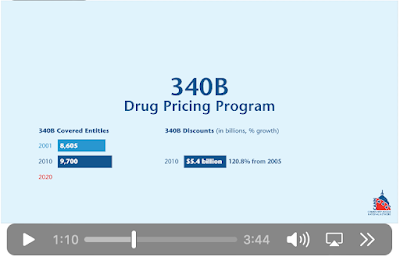
There are probably fewer issues that generate such passion than the need to reform the 340B Drug Discount Program. Macsata (me) offered his perspective on clarifying the purpose and intent of the 340B program, including why reforming the program is in the best interest of the patient community. The program was a well-intended attempt to increase access to prescription drugs for low-income, uninsured patients, and in many ways it has succeeded in doing so. There is no doubt that the program has plugged the funding gaps for many Covered Entities – including Ryan White grantees, and Federally Qualified Health Centers – and that, by in large, federal grantees are not abusing the program to the extent done by hospitals. 

Insufficient funding increases approved by Congress coupled with the lack of buy-in from state legislatures for additional dollars has led many federal grantees to overly rely on their 340B revenue. No matter the program's success, it is no excuse to turn a blind eye to the waste, fraud and abuse that actually serves to hamper even greater patient access, nor is it fruitful to grant a pass to federal and state legislators for failing to appropriate adequate funding for public safety-net programs.

In 2021, annual 340B-related purchases by Covered Entities totaled $43.9 billion, up from only $12.2 billion only six short years ago. Whereas hospitals accounted for most of the growth,[1] federal grantees also benefited from the lucrative revenue stream. In theory, that is good news because it would mean more patients are gaining access to prescription drugs. But in practice, providers are not required by law to apply the discounted savings to patients and there are numerous reports where "charity care" offered to patients has declined over the same six year period. Ryan White grantees, however, aren't absent from program abuse, with several attendees identifying excessive executive compensation as an example. One participant rightly and repeatedly reminded the group, “there are no requirements as to how those dollars are spent.”

In fact, a recent study concluded: "Seventy-two percent of private, nonprofit hospitals had a fair share deficit, meaning they spend less on charity care and community investment than they received in tax breaks."[2] The abuses by hospitals has resulted in a growing number of pharmaceutical manufacturers to place restrictions on their 340B discounts, which isn't necessarily a good thing especially if those restrictions are inadvertently hurting federal grantees. The ADAP Advocacy Association and the Community Access National Network (CANN), back in October 2020, issued a Dear Colleague letter to our industry partners in the pharmaceutical manufacturing space surrounding HIV therapies. The letter sought a carve-out for Ryan White grantees. 

During the discussion, stakeholders kept coming back to a question one attendee asked, "Where does the patient in all of this mess?" Clearly the hospitals benefit from the program, as do federal grantees, as well as contract pharmacies and pharmacy benefit managers (PBMs). In each case, dollars can be tied directly to the program's participants measured by the revenue being reported...except for the patients. It begged the question: Is the program benefitting providers, or patients? That question became more evident because three recent studies found that consumers in the United States are burdened by $195 billion in medical debt. Yes, billion!

Generally, there was agreement that the 340B Drug Discount Program is long-overdue for an update. Diving into the specifics over what needs to be reform saw a bit more variation of opinion. 

340B Drug Pricing Program
Photo Source: CANN YouTube Channel

The following materials were shared with retreat attendees:

Editor's Note: The ADAP Advocacy Association has offered opinions on 340B over the last several years, including Industry’s Changes to 340B Drug Discount Program (April 2022), 340B – Reply Hazy, Try Again (January 2020), The Federal 340B Program: A Call to Order (March 2019), and 340B Program: Don't Throw the Baby Out with the Bathwater (March 2017)

Covid-19's Impact on Public Health:

Covid-19’s impact on public health programs remains constant, evidenced by a slew of recent news reports documenting area after area falling behind with respect to efforts on prevention, testing, and treatment. Jen Laws took the liberty of deviating the discussion away from policy issues in favor of assessing patient advocacy and provider services as a response. With concentration on sustainability and succession planning, participants reflected how the crisis phase of the pandemic highlighted not just the weaknesses in public health programs, but also re-emphasized the need for HIV advocacy to consider appropriate succession planning and mentorship, as much as our service organization partners need to find room in their budgets to hire enough staff to not burn out their existing staff. 

Reminding the audience, Laws reflected, “Because eventually Bill Arnold dies.” The statement hit home for the room’s audience, referring to the empty seat draped in the fishing vest with the AIDS red ribbon on the lapel once worn by our Lion of HIV/AIDS advocacy. The group agreed that agencies need to plan better, and they have to be willing to make these investments now, not later. 

The discussion also focused on how the Covid-19 challenges have been further complicated by the emergence of yet another public health crisis: Monkeypox. The public health infrastructure is literally at a breaking point, which isn't helped by ongoing public attacks by certain politicians seeking nothing more than soundbites. 

Sign that reads: Get Tested for COVID Today"
Photo Source: MedPage Today

The following materials were shared with retreat attendees: 

The ADAP Advocacy Association would like to publicly acknowledge and thank Jen Laws for facilitating this important discussion.

Additional Fireside Chats are planned for 2023.

[1] Pitts, Peter J. and Robert Popovian (Fall 2022). 340B and the Warped Rhetoric of Healthcare Compassion. Food and Drug Law Institute. Retrieved online at https://www.fdli.org/2022/09/340b-and-the-warped-rhetoric-of-healthcare-compassion/

Disclaimer: Guest blogs do not necessarily reflect the views of the ADAP Advocacy Association, but rather they provide a neutral platform whereby the author serves to promote open, honest discussion about public health-related issues and updates.