Showing posts with label CVS Health. Show all posts

Thursday, March 5, 2026

The Medical Monopolies Monopolizing Modern Medicine

By: Marcus J. Hopkins, Health Policy Lead Consultant, ADAP Advocacy

Imagine a scenario where every aspect of your healthcare is owned by the same company—your health insurance, your doctor, your pharmacist, and the company that manufactures the medication you’ve just purchased. For many Americans, this is already a reality.

Enter CVS Health.

CVS Health
Photo Source: Barchart

When most people hear “CVS,” they think of the national chain of pharmacies with over 9,000 locations across the United States. They think of either filling a prescription, buying a holiday greeting card, or buying other small retail items.

What they don’t often think of is the fact that CVS Health doesn’t just own pharmacies; they own:

  • Aetna, the health insurance giant serving over 36 million Americans;
  • Oak Street Health medical clinics, the American Association of Retired Persons (AARP)-approved primary care provider for older and disabled Americans on Medicare;
  • CVS Caremark, the pharmacy benefit manager (PBM) that negotiates drug prices that patients pay and which processes nearly 30% of all prescriptions in the United States in a given year; and,
  • Cordavis, a relatively new pharmaceutical company created by CVS to manufacture biosimilar medications.

As Representative Alexandria Ocasio-Cortez (D-NY-14), during a hearing in the Health Subcommittee of the Committee on Energy and Commerce, put it when questioning CVS Health’s CEO, “Mr. Joyner, this is quite a bit of market concentration. Wouldn't you agree?” (AOC, 2026).

Joyner’s response was typical of companies that control a monopoly:

“No, I wouldn't agree that it's market concentration. I would suggest it's a model that works really well for the consumer.” (AOC, 2026).

CVS Health’s former CEO, Karen S. Lynch, very succinctly summed up the company’s strategy in 2024:

Many of our four million Medicare Advantage members can have access to our Oak Street clinics. We have a captive audience with benefit designs that can support the physicians [in the clinics]. We can drive patients to [the Oak Street health centers] (Japsen, 2024).

The often glib responses from health insurance CEOs did not go unnoticed in the Senate.

On February 11th, Senators Elizabeth Warren (D-MA) (seen right) and Josh Hawley (R-MO) (seen left) introduced the “Break Up Big Medicine Act of 2026,” a bill that would prevent PBMs, insurers, and prescription drug and medical device wholesalers from being owned by the same company.

Senator John Hawley and Senator Elizabeth Warren
Photo Source: The Wall Street Journal

The “Break Up Big Medicine Act of 2026” would:

  • Prohibit a parent company from owning a medical provider or management services organization and a PBM or an insurer;
  • Prohibit a parent company of a prescription drug or medical device wholesaler from owning a medical provider or management services organization;
  • Require that a company in violation of these provisions come into compliance within one year of the bill’s enactment;
  • Create automatic penalties if a company fails to comply in a timely manner, including disgorgement of profits and forced sales of assets;
  • Enable the Federal Trade Commission (FTC), Department of Health and Human Services, Department of Justice (DOJ), state attorneys general, and private parties to bring lawsuits against violators; and
  • Allow the FTC and DOJ to review and block future actions that would recreate the conflicts of interest prevented by the bill (Elizabeth Warren, 2026).

Essentially, this bill aims to break up healthcare monopolies in the United States.

About the legislation, Senator Hawley said:

Americans are paying more and more for healthcare while the quality of care gets worse and worse. In their quest to put profits over people, Big Pharma and the insurance companies continue to gobble up every independent healthcare provider and pharmacy they can find. Working Americans deserve better. This bipartisan legislation is a massive step towards making healthcare affordable for every American (Josh Hawley, 2026).

Senator Warren echoed:

There’s no question that massive health care companies have created layers of complexity to jack up the price of everything from prescription drugs to a visit to the doctor. The only way to make health care more affordable is to break up these health care conglomerates. Our bill would be a monumental step towards ending the stranglehold that corporate giants have on our broken health care system (Elizabeth Warren, 2026).

The CVS Health example is a classic case of a monopoly that should have been broken up before it even got started… but, since the 1980s, enforcement of antitrust and monopoly laws in the U.S. has been… spotty, at best.

Over time, more and more aspects of American society, life, and commerce have become “vertically integrated,” meaning that businesses—particularly in the technology and health sectors—have gone out of their way to purchase and control multiple stages and steps of supply chains.

According to many of the businesses that control these monopolies (e.g., Google, Amazon, Meta), these purchases are “great for consumers” because they centralize purchasing and make things “easier.”

As Mr. Joyner from CVS Health would argue, “…it's a model that works really well for the consumer.”

Matt Toresco, Founder and CEO of Archo Advocacy and Co-Founder of We The Patients, is a leading voice in patient advocacy. Toresco further highlights this issue:

Vertical integration industrializes the problem. It does not create it. The deeper issue is that we built a system where financial entities control access to care without carrying medical liability for the consequences. Insurers shape treatment through coverage design. Step edits. Fail first protocols. Closed formularies. Technically, they do not practice medicine. Operationally, they influence it every day. If a delay harms a patient, the physician carries the malpractice risk. The insurer carries none. That asymmetry drives everything. You can reduce integration. If you do not align authority with accountability, you will reorganize power instead of reforming it (Toresco, 2026).

AntiTrust Law Journal
Photo Source: AntiTrust Law Journal LinkedIn

A working paper published in the Antitrust Law Journal neatly summed up the lack of enforcement:

The decline of antitrust enforcement from the 1970s to the present was not achieved through legislative reform in response to public demand. It was the result of decisions made mostly in the shadow by politically unaccountable officials—judges and regulators—whose views of antitrust at the time of their appointment were (in most cases) not publicly known or perhaps even clear in their own minds.

To explore the potential forces behind this weakening, we considered two alternative hypotheses. The first is that these actions were the result of an enlightened elite of technocrats who promoted efficiency against the will of a Congress dominated by irrational populistic hostility to big business The alternative view is that big business drove a steady decline in antitrust enforcement against the public will to benefit itself. While we have no smoking gun, the evidence we collected provides more support to the second hypothesis than the first (Lancieri, Posner, & Zingales, 2022).

So, will the Break Up Big Medicine Act succeed?

Well, it’s hard to say.

But it’s a great first step.

Disclaimer: Guest blogs do not necessarily reflect the views of the ADAP Advocacy Association; rather, they provide a neutral platform for the author to promote open, honest discussion of public health-related issues and updates.

References:

[1] Alexandria Ocasio-Cortez. (2026, January 22). ICYMI: Ocasio-Cortez Calls Out CVS Health’s Corporate Strategy to Monopolize Patient Care. Alexandria Ocasio-Cortez: Press: Press Releases. https://ocasio-cortez.house.gov/media/press-releases/icymi-ocasio-cortez-calls-out-cvs-healths-corporate-strategy-monopolize

[2] Elizabeth Warren. (2026, February 10). Warren, Hawley Introduce Bipartisan Bill to Break Up Big Medicine. Elizabeth Warren: Newsroom: Press Releases. https://www.warren.senate.gov/newsroom/press-releases/warren-hawley-introduce-bipartisan-bill-to-break-up-big-medicine

[3] Japsen, B. (2024, February 08). CVS Stays With Clinic Expansion Strategy Despite Walgreens Woes. New York, NY: Forbes. https://www.forbes.com/sites/brucejapsen/2024/02/08/cvs-sticking-with-clinic-expansion-strategy-despite-walgreens-woes/

[4] Josh Hawley. (2026, February 11). Hawley, Warren Introduce Bill to Break Up Big Medicine. Josh Hawley. https://www.hawley.senate.gov/hawley-warren-introduce-bill-to-break-up-big-medicine/

[5] Lancieri, F., Posner, E. A., & Zingales, L. (2022, August). The Political Economy of the Decline of Antitrust Enforcement in the United States. Antitrust Law Journal, 85(2), 442-519. https://www.americanbar.org/content/dam/aba/publications/antitrust/journal/85/2/political-economy-decline-of-enforcement.pdf

[6] Toresco, M. (2026, February 26). BREAKING UP BIG MEDICINE WON'T FIX HEALTHCARE UNTIL WE BREAK UP STATE MONOPOLIES. Charleston, SC: Archo Advocacy: Archo Advocate Brief: Posts. https://archo-advocate-brief.beehiiv.com/p/breaking-up-big-medicine-won-t-fix-healthcare-until-we-break-up-state-monopolies

Thursday, January 29, 2026

Congress Shines Spotlight on Health Insurance Companies' Squeeze on Patients

By: Marcus J. Hopkins, Health Policy Lead Consultant, ADAP Advocacy

The CEOs of four major insurance companies—UnitedHealth Group, CVS Health, Elevance Health, and Cigna—testified before the House Committees on Energy and Commerce and Ways and Means on Thursday, January 22nd, 2026. It went poorly for them.

Insurance company CEOs testifying at a Congressional committee hearing
Photo Source: Kent Nishumara | Bloomberg | Getty Images

It is rare in the Year of Our Lord Two-Thousand, and Twenty-Six, for congressional enemies to join the same team when questioning witnesses, but health insurance companies seem to be one of the few industries left where bipartisan enmity is shared. And with good reason.

UnitedHealth Group, CVS Health, Elevance Health, and Cigna’s most recent financial reports indicate annual revenue growth ranging from 7.8% (CVS) to 12% (UnitedHealth & Elevance), continuing the pattern of insurers delivering for shareholders, but failing to deliver for patients.

In a statement issued after the two hearings concluded, Brandon M. Macsata, CEO of ADAP Advocacy, stated:

Patients in America are facing unprecedented increases in premiums, deductibles, and co-payments, while insurance giants make out like bandits. After Congress allowed the enhanced premium subsidies enacted during the COVID-19 pandemic to expire, marketplace benchmark premiums increased by an average of 21.7%, compared with the 2% annual increases seen from 2020 through 2025. Meanwhile, premiums increased between 6% to 7% in the employer-sponsored insurance market. These marketplace premium increases are both unconscionable and discriminatory, as they specifically target the patients who most need insurance.

These premium hikes are likely to have an outsized effect on People Living with HIV/AIDS, as most state AIDS Drug Assistance Programs assist enrollees through insurance continuation and premium and co-pay assistance.

But the issue runs deeper than premiums—one of the key moments from these hearings included an exchange between Representative Alexandria Ocasio-Cortez (D-NY-14) and CVS Health CEO, David Joyner:

Rep. Ocasio-Cortez correctly identified, explained, and excoriated Joyner for what CVS Health Group refers to as their “captive strategy.”

Rep. AOC Calls Out CVS Health’s Corporate Strategy to Monopolize Patient Care
Photo Source: Rep. Alexandria Ocasio-Cortez | YouTube

CVS Health Group not only owns CVS pharmacies, but also owns:

  • Aetna
    • The health insurance company providing insurance to over 36 million Americans (Aetna, 2026)
  • Oak Street Health
    • A system of primary care clinics serving over 350,000 people across 27 states (Oak St. Health, 2025)
  • CVS Caremark
    • A Pharmacy Benefit Manager (PBM) that negotiates prices for prescription medications, processing nearly 30% of all prescriptions in a given year for more than 110 million plan members in the United States (CVS Caremark, 2026); and,
  • Cordavis
    • A Dublin, Ireland-based drug maker that works with existing drug manufacturers to commercialize and/or co-produce biosimilar medications for the U.S. (CVS Health, 2023)

When asked whether this collection of companies constituted “market concentration,” Joyner responded:

No, I wouldn't agree that it's market concentration. I would suggest it's a model that works really well for the consumer” (Rep. AOC, 2026).

This response, so glibly delivered, is not unique; rather, it is typical of major corporations like Microsoft, Google, Meta (formerly Facebook), and Amazon, which control multiple companies within the same sector.

It all boils down to this argument:

“This isn’t a monopoly! No! It’s just…vertical integration! It’s what’s best for consumers!”

What they’re really saying is, “It’s what’s best for shareholders and my bank account.”

Over in the House Ways and Means Committee, Representative Greg Murphy (R-NC-03) stated unequivocally:

You have put profits above patients. And you have put profits above those who care for patients. You have squarely abused your position of authority to deliver healthcare to patients in this country (Parduhn, 2026).

Piggy bank with a stephoscope around it
Photo Source: WalletInvestor.com

Paul Markovich, CEO of the non-profit parent company that owns California Blues’ largest plan, was also present for these hearings, and spared no words in criticizing the American healthcare system:

Our healthcare system is bankrupting and failing us. I’ve come to the conclusion that the system will not fix itself. The healthcare system needs some tough love and clear direction, and the American government is in the best position to provide both (Parduhn, 2026).

Markovich truly hit the nail on the head here. The American healthcare system isn’t so much a system as it is a patchwork collection of profit-driven corporations, all of whom know that they have a captive market:

  • Drug manufacturers actively navigate the U.S. patent system to extend patents beyond their initial time period, secure numerous patents to cover the same product, use secondary patents to cover dosage changes, formulation changes (e.g., capsule to tablet), and even delivery methods (e.g., adding dosage counters to inhalers; Tu & Rutschman, 2025). Critics argue that these practices allow manufacturers to maintain control over the available treatment market, justify price increases, and maximize profits.
  • Health insurance companies actively utilize formulary management to deny access to life-saving medications either by excluding them from their formularies outright, creating labyrinthine prior authorization processes to access them, or forcing patients to switch to medications they deem as being “similar,” but which have not been actively prescribed as they are no longer the standard of care (Giebenhain, 2017).
  • PBMs act as intermediaries between individual or group pharmacies, insurance companies, pharmaceutical companies, and drug wholesalers, each of which is attempting to either save money or make a profit by (Mattingly II et al., 2023):
    • Designing formularies (i.e., determining which medications are available to patients)
    • Managing drug utilization (e.g., creating prior authorization requirements, including step-therapy, supply limits, and/or tiering medications based on their list prices or utilization)
    • Negotiating purchasing prices between pharmacies, wholesalers, and drug manufacturers
    • Forming pharmacy networks that lock patients into purchasing covered medications at specific locations (e.g., speciality pharmacies)
    • Providing mail-order pharmacy services
PBMs have come under consistent criticism over the past twenty years for creating market conditions that have limited competition. By 2023, 3 PBMs accounted for 79% of prescription drug claims in the U.S., and just 6 PBMs handle 96%. CVS Caremark accounted for 33% of all prescription drug claims, followed by Express Scripts (24%) and OptumRx (22%; Mattingly II et al., 2023).

Corporate profits soar; shareholders get paid; patients suffer.

This is the plight of the American Patient: getting left behind with more and more medical debt. Meanwhile, American life expectancy lags behind that of comparable nations (Sharfstein et al., 2024), even as we’re told we have “the best healthcare system in the world.”

Paul Markovich was right: the U.S. government is in the best position to fix the U.S. healthcare system. In all likelihood, however, it lacks the political will.

Disclaimer: Guest blogs do not necessarily reflect the views of the ADAP Advocacy Association, but rather they provide a neutral platform whereby the author serves to promote open, honest discussion about public health-related issues and updates.

References:

[1] Aetna. (2026). About Us. Hartford, CT: CVS Health Group: Aetna: About Us. https://www.aetna.com/medicare/footers/about-us.html

[2] CVS Caremark. (2026). About Us. Woonsocket, RI: CVS Health Group: CVS Caremark: About Us. https://business.caremark.com/about-us.html

[3] CVS Health. (2023, August 23). CVS Health launches Cordavis. Woonsocket, RI: CVS Health Group: New: PBM. https://www.cvshealth.com/news/pbm/cvs-health-launches-cordavis.html

[4] Giebenhain, K. (2017, June). Dirty Laundry: Drug Formulary Exclusions. AMA Journal of Ethics, 19(6): 629-630. https://doi.org/10.1001/journalofethics.2017.19.6.imhl1-1706

[5] Mattingly II, T. J., Hyman, D. A., & Bai, G. (2023, November 03). Pharmacy Benefit Managers: History, Business Practices, Economics, and Policy. JAMA Health Forum, 4(11): e233804. https://doi.org/10.1001/jamahealthforum.2023.3804

[6] Oak Street Health. (2025, May). The Gold Standard of Advanced Primary Care for Medicare Beneficiaries. Chicago, IL: CVS Health Group: Oak Street Health. https://www.cvshealth.com/content/dam/enterprise/cvs-enterprise/pdfs/2025/Oak-Street-White-Paper-2025-v2.pdf

[7] Parduhn, R. P. (2026, January 23). Insurance CEOs’ no good, very bad day on the Hill. Newton, MA: Informa TechTarget: Industry Dive: Healthcare Dive: News. https://www.healthcaredive.com/news/health-insurance-ceos-house-hearings-affordability/810269/

[8] Representative Alexandria Ocasio-Cortez [RepAOC]. (2026, January 22). Rep. AOC Calls Out CVS Health’s Corporate Strategy to Monopolize Patient Care  [Video]. YouTube. https://www.youtube.com/watch?v=ayNKCNhoD7w

[9] Sharfstein, J., Gemmill, A., Appel, L., Angell, S., Saloner, B., Horwitz, J., Villareal, S., Alvarez, K., & Ehsant, J. (2024, December). A Tale of Two Countries: The Life Expectancy Gap Between the United States and the United Kingdom. Baltimore, MD: Johns Hopkins University: Johns Hopkins Bloomberg School of Public Health. https://americanhealth.jhu.edu/sites/default/files/2025-02/2024 Life Expectancy Report.pdf

[10] Tu, S. S. & Rutschman, A. S. (2025, November 14). Mapping Intellectual Property Abuses in the Pharmaceutical Field. JAMA Health Forum, 6(11): e254938. http://doi.org/10.1001/jamahealthforum.2025.4938

Thursday, May 16, 2024

Federal Court Sides with Patients Over CVS Health's Attempt to Gut Non-Discrimination Protections

By: Ranier Simons, ADAP Blog Guest Contributor

The increasing consolidation of corporate health entities is of significant concern because of the vast number of lives affected. When companies control a substantial market share of services and products, every business practice has pervasive outcomes since so many end users are dependent on them. This is especially notable in the arena of prescription drug benefit management, where CVS Health is one of the most prominent players. CVS Health has a history of actions and practices that have proven to be problematic in the lives of many patients and consumers. Moreover, their practices have habitually adversely affected people living with HIV/AIDS (PLWHA). Recently, CVS unsuccessfully tried to evade a discrimination lawsuit due to their practices.

CVS Pharmacy sign
Photo Source: TheBody

In 2018, seven plaintiffs filed a class action lawsuit against CVS Health Corporation, claiming CVS discriminated against PLWHA based on their prescription plans' design and denying them meaningful access to their health benefits.[1] The employer-sponsored health plan the patients utilized, whose pharmacy benefits were managed by CVS, required them to use mail-order specialty pharmacy services or CVS chain pharmacy services to obtain their HIV medication and receive the in-network pricing. They could not use their preferred in-network community pharmacies without incurring significantly higher out-of-pocket costs.

Utilizing preferred in-network pharmacies results in optimal patient care and utilization of services. Local pharmacies allow face-to-face interactions with pharmacists familiar with patients’ medical histories and related needs. Additionally, they are often geographically more accessible than the CVS chain pharmacies. Mail-order dispensing can result in delayed medication, lost or stolen medication, damage to medicines due to exposure to the elements, and even privacy concerns.

Repeatedly, the plaintiffs petitioned both their employer and CVS to ‘opt-out’ to be able to use their preferred in-network pharmacy choices, which were considered in-network for non-HIV medications. Despite repeated communications and requests, neither CVS nor their employers allowed them to opt out.[1] As such, they brought the lawsuit alleging that CVS was engaged in discrimination based on HIV disability under the Affordable Care Act. CVS moved to have the case dismissed on several grounds.[2] Firstly, they argued that the case had no merit because several of the plaintiffs are now deceased. They also argued the case should be dismissed because a couple of plaintiffs are now on different plans not currently associated with the problematic CVS benefit issue in question. Most notably, they claimed that they were not aware that their policies directly affected the rights of a federally protected class. Additionally, they argued that the employers were responsible for not allowing the plaintiffs to opt-out, not CVS.

Hands raising
Photo Source: Chronic Disease Coalition

In April 2024, U.S. District Judge Edward Chen ruled that CVS’ request for dismissal would not be granted.[2] He ruled that CVS’s actions fulfilled the requirements of proving deliberate indifference. The legal term means that CVS was fully aware of the damage the benefit plan specifically had on the PLWHA’s medically necessary access to HIV medications but failed to act on it by making reasonable accommodations.[2] In addition to the well-documented communications between the plaintiffs and CVS, CVS internal reports indicated that CVS had been given previous legal guidance that their benefit design could be deemed discriminatory to a protected class. 

Judge Chen also ruled that CVS could not blame the employer. CVS was fully able to modify a plan structure whenever it wanted. Moreover, the plans CVS presented to employers to select for coverage contained financial incentives for forcing the use of mail-order and CVS-specific branded pharmacies for HIV medication and other specialty drugs.[2] It was proven that CVS had other plans that allowed patients to opt out but did not make those options available for the employers in question. Unfortunately, Judge Chen ruled against the plaintiffs, stating they could not sue for monetary damages from the thousands of dollars they had paid out of pocket to get their medications from their preferred community pharmacies. Regardless, the plaintiffs legally have standing for the case to proceed because of Chen’s denial of the dismissal. 

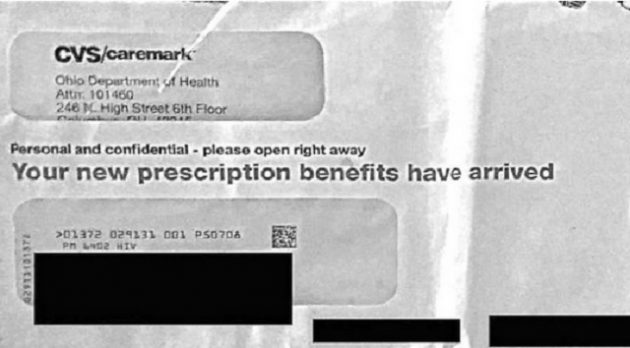
As a result, CVS was sued in a separate lawsuit in 2018 for errantly publicly disclosing the HIV status of over 6,000 Ohio residents.[3] The Ohio AIDS Drug Assistance Program (OhDAP) had a contract with CVS where CVS provided HIV medications to OhDAP clients and handled communications with those members. The suit alleged that in the third quarter of 2017, CVS mailed out a letter containing membership cards, information about how to obtain HIV medications, and other program information to 6,000 clients. This mailing was in an envelope with a clear plastic window with a short reference code for the mailing list, ‘PM 6402 HIV’ printed above the recipient’s name. The plaintiffs sought legal remedy because the mailer "resulted in the potential or actual disclosure of recipients' HIV status to numerous individuals, including their families, friends, roommates, landlords, neighbors, mail carriers, and complete strangers."[4]

CVS Caremark mailer
Photo Source: KRSO

The mailing was not only negligent in its handling of protected health information but was seemingly profit-driven. At the time of the mailing, many of the recipients did not have an established relationship with CVS. The mailer was sent regardless of whether the recipients were active CVS pharmacy customers. It was a way to market the usage of not only CVS pharmacy benefit products but also its general health care delivery services.[5] In 2020, CVS agreed to settle the lawsuit for $4.35 million.[6]

CVS is not the only problematic player in the corporate healthcare arena. However, their actions and core paradigms are consistently antagonistic to the best interests of PLWHA and others utilizing specialty drugs. In a briefing presented to payors in 2021, CVS Caremark listed strategies it would employ to save money. Regarding activities in response to new drugs in the market, some of its planned actions included: initially blocking coverage of new drugs, reviewing for clinical appropriateness and cost-effectiveness prior to formulary decision, applying aggressive clinically appropriate utilization management criteria with rigorous approval requirements, strongly favoring generic use requiring objective evidence of need for newer agents, and selecting preferred agents generating lowest net cost option in each category.[7]

Jen Laws, CEO of Community Access National Network, summarily describes CVS, stating: “CVS engages in aggressive self-dealing practices and anti-competitive contract efforts to eliminate competition, drive patients to their own pharmacies (including by way of under reimbursement to independent, non-chain pharmacies and higher cost-sharing for patients utilizing their trusted pharmacies), and roundly limit access to care by weaponizing their PBM.” It seems that keeping a continued focus on CVS will be necessary to highlight and act against present and future practices that harm patients.

[1] Third Amended Class Action Complaint. (2023, October 24) ). Retrieved from https://consumerwatchdog.org/wp-content/uploads/2023/11/2023-10-24-241_Third-Amended-Complaint.pdf

[2] John Doe One et al. v. CVS Pharmacy Ruling. (2024, April 18). Retrieved from https://www.courthousenews.com/cvs-medication-program-discriminates-against-hiv-aids-patients-judge-says/john-doe-one-et-al-v-cvs-pharmacy-et-al-mtd-ruling/

[3] Doe One et al. v. CVS Health Corporation et al. (2018, March 21). Retrieved from https://dockets.justia.com/docket/ohio/ohsdce/2:2018cv00238/211764

[4] Faul, A. (2018, March 29). CVS Health unintentionally revealed HIV status of 6,000 customers: Lawsuit. Retrieved fromhttps://abcnews.go.com/Health/cvs-health-unintentionally-revealed-hiv-status-6000-customers/story?id=54095674

[5] Schladen, M. (2018, June 29). State, CVS sued over HIV mailing. Retrieved from https://www.dispatch.com/story/news/politics/elections/2018/06/29/state-cvs-sued-over-hiv/11624806007/

[6] AIMED Alliance. (2020, May 15). CVS Health to Settle Lawsuit for Revealing HIV Status of Over 4,500 Patients. Retrieved fromhttps://aimedalliance.org/cvs-health-to-settle-lawsuit-for-revealing-hiv-status-of-over-4500-patients/

[7] Accetta, L. (2021). Expanding therapies, indications and implications for payors: Pipeline trends that will drive change in 2022. Retrieved from https://business.caremark.com/insights/2021/expanding-therapies-indications-and-implications-payors.html   

Disclaimer: Guest blogs do not necessarily reflect the views of the ADAP Advocacy Association, but rather they provide a neutral platform whereby the author serves to promote open, honest discussion about public health-related issues and updates.