Showing posts with label Connecticut. Show all posts

Thursday, April 30, 2026

Connecticut’s Misguided Medicaid Proposal Places People Living with HIV/AIDS at Risk

By: Marcus J. Hopkins, Health Policy Lead Consultant, ADAP Advocacy

The Office of Connecticut Governor Ned Lamont released its Fiscal Year 2027 Recommended Budget Adjustments document (Office of Policy and Management, 2026), in which they recommend removing antiretroviral medications used to treat HIV from the Medicaid exclusion list and adding them to the state’s Preferred Drug List (PDL). Earlier this year, Colorado’s Department of Health Care Policy and Financing (HCPF) considered modifying its protected drug classes and allowing prior authorization for select drugs, a move that threatens to undermine that progress.


CT Governor Ned Lamont
Photo Source: SHAHRZAD RASEKH / CT MIRROR

This week, ADAP Advocacy joined HealthHIV in issuing a joint statement on the proposal. Both organizations submitted public comment to the Connecticut General Assembly, maintaining that the health of Connecticuters living with HIV/AIDS is being put at risk if the protected drug class is weakened by adding antivirals to the state’s PDL. To read the public comment, click here.


What is a Medicaid Drug Class Exemption?


At issue in Connecticut is the exemption of medications used to treat HIV/AIDS from being included on the state’s PDL.


An “exemption,” in this case—also known as an exclusion or an exception—means that the medications are considered necessary for patients’ continued good health or survival, and therefore should not be included on the PDL, a tool that is specifically designed to restrict which medications will be covered for patients by limiting coverage to medications for the purpose of cutting costs or limiting expenditures. Exemptions are usually applied to entire classes of drugs and typically include medications used to treat HIV, cancer, and epilepsy. This practice is commonly referred to as the Protected Drug Class (PDC).


Exemptions can be whole—as is the case with medications used to treat HIV—or class-specific, such as medications used to treat mental health issues and epilepsy, in which cases prescriptions are not subject to step-therapy requirements that would require patients to try other medications prior to being prescribed the one they actually need.


The six protected classes
Photo Source: MedicareFAQ

Why Adding Medications to Treat HIV to the PDL is a Bad Idea


When a class of medications is exempted from inclusion on a PDL, medications in that class cannot be subject to prior authorization (PA) requirements, patients are able to access the medications that work best to treat their specific strain of HIV, and patients are not forced to endure delays or administrative red tape that might prevent them from accessing and taking the medications they need to stay alive.


In its budget adjustment document, Connecticut has made a craven attempt to justify including HIV medications on the PDL by suggesting—incorrectly—that medical advances in HIV therapies merit this change:

Now, over two decades later, there have been significant advances in the treatment of HIV and, in recognition of this, the Governor is proposing to lift the current restrictions and include antiretroviral medications on the preferred drug list. This will not only allow the state to receive supplemental rebates on these drugs, but it will also allow for better management of these medications as their inclusion on the preferred drug list will help to ensure practitioners are aligning with clinical criteria and best practices (OPM, 2026).

Not only is this assumption wildly incorrect, but it also amounts to medical malpractice by the State of Connecticut. And all so the state can reap drug rebates to offset expenditures.


Advancements in the quality, tolerability, and efficacy of HIV treatment regimens do not mean that every patient’s HIV can be treated with the same medication.


HIV—a retrovirus that uses reverse transcriptase enzymes to turn its ribonucleic acid (RNA) into deoxyribonucleic acid (DNA), making itself compatible with a person’s own DNA—evolves extremely rapidly, exhibiting the highest recorded biological mutation rate of any organism currently known to science. This is largely due to the reverse transcriptase process, which is prone to errors during viral replication (Andrews & Rowland-Jones, 2017).


In lay terms, this means that medications used to inhibit the reverse transcriptase process—nucleoside reverse transcriptase inhibitors (NRTIs, such Truvada) and non-nucleoside reverse transcriptase inhibitors (NNRTIs, such as rilpivirine, used as part of the Cabenuva long-acting injectable regimen)—are vital for not only maintaining viral suppression, but for ensuring that the HIV virus, itself, is not given a chance to mutate.


What this means for patients is that, once they begin treatment for HIV, lapses in treatment can lead to the HIV virus mutating to create multidrug-resistant strains of the virus. Essentially, if patients suddenly stop taking a medication without replacing it with another NRTI or NNRTI, they risk developing a strain of HIV that is more difficult and more expensive to treat.


Medical claims denial form
Photo Source: Medwave

What Can People Do to Prevent These Changes?


Under current Connecticut law, medications to treat HIV are exempt from inclusion on the PDL precisely because of the nature and rapid mutation of the HIV virus. Changing this drug class exemption literally places the lives of not only people currently living with HIV/AIDS at risk, but also those who might contract a multidrug-resistant strain of HIV from someone whose medications were delayed or no longer covered by Connecticut’s Medicaid program.


Alex Garbera, a long-term survivor of the HIV/AIDS epidemic and patient advocate residing in Connecticut, stated:

“Under current law, classes of antiretroviral drugs are exempt from prior authorization requirements and cannot be included on preferred drug lists. But what the Governor is proposing undermines that protection. PDLs, under the cloak of saving money, may be selecting drugs that are not based on patient needs but on the number of rebates received by the state from drug manufacturers. Sadly, prior authorization is far too common but still imposes an administrative burden on providers, can cause delays in obtaining needed medication, and could result in denial, subject to an appeal process. In my humble opinion, I would say keep the current law exactly as it is for HIV medications, given the complicated medical issues involved.”

For full Bill information, visit:


https://www.cga.ct.gov/asp/cgabillstatus/cgabillstatus.asp?selBillType=Bill&bill_num=HB05040&which_year=2026#


To locate your CT State Legislators, go to:


https://www.cga.ct.gov/asp/menu/cgafindleg.asp


To contact the CT Governor's office, visit:


https://portal.ct.gov/governor/contact-the-governor?language=en_US


The HIV Medicine Association (HIVMA) published an important fact sheet, outlining the potential harm done to HIV-positive patients by allowing prior authorization with HIV medicines, which would be allowed by states adding antivirals to PDLs. ADAP Advocacy will continue to monitor this situation, as well as monitor actions that may be taken in other states that place patients at risk.


Disclaimer: All funders of the ADAP Advocacy Association are publicly listed on our website


Disclaimer: Guest blogs do not necessarily reflect the views of the ADAP Advocacy Association; rather, they provide a neutral platform for the author to promote open, honest discussion of public health-related issues and updates.

References:

[1] Andrews, S. M. & Rowland-Jones, S. (2017). Recent advances in understanding HIV evolution. F1000Research, 6, 597. https://doi.org/10.12688/f1000research.10876.1

[2] Office of Policy and Management. (2026, February 04). FY 2027 recommended budget adjustments. Hartford, CT: State of Connecticut: Office of Policy and Management: Budget Document Home. https://portal.ct.gov/-/media/opm/budget/2027-midterm/governors-budget-2027-web-version-3-5-26.pdf?rev=8fedbe3df5384f6fa74c78846ec50017&hash=626EFF74CC89DC9E3949C627466B69D9

Thursday, September 12, 2024

Fireside Chat Retreat in New Haven, CT Tackles Pressing Public Health Issues

By: Brandon M. Macsata, CEO, ADAP Advocacy

ADAP Advocacy hosted its Health Fireside Chat retreat in New Haven, Connecticut among key stakeholder groups to discuss pertinent public health issues facing patients in the United States. The Health Fireside Chat convened Thursday, September 5th through Saturday, September 7th. An analysis of the negative impact pharmacy benefit managers (PBMs) are having on the nation's drug supply chain, how state prescription drug "affordability" boards (PDABs) are threatening to undermine the 'Ending the HIV Epidemic' initiative, and the explosive growth in executive compensation among Covered Entities participating in the 340B Drug Pricing Program were each evaluated and discussed by the 31 diverse stakeholders.

FDR Fireside Chat
Photo Source: Getty Images

The Health Fireside Chat kicked-off with a stakeholders reception. The retreat also featured three moderated white-board style discussion sessions on the following issues:

  • Ripple Effect: How PBMs and Counterfeit Drugs Threaten Patients — moderated by Shabbir Imber Safdar, Executive Director at Partnership for Safe Medicines (PSM) 
  • Prescription Drug Affordability Boards: A Threat to Ending the HIV Epidemic — moderated Jen Laws, President & CEO at Community Access National Network (CANN)
  • 340B Greed: Rising Revenues, Rising Executive Compensation, Rising Medical Debt...but Lower Charity Care — moderated by Brandon M. Macsata, CEO at ADAP Advocacy & Marcus J. Hopkins, Executive Director, Appalachian Learning Initiative (APPLI)

The discussion sessions were designed to capture key observations, suggestions, and thoughts about how best to address the challenges being discussed at the Health Fireside Chat. The following represents the attendees:

  • Tez Anderson, Executive Director, Let's Kick ASS (AIDS Survivor Syndrome)
  • Guy Anthony, President & Founder, Black, Gifted & Whole Foundation
  • Ninya Bostic, National Policy and Advocacy Director, IDV, Johnson & Johnson
  • Erin Bradshaw, EVP, Advancement of Patient Services & Navigation, Patient Advocate Fndn.
  • Caleb Brown, Patient Advocate, and Research Associate, Yale University 
  • De’Shea Coney, Vaccine Access and Equity Coordinator, Iowa Department of Health
  • Brady Etzkorn-Morris, Patient Advocate
  • Earl Fowlkes, President & CEO, Center for Black Equity — unable to attend
  • Vanessa Gannon, Head, Issue Advocacy, Genentech — unable to attend
  • Alexander Garbera, Member, New Haven Mayor’s Task Force on AIDS, City of New Haven, CT
  • Dusty Garner, Patient Advocate
  • Kelsey Haddow, Patient Engagement, Rare Access Action Project (RAAP) 
  • Marcus J. Hopkins, Founder & Executive Director, Appalachian Learning Initiative
  • Lisa Johnson-Lett, Peer Support Specialist, AIDS Alabama
  • Ben Kelly, Senior Vice President of Pharmacy Management, Maxor National Pharmacy Services — unable to attend
  • Jax Kelly, President, Let's Kick ASS (AIDS Survivor Syndrome) Palm Springs
  • Karen King, Harm Reduction Specialist
  • Kamaria Laffrey, Co-Executive Director, The SERO Project
  • Jen Laws, President & CEO, Community Access National Network
  • Kevin Lish, Patient Advocate, and Finance Director, SERO Project
  • Brandon M. Macsata, CEO, ADAP Advocacy
  • Judith Montenegro, Program Director, Latino Commission on AIDS
  • Steve Novis, Director, Community Alliances & Government Relations, ViiV Healthcare
  • Warren O'Meara-Dates, Founder & CEO, The 6:52 Project Foundation — unable to attend
  • David Pable, Patient Advocate
  • Kalvin Pugh, Patient Advocate
  • Shabbir Imber Safdar, Executive Director, Partnership for Safe Medicines
  • Dmitri Siegel, Alliance Development Director, Bristol-Myers Squibb
  • Ranier Simons, Policy Consultant, Community Access National Network
  • Jonathan Sosa, Patient Advocate
  • Robert Suttle, Patient Advocate
  • Nicole Tomassetti, Government Affairs Associate, Capitol Strategies Group
  • Jeremy Toney, Patient Advocate, and Research Coordinator, Henry Ford Health
  • Denise Tucker, Executive Director, State Policy, Merck
  • Olivier Viel, Associate Director, Policy & Government Affairs, Merck

Health Fireside Chat

ADAP Advocacy is pleased to share the following brief recap of the Health Fireside Chat.

Pharmacy Benefit Managers:

The first policy session was Ripple Effect: How PBMs and Counterfeit Drugs Threaten Patients, which was led by the Partnership for Safe Medicine's (PSM) Executive Director, Shabbir Imber Safdar. PSM is committed to the safety of prescription drugs and protecting consumers against counterfeit, substandard or otherwise unsafe medicines. Shabbir shared some general background on PBMs, and what they have to do with the cost of medicines. In doing so, Shabbir also dissected the role PBMs play in the cost a pharmacy pays for and gets reimbursed for medicine they dispense you? Using several attendees as props, attendees witnessed how pharmacies often lose money on filling high-cost prescriptions, as well as how patients unknowingly put other patients at risk by selling their prescriptions to criminal counterfeiter rings pretending to be "Buyers Clubs" trying to help patients. The discussion also did a deep dive on online pharmacy-only marketplaces, and how these criminal rings get these diverted and counterfeit medicine.

Be on the lookout for profiles and chats like these

Earlier this year, PSM published a report unveiling how criminal entities exploit vulnerabilities in the supply chain, made worse by PBMs, whose reimbursement policies often leave pharmacies on the edge of financial viability. According to that report, "Over the past decade, PBMs have been cutting the reimbursements pharmacies receive for the medicine they dispense to insured patients into smaller and smaller amounts. In many places, those reimbursements don’t fully cover the acquisition cost of medicine. Pharmacies now routinely dispense medication that they lose money on."

The discussion also largely centered around how the problem is being exacerbated by these criminal rings are using dating apps, such as Grindr, to targeted unsuspecting patients. Earlier this year, ADAP Advocacy, in collaboration with PSM, issued an important safety alert warning Grindr's users to stop selling their HIV and other medications on the popular gay dating App. Medicine buyback schemes falsely claim to be "Buyers Clubs" making medicine available to people who cannot afford them. In reality criminals buy medicine, and sometimes empty bottles, from patients and sell them at a discount to unsuspecting pharmacies who dispense it to patient victims. The safety alert urged Grindr's users to be more mindful of patient safety.

The following materials were shared with retreat attendees:
ADAP Advocacy would like to publicly acknowledge and thank Shabbir for facilitating this important discussion.

PDABs:

The discussion, Prescription Drug Affordability Boards: A Threat to Ending the HIV Epidemic, was led by the Community Access National Network's (CANN) President & CEO Jen Laws. CANN focuses on public policy issues relating to HIV/AIDS and viral hepatitis. Previously characterizing PDABs as "price control wolves in sheep's clothing", Jen once again stressed the potential dangers behind these entities making potentially life and death decisions without having all of the facts and real-world implications of how those decisions could adversely impact patient care. Aside from cancer drugs, antiretroviral therapies for HIV are disproportionally being targeted by PDABs in numerous states. The mechanism being eyed by these boards to "control" drug costs is what is known as the Upper Payment Limit (UPL), which is the maximum reimbursement rate above which purchasers throughout the state may not pay for prescription drug products.

Prescription Drug Affordability Boards: A Threat to Ending the HIV Epidemic?
Photo Source: CANN

Earlier this year, CANN untangled the warnings and concerns regarding PDABs. On the surface, they are presented as a simple solution to a complex issue. As further background, Jen pointed to an analysis done by CANN's State Policy Consultant, Ranier Simons, in which he summarized: "The complex problem is the extremely high healthcare expenditure in the United States. Accessing modern healthcare results in high amounts of spending from costs associated with hospitals and other facilities, medical technology creation and utilization, and even prescription drugs. Although prescription drug expenditures are only a small part of the billions spent annually on healthcare, the price of prescriptions is the low-hanging fruit that PDABs aim to attack. The money patients pay for prescription drugs is assuredly a financial burden for many. However, while PDABs aim to expressly lower the direct cost of prescription drugs for patients, their trajectory does not achieve that goal. Their actions have the potential to cause access issues in addition to potentially increasing out-of-pocket costs to consumers. This is especially true since the primary means PDABs lean toward to lower costs is the upper payment limit. Moreover, while CANN has a focus on PDAB potential outcomes regarding HIV drugs, all drugs are of concern, given that people living with HIV (PLWH) have multiple co-morbidities. Any threat to any drug utilized by vulnerable chronic disease communities is a threat to all."  

Jen walked attendees through how 340B rebates, often the lifeline for smaller, community-based providers, could be drastically reduced as a result of the "affordability determinations" being made by PDABs. He noted how CANN has routinely pushed back against the fast-paced approach in some states to rush into making affordability determinations, including submitting testimony to the PDABs in both Colorado and Maryland. Jen outlined why UPL adjustments won’t address patient access or affordability, nor will is save patients a dime. He demonstrated his point with a fictitious provider and the 340B rebates it would receive under current law, as compared to the amount after UPL adjustments. Most providers would be forced to cut services, layoff staff, and potentially cease operations.

The following materials were shared with retreat attendees: 

ADAP Advocacy would like to publicly acknowledge and thank Jen for facilitating this important discussion.

340B:

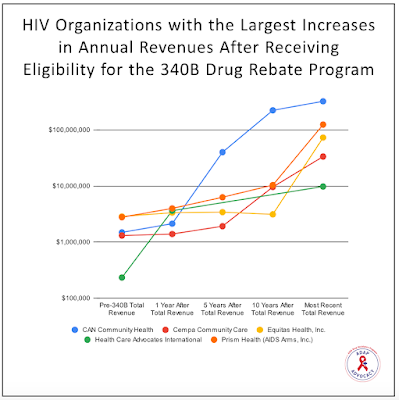
Marcus J. Hopkins, Founder & Executive Director, Appalachian Learning Initiative, concluded the retreat with a discussion focused on the 340B Drug Pricing Program and its potential impacts on the annual revenues and executive compensation amounts at Covered Entities that are eligible to receive rebates from the program, as well as the provision of charity care at cost by hospital entities who qualify. There has been an exponential increase in the number of Covered Entities from 1992 to 2021, increasing from just ~1,000 entities in 1992 to over 50,000 in 2021 (increasing from 12,700 in 2020 as a result of relaxed standards and enforcement due to the COVID-19 pandemic), which Jen Laws, President & CEO of the Community Access National Network, explained, along with additional insights from other attendees with professional knowledge of the program, that the first major increase that occurred in 2010 happened because the Health Resources Services Administration (HRSA)—the federal agency in charge of administering the program—lifted the cap on the number of contract pharmacies with which covered entities could provide medications. This decision essentially allowed organizations that did not have an on-site pharmacy to contract with external pharmacies to provide their services either at another in-person location or via mail delivery, which was becoming a more popular way to provide medications in the late-2000s and early-2010s.

HIV Organizations with the Largest Increases in Annual Revenues After Receiving Eligibility for the 340B Drug Rebate Program

The discussion brought attention to many of the barriers encountered when attempting to access information about 340B revenues from Covered Entities other than those that qualified as an AIDS Drug Assistance Program (ADAP) entity, including (but not limited to):

  • The total lack of transparency required by HRSA for non-ADAP covered entities to disclose the amount of revenues received from the program or how those revenues are utilized;
  • The numerous methods through which hospitals are able to legally create multiple other legal entities to shift funds, profits, and losses away from the primary hospital, and;
  • The ability of hospitals to purchase other hospitals and private practices and counting those purchases as both revenues increases and losses on separate line items in the federal and state tax filings.

This brought up the issue of vertical integration—the practice of a company purchasing and controlling different stages within a chain of goods or services. For example, large hospital systems across the United States have spent much of the last two decades purchasing regional hospitals, local private practices, and private pharmacies, essentially making themselves the largest single employers in many states. This benefits the hospital system by increasing their revenues through ensuring that they are essentially the only providers of healthcare services and medications in a region. This allows them to absorb the 340B revenues from many of these entities, as each entity they purchase (known as "child sites") then fall under their 340B eligibility. Major hospital systems, such as Bon Secours Mercy Health based in Virginia, have been accused of using 340B revenues (which are supposed to be utilized to increase the availability and affordability of care for lower-income patients) to open new locations in more affluent areas in order to decrease the amount of uncompensated care and increase the amount of paid services, further driving up annual revenues.

Questions centered around how ADAP Advocacy (and CANN) can better elucidate abuses in the 340B program by hospital entities and mega service providers, but also highlighting good faith actors—Covered Entities who are using the program as it was intended to be used—in order to better compare and contrast the difference between Covered Entities.

The following materials were shared with retreat attendees:

ADAP Advocacy would like to publicly acknowledge and thank Marcus for facilitating this important discussion.

Additional Fireside Chats are planned for 2024 in New York City (December).

Disclaimer: Guest blogs do not necessarily reflect the views of the ADAP Advocacy Association, but rather they provide a neutral platform whereby the author serves to promote open, honest discussion about public health-related issues and updates.

Thursday, August 24, 2023

Reflections from an HIV Advocate's Journey: Rev. Alexander Garbera

By: Rev. Alexander Garbera, Co-Chair, New Haven Mayor’s Task Force on AIDS 

Life is a circle.  I remember spiking high fevers and having strange rashes in the Summer of 1980 while working on a Psychology master’s degree at Stony Brook University. It was a mystery. Cell phones and the Internet did not exist as we know them today. Information was scarce, and LGBQT persons led a shadowy existence. It seemed that attempted suicides were on the rise, and I believed part of the problem was isolation and a general distrust of established counseling centers.   

I thought creating a dorm-based counseling service might help individuals struggling with gender and issues of sexuality more accessible. A poster hanging outside my dorm door announcing the first meeting was set on fire. It burned through, and if I had been sleeping at that time, I would probably not be writing this blog today. 

Newspaper clipping
Photo Source: Stony Brook Satesman Vol. 23 No. 61 3/14/1980

I was traumatized. The words of the security guard are imprinted in my brain: “You’re a big boy, you can handle it.” It wasn't until the past few years I’ve really become keenly aware of trauma and how it affects us. The counseling project was put on hold and full attention was given to completing my studies, graduation and corporate ladder climbing. 

Having always been health conscious, I regularly checked into a STD clinic every six months. Something seemed strange though around 1984. The Long Island free clinic was re-designed and once open cubicles were now fully shielded by plexiglass. Even-though I never tested positive for any STDs, I was told: “you should go to New York City where homosexuals go. I should go to a homosexual clinic.” I hadn’t the slightest clue why or where to go.  

Employment brought me to CT instead. I found a gay physician and buried myself in my work. When at a Boston training seminar, I met someone. He wanted to move to CT, and so we decided to begin a healthy relationship, starting off with the new HIV test that just came out in 1986. I tested positive and was shocked, after all, I never had tested positive for any STDs… my partner at the time was extremely supportive. He said it did ‘t make a difference to him as he was putting together a portable BBQ grill.   His test results came a week later, also positive. Thus, a journey began but the healthy relationship soon turned out to be anything but. He never wanted to talk about it and didn’t want anyone to know. He acted out by drinking and I acted out by trying to control his drinking.   It was a volatile drama that catapulted me into Al-anon to return the focus onto me and my own sanity. 

At that time New Haven had a very large, strong, vibrant Gay AA and Gay Al-Anon groups that would periodically have joint meetings and annual convention called a Round-Up. It was a godsend. People talked about everything, well almost everything. Nobody mentioned the words HIV or AIDS, and I knew I wasn’t the only one. There is an Al-Anon slogan “Let it Begin With Me” and so I did start talking about my HIV. First at local group meetings, then at Round-Ups in Connecticut and Provincetown, giving workshops on being HIV positive and in recovery. Over the years individuals would bring it up claiming it saved their life.   I was appreciative but always reminded them the life they saved was of their own doing. (I have issues with compliments)

I didn’t do it to help others so much as it was necessary to talk about the feelings of living with HIV, being ejected from a dentist after disclosing my status, navigating life. The gay physician I was seeing frowned when I mentioned taking vitamins and things to boost natural immunity, so I switched to the new HIV clinic at YALE New Haven Hospital.   

It was so new they initially did not have a physical space for people with HIV/AIDS. We were combined within the Gerontology clinic. So, there I was a young gay man in his early 30’s, with an oxygen tank breathing aerosolized pentamadine next to an elderly man hooked up to his oxygen tank looking at me very puzzled wondering what I was doing there.

It also seemed that I never got to see the same provider more than once and felt very disconnected from my own care. When I attended a talk by Dr. Gary Blick, MD who mentioned a more holistic, cutting edge and educational approach I knew that as the right match for me. 

Life is a circle. Thinking of that old man looking at me seems ironic. I am now a senior, over 65 – but not requiring assisted breathing yet.   

In the recent past there have been a slew of workshops/ seminars on HIV and aging, responding to the fact that most people living with HIV are living longer and are now over 50 years old. 

This may seem intuitive as medication’s become less toxic and easier to take. It is not as simple as one might assume. A relatively recent study created headlines that “HIV May Speed Up the Body’s Aging Process” 

Yet, I am not seeing much structural adaptation to our aging HIV population, and non-HIV related medical research tends to exclude people with HIV.   

Accelerated aging issues and increased susceptibility to conditions more prevalent for older persons is not news for those long-term HIV survivors actively engaged in managing their health outcomes. Just as issues of HIV stigma and social isolation echo what many elderly faces. 

The accelerated aging process is what horrified people in the early days of the pandemic — before HIV’s discovery — as young gay man was exhibiting symptoms and dying of rare diseases more typical in elderly populations, particularly around the Mediterranean region. Now that we understand more about HIV and people with HIV are living longer there seems to be much less sense of horror giving way to apathy and ageism.   

We didn’t have the luxury of apathy “back in the day”— a phrase I lifted from a young nurse asking me questions about the 1980’s before he was born. Death was in our face.  People are still dying, but in far fewer numbers. We have also become more clinical about death, even secretive under the cloak of HIPPA and it no longer sparks any outrage. 

Back then, radical right preachers said AIDS was sent from God to punish homosexuals and drug users  (which probably is still around however unspoken). My response was that if it was sent by God, it was sent as a spotlight on our will to live and love ourselves and each other. Perhaps a test of our compassion and readiness of our social and medical institutions.   

Alex Garbera, 2006
Picture: 2006

In a chapter title “Living with Insanity” from Stories From the Other Side: Thematic Memoirs I wrote: “I think HIV/AIDS is here to teach us a few lessons. My fear is that unless we learn them, it is not going to go away and something worse will come along if we keep our heads buried in the sand.”  This came from a metaphysical principle that the lesson never goes away until it is learned.

As a spotlight, HIV has and continues to shine light to many of our phobias and isms: homophobia, transphobia, sexphobia, racism, classism, colonialism, ageism (to name a few) and all the intersections where they inevitably meet.   

If HIV is viewed as a spotlight on aging, it needs a very wide lens. Covid-19 raised the social isolation alarm to a deafening silence.  It wasn’t too long ago that the surgeon warned that loneliness is as dangerous to one’s health and longevity as smoking a pack of cigarettes a day. 

Upon hearing this and knowing the issues of increased susceptibility to certain illnesses and cancers correlated with HIV, the U.S. Surgeon General’s report almost made me want to smoke cigarettes.  

Of the many diverse long-term survivors, I know one of the shared themes is a strong unmet need for socialization, meaningful social interaction, intimacy, and lighthearted fun.

It is curious that in the early days of HIV there was less funding yet more community activities — at least in CT — such as weekend spiritual retreats, support groups, interfaith services, and healing circles. 

While it takes planning and resources to create relevant accessible senior support/socialization groups and creating supportive HIV senior housing, perhaps going back to the early days of HIV buddy programs would be a good/easy place to start?

Another difficult need is finding gerontological expertise in concert with expert HIV care. 

These structural changes require educating our aging HIV population as well as using trauma informed care to address complex post traumatic stressors (CPTSD) from accumulated of years of living with HIV. There are many levels of trauma and HIV stigma, and some can be very scarring, making isolation, however deadly, deceptively preferable. 

Very early on, when many PLWHAs were given only a few months to live, it was clear that survival alone was insufficient. Quality of life matters. 

The word “heal” means “to make whole.” We know what works, and in addition to medication supportive services such as housing, mental health, nutrition is crucial, just as addressing the disparities in health care and outcomes.  

There was a time when HRSA funded complimentary therapies such as medical massage, nutritional supplements, chiropractic care and acupuncture. These therapies helped PLWHAs deal with systemic inflammation, medication side effects, pain, and mobility issues.

With the war launched against opiate abuse I see very little of these alternatives coming back — and pain management an increasing nightmare. I wonder why the proceeds from opiate related lawsuits aren’t being channeled back into holistic therapies.

Quality of life also requires integrating life extension research factoring aging issues as well as the metabolic and inflammatory demands HIV incurs. Current programs directed at the health and well-being of clients such as nutritional programs need adjustments accordingly.  

HIV Aging issues are not academic. They may seem daunting, but the good news is there is much room for growth, change and novel approaches. 

Looking back at everything I would say that one should never underestimate the importance of being able to make a difference in one’s own life and others. Just as Margaret Mead said: “Never doubt that a small group of thoughtful, committed citizens can change the world; indeed, it's the only thing that ever has.”

If people were terrified when young persons were getting old people’s diseases and now those young-ins are old, can we re-ignite, or even approach, the same level of urgency, action, and care?

Alex Garbera
Picture: 2023

Disclaimer: Guest blogs do not necessarily reflect the views of the ADAP Advocacy Association, but rather they provide a neutral platform whereby the author serves to promote open, honest discussion about public health-related issues and updates.

Thursday, October 1, 2020

COVID-19's Impact on Connecticut's Latinos

By: Madeline Rodriguez, Executive Director, Latino Community Services

According to the Connecticut Department of Public Health HIV Surveillance Program, Latinos are disproportionally impacted by HIV-infection in the state. Nearly half of the Latinos living with HIV/AIDS in Connecticut are now over the age 50, but our Latinx generation is being hard hit by new diagnosis. (CDPH, 2020)

Latino Community Services, Inc. (LCS) was founded in 1986 as Latinos/as Contra SIDA in response to the need for culturally and linguistically competent services for Latinos in Hartford who were infected with and affected by HIV/AIDS.  The mission of LCS is to reduce the further spread of HIV/AIDS among Latinos and other at-risk populations and improve the quality of life and health of people living with HIV/AIDS. The clients at Latino Community Services come from all walks of life and are diverse in age, race and gender. LCS is a devout ally of the LGBTQI community and staff is dedicated to providing the best possible services so that everyone feels safe and welcomed.

Many of the individuals we serve have plenty of common ground. From battling with depression and anxiety to living with HIV/AIDS, and/or Hepatitis C and other health issues. Our clients, who are mainly black and brown people, are consistently disproportionately burdened with poor outcomes across these health conditions which are now layered by COVID-19. 

These individuals many times rely on human interaction such as our support groups; however since the pandemic, our support groups are now held virtually resulting in clients not engaging consistently .  The HIV/AIDS virus compromises the body's immune system which allows for common colds to be magnified due to the weakening of the clients' defense system (immune system). Meaning, a person who lives with HIV/AIDS has a greater chance of contracting coronavirus, hence many of our clients resorting to complete isolation as a precautionary measure. In turn, this has brought to light the impact that mitigation strategies such as social distancing are having on their health, mental health, access to HIV treatment and basic needs. 

Food pantry

As one strategy to bring some relief to the community,  LCS has been delivering food to the individuals who have self-quarantined. The organization has experienced a significant influx of families and individuals utilizing the service particularly due to being unemployed with by lay off or the business being shut down permanently additionally, homelessness that was partially due to the pandemic. A survey was conducted which concluded that many of the individuals utilizing the food pantry identified as black and brown people with underlying health issuesm mainly HIV/AIDS. LCS' food pantry also provides other basic needs essentials which include but are not limited to toilet paper, shampoo & conditioner, body soap, laundry detergent and pet food.Since March of 2020, Latino Community Services have served 419 unduplicated families.  Lastly, recent funding has afforded Latino Community Services with the resources to provide personal protective equipment.

About Latino Community Services: Founded in the City of Hartford, CT, in 1986, LCS provides culturally responsive care and prevention services to people living with HIV/AIDS and their communities. Beginning it's operations in the height of the HIV/AIDS epidemic,  LCS is the only Latino led organization with it's experience providing direct services to marginalized PLWH and other underrepresented populations of color throughout Hartford, Middlesex and Tolland Counties. Latino Community Services recognizes the challenges posed by COVID-19 and the impact that the virus has had worldwide. Throughout these challenging times, they remain committed to their clients and the public as they continue to adapt and evolve throughout the outbreak and recovery phases. Donate to Latino Community Services.  

Latino Community Services

References:

  • Connecticut Department of Public Health HIV Surveillance Program. Rate of Newly Diagnosed HIV Cases by Race/ethnicity, Connecticut, 2014-2018. Retrieved online at https://portal.ct.gov/-/media/Departments-and-Agencies/DPH/AIDS--Chronic-Diseases/Surveillance/statewide/CT_rate_hiv_race.pdf.
  • Connecticut Department of Public Health HIV Surveillance Program. Hispanic/Latino People Living with HIV Infection by Sex, Race, and Risk, Connecticut, 2018. Retrieved online at https://portal.ct.gov/-/media/Departments-and-Agencies/DPH/AIDS--Chronic-Diseases/Surveillance/statewide/CT_plwhivaids_table_cur_hispanic.pdf.
  • Connecticut Department of Public Health HIV Surveillance Program. Rate of Newly Diagnosed HIV Cases by Age at Diagnosis, Connecticut, 2014-2018. Retrieved online at https://portal.ct.gov/-/media/Departments-and-Agencies/DPH/AIDS--Chronic-Diseases/Surveillance/statewide/CT_rate_hiv_age.pdf. 

Disclaimer: Guest blogs do not necessarily reflect the views of the ADAP Advocacy Association, but rather they provide a neutral platform whereby the author serves to promote open, honest discussion about public health-related issues and updates.