Thursday, August 15, 2024

340B Program Cash Cow for Covered Entities and Their CEOs, Report Finds

By: Brandon M. Macsata, CEO, ADAP Advocacy; Marcus J. Hopkins, Executive Director, Appalachian Learning Initiative

In 2023, ADAP Advocacy, along with the Appalachian Learning Initiative (APPLI) and the Community Access National Network (CANN), launched a project to examine the potential impacts of the 340B Drug Pricing Program (340B Program) on the annual revenues, chief executive salaries, and charity care expenditures of covered entities. Specifically, we sought to examine whether eligibility for the 340B program was correlated with statistically significant increases in annual revenues and whether executive compensation for company presidents and Chief Executive Officers (CEOs) for all covered entity types and charity care provision for hospital entities saw commensurate increases. The report – “The 340B Drug Pricing Program and its Potential Impacts on Annual Revenues, Executive Compensation, and Charity Care Provision in Eligible Covered Entities” – found that annual revenues increased by an average of 824.32%, and executive compensation increased by an average of 231.51%.

The compensation of healthcare executives has been a topic of growing concern and worker outrage, particularly since the COVID-19 pandemic demonstrated both the irreplaceable value of and the poor compensation of healthcare workers (Saini, Garber, & Brownlee, 2022). Research from the North Carolina State Health Plan for Teachers and State Employees, Rice University’s Baker School for Public Policy, and Johns Hopkins University’s Bloomberg School of Public Health found that CEO pay has climbed significantly in the state of North Carolina while nurse pay has largely stagnated (North Carolina State Health Plan for Teachers and State Employees, 2023). This, their report posits, is because hospital CEO salaries are largely based upon their abilities to increase hospital revenues while simultaneously cutting costs in ways that both threaten patient safety and decrease the affordability of care (Scott, 2023).

In 2021, in the midst of the COVID-19 pandemic, former Democratic Congressman Tim Ryan (Ohio 13), expressed what most American workers and patients struggling to pay their medical bills feel:

“In the late ‘70s, a CEO made 35x the worker; today, it’s 300-400x the worker.”
(Forbes Breaking News, 2021)

Rep. Tim Ryan
Photo Source: Forbes Breaking News

In fewer places is this truer than in the healthcare industry. According to the U.S. Bureau of Labor Statistics, Licensed Practical and Licensed Vocational Nurse salaries average $59,730/year, while Registered Nurses average $86,070/year (U.S. BLS, 2024). Comparatively, the average CEO compensation for the 38 hospitals we examined was $1,141,973.29—180.1% higher than an LPN and 172% higher than an RN.

The explosive growth in the 340B Program has been painstakingly documented over the years by Dr. Adam Fein with Drug Channels. In September 2023, Drug Channels’ headline read, EXCLUSIVE: The 340B Program Reached $54 Billion in 2022—Up 22% vs. 2021. Fein, whose well-known call sign is “I ♥ DATA”, noted the following: “Every 340B covered entity type experienced double-digit growth, despite drug prices that grew more slowly than overall inflation.”

This process involved identifying different covered entities, checking the Health Resources and Services Administration (HRSA) Office of Pharmacy Affairs Information System (OPAIS) to determine the dates when each entity became eligible for the 340B program, and then using ProPublica’s Nonprofit Explorer to access publicly available federal 990 filings for each of the covered entities, looking at filings for the year prior to eligibility, the year after eligibility, five years after, ten years after, and the most recent year on record.

It is first important to define what ADAP Advocacy’s findings do and do not suggest:

1. ADAP Advocacy’s findings make no implications of impropriety against any of the entities whose filings were examined. Rather, the research was designed to determine whether or not eligibility for the 340B drug rebate program had any positive or negative impacts, either directly or indirectly, on annual revenues, on executive compensation, and, for hospital entities, whether or not increases or decreases in annual revenues were met with comparable increases or decreases in the percentage of charity care provided to lower-income patients.

2. ADAP Advocacy’s research makes no claims about the use, misuse, or abuse of 340B revenues by any covered entities.

3. ADAP Advocacy’s research does not claim that increases in executive compensation are the result of any impropriety; simply that those increases have occurred.

From these filings, we gathered the following information:

  • Total Annual Revenue
  • Annual CEO/President Compensation in U.S. Dollars
  • CEO Compensation as a Percentage of Annual Revenue (i.e., what percentage of revenues were spent on CEO compensation)
  • Annual Charity Care Expenditures in U.S. Dollars (for hospital entities, only)
  • Charity Care Expenditures as a Percentage of Annual Revenue (i.e., how much of annual revenues are spent on the provision of charity care)

We then measured the following:

  • Percentage Change in Annual Revenues from Pre-340B to Present
  • Percentage Change in Annual Executive Compensation from Pre-340B to Present
  • Percentage Change in Annual Charity Care as a Percentage of Annual Revenues from Pre-340B to Present
  • Average Change in Annual Revenues Across Entity Types (excluding the highest and lowest outliers)
  • Average Change in Annual Executive Compensation Across Entity Types (excluding the highest and lowest outliers)
  • Average Change in Annual Charity Care as a Percentage of Annual Revenues Across Entity Types (excluding the highest and lowest outliers)

We examine a total of 69 covered entities, including 24 HIV Care Providers, 38 Hospitals, and 7 Other types of entities, including Federally Qualified Health Centers (FQHCs) and Comprehensive Healthcare Centers (CHCs). Our key findings include:

  • Annual revenues increased by an average of 824.32% across all entity types:
    • HIV Care Entities saw an average increase of 2,094.88%
    • Hospitals saw an average increase of 217.09%
    • Other Entity Types saw an average increase of 1,312.59%

  • Executive compensation increased by an average of 231.51% across all entity types:
    • HIV Care Entity executives saw an average increase in annual compensation of 282.57%
    • Hospital executives saw an average increase of 206.10%
    • Executives at other entities saw an average increase of 187.16%
  • Charity Care as a percentage of annual revenues decreased across all hospital entity types by 14.79%
Increases in Annual Revenues

ADAP Advocacy’s findings suggest that the types of entities that the largest increases in revenues after gaining eligibility for the 340B drug rebate program tend to be those providing HIV care. This may be because of the high list prices of HIV medications which, when the rebates are supplied to HIV care providers for the difference between the list prices and the purchase prices, may result in significant revenues (Figure 1). These 340B revenues may account for a percentage of those revenue increases, though other revenue streams and the acquisition of additional locations with pharmacies may account for them, as well. 

Figure 1 - HIV Organizations with the Largest Increases in Annual Revenues After Receiving Eligibility for the 340B Drug Rebate Program 

Figure 1
Photo Source: ADAP Advocacy

While hospital revenues saw comparatively modest increases, this may be because many of those hospitals already had annual revenues in the hundreds-of-millions of dollars, whereas many of the HIV organizations began with revenues in the lower millions (Figure 2). Essentially, while hospitals still see increases in revenues in the multiple millions of dollars, they tend to start with far greater annual revenues than HIV care organizations making the increases in revenue proportionally smaller.

Figure 2 - Hospitals with the Largest Increases in Executive Compensation After Receiving Eligibility for the 340B Drug Rebate Program 

Figure 2
Photo Source: ADAP Advocacy

While increases in 340B revenues—and consequently increases in 340B revenues as a percentage of total revenues—significantly bolster the ability of HIV care providers to provide services to patients, where more clarity is needed across every entity type is in exactly how, where, and on what those 340B dollars are spent.

The 340B regulatory and enforcement landscape is such that, aside from certain types of entities being required to report the amount of 340B revenues in a specific filing period, HRSA has failed to provide specific guidelines concerning allowable expenditures using those dollars or where those dollars are reinvested (Mulligan, 2021). While the legislation itself only requires certain entity types, including HIV care providers, to spend 340B revenues according to the stipulations of their grants, hospitals are not required to utilize those revenues in any specific way or in any specific jurisdiction. This may result in expenditures that, while not technically in violation of the statutory requirements, would be largely perceived as violating the spirit of the statute. An example of this would be for a hospital system to generate 340B revenue at a Disproportionate Share Hospital—one that serves a disproportionately large share of lower-income patients and receives payments from the Centers for Medicaid and Medicare Services (CMS) to cover the cost of providing care to uninsured patients—and then utilizing those revenues by building new facilities, upgrading existing facilities, or expanding services in areas that serve primarily higher-income populations.

Increases in Executive Compensation

When examining the compensation of covered entities’ presidents and CEOs, ADAP Advocacy found that their compensation increased by an average of 231.51% across all entity types, with executives at HIV care organizations seeing the highest increases in compensation, in terms of a percentage of growth, at an average of 282.57%. Two organizations—Equitas Health, Inc. and CAN Community Health—saw CEO compensation increase by 1,380.79% and 1,088.94%, respectively (Figure 3). These increases resulted in both CEOs receiving more than $1 million dollars in compensation, significantly higher than any of the other 22 HIV care organizations we examined.

Figure 3 – HIV Organizations with the Largest Increases in Executive Compensation After Receiving Eligibility for the 340B Drug Rebate Program

Figure 3
Photo Source: ADAP Advocacy

By comparison, executive compensation rose at the hospitals ADAP Advocacy examined by an average of 206.10%, with the highest increases in compensation occurring at Yale New Haven Hospital and Sutter Valley Hospitals, at 1,421.15% and 1,133.42%, respectively (Figure 4). The primary differences in executive compensation levels between HIV care organizations and hospitals is that the starting size of the compensation packages are vastly different. All of the HIV care executives began with salaries below $200,000/year, while only one hospital executive’s salary started below $200,000. In fact, 25 of the 38 hospitals we examined (65.8%) had starting executive salaries above $500,000.

Figure 4 – Hospital Organizations with the Largest Increases in Executive Compensation After Receiving Eligibility for the 340B Drug Rebate Program

Figure 4
Photo Source: ADAP Advocacy

Decreasing Charity Care Provision

Perhaps the most stunning findings to come out of ADAP Advocacy’s research are the significant decreases in the provision of charity care or uncompensated care by hospitals at cost as a percentage of annual revenues. Of the 38 hospitals whose 990s ADAP Advocacy examined, just 9 (23.7%) reported increases in the amount of charity care they provided as a percentage of annual revenues. Of the five hospitals that saw the largest decreases in charity care, three—Cabell-Huntington Hospital, Pleasant Valley Hospitals, and Charleston Area Medical Center—are located in West Virginia, one of the most impoverished states in the nation (Figure 5). This is particularly concerning due to the fact that more than 1 out of every 4 West Virginians (28.1%) earns less than 150% of the Federal Poverty Level (American Community Survey, 2023).

Figure 5 - Decreases in the Provision of Charity Care as a Percentage of Annual Revenue in Hospitals After Receiving Eligibility for the 340B Drug Rebate Program

Figure 5
Photo Source: ADAP Advocacy

This raises a significant concern regarding the utilization of 340B revenues in hospitals: if the purpose of the program is to increase patient access to medications and treatments, shouldn’t the provision of charity care at cost be one of the primary mechanisms for doing so? Unfortunately, because there is no transparency regarding 340B revenues, either in the generation or spending of them, neither HRSA nor patients are able to hold hospitals accountable.

Perhaps the most salient statement about the rules regarding hospitals and 340B is this: 

“The number one rule of 340B is that there are no rules.”

Where other 340B entity types have reporting requirements, hospitals have none; where other entities are required to use funds in compliance with certain restrictions, hospitals have no such restrictions; where other entities actively risk losing their 340B eligibility for failing to comply with HRSA’s 340B requirements, hospitals face no such risk. Moreover, hospitals, their lobbyists, and their executives have openly opposed all efforts to reform the 340B program, including a 2023 bill—H. R. 3290—that proposed relatively modest changes to the program that would require transparency about revenues generated by covered entities (Southwick, 2023).

HIV care providers are equally likely to oppose 340B reform. In a statement released in September 2022, Ryan White Clinics for 340B Access (RWC-340B)—a national 501(c)(4) organization composed of over 60 organizations across 24 states that advocates against 340B reform efforts—argued that opinion pieces and “so-called ‘studies’” criticizing the 340B program in 2022 were authored almost exclusively by persons with “...have financial ties to the pharmaceutical industry, calling into question the objectivity and integrity of their work” (RWC-340B, 2022). The arguments against 340B reform from HIV care organizations tend to be grounded in the idea that any changes to the program are likely to fundamentally destroy their ability to provide services to PLWHA by reducing the size of the program and increasing scrutiny of how those revenues are reinvested to improve patient access to and utilization of care. They additionally contend that efforts to reform the 340B program are funded by pharmaceutical manufacturers that are statutorily required to participate in the program, and that anyone who receives funding from those companies is biased in favor of increasing pharmaceutical company profits.

The arguments against 340B reform pose a set of interesting questions:

  • Is there room for targeted 340B reforms that focus on increasing regulations, transparency, and reporting requirements for specific types of covered entities?
  • How should potential reforms be structured in order to ensure that patients reliant upon social safety net programs like the Ryan White Part B program and who receive healthcare services at Ryan White clinics are not negatively impacted?
  • What are the potential downstream impacts of reforms that would specifically define how 340B revenues may be used, and which entities will be most likely to face negative impacts?
  • Aside from regulatory reforms, what changes are required to grant enforcement power and regulatory oversight to HRSA that would allow them to discipline entities that fail to comply with existing 340B regulations and any other requirements that may be enacted through the reform process.

As with most issues related to the healthcare system in the United States, the answers to these questions and issues are rarely simple. Any efforts to reform programs or the healthcare system itself to benefit patients is met with stern opposition from providers who rely on certain revenue streams, payors who rely on cost containment measures to ensure profitability, and manufacturers who depend on complex reimbursement and the for-profit healthcare model to support both profitability and purported innovation. One significant change in the patient’s favor may result in the destabilization or wholesale destruction of one or more pillars of an overly complex, profit-driven model that impacts one-sixth of the American economy.

With those considerations in mind, it is important that any efforts to reform the 340B program look at the totality of impacts across all covered entity types and make reforms that will increase and improve patient access to care and treatment, rein in bad actors who abuse the 340B system, and ensure that good actors are able to access 340B revenues without increase their regulatory and reporting burdens.

This report reminds us why patients keep asking, "340B: What About Me?"

Disclosure: Phase I of this report was funded by general revenues. A complete listing of funders is available online, here. Phase II of this report was funded by revenues from its Ryan White Grantee 340B Project. This 340B Project is funded by the following corporate entities: Bristol-Myers Squibb, Genentech, Gilead Sciences, Johnson & Johnson Health Systems (Janssen Pharmaceuticals), Merck, Novartis, PhRMA, and ViiV Healthcare. The report explicitly states that ADAP Advocacy exercised full control over the implementation strategy, design, and data analysis, independent of funder influence. This independence is crucial for maintaining the objectivity and credibility of the research.

Disclaimer: Guest blogs do not necessarily reflect the views of the ADAP Advocacy Association, but rather they provide a neutral platform whereby the author serves to promote open, honest discussion about public health-related issues and updates.

Thursday, August 8, 2024

Fraudsters are Using Grindr to Buy HIV Meds

By: Brandon M. Macsata, CEO, ADAP Advocacy; Shabbir Imber Safdar, Executive Director, Partnership for Safe Medicines

Earlier this year, ADAP Advocacy, in collaboration with the Partnership for Safe Medicines (PSM),  issued an important safety alert warning Grindr's users to stop selling their HIV and other medications on the popular gay dating App. Medicine buyback schemes falsely claim to be "Buyers Clubs" making medicine available to people who cannot afford them. In reality criminals buy medicine, and sometimes empty bottles, from patients and sell them at a discount to unsuspecting pharmacies who dispense it to patient victims. The safety alert urged Grindr's users to be more mindful of patient safety.

Screenshots of fraudster profiles on Grindr
Photo Source: ADAP Advocacy

Grindr, as well as potentially other dating Apps, are being used as a platform for fake user profiles operating under counterfeit drug rings to buy prescription medications. This seemingly innocent practice is not only illegal, but it is jeopardizing the drug supply chain and putting the health of patients at risk for health complications, severe illness, and even death. It often targets high-cost drugs – because the potential profit spread is higher – often associated with the treatment of cancer, diabetes, and HIV (and others).

This is not a theoretical patient danger: over the past five years, hundreds of millions of dollars of HIV medicine has been diverted and counterfeited in the drug supply this way, resulting in some patients getting fake medicines

ADAP Advocacy and PSM potentially uncovered one such counterfeit drug ring in New Orleans Parish earlier this year and immediately alerted both the U.S. Food & Drug Administration, as well as Gilead Sciences. Earlier this year, Gilead Sciences uncovered a criminal enterprise centered in Florida distributing over $230 million of counterfeit drugs, some of which were their HIV antiretroviral medications.

In response to the Florida fraudsters, ADAP Advocacy and PSM aired a public service announcement sharing some important steps patients can take to combat counterfeit drugs. Additionally, PSM hosted an online briefing focused on recent breaches in the United States drug supply chain that put patients living with HIV at risk.

If you see people trying to buy medicine on dating apps, please report them to us.

Additional collaboration on patient safety in the fight against counterfeit drug rings is warranted in this space. Download the safety alert, here.

Photo Source: ADAP Advocacy

Disclaimer: Guest blogs do not necessarily reflect the views of the ADAP Advocacy Association, but rather they provide a neutral platform whereby the author serves to promote open, honest discussion about public health-related issues and updates.

Thursday, August 1, 2024

Facing HIV Health Disparities in Latino Communities

By: Ranier Simons, ADAP Blog Guest Contributor

While overall HIV rates in the United States have been in decline, HIV is still a present and impactful issue. This is especially true for communities that experience a higher impact of HIV-related health disparities. One of these groups is the Latino community. The Latino community is second to the Black community about bearing the HIV burden. Several challenges converge in maintaining HIV’s disproportionate impact on the Latino community, including racism, stigma, language barriers, and access. In recently reported data for 2022 by the Centers for Disease Control & Prevention (CDC) the Latino community was about 18 percent of the U.S. population, but represented 33 percent of new HIV diagnoses.[1]

Latinos and HIV
Photo Source: Baton Rouge AIDS Society

According to PlusInc, which addresses health disparities in the United States, HIV disproportionately impacts Black and Hispanic/Latino Americans (according to 2019 data). PlusInc’s HIV health disparities statement notes:

"While Black and Hispanic/Latino make up just 13.4% and 18.5% of the U.S. population, respectively, Black Americans account for 40.3% and Hispanic/Latino Americans account for 24.7% of the total population of Persons Living with HIV/AIDS (PLWHA). Additionally, this disparity extends to the incidence, with 42% of new HIV diagnoses occurring in Black Americans and 27.8% in Hispanic/Latino Americans. According to the Centers for Disease Control and Prevention (CDC), 26% of new HIV diagnoses were among Black gay and bisexual Men who have Sex with Men (MSM), 23% were among Hispanic/Latino gay and bisexual MSM, and 45% among gay and bisexual MSM under the age of 35."

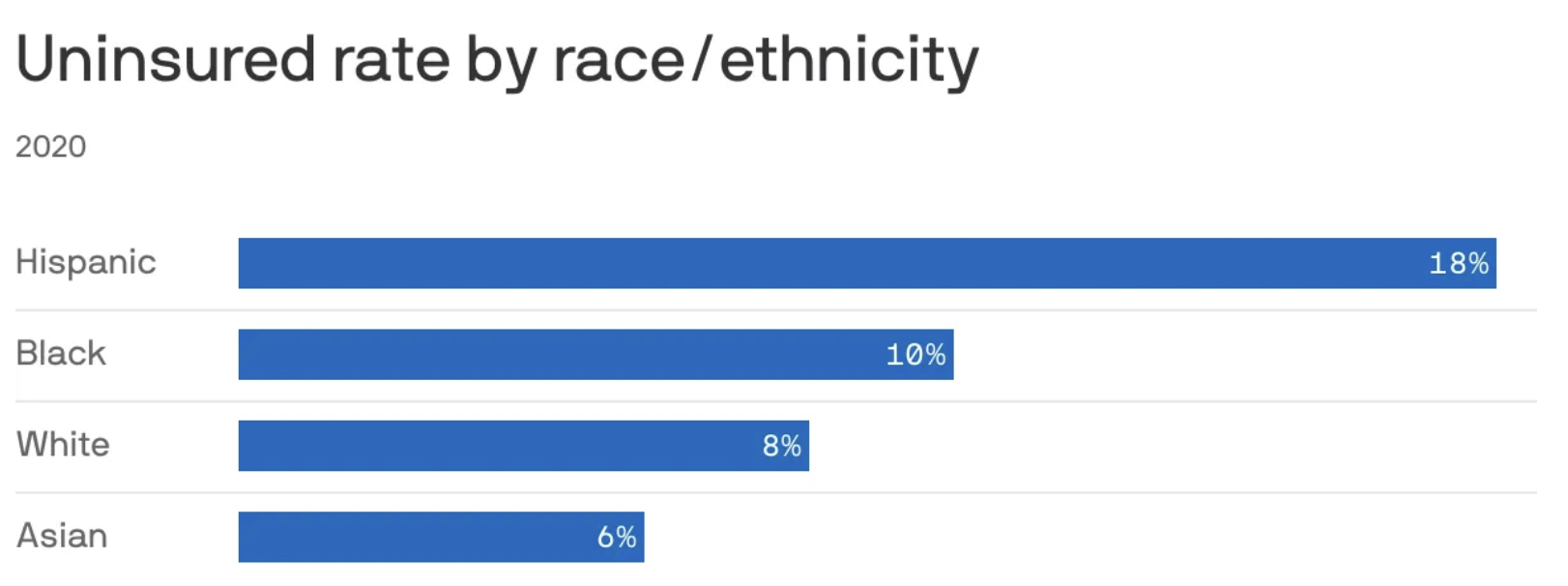
Access is a significant issue contributing to HIV challenges among Latinos. Latinos are the most underinsured/uninsured ethnic group in the United States.[2] Approximately 19 percent did not have health insurance in 2023, in contrast to 5.8 percent of White Americans and 8.6 percent of Black Americans.[3] Lack of health insurance means reduced access to HIV treatment and prevention, reduced or lack of primary healthcare services, or comorbidity management. Only 84 percent of the Latino community is aware of their HIV status, compared to 87 percent of the general population.[4] Of Latinos living with HIV who know their status, in 2021, only 72 percent received some kind of HIV care, 54 percent consistently remained in care, and only 64 percent were virally suppressed.[5]

Many Latinos are underinsured or uninsured due to financial barriers, language barriers, occupation, and even immigration status. In 2022, One-third of Latinos without health insurance were undocumented, and 37.7 percent were dependent upon Medicaid.[6] Some Latinos struggle to understand the healthcare system, and others do not seek out healthcare due to fear of deportation because of their immigration status. In states where they may be eligible for Medicaid, some Latinos in the process of acquiring citizenship are hesitant to apply out of fear of being deemed a public charge. However, only one-tenth of one percent of deportations result from public charge determinations.[6] Moreover, although ACA Medicaid expansion enables more adults to be covered, ten states have not expanded Medicaid, including Texas, Florida, and Georgia, which have large numbers of uninsured Latino residents.[6]

Uninsured rates by race/ethnicity
Photo Source: Axios

Two specific HIV care access challenges affecting the Latino community are PrEP and long-acting injectables. In 2021, Latinos represented 17 percent of PrEP users and 27 percent of new HIV diagnoses.[7] While PrEP could drastically improve outcomes, access barriers are high. Additionally, many Latinos living with HIV could greatly benefit from long-acting injectable treatments, such as Cabenuva, which would ameliorate adherence issues. However, it is expensive, and thus, paying for it out of pocket is impossible. Moreover, getting it covered in public assistance programs is also a challenge.

There are states, such as Texas, that do not carry Cabenuva on their drug formulary under the AIDS Drug Assistance Program (ADAP). Steven Vargas, Texas HIV advocate and long-term survivor, argues, “What I really want is for our Texas ADAP to be brought to its full potential in easing the burden of HIV on Texans.” 

Vargas offers some novel ideas to help Latinos in need, as well as all Texans access Cabenuva. One way would be for Texas to expand Medicaid since Cabenuva is covered by Medicaid. Another option would be to utilize state ADAP funds to purchase insurance for those in need. Unfortunately, presently, in Texas, that is not possible due to exaggerated concerns about costs and solvency. A policy proposal Vargas suggested involves the federal agency, Health Resources & Services Administration (HRSA). He suggests that the agency “...create a policy clarification mandating non-Medicaid expansion states to use ADAP funds to purchase health insurance for HIV-positive individuals. This would ensure more equitable access to healthcare and align with efforts to end the HIV epidemic in these intransigent states. Without such measures, the current inequities will persist, and achieving the goal of ending the HIV epidemic will remain out of reach.”

Stigma is another barrier from a policy, healthcare, and cultural perspective. Vargas points out, “Stigma is an overarching and deeply entrenched challenge significantly hindering Hispanic/Latino engagement in HIV services. Local efforts to increase community awareness and knowledge about HIV prevention and treatment are not prioritized and buried beneath the weight of stigmatizing edicts from our Governor and Texas Legislature.” A 2022 study shows that 11 percent of Latinos living with HIV reported encountering discrimination in a healthcare setting at least three times in a 12-month period.[5]

Stigma is keeping LGBTQ+ Hispanic and Latino men from seeking HIV care: report
Photo Source: The Hill

Cultural stigmas and norms are also high barriers to improved HIV outcomes as well. Latino men who have sex with men accounted for the highest number of new HIV diagnoses in 2022. There is a sizeable Catholic influence in Latino culture. Thus, discussing sex and sexual health is not a widely socially acceptable norm, especially if one is gay. There is also the existence of marianismo and machismo. Marianismo is the idea that women should be subservient to men even in sexual encounters, including not wearing a condom if that is what the man desires. Machismo is the ideal that men should be masculine, dominant, and virile.[8] Social pressures and stigma cause many to be fearful of seeking out care and live secretly with their status if, they are positive. This could result in increased transmission by allowing social norms to influence decision-making when it comes to sexual health and partner selection.

Reducing the impact of HIV in the Latino community will require interventions from both policy and community perspectives. The Latino community is not monolithic. Thus, there is a need for stigma intervention that explicitly targets different groups, such as youth groups, church groups, and parent groups. One such national campaign is Celebro Mi Salud (I Celebrate My Health).[9] It is designed to normalize HIV and encourage people living with HIV to seek out care and stay in care. Policy interventions would include means to strengthen collaboration between communities and local governments. There needs to be more culturally competent and bi-lingual healthcare providers as well as those involved with helping Latinos in need navigate the challenges of poverty, food insecurity, homelessness, and immigration.

There is no single simple solution. Addressing the impact of HIV requires making people whole. A holistic approach means helping Latinos in need navigate the challenges of poverty, food insecurity, homelessness, and immigration, as well as healthcare. Providing stability with the basic needs of life facilitates making personal health a priority instead of an afterthought.

[1] CDC. (2024, May). Estimated HIV incidence and prevalence in the United States, 2018–2022. HIV Surveillance Supplemental Report 2024;29(No. 1). Retrieved from https://www.cdc.gov/hiv-data/nhss/estimated-hiv-incidence-and-prevalence.html

[2] Guilamo-Ramos, V., Thimm-Kaiser, M., Benzekri, A., Chacón, G., López, O. R., Scaccabarrozzi, L., & Rios, E. (2020). The Invisible U.S. Hispanic/Latino HIV Crisis: Addressing Gaps in the National Response. American journal of public health, 110(1), 27–31. https://doi.org/10.2105/AJPH.2019.305309

[3] Vankar, P. (2024, July 10). Percentage of people in the U.S. without health insurance by ethnicity 2010-2023. Retrieved from https://www.statista.com/statistics/200970/percentage-of-americans-without-health-insurance-by-race-ethnicity/#:~:text=Percentage%20of%20people%20in%20the,insurance%20by%20ethnicity%202010%2D2023&text=In%202023%2C%20approximately%20nineteen%20percent,national%20average%20was%209.1%20percent.

[4] Helmer, J. (2024, June 2). HIV/AIDS in Hispanic and Latino Populations. Retrieved from https://www.webmd.com/hiv-aids/hiv-aids-hispanic-latino-populations

[5] The Body. (2024, April 30). How HIV Impacts Latinos in the U.S. Retrieved from https://www.thebody.com/health/hiv-aids-latinx

[6] Smith, C. (2024, April 22). Hispanics make up nearly half the nation's uninsured. Retrieved from https://www.governing.com/health/hispanics-make-up-nearly-half-the-nations-uninsured

[7] AIDSVU. (2022, July 29). AIDSVu Releases New Data Showing Significant Inequities in PrEP Use Among Black and Hispanic Americans. Retrieved from https://aidsvu.org/news-updates/prep-use-race-ethnicity-launch-22/

[8] Nuñez, A., González, P., Talavera, G. A., Sanchez-Johnsen, L., Roesch, S. C., Davis, S. M., Arguelles, W., Womack, V. Y., Ostrovsky, N. W., Ojeda, L., Penedo, F. J., & Gallo, L. C. (2016). Machismo, Marianismo, and Negative Cognitive-Emotional Factors: Findings From the Hispanic Community Health Study/Study of Latinos Sociocultural Ancillary Study. Journal of Latina/o psychology, 4(4), 202–217. https://doi.org/10.1037/lat0000050

[9] HIV.GOV. 2022. Celebrao Mi Salud. Retrieved from https://www.hiv.gov/es/respuesta-federal/campanas/celebro-mi-salud

Disclaimer: Guest blogs do not necessarily reflect the views of the ADAP Advocacy Association, but rather they provide a neutral platform whereby the author serves to promote open, honest discussion about public health-related issues and updates.  

Thursday, July 25, 2024

Facing HIV Health Disparities in Black Communities

By: Ranier Simons, ADAP Blog Guest Contributor

Although great strides have been made toward fighting HIV in the United States, several groups remain disproportionately impacted. Black communities are one of the groups experiencing a higher impact of HIV-related health disparities. Health disparities are differences in the incidence, prevalence, and mortality of a disease and its associated related adverse health conditions.[1] Multiple factors contribute to Black communities bearing more of the HIV burden than other groups. The characteristics of many communities of color social determinants of health are part of those factors. Social determinants of health (SDOH) include economic stability, education access, and quality, health care access and quality, neighborhood and built environments, and social and community context.[2] These SDOH are influenced by things like discrimination, racism, and poverty. In 2022, Black persons were disproportionately impacted by new HIV infections.[3]

HIV does not affect all groups equally
Photo Source; HIV.gov

According to PlusInc, which addresses health disparities in the United States, HIV disproportionately impacts Black and Hispanic/Latino Americans. PlusInc's HIV health disparities statement notes:

"While Black and Hispanic/Latino make up just 13.4% and 18.5% of the U.S. population, respectively, Black Americans account for 40.3% and Hispanic/Latino Americans account for 24.7% of the total population of Persons Living with HIV/AIDS (PLWHA). Additionally this disparity extends to the incidence, with 42% of new HIV diagnoses occurring in Black Americans and 27.8% in Hispanic/Latino Americans. According to the Centers for Disease Control and Prevention (CDC) 26% of new HIV diagnoses were among Black gay and bisexual Men who have Sex with Men (MSM), 23% were among Hispanic/Latino gay and bisexual MSM, and 45% among gay and bisexual MSM under the age of 35."

The lived experiences and cultural commonalities among Black communities contribute to the disproportionate HIV burden. Larry Scott-Walker, Executive Director for Thrivess, Inc., explains, “Many within the Black community have experienced some form of medical racism or implicit bias that prevents them from trusting those within the medical industrial complex.” Distrust in the medical system means a person has a lowered likelihood of actively seeking out medical knowledge and intervention, especially concerning HIV. Furthermore, many medical professionals lack cultural competency. 

Cultural competency is understanding and respecting the beliefs, values, and histories of individuals of all cultural backgrounds.[4] In an article for Medical News Today, Dr. Luz Maria Garcini, assistant professor in the Department of Psychological Sciences at Rice University, stated, “Cultural competence improves interpersonal interactions, helps to build trust, conveys respect, reduces biases that may lead to inaccurate diagnoses and treatments, and increases the chances that patients may be more compliant with the medical recommendations given.”[4]

Socially, a good deal of HIV stigma also still exists in Black communities. Stigma can result in people not seeking out or maintaining HIV care, regularly testing, or even having discussions of an intimate nature socially. Traditionally, Black culture has been heavily influenced by the institution of the church. Thus, open sex-positive discourse is not pervasive. Shame and stigma are not only barriers to obtaining HIV-related knowledge but also facilitate poor decision-making and even partner selection. Most importantly, shame leads to isolation when data shows HIV-related stigma is mitigated by social support.[5]

Economically, the poverty rate in Black communities in 2022 was 17.1%. The overall national poverty rate was 11.5%. Black persons were 13.5% of the population but represented 20.1% of those living in poverty.[6] The South, regionally, had the highest rate of new HIV diagnoses. Coincidentally, the South also contained the highest concentration of the Black population in the United States at 56%, and next to the Northeast had the highest level of poverty.[7] Poverty usually results in one’s focus being centered on many things, with personal healthcare residing lower on the list. Poverty also usually lends itself to segregation. Black communities segregated in some impoverished areas are not located near quality hospitals or clinics. This is a barrier to access to care in terms of prevention, treatment, and medical education.

The rate of new HIV diagnoses in Black Women is 4x greater than Hispanic/Latino Women and 11x greater than White Women
Photo Source: PlusInc

Regarding poverty, Black communities have a higher likelihood of being uninsured or on publicly funded insurance.[8] The result is inadequate, non-existent, or inconsistent primary care. This also is a barrier to HIV and STI testing, HIV treatment and prevention, and management of other chronic medical issues. Even with access to private insurance, Black persons of lower socioeconomic status may not be able to afford the cost-sharing associated with utilizing their insurance plans in addition to the premiums. Avenues of medical assistance in terms of co-pay assistance, living expenses, insurance premium assistance, and even charity care exist. However, they are useless for those who find accessing them too complicated or are unaware of the options, especially when it comes to prevention.

One glaring prevention strategy discrepancy identified among Black communities is the utilization of PrEP. As expressed by Scott-Walker, “When we look at the poor uptake of PrEP within Black communities, it is clear that not enough education, community buy-in, and galvanization efforts have been attempted.” When appropriately used, PrEP, whether oral or injectable, has proven to be 99% effective at preventing sexual HIV infection while reducing injection drug use-related HIV transmission by 74%.[9] However, data shows that 94% of Whites who can benefit from PrEP have been prescribed it, contrasting with 13% of African Americans who can benefit from it.[10]  

Utilizing PrEP requires laboratory tests and medical visits usually covered by insurance, whether private or Medicaid. Additionally, by law, insurance plans are not supposed to charge co-pays, co-insurance, or deductibles for PrEP.[11] However, for the uninsured, it is more expensive. For the uninsured, beginning PrEP could cost around $2,700, which includes $1,000 for lab tests and medical visits.[10] The uninsured monthly prescription of generic Truvada would cost about $60 per month, with the brand name costing upwards of $2,000 per month. Moreover, without insurance, the required quarterly lab tests and medical visits would be, on average, around $15,000 per year.[11,12,13]

Tragically, lifesaving long-acting injectable (LAI) PrEP is even farther out of reach for some Black communities. Cabotegravir, trade name Apretude, is a long-acting injectable form of PrEP. It is administered by injection every other month. Logistically, this would be very beneficial to Black populations who dealt with transportation difficulties, housing instability, or treatment adherence. However, long-acting injectable PrEP is very expensive, and access is even more challenging than with standard oral PrEP. Apretude is administered in a clinic setting and covered under the medical portion of insurance, not the prescription drug benefit. Therefore, it is subject to cost-sharing that oral PrEP is not. Additionally, it is too expensive to pay for out of pocket. Moreover, some African Americans are not located in areas with feasible access to physicians who can administer Apretude.

Group of Black persons standing together
Photo Source: American Psychological Association

The machinations of the diverse factors contributing to the disproportionate impact of HIV in the Black community are complex. The interactions of various aspects of policy, economics, culture, and social frameworks create a web that is hard to navigate for a solution to HIV health disparities in Black communities. This is why Scott-Walker states, “organizations that are explicitly committed to and reflective of Black communities are so essential in bringing about real change.”

[1] CDC. (2024, January 17). Health Disparities in Black or African American People. Retrieved from https://www.cdc.gov/health-disparities-hiv-std-tb-hepatitis/populations/black-african-american.html

[2] U.S. Department of Health and Human Services, Office of Disease Prevention and Health Promotion. (2024). Healthy People 2030. Retrieved from https://health.gov/healthypeople/objectives-and-data/social-determinants-health

[3] CDC. (2024, May 21). Fast Facts: HIV in the U.S. by Race and Ethnicity. Retrieved from https://www.cdc.gov/hiv/data-research/facts-stats/race-ethnicity.html.

[4] Pelc, C. (2022, November 9). What is cultural competency, and why is it crucial to healthcare? Retrieved from https://www.medicalnewstoday.com/articles/what-is-cultural-competency-and-why-is-it-crucial-to-healthcare

[5] Williams, R. S., Stetten, N. E., Cook, C., Cook, R., Ezenwa, M. O., & Lucero, R. (2022). The Meaning and Perceptions of HIV-Related Stigma in African American Women Living With HIV in Rural Florida: A Qualitative Study. The Journal of the Association of Nurses in AIDS Care: JANAC, 33(2), 118–131. https://doi.org/10.1097/JNC.0000000000000252

[6] Shrider, E. (2023, September 12). Poverty Rate for the Black Population Fell Below Pre-Pandemic Levels. Retrieved from https://www.census.gov/library/stories/2023/09/black-poverty-rate.html#:~:text=The%20official%20poverty%20rate%20of,Census%20Bureau%20data%20released%20today.

[7] Moslimani, M., Tamir, C., Budiman, A., Bustamante, L., & Mora, L. (2024, January 18). Facts about the U.S. Black population. Pew Research Center. https://www.pewresearch.org/social-trends/fact-sheet/facts-about-the-us-black-population/ 

[8] N.D. (2022, April 14). HIV and AIDS Among Black Americans. Retrieved from https://www.webmd.com/hiv-aids/hiv-aids-in-blacks-alarming-crisis

[9] HIV.GOV. (2024, June 27). Pre-Exposure Prophylaxis. Retrieved from https://www.hiv.gov/hiv-basics/hiv-prevention/using-hiv-medication-to-reduce-risk/pre-exposure-prophylaxis#:~:text=Why%20Take%20PrEP%3F,74%25%20when%20taken%20as%20prescribed.

[10] Scaturro, M. (2024, April 16). HIV crisis in Atlanta made worse by racial disparities in treatment. Retrieved from https://www.ajc.com/news/health-news/hiv-crisis-in-atlanta-made-worse-by-racial-disparities-in-treatment/XPM2SEVXBRADJHMIBFH4C2O2U4/

[11] HealthHIV. (2024). Insurance and paying for PrEP. Retrieved from https://pleaseprepme.org/paying-prep/#:~:text=Did%20you%20know%20that%20most,PrEP%20a%20Grade%20A%20recommendation.

[12] Varney.S. (2022, March 3). HIV Preventive Care Is Supposed to Be Free in the U.S. So, Why Are Some Patients Still Paying? Retrieved from https://kffhealthnews.org/news/article/prep-hiv-prevention-costs-covered-problems-insurance/#:~:text=The%20costs%20can%20be%20daunting,can%20total%20%2415%2C000%20a%20year.

[13] Srikanth, K., Killelea, A., Strumpf, A., Corbin-Gutierrez, E., Horn, T., & McManus, K. A. (2022). Associated Costs Are a Barrier to HIV Preexposure Prophylaxis Access in the United States. American journal of public health, 112(6), 834–838. https://doi.org/10.2105/AJPH.2022.306793

Disclaimer: Guest blogs do not necessarily reflect the views of the ADAP Advocacy Association, but rather they provide a neutral platform whereby the author serves to promote open, honest discussion about public health-related issues and updates.

Thursday, July 18, 2024

HIV LONG-ACTING INJECTABLES: Patient Access Considerations for Injectable HIV Therapies & Injectable HIV Pre-Exposure Prophylaxis

By: Brandon M. Macsata, CEO, ADAP Advocacy; Jen Laws, President & CEO, Community Access National Network (CANN); Marcus J. Hopkins, Founder & Executive Director, Appalachian Learning Initiative (AAPLI); and Riley Johnson, LGBTQ Health and HIV Policy Consultant

On June 26th, after nearly one year of community engagement, ADAP Advocacy published its final report, HIV LONG-ACTING INJECTABLES: Patient Access Considerations for Injectable HIV Therapies & Injectable HIV Pre-Exposure Prophylaxis

Final Report Cover - HIV LONG-ACTING INJECTABLES: Patient Access Considerations for Injectable HIV Therapies & Injectable HIV Pre-Exposure Prophylaxis
Photo Source: ADAP Advocacy

In pursuing this project, ADAP Advocacy sought to understand patient perspectives on long-acting injectables (LAIs). This occurred through three methods – a quantitative survey, a qualitative focus group, and an examination of data – across two populations – those who are HIV-positive (the use of LAIs for treatment) and those who are HIV-negative (the use of LAIs for prevention). This project was made possible by support from Gilead Sciences, Merck, and ViiV Healthcare.

ADAP Advocacy received 305 responses to the Perspectives Survey on LAI Treatments for People Living with HIV (“Treatment Survey”), which resulted in a total of 262 eligible participants from 38 states, the District of Columbia, and Puerto Rico. In addition, ADAP Advocacy conducted a post-survey focus group with 8 participants to further explore patient awareness and knowledge of, perspectives about, and access to LAI treatment options. 

ADAP Advocacy received a total of 184 responses to the Perspectives Survey on LAI HIV Prevention Medications (“Prevention Survey”), which resulted in a total of 154 eligible participants from 35 states, the District of Columbia, and Puerto Rico. ADAP Advocacy conducted a post-survey focus group with 8 participants to further explore patient awareness and knowledge of, perspectives about, and access to LAI prevention options.

The findings from this project serve as a starting point for ADAP Advocacy to conduct additional patient-centric research to learn more about the barriers as well as facilitators faced by patients seeking LAIs. This project’s research questions concerned patient treatment preferences, information pathways, utilization, and barriers to access. 

 Key findings include:

  • The majority of respondents to the Treatment Survey (52.3%) indicated that they would prefer receiving LAI medication to treat their HIV over a daily pill-based regimen; In the Prevention Survey, the majority of respondents (71.4%) indicated they would prefer an LAI over a daily pill-based regimen to prevent HIV.
  • The vast majority of respondents to the Treatment Survey (87.8%) indicated being aware of Cabenuva as an LAI to treat HIV. Of those respondents who learned about the existence of LAI medications through this survey, half (50%) reported being open to discussing them with a medical provider; Just over half of respondents to the Prevention Survey (58.4%) indicated being aware of Apretude for use as LAI PrEP. More than four out of every ten respondents (42.2%) who learned about the existence of Apretude through this survey reported being open to discussing it with a medical provider;
  • A majority of respondents to the Treatment Survey (87.7%) indicated having no issues finding information about LAI medications. Of those respondents who did have trouble finding information (12.3%), most respondents had trouble finding information about insurance coverage (78.6%), prior authorization requirements (78.6%), and the cost they would have to pay to access LAIs (71.4%);
  • Insurance coverage barriers impacted respondents’ ability to pursue LAIs, with more than 1 in 4 survey respondents (27%) reporting this barrier in the Treatment and Prevention surveys. In the case of PrEP, a majority of those experiencing this (66%) indicated that the barriers to access were so cumbersome that they decided Apretude was not right for them.

The authors wish to also thank community partners and individual advocates who helped publicize the survey. The following community partners offered their assistance: Avita Care Solutions, Community Access National Network (CANN), Georgia Equality, HealthHIV, Human Rights Campaign, International Association of Providers in AIDS Care (IAPAC), New Haven Pride Center, PlusInc, Positive Women’s Network (PWN), Positively Aware Magazine, The AIDS Institute, Vivent Health, and Yale University’s LGBTQ Resource Center. The following individual advocates helped to spread the word with this project: Guy Anthony, Wanda Brendle-Moss, Rick Guasco, Lynne Maureen Hurdle, Patrick Ingram, Kate McManus, M.D., Maria Mejia, La Kia Mondale, Kalvin Pugh, Matt Toresco, and Jennifer Vaughan. The authors also wish to express their gratitude to Perry Communications Group for their amazing work advertising both of the surveys. Lastly, this project would not be possible without the assistance of those individuals who shared the survey and those who took the time to share their perspectives.

Additional research on patient perspectives is warranted in this space. Download the final report, here.

Disclaimer: Guest blogs do not necessarily reflect the views of the ADAP Advocacy Association, but rather they provide a neutral platform whereby the author serves to promote open, honest discussion about public health-related issues and updates.

Thursday, July 11, 2024

PDABs: A Threat to Ending the HIV Epidemic?

By: Ranier Simons, ADAP Blog Guest Contributor

****Blog original published on June 18th and reprinted with permission from the Community Access National Network****

The Community Access National Network (CANN) continues to be active in the advocacy and policy space concerning Prescription Drug Advisory Boards (PDABs), also known as Prescription Drug Affordability Boards. PDAB activity is growing and advancing. Not only are more states considering or working through PDAB creation legislation, but a few recent drug-specific advisory board decisions have already been made. 

State AIDS Drug Assistance Programs, or ADAPs, are largely dependent on savings and revenues from 340B
Photo Source: CANN

[CLICK IMAGE TO ENLARGE]

A previous blog post untangles the warnings and concerns regarding PDABs. On the surface, they are presented as a simple solution to a complex issue. The complex problem is the extremely high healthcare expenditure in the United States. Accessing modern healthcare results in high amounts of spending from costs associated with hospitals and other facilities, medical technology creation and utilization, and even prescription drugs. Although prescription drug expenditures are only a small part of the billions spent annually on healthcare, the price of prescriptions is the low-hanging fruit that PDABs aim to attack. The money patients pay for prescription drugs is assuredly a financial burden for many. However, while PDABs aim to expressly lower the direct cost of prescription drugs for patients, their trajectory does not achieve that goal. Their actions have the potential to cause access issues in addition to potentially increasing out-of-pocket costs to consumers. This is especially true since the primary means PDABs lean toward to lower costs is the upper payment limit. Moreover, while CANN has a focus on PDAB potential outcomes regarding HIV drugs, all drugs are of concern, given that people living with HIV (PLWH) have multiple co-morbidities. Any threat to any drug utilized by vulnerable chronic disease communities is a threat to all.

Currently, CANN is monitoring several states that are looking to activate boards or already have active boards. Those states are Colorado, Maine, Maryland, Minnesota, New Hampshire, New Jersey, Ohio, Oregon, and Washington. Attending virtual PDAB meeting sessions, engaging by contributing both written and verbal commentary/testimony, and communicating with nationwide advocacy partners have revealed trends and developing paradigms that are problematic. Currently, the PDAB that is most far along in processes is Colorado. They have already deemed two medications, Enbrel and Cosentyx, as unaffordable, thus making them eligible for a UPL. Although every state’s PDAB is different operationally, due to the language of the legislation they are created by, states are watching Colorado. They will watch each other and potentially network in the future.

A sweeping, troublesome focus of PDABs is price. The stated intent of PDABs is to reduce the out-of-pocket costs patients pay for prescription drugs. However, the focus of analysis and discussion is how much manufacturers charge for drugs instead of how much patients pay. Focusing on drug prices could potentially lower the costs of drugs for the system, i.e., health plans, sponsors, and payers, but that does not directly help the patient cost burden.

A UPL sets a limit on the reimbursement rates of entities such as state health plans. It does not directly affect what patients pay out of pocket or change what manufacturers charge for drugs. A recent board discussion revealed the thought process that a UPL would equal more drug pricing transparency, eliminate hidden price variation caused by opaque rebates and discount structures, and increase patient access. Additionally, an assumption with consensus was that a lower price via UPL suggests an insurance company would be less likely to put a drug on a higher tier, less likely to require prior authorizations and be a barrier to pricing issues caused by payer vertical integration. These thought processes are not sound.

PDABs are considering "price controls" to set the cost of prescription drugs by setting an "upper payment limit".
Photo Source: CANN

[CLICK IMAGE TO ENLARGE]

A UPL does not automatically lower the price of a drug. It has no bearing on what a manufacturer charges for a medication. A manufacturer would have to voluntarily lower its price to be at or near the UPL. Additionally, if a UPL were set to be lower than the acquisition cost for pharmacies, pharmacies would lose money stocking medications. They cannot operate at a constant loss which lowers patient access since some pharmacies would have to stop carrying certain medications. If a pharmacy can’t fill a prescription, patients are put at risk due to treatment interruptions or even treatment cessation. Deliberations on boards proceed with the assumption that a UPL would not hinder access, with no discussions of contingency plans or safeguards to guard access against unintended consequences. Unfortunately, the prevailing attitude is that loss of access to medications as a result of UPLs is an unwarranted fear. 

UPLs also threaten the 340B Drug Pricing Program. The value of 340B is found in the spread between reimbursement rates and a reduced acquisition cost by way of drug manufacturer 340B rebates. UPLs will significantly reduce reimbursement rates, devaluing the funding realized by 340B rebates. Taking dollars out of the 340B program means that entities benefiting from 340B rebates will lose the ability to provide services to the vulnerable communities they serve. Furthermore, state AIDS Drug Assistance Programs (ADAP) heavily depend on savings and revenues from the 340B program. For states like Michigan, New Jersey, and Oregon, roughly 70 percent of their state ADAP budgets comes from 340B funding, and Oregon doesn’t receive any state contribution. According to NASTAD, a majority of ADAP clients live at or below 300% of the Federal Poverty Level. Thus, even if they qualify for Medicaid, they still need assistance.

Percentage pie charts showing revenue allocation for ADAPs
Photo Source: CANN

[CLICK IMAGE TO ENLARGE]

In reality, insurance plan benefit design is what directly translates into what patients pay out of pocket. The convoluted utilization of tools such as copays, coinsurance, high cost-sharing tiers, and copay accumulators directly determines direct patient expenditures. Most importantly, a drug’s price doesn’t determine the utilization management techniques an insurance plan uses. Many different factors are at play there, and those factors benefit many parties but not patients.

Drug manufacturers have patient assistance programs (PAP) that actually directly lower consumer out-of-pocket costs. One type of PAP is copay assistance programs that help pay most or all of the copays patients pay for medications due to their insurance plans. Another type of PAP is where a manufacturer will provide medications entirely for free for those who are uninsured, underinsured, those whose insurance does not cover a particular medication, or those who cannot afford their copay or coinsurance while not qualifying for other help. 

Although PAPs directly facilitate low out-of-pocket costs and bolster access, they are deleteriously used to support UPLs in PDAB board deliberations. The circular argument is that the mere existence of PAPs indicates that manufacturer drug pricing is too high. Additionally, discourse hints at the sentiment that PAPs are self-serving to drug manufacturers because it enables them to enjoy considerable tax advantages under the guise of charitable giving. As Jen Laws, CEO of Community Access National Network, points out, drug manufacturers have PAPs because “they are being made to shoulder discriminatory, profit-driven plan designs and supplement the under-reimbursement issue, all while patients are subject to predatory practices by payors.” 

PDABs, those currently active and those that are upcoming, are well-intentioned in wanting to lower drug pricing for consumers. They state that when identifying drugs they deem are unaffordable for consumers, they will consider other ways to reduce costs besides just the UPL. However, although things such as PBM reform and effecting policy change regulating insurance plans are superior options, the UPL remains the de facto consideration. It is essential that patients learn about and stay aware of PDAB activity. Above all, it is imperative that patients engage with PDABs because they are not receiving enough feedback from consumers and caregivers. Their deliberations are based on minuscule sample sizes of survey responses and low turn-out, with opportunities for in-person or virtual commentary from the public.

Boards feel as if they are aggressively seeking patient engagement but aren’t receiving it. Regardless of the veracity of PDAB's efforts to obtain robust patient-centered data, it is imperative that patients and caregivers stay informed and intentionally make their voices heard. Being vocal and active does make positive change happen. As a result of education efforts from patient advocacy groups and FQHCs regarding the damage of UPLs on 340B funding, this week, Oregon’s PDAB decided to revamp its entire affordability review process. CANN is committed to continued education, engagement, and advocacy to empower patients individually and collectively, irrespective of medical condition.

Go to original blog post.

Go to blog post infographic.

Disclaimer: Guest blogs do not necessarily reflect the views of the ADAP Advocacy Association, but rather they provide a neutral platform whereby the author serves to promote open, honest discussion about public health-related issues and updates.  

Thursday, July 4, 2024

Drug Shortages Growing, but Spares HIV-related Injectable Therapies

By: Ranier Simons, ADAP Blog Guest Contributor

Periodic shortages of all kinds of products are common. The height of the coronavirus pandemic even created a widespread shortage of toilet paper, Lysol, and baby formula. At times, drug shortages are also not uncommon. Nevertheless, drug shortages have been a trending topic in the media. The heightened discourse is atypical for so many drugs to be experiencing shortages simultaneously. Not only are there many drugs in shortage, but they have been in scarcity for a long time. Moreover, some of the drugs in shortage treat life-threatening conditions. Now shortages appear to be impacting injectable therapies.

Empty pharmacy shelves
Photo Source: Forbes

Drug shortages have increased over time, with the end of 2023 being the highest in the past ten years. At the end of 2025, according to the U.S. Food & Drug Administration (FDA), 125 drugs were in shortage status. Some of the drugs were new to the shortage list. However, many have been in shortage status for years. Furthermore, the duration of shortage status has also been increasing. In 2023, the average shortage was about three years compared to a duration of two years in 2020.[1] Unfortunately, at 2023 year-end, about a quarter of the drugs on the list had been in shortage for approximately five years, and treatments such as epinephrine injections had been in shortage for over ten years.[1,2]

Drug shortages affect all aspects of healthcare. No one therapeutic class is disproportionately harmed. Clinicians are frustrated because shortages of life-saving medications endanger many living with life-threatening conditions. Complete outages of supply mean that some patients must suffer through dangerous delays in care. In other cases, doctors must switch regimens completely due to shortages, forcing them to use medications they do not feel are the best options for patients. This results in using less efficacious medications with poorer desired outcomes and undesirable side effects. Additionally, when shortages result in switching from a regimen in progress, there is a danger of the body becoming unresponsive to the original regimen when the shortage is resolved.

A myriad of issues create drug shortages. Some of those issues are economic, supply and demand, and even manufacturing quality problems. Shortages are more common with lower-priced drugs such as generics.[3] A prescription for most of the injectables and solid oral medications in shortage costs less than five dollars to produce.[1,2] This translates into meager manufacturer profit margins, especially with wholesalers and purchasing groups driving down pricing. Thus, manufacturers are not incentivized to produce those medications in sustained large quantities. The FDA cannot force a company to make a particular medication, even if it is needed.

FDA fact sheet on drug shortages
Photo Source: FDA

Supply and demand issues also drive shortages. In some cases, demand outpaces supply when drugs are used for expanded use cases. This is the case for drugs like Ozempic and Wegovy, which are GLP-1 drugs whose primary indications are to treat diabetes. The discovery of its effectiveness in weight loss has resulted in a vastly increased demand. The demand driven by the population of those dependent upon GLP-1 drugs to manage diabetic conditions in combination with those using them for weight loss has driven outages as well as increased pricing. Some of the demand for other drugs is driven by increases in prescriptions due to telemedicine. During the pandemic, restrictions were lifted on the prescribing of certain classes of medicines via telemedicine, such as Adderall, which is used for ADHD.[4] This resulted in increased demand for the drug which contributed to shortages that are still seen presently. This is especially pertinent since some obtain Adderall and other medications online for purposes of substance abuse.

Manufacturing problems and supply chain issues strongly contribute to drug shortages as well. The U.S. is dependent upon sources outside of the country for many of the drugs in shortage status. Less than one-quarter of the oral generics used in the U.S., and about 40 percent of sterile injectable generics are manufactured domestically. Approximately 17% of injectables used in the U.S. are manufactured in China.[5] Most importantly, many of the raw ingredients for pharmaceuticals are sourced outside of the U.S., with materials for 90-95 percent of U.S. generic injectable drugs coming from China and India.[5,6] Manufacturing certain older generic drugs, especially sterile injectables, is difficult due to the sterile manufacturing conditions required; thus, the number of capable facilities is low.

About 53 percent of the newest drug shortages are generic injectable medicines.[7] Sterile injectables include normal saline, antibiotics, flu vaccines, chemotherapy drugs, morphine, and insulin. Shortages in chemotherapy drugs have caused doctors and hospitals to resort to drug rationing. In those instances, hard decisions must be made regarding the treatment of life-threatening cancers. Doctors must choose which patients receive certain medications based on decisions based on curative intent and probability versus overall survival.

ADAP Advocacy Association Applauds Pharmaceutical Industry Efforts on Protecting the Drug Supply Chain during the Coronavirus Pandemic
Photo Source: ADAP Advocacy

Drug shortages were also of heightened concern for those living with HIV during the coronavirus pandemic. In March 2020, ADAP Advocacy received assurances directly from each drug manufacturer that the coronavirus pandemic wasn’t negatively impacting the availability of anti-retroviral medications. The pharmaceutical industry was applauded for its efforts to protect the anti-retroviral drug supply chain.[8] At that time all of the drug manufacturers – AbbVie, Janssen Pharmaceuticals, Gilead Sciences, Merck. Theratechnologies, and ViiV Healthcare – did not foresee disruption to their supply chain.

Considering injectable therapies are increasingly showing up on the FDA’s drug shortage list, ADAP Advocacy once again inquired with its industry partners about potential concerns over shortages of injectable HIV-related medications, such as the injectables Cabenuva for the treatment of HIV, and Sunlenca for the prevention of HIV. 

Reaching out to the industry resulted in very positive feedback. A representative from ViiV Healthcare stated that “there are no current shortages nor anticipation of any prolonged shortages of any injectable within the ViiV portfolio.”

A Gilead spokesperson likewise stated, “Gilead’s commercial supply chain is robust, and we have a strong inventory position. We continually monitor the forecast and actively manage supply; thus, we do not anticipate any supply concerns related to Sunlenca®, Gilead’s twice-yearly injectable HIV treatment option for people living with the virus who are heavily treatment-experienced with multi-drug resistant HIV. We are committed to person-centric HIV treatment research and development, ensuring our advances in biomedical innovation reach the wide range of individuals and communities who are most in need.” 

Drug shortage is a serious concern that will require a multi-pronged approach to solve. The White House, FDA, and others must find solutions to the manufacturing, regulatory, and supply chain challenges. The government is already looking into investing in some of the raw materials needed for drug creation, which is a good start.

[1] Lokuwithana, D. (2024, June 15). U.S. drug shortages worsen to reach a decade high: report. Retrieved from https://seekingalpha.com/news/4116477-us-drug-shortages-reach-decade-high

[2] Silverman, E. (2024, June 4). U.S. drug shortages have reached a decade high and are lasting longer, too. Retrieved from https://www.statnews.com/pharmalot/2024/06/04/shortages-medicines-drugs-hospitals-manufacturing-cancer-adhd-gpo/

[3] IQVIA. (2023, November 15). Drug shortages in the U.S. 2023. Retrieved from https://www.iqvia.com/insights/the-iqvia-institute/reports-and-publications/reports/drug-shortages-in-the-us-2023

[4] Gilbert, D., Amenabar, T. (2023, March 14). An Adderall shortage has not let up. Here is why. Retrieved from https://www.washingtonpost.com/business/2023/03/14/adderall-shortage-telehealth-prescriptions/

[5] Owens, C. (2024, January 5). Low prices are contributing to America's drug shortage problem. Retrieved from https://www.axios.com/2024/01/05/america-generic-drug-shortage-reasons

[6] United States Senate Committee on Homeland Security and Governmental Affairs. (2023, March). Short Supply: The Health and National Security Risks of Drug Shortages. Retrieved from https://www.hsgac.senate.gov/wp-content/uploads/2023-06-06-HSGAC-Majority-Draft-Drug-Shortages-Report.-FINAL-CORRECTED.pdf

[7] U.S. Pharmocopeia. (2024, June). USP Annual Drug Shortages Report. Retrieved from https://go.usp.org/l/323321/2024-05-31/92zsjg/323321/1717187146zgOpt4vW/GEA_GC_056R_MSM_Report_2024_05_FINAL.pdf?_gl=1*e6c4sj*_gcl_au*Mjc1NzUzOTg5LjE3MTc1MTMzOTM.*_ga*OTI0OTQ1ODI4LjE3MTc1MTMzOTM.*_ga_DTGQ04CR27*MTcxNzUxMzM5My4xLjEuMTcxNzUxMzc1Ny4wLjAuMA

[8] ADAP Advocacy. (2020, March 26). Press Release: ADAP Advocacy Association Applauds Pharmaceutical Industry Efforts on Protecting the Drug Supply Chain during the Coronavirus Pandemic. Retrieved from https://www.adapadvocacy.org/pdf-docs/2020_ADAP_Press_COVID_19_Supply_Chain_03-26-20.pdf

Disclaimer: Guest blogs do not necessarily reflect the views of the ADAP Advocacy Association, but rather they provide a neutral platform whereby the author serves to promote open, honest discussion about public health-related issues and updates.