Thursday, January 25, 2024

For People Living with HIV, Why Covid-19 Still Matters

By: Ranier Simons, ADAP Blog Guest Contributor

Even though the COVID-19 pandemic emergency designation is no longer in effect, COVID-19 remains a very present public health issue. Research continues to unearth and examine its mechanisms and effects on the body. Understanding COVID-19 is vital for people living with HIV (PLWH) because co-infection with HIV has different consequences than for those who are HIV-negative. Studies continue to reveal the results of the interactions of HIV and COVID-19 and the realities of long Covid.

Living with HIV and Covid-19
Photo Source: HIV.gov

A significant difference discovered regarding HIV and COVID-19 is that PLWH are at a higher risk of being reinfected with COVID-19 after an initial bout. The Centers for Disease Control & Prevention (CDC) and the Chicago Department of Public Health studied 453,000 Chicago residents who contracted COVID-19. They found that 5.2% of HIV-negative people experienced reinfection, while the reinfection rate of PLWH was 6.7%.[1] Additionally, data showed that PLWH had higher primary vaccination plus booster rates than the general population at 31.8% and 27%, respectively.[1] This supports the hypothesis that HIV infection is a reinfection risk causal factor.

Increased risk of developing long Covid is another reality of the intersection of HIV and COVID-19. Long Covid is defined as a range of over 200 symptoms that linger or appear after an acute episode of Covid-19.[3,6] This wide range of symptoms can last months or years. Frequently reported symptoms of long covid include cognitive impairment (brain fog), incessant fatigue, loss of smell, muscle pain, shortness of breath, post-exertional malaise (inability to recover after exercise), and postural orthostatic tachycardia syndrome (POTS).[2,3,4] POTS is a relatively new term to describe a condition that has previously gone without a name. It is an issue with the autonomic nervous system that can cause fainting, rapid heartbeat, and dizziness.[5] Additionally, research presented at the 2023 Conference on Retroviruses and Opportunistic Infections (CROI), shows that not only are PLWH more likely to have persistent long Covid symptoms but have an increased risk of developing new diseases such as diabetes, heart disease, and cancer.[2,7]

Long Covid and HIV
Photo Source: Michael Peluso, MD | IAS 2023

Some possible causes of long Covid symptoms are inflammation, persistent SARS-CoV-2 infection, reactivation of existing pathogens, immune responses that don’t return to normal after acute infection, and "leaky gut" condition.[2] HIV is already known to cause microbial translocation, known as leaky gut. This means weakened intestinal wall permeability allows bacteria and their toxins into the bloodstream, causing disease. Since studies are showing that long Covid symptoms may be due to the SARS-CoV-2 virus causing loss of gut wall integrity, having HIV compounds that condition.[3] Research has also proven that PLWH have higher levels of chronic inflammation, which could compound the inflammation caused by Sars-CoV-2 that raises risks of long Covid.[3] PLWH have increased susceptibility to vascular disease and endothelial dysfunction.[8] This can worsen long Covid related clotting and heart problems.[2,8]

Continuing research is necessary to investigate all the nuances of HIV and Sars-CoV-2 infection. Most notably, it is essential to delineate how long Covid amidst PLWH differs from the general population. At present, it is imperative that PLWH continue to follow medical guidelines concerning staying up to date with COVID-19 vaccinations and remaining consistent in treating comorbid conditions. Research shows that vaccination does reduce the severity of long Covid symptoms, even though it is true that PLWH may experience long Covid at a higher rate than the general population.[2,3] Additionally, it is crucial that PLWH are included in clinical trials investigating treatments for long Covid symptoms.

[1] Kekatos.M. *2923, October 18). People with HIV at higher risk of COVID reinfection: CDC. Retrieved from https://abcnews.go.com/Health/people-hiv-higher-risk-covid-reinfection-cdc/story?id=104035803

[2] Highleyman, L. (2024, January 17). Are people with HIV at greater risk for long COVID. Retrieved from https://www.poz.com/article/people-hiv-greater-risk-long-covid

[3] Alcorn, K. (@023, June 13).More evidence that long COVID is more common in people with HIV. Retrieved from https://www.aidsmap.com/news/jun-2023/more-evidence-long-covid-more-common-people-hiv

[4] Davis, H., Assaf, G., McCorkell, L., Wei, H., Low, R., Re’em, Y., Redfield, S., Austin, J. P., & Akrami, A. (2021). Characterizing long COVID in an international cohort: 7 months of symptoms and their impact. EClinicalMedicine, 38, 101019. https://doi.org/10.1016/j.eclinm.2021.101019

[5] Morris, A. (2023, February 23). A condition called POTS rose after covid, but patients can’t find care. Retrieved from https://www.washingtonpost.com/wellness/2023/02/27/pots-heart-fainting-long-covid/ 

[6] Davis, H., Assaf, G., McCorkell, L., Wei, H., Low, R., Re’em, Y., Redfield, S., Austin, J. P., & Akrami, A. (2021b). Characterizing long COVID in an international cohort: 7 months of symptoms and their impact. EClinicalMedicine, 38, 101019. https://doi.org/10.1016/j.eclinm.2021.101019

[7] Yendewa, G. A., Perez, J. A., Patil, N., & McComsey, G. A. (2022). HIV Infection is Associated with Higher Risk of Post-Acute Sequelae of SARS-CoV-2 (PASC) However Vaccination is Protective. Social Science Research Network. https://doi.org/10.2139/ssrn.4276609

[8] Peluso, Michael J.a; Antar, Annukka A.R.b. Long COVID in people living with HIV. Current Opinion in HIV and AIDS 18(3):p 126-134, May 2023. | DOI: 10.1097/COH.0000000000000789

Disclaimer: Guest blogs do not necessarily reflect the views of the ADAP Advocacy Association, but rather they provide a neutral platform whereby the author serves to promote open, honest discussion about public health-related issues and updates.

Thursday, January 18, 2024

FDA Failure: Why Agency's Approval of Floridian Drug Importation Plan Fails Patients on Both Sides of the Border

By: Ranier Simons, ADAP Blog Guest Contributor

The U.S. Food & Drug Administration (FDA) has started the year off in the news cycle under controversy. The beleaguered federal agency announced on January 5th its authorization of Florida’s flawed drug importation program.[1] Under section 804 of the Food, Drug, and Cosmetic Act (FD&C Act), the FDA created a pathway for states to import certain prescription medications from Canada.[2] A state must submit a section 804 importation program proposal (SIP) to the FDA, which fulfills all requirements specified by the FD&C Act and FDA regulations delineated under the Code of Federal Regulations Title 21 Part 251 (21 C.F.R. part 251).[3] Drug prices in Canada are significantly lower than those in the United States, but rooted in a myriad of reasons. The goal, in theory, is to lower the costs of drugs for the consumer by purchasing them at lower prices from Canada. However, Florida’s SIP does not provide lower costs for consumers, threatens the safety of the United States' drug supply, and could cause harm to Canadians. Moreover, in its current approved iteration, Florida’s plan is an acute threat to people living with HIV (PLWH) since many of the proposed drugs for import are HIV treatments. For that reason, ADAP Advocacy was the very first patient advocacy organization to question the FDA's decision after it was made public.

ADAP Advocacy Blasts  @US_FDA  on Florida's Drug Importation Approval - Federal agency's approval of the risky drug importation plan potentially puts the health of people living with HIV at risk https://adapadvocacy.org/pressroom.html #DrugImportation #CounterfeitDrugs #Florida

All of the FDA and FD&C Act rules for the importation of prescription drugs from Canada exist to support one central overarching tenet: to significantly reduce the cost of drugs to the American consumer without imposing additional risk to public health and safety. Florida’s plan does not fulfill that tenet. According to Florida’s SIP, the drugs purchased are for those receiving care through the Florida Agency for Healthcare Administration and its Medicaid managed care plans, Agency for Persons with Disabilities (APD), Department of Children and Families (DCF) mental health treatment facilities, Department of Corrections (DOC), and the Department of Health (DOH) county health departments.[4] Those served by these entities are a small subset of the overall Floridan population. Additionally, those receiving prescription drugs through these programs already have access to them at very deep discounts and, in some cases, for free. Any resulting cost savings would benefit state drug spending expenditures, not Floridian consumers.

Cost savings or cost containment is also a challenge due to the logistics required to properly execute the importation program. The section 804 importation program rules require many steps to help ensure the safety of imported medications. One of these critical steps is testing. Testing of every batch of imported medicines is required to verify authenticity, degradation inquiry, and purity to rule out contamination and more.[2,3,5] Testing is expensive and requires the usage of FDA-acceptable testing laboratories. Florida plans to use two testing facilities, one mainly functioning as a backup. One is in Detroit, Michigan, and the other is in Fairfield, New Jersey.[4] There is only one FDA-approved U.S. Customs and Border Protection (CBP)port of entry for eligible imported drugs, which is in Detroit.[4] Thus, there are costs associated with temperature-controlled transport of medications to testing facilities.

U.S. Food & Drug Administration headquarters
Photo Source: US Times Mirror

The costs are just a fraction of the multitude of costly logistical details on both sides of the Canadian border required to implement Florida’s importation plan. The state has a $38 million contract with a logistics company for the administration and operation of the program.[6] This cost is in addition to paying for the drugs purchased under the program. Not only are most Floridians not receiving any consumer relief from prescription drug costs, but as taxpayers, their money is paying for the program. Research by Dr. Kristina M.L. Acri revealed that costs associated with conducting proper testing of imported drugs cancel out any potential savings.[7]

The logistics of implementing the program is also part of why it has the potential to add risk to public health and safety. Section 804 and the FDA regulations stipulate extensive and detailed requirements such as reporting on the origin of medications and their manufacturing, the documentation of the controlled chain of custody of drug batches, verifying that all Canadian suppliers receive drugs from FDA-approved manufacturers, and even requiring a detailed system for notification and retrieving drugs that have been recalled. Proper execution requires many moving parts and geographical locations, providing multiple points of possible compromise. The massive implementation will also result in subcontracting for various aspects, posing another potentially disastrous failure that can result in counterfeit medications, lowered efficacy of drugs due to improper storage or transport, or even adulterated or tampered medications. Moreover, Canada does not have a track and trace system like the United States; thus, there is no solid way to verify true transparency back to a non-US manufacturer.[8]

On the other side of harm is the damage Florida’s drug importation program could potentially be due to the Canadian system. Lyne Fortin, B.Pharm, MBA, who serves on ADAP Advocacy's board of directors, offered her insights from the Canadian perspective: "In recent years, 1 in 5 approved prescription drugs in Canada have been in out-of-stock situations, creating already enormous pressure on the public Canadian Healthcare which continues to introduce regulatory safeguards against US drug importation initiatives. The recent FDA decision, however, paving the way for such a program in Florida dangerously compounds the risks and severity of potential drug shortages for Canadians. Florida alone represents half of the entire Canadian population. HIV being a chronic, life-threatening infectious condition where U=U, the importance of secured supply and drug integrity are even more heightened. When patients on both sides of the border bear all the risks against the pursuit of unvalidated economic benefits, flags should be raised to balance short-sighted wishful thinking policies."

Two pills with one symbolized by U.S. flag and other with Canadian flag
Photo Source: AARP

On January 8th, Health Canada, Canada's version of the FDA, released a statement in response to the FDA decision. “Regulations have been implemented under the Food and Drugs Act to prohibit certain drugs intended for the Canadian market from being sold for consumption outside of Canada if that sale could cause, or worsen, a drug shortage in Canada. This includes all drugs that are eligible for bulk importation to the United States, including those identified in Florida's bulk importation plan or any other state's future importation programs.”[9] Canada is effectively legislatively blocking the bulk exportation of drugs. Essentially, no wholesaler in their legitimate supply chain can ship to the United States, and FDA regulations do not allow imported drugs outside of the legitimate supply chain. Additionally, manufacturers that sell their patented medications in both United States. and Canadian markets will not sell extra supplies to Canada just to potentially buffer increased demand due to exportation. Thus, if any exportation occurred, it would be from the supply meant explicitly for Canada, directly shorting their coffers. Canadians, in general, aren't too happy with the news either!

In addition to the aforementioned problems associated with the Florida bulk importation program, it poses a targeted threat to PLWH. Of the fourteen initial drugs listed for procurement in the Florida SIP, ten are HIV treatment medications. In recent years, there have been issues with counterfeit HIV medications. Gilead Sciences was the victim of a notable scheme. Over a two-year period, criminals sold over $250 million of counterfeit bottles of their HIV drugs including Descovy, Genvoya and Biktarvy.[10] Anything that can threaten the already fragile supply chain of HIV medication, such as drug importation, is a detriment to both U.S. and Canadian public health.

The FDA’s approval of Florida’s SIP is just the first step and one hill the state must climb to actually see any medicine in hand from this program, much less any savings. Additionally, given that Canada is not supportive of the venture, Florida does not have a Canadian supply to tap. Ultimately, the more significant issue is that importation does not solve the United States problem of high prescription drug prices.

[1] FDA. (2024, January 5). News Release: FDA Authorizes Florida's Drug Importation Program. Retrieved from https://www.fda.gov/news-events/press-announcements/fda-authorizes-floridas-drug-importation-program

[2] FDA. (2024, January 5). Importation program under section 804 of the FD&C Act. Retrieved from https://www.fda.gov/about-fda/reports/importation-program-under-section-804-fdc-act

[3] National Archives and Records Administration. (2024, January 10). Code of Federal Regulations: Part 251 - Section 804 Importation Program. Retrieved from https://www.ecfr.gov/current/title-21/chapter-I/subchapter-C/part-251

[4] State of Florida. (2023, October 20). The State of Florida’s Section 804 Importation Program (SIP) Proposal for the Importation of Prescription Drugs from Canada. Retrieved from https://www.safemedicines.org/wp-content/uploads/2019/09/01-Florida-SIP-Proposal-Oct-2023.pdf

[5] FDA. (2024, January 5). Letter of Authorization for Florida’s Section 804 Importation Program. Retrieved from https://www.fda.gov/media/175237/download?attachment

[6] State of Florida Agency for Health Care Administration. (December 29, 2020) Standard Contract. Retrieved from https://www.safemedicines.org/wp-content/uploads/2024/01/CN-680000-ME214.pdf

[7] Lybecker, K. M. (2020). State pharmaceutical importation programmes: an analysis of the cost‐effectiveness. Journal of Pharmaceutical Health Services Research, 11(2), 117–126. https://doi.org/10.1111/jphs.12349

[8] The Partnership for Safe Medicines. (2023). Canada doesn't have Track and Trace. Retrieved from https://www.safemedicines.org/wp-content/uploads/2019/09/Track-and-Trace-final.docx.pdf

[9] Health Canada. (2024, January 8). Statement from Health Canada on FDA decision on Florida bulk drug importation plan. Retrieved from https://www.canada.ca/en/health-canada/news/2024/01/statement-from-health-canada-on-fda-decision-on-florida-bulk-drug-importation-plan.html

[10] Reuters. (2022, September 28). Gilead widens battle against alleged counterfeit HIV drug ring. Retrieved from https://www.reuters.com/business/healthcare-pharmaceuticals/gilead-widens-battle-against-alleged-counterfeit-hiv-drug-ring-2022-09-29/

Disclaimer: Guest blogs do not necessarily reflect the views of the ADAP Advocacy Association, but rather they provide a neutral platform whereby the author serves to promote open, honest discussion about public health-related issues and updates.

Thursday, January 11, 2024

Harm Reduction Key to HIV Prevention

By: Ranier Simons, ADAP Blog Guest Contributor

Harm reduction is defined as “a set of practical strategies and ideas aimed at reducing negative consequences associated with drug use.”[1] Adverse outcomes of drug use include the spread of transmissible infectious diseases, such as HIV and Hepatitis C, as well as overdose, injury, and death. Effective harm reduction is compassionate and meets people where they are in their journey of drug use.[2] Evidence-based harm reduction does not require the populations being served to stop their drug use.[1] The goal is to enable them to deal with their addiction safely, work towards reducing their drug dependence, and educate and guide users into treatment options as they desire. 

Why Harm Reduction Works
Photo Source: New Hampshire Harm Reduction Coalition

Removing barriers to tools and assistance is an integral part of harm reduction. Organizations engaged in harm reduction are community-based, engaging directly with people who use illicit drugs. Harm reduction tools include needle exchange programs, safer-sex kits, home testing kits for viral hepatitis and HIV, substance testing kits such as fentanyl test strips, and even naloxone kits to prevent drug overdose.[2] The population in direst need of harm reduction services does not frequent traditional healthcare centers. When available in the community, harm-reduction organizations usually have limited hours and are poorly funded.

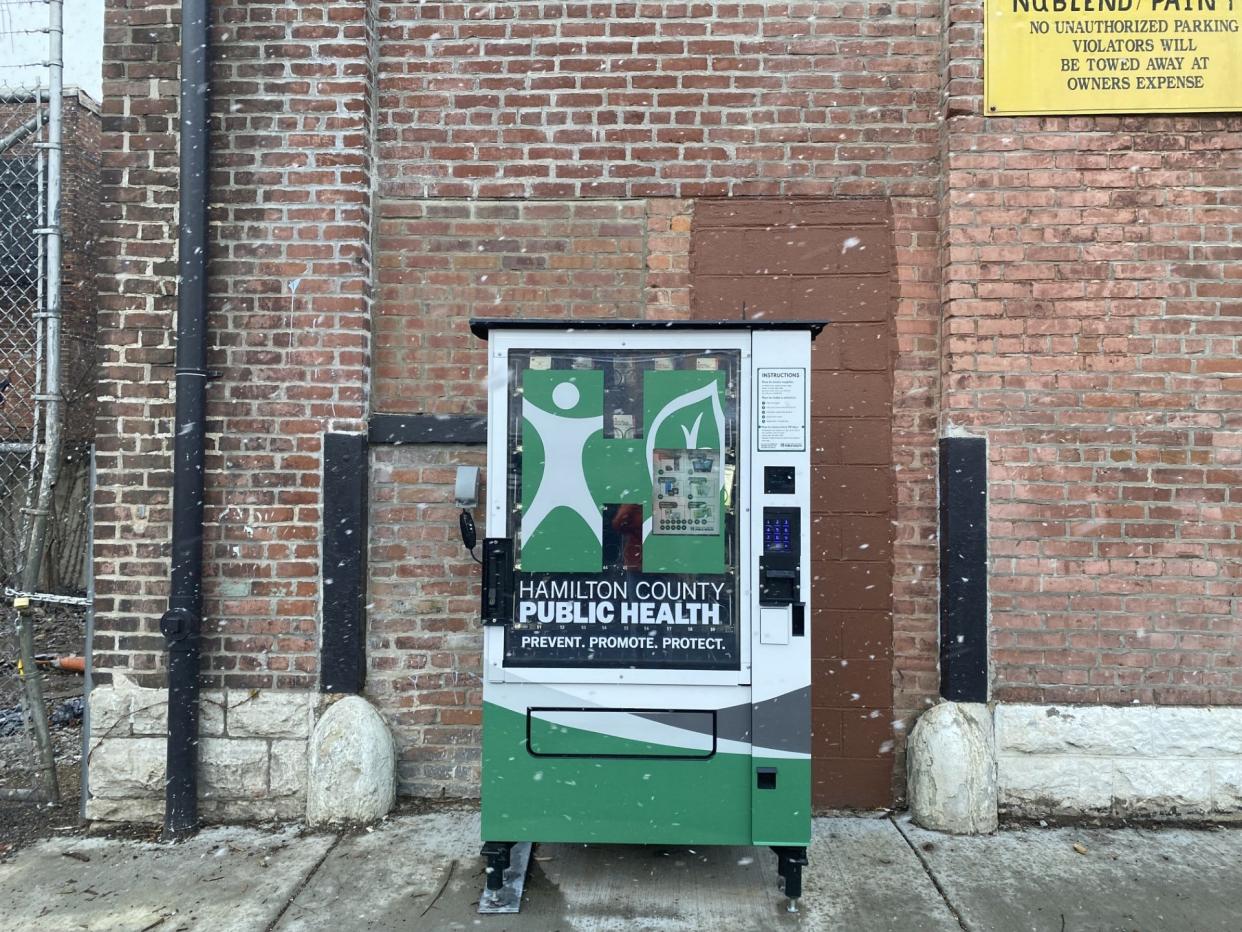
One innovative way to effectively lower the barrier to access harm reduction services is neighborhood vending machines. In December of 2023, in Cincinnati, Ohio, the Hamilton County Health Department installed two life-saving harm reduction vending machines on the streets where people need them.[3] One is located at a downtown Fire Station, and another is located in an alley near a NeighborHub Integrated Health Clinic. NeighborHub Health is a Federally Qualified Health Center (FQHC) exclusively focused on providing integrated medical and behavioral care to those who are homeless and/or living with HIV/AIDS.

These vending machines contain naloxone spray, fentanyl test strips, and condoms. Naloxone spray is used to treat suspected opioid overdoses. Fentanyl test strips empower substance abusers to know if the drugs they are using contain the deadly drug fentanyl in order to prevent death and overdoses. They are small strips of paper that can detect fentanyl in many different kinds and forms of drugs, whether they are injectable, powder, or pills.[4] Condoms are provided to prevent the spread of HIV and other infectious diseases. Substance abuse has been shown to result in people engaging in riskier sexual behavior. Thus, providing condoms along with harm-reduction supplies is a means of accessible, holistic public health intervention. 

Harm Reduction vending machine
Photo Source: Yahoo News

These two vending machines are additions to Ohio's first harm reduction machine, which was installed in Northside, a community in Cincinnati, in 2021. Caracole, a nonprofit HIV/AIDS organization in Cincinnati, operates and placed the machine outside of its office. This machine contains injection kits for safer drug injections, kits for safer substance smoking, safe sex kits, pregnancy tests, naloxone, bandages, and even containers with which to carry needles and syringes until they can be safely disposed of.[5]

Vending machines are examples of no-contact harm reduction. The vending machines are accessible 24/7 and do not require face-to-face contact. The supplies are free and are accessible via a code obtained by calling a special confidential number, which connects to a trained person who obtains non-identifying information and gives a code. Having on-contact harm reduction resources available on the street with 24/7 access increases accessibility. Some of those in need are uncomfortable with going into centers that may have the supplies or may be unable to get to them during hours of operation. Additionally, no-contact accessibility means that people can get what they need at all hours without judgment or fear of arrest such as sex workers and transient unhoused dealing with substance abuse.

A study published in the Journal of the American Pharmacists Association proved that the Caracole vending machine resulted in increased accessibility of harm reduction products and services and was associated with a lower countywide incidence of unintentional overdose death and HIV.[6] This is important to note since harm-reduction efforts in Hamilton County started in 2014 in response to increased HIV cases. In 2014, the Cincinnati Exchange Project dispensed sterile syringes to drug users to protect them from HIV and Hepatitis C. Vending machines are a practical addition to harm reduction strategies already in use, such as mobile health vans that travel to neighborhoods also providing safer drug use supplies, safe-sex supplies and information concerning healthcare services and treatment.

Harm reduction, in its various forms, is drug overdose and injury prevention, as well as HIV and infectious disease prevention. It should be supported in public policy to innovate and increase funding for modalities already in place, to educate the public and health professionals who sometimes demonize harm reduction efforts due to misinformation, and for research to create new pathways. Harm reduction acknowledges the dignity and humanity of those in need, improves public health outcomes, and can supportively lead people into substance abuse treatment and cessation.

[1] Sue, K., & Fiellin, D. A. (2021). Bringing Harm Reduction into Health Policy — Combating the Overdose Crisis. The New England Journal of Medicine, 384(19), 1781–1783. https://doi.org/10.1056/nejmp2103274

[2] SAMHSA.(2023). Harm Reduction. Retrieved from https://www.samhsa.gov/find-help/harm-reduction

[3] DeMio, T., Kim, R. (2024, January 3). Drugs, sex and harm reduction: New vending machines could reduce spread of HIV. Retrieved from https://news.yahoo.com/drugs-sex-harm-reduction-vending-033416611.html

[4] CDC. (2022, September 30). Fentanyl Test Strips: A Harm Reduction Strategy. Retrieved from https://www.cdc.gov/stopoverdose/fentanyl/fentanyl-test-strips.html

[5] DeMio, T. (2021, March 8). Ohio's first harm reduction vending machine helps promote safer sex, safer smoking, safer injection. Retrieved from https://www.cincinnati.com/story/news/2021/03/08/vending-machine-safer-sex-drug-use-supplies-overdose-hiv-prevention-ohio/4592675001/

[6] Arendt, D. (2023). Expanding the accessibility of harm reduction services in the United States: Measuring the impact of an automated harm reduction dispensing machine. Journal of the American Pharmacists Association, 63(1), 309–316. https://doi.org/10.1016/j.japh.2022.10.027

Disclaimer: Guest blogs do not necessarily reflect the views of the ADAP Advocacy Association, but rather they provide a neutral platform whereby the author serves to promote open, honest discussion about public health-related issues and updates.

Thursday, January 4, 2024

Our Commitment to Transparency, 2023

By: Brandon M. Macsata, CEO, ADAP Advocacy

One of the most important foundational values embodied in the advocacy done by ADAP Advocacy are the partnerships with all stakeholders working to end the HIV epidemic in the United States. Look no further than our mission's support statement: "ADAP Advocacy works with advocates, community, health care, government, patients, pharmaceutical companies and other stakeholders to raise awareness, offer patient educational programs, and foster greater community collaboration." Equally important is our commitment to transparency. We need more transparency in public policy, as well as public health. As an organization, ADAP Advocacy takes great pride in the partnerships we've formed over the years, and as such we make no apologies for the financial support afforded to fund our efforts. The 340B Drug Pricing Program provides ample evidence of what happens when there is a lack of transparency. Highlighting our values statements and our commitment to transparency goes hand-in-hand with our unwavering conviction that the voice of persons living with HIV/AIDS shall always be at the table and the center of the discussion.

Blocks showing the words, Trust / Truth
Photo Rights Purchased via iStock

Since our last transparency report in 2021, not much has changed. ADAP Advocacy still receives no taxpayer funding. We received no funding from the Ryan White HIV/AIDS Program, Medicaid, Medicare, HOPWA, or Veterans Affairs. Additionally, we receive no revenue from the lucrative 340B Program. All of our revenue is generated from individuals, corporations, foundations, and nonprofit organizations. Check out our Silver Transparency profile on Guidestar.

ADAP Advocacy has increasingly been engaging patient advocates on why reforming the 340B Program is in their best interests. The lack of accountability in the program and the near-zero transparency among the program's covered entities is mind-boggling, and that is an understatement. Our advocacy has led us to ask simple questions about where is all the money going, and who is actually being served who otherwise might not have received needed services and supports. Those efforts prompted us to examine the intersection between growing 340B revenues, increasing executive compensation, declining hospital charity care, and the explosion of the medical debt in this country. Upon releasing some of the examination's top-line findings, what would happen next epitomized the problems faced by those of us trying to put patients before providers.

Ever dealt with the media? They always have their angle, and it’s expected with interviews. But ya go into it with a smile, right? 

What followed with this so-called news "story" about our 340B examination resulted in nothing more than a classic "take down" piece from a publication financed by pro-hospital groups and well-financed lobbyists fueling anti-patient reforms! Despite the reporter being told our 340B examination was funded by general revenue dollars, his story attempted to still taint the findings with a "guilt by association" because drug manufacturers are among our advocacy partners and funders. Editor's Note: Since 2007, not once has a drug manufacturer attempted to attach strings or any quid pro quo to its funding either instructing us to support or oppose a single federal public policy initiative. Not once!

What’s funny is how our work was labeled as “drug industry backed” yet no mention of the hospital back or mega service provider backed opposition groups noted in the article. The woman questioning my intentions in the so-called news story has received a NINETY PERCENT (90%) increase in executive compensation since being name CEO in 2015. The reporter failed to mention that important factoid. I wonder how patients feel about that 90% pay raise or the disconnect between exploding 340B revenues and rise in CEO compensation, and patients still struggling. There is a darn good reason why on World AIDS Day, ADAP Advocacy sounded the alarm on the medical debt crisis facing consumers – including people living with HIV/AIDS (PLWHA).

A much more detailed summary of the 340B examination was provided by Marcus J. Hopkins, who serves on ADAP Advocacy's Ryan White Grantee 340B Patient Advisory Committee and conducted the data analysis. Upon Hopkins penning his guest blog, 340B Covered Entities’ Revenue Witnessed Huge Executive Compensation Increases, Alarming Charity Care Decreases, he was instructed by me to include the following transparency statement on me:

"At the request of ADAP Advocacy’s CEO, Brandon M. Macsata, to demonstrate transparency, we’re sharing some information about compensation paid to his firm, Purple Strategy Group, Inc. (PSG). PSG is paid a monthly management fee, which covers the work Brandon does on administrative, accounting, governance, marketing, and programs. The monthly fee is $8,000 per month, which has remained at that level since 2013 without an increase. Based on budget and net revenue year-end numbers, Brandon is also eligible to receive a performance bonus up to $6,500. Additionally, Brandon gives back to the organization annually, with his annual financial contributions ranging between $2,500 and $15,000+. No fringe benefits are paid, since Brandon is a 1099 contractor and not an employee. He is eligible to receive additional compensation for special projects that fall outside the scope of work, although most years there are no such projects."

Transparency is about not only talking the talk, but walking the walk. Ironically, upon further review of said publication, any reporting focused on 340B Program reform efforts gets labeled as “drug industry backed” in the story headline or opening paragraph. There doesn't appear to be a firewall between its "news" division and its advertisers, sadly enough.

Corporate Philanthropy
Photo Rights Purchased via iStock

In 2023, our revenue, as it will be reported to the Internal Revenue Service, was $359,226.70, derived from numerous sources — including corporate partnerships, event sponsorships, program sponsorships, scholarship fund donations (ranging from $5.00 to $5,000.00), third-party donors (i.e., PayPal Giving Fund), and miscellaneous donations. Approximately 75% (in 2022, it was 82%) were membership dues received from pharmaceutical manufacturers. That means nearly one-fourth of our membership funding (25%) came from non-industry partners. Among organizational donors to our restricted Scholarship Fund, 45% of the funding was derived from pharmaceutical manufacturers and 55% from non-industry partners. For our flagship ADAP Directory sponsorships, approximately 77% was support from pharmaceutical manufacturers and 23% from non-industry partners. Among registration fees, only 22% came from pharmaceutical manufacturers and 78% from non-industry partners. We also received several thousand dollars from individual donations, supporting either our general mission or specifically supporting our restricted Scholarship Fund. Our organization strives every single year to achieve greater funding diversification because it is consistent with a sound business model. Some years we do better than others.

Our ongoing 340B Project was funded entirely by pharmaceutical manufacturers, including AbbVie, Bristol-Myers Squibb, Genentech, Gilead Sciences, Johnson & Johnson Health Systems (Janssen Pharmaceuticals), Merck, and Novartis. Their support has never been a deeply held secret. And it is worth noting, again, our 340B examination on 340B revenues, executive compensation, charity care, and medical debt was funded by general revenues and not the 340B Project, although moving forward that will change. Another ongoing project financed entirely by pharmaceutical manufacturers is our Long-Acting Injectables Project with support from Gilead Sciences, Merck, and ViiV Healthcare.

That said with respect to general revenues (memberships, scholarship fund, directory sponsorships), our top five pharmaceutical funders this year were Merck (20.66), Gilead Sciences (18.08%), Janssen Pharmaceuticals (15.50%), ViiV Healthcare (12.91%), and Napo Pharmaceuticals (1.00%). Our top five non-industry funders were Magellan Rx Management (7.75%), Ramsell Corporation (7.75%), Walgreens (5.17%), Community Access National Network (2.58%), and the Partnership for Safe Medicines (1.00%). We generated financial support from nineteen (19) corporate entities.

In totality, our corporate donors included AbbVie, AIDS Alabama, Bender Consulting Services, Bristol-Myers Squibb, Community Access National Network, Genentech, Gilead Sciences, Janssen Pharmaceutical Companies of Johnson & Johnson, Magellan Rx Management, Maxor National Pharmacy Services Company, MedData Services, Merck, Napo Pharmaceuticals, Novartis, Partnership for Safe Medicines, Patient Access Network Foundation, Patient Advocate Foundation, Pharmaceutical Research and Manufacturers of America, Ramsell Corporation, ScriptGuideRx, ViiV Healthcare, and Walgreens.

Our top individual donor was yours truly. In 2023, I personally donated $1,355.00 to the organization (an amount less than previous years because I directed more of my personal donations to help the nonprofit nursery school where my son attends). All donations made to our scholarship fund are restricted in nature, and as such can only be used toward funding scholarships for people living with HIV/AIDS and/or their advocates.

Group of diverse crowd holding up heart shaped images
Photo Rights Purchased via iStock

ADAP Advocacy remains deeply committed to improving access to care for PLWHA. Every decision we make is made through the lens of the patient. When those interests align with the pharmaceutical industry, then so be it. In doing so, we're also not afraid to call out the hypocrisy behind the naysayers who question our intentions.

According to a survey Network for Good conducted among 3,000 donors, there are 7 reasons why donors give (and 1 reason they don’t). While the aforementioned survey solicited feedback from individuals, there are consistent ‘ideological sorting' motivations for giving among corporate donors and political donors. Donors give money to align themselves with causes they already support, and not the dogmatic 'vote-buying' hypotheses. There is plenty of research in this area, too.

It is important to remember that there is an inherent value in advocacy partnerships. We remain unapologetically pleased with the relationships we've built over the last 17 years since the organization's founding in 2007. We're thankful for the support from industry, and equally thankful for the support from our non-industry partners...which includes some individuals who give as little as five bucks!

Disclaimer: Guest blogs do not necessarily reflect the views of the ADAP Advocacy Association, but rather they provide a neutral platform whereby the author serves to promote open, honest discussion about public health-related issues and updates.

Thursday, December 14, 2023

Americans with Disabilities Act Negates Tennessee HIV Criminalization Statute

By: Ranier Simons, ADAP Blog Guest Contributor

Christmas has come early in Tennessee. December 2023 began with a victory in the fight against HIV criminalization in the Volunteer State. As a result of complaints filed by the Center for HIV Law and Policy (CHLP), the U.S. Department of Justice found that Tennessee’s enforcement of its aggravated prostitution statute violates the Americans with Disabilities Act (ADA) by specifically targeting people living with HIV (PLWHA). CHLP hailed the decision, "CHLP Made the Call and the DOJ Answered."

Center for HIV Law & Policy

According to the Centers for Disease Control & Prevention (CDC), 35 states currently have laws that criminalize HIV exposure, which fall into several categories. They are either HIV-specific laws regarding actions that can potentially result in HIV exposure, sexually transmitted disease (STD) or communicable disease exposure laws that could include HIV, general criminal statutes that could be used to define actions that could possibly cause HIV or STD exposure, or laws that enhance sentences for certain crimes when committed by PLWHA.[1] Tennessee’s aggravated prostitution statute falls into the sentence enhancement category.

Tennessee enacted its aggravated prostitution statute in 1991. Prostitution in the state, in general, is only a misdemeanor crime. However, the aggravated prostitution statute converts it to a Class C Felony if the person convicted is HIV positive. Conviction of a Class C felony means the possibility of imprisonment from three to fifteen years and up to a $10,000 fine.[2] Conviction of prostitution by someone without HIV is only a Class B misdemeanor, which could result in up to only six months in jail and up to a $500 fine.[2] Additionally, aggravated prostitution convictions require registering with the Tennessee Bureau of Investigations as a sex offender. 

To add insult to injury, in 2010, aggravated prostitution was reclassified as a violent sexual offense. This means that those convicted must stay on the sexual offender registry (SOR) for life. Previously, they were able to petition to be removed after ten years.[2] Moreover, an aggravated prostitution conviction makes one ineligible for judicial diversion. Judicial diversion is when first-time offenders are allowed to enter what equates to a conditional guilty plea. If they plead guilty and fulfill the conditions of a court-defined special probation period, their charges are dismissed, and their records are expunged.[2]

The Americans with Disabilities Act defines HIV/AIDS as a disability because it can significantly hinder life activities. PLWHA are protected whether they are symptomatic or not, and those protection were reaffirmed in Bragdon v. Abbott, 524 U.S. 624 (1998). Protection under the ADA means guaranteed “equal opportunity for individuals with disabilities in public accommodations, employment, transportation, State and local government services, and telecommunications…also protects persons who are discriminated against because they have a record of or are regarded as having HIV, or they have a known association or relationship with an individual who has HIV”.[3] All of those guarantees are denied to those convicted under the aggravated prostitution statute, which subjects those convicted to undue hardship in many aspects of their lives.

HIV Criminalization Map
Photo Source: POZ Magazine

Being on the sexual offender registry significantly affects where people can live, work, or be present in public. You may not work or live within 1,000 feet of any school, childcare facility, public park, or playground.[2] Simply being on the premises of these areas is also prohibited unless you have an express reason for being there, such as being the parent of a child at a specific place. An individual on the SOR cannot take their child to a public park to play. However, they can retrieve their child from school only if they give written notice to the school in advance that they are a registered sex offender.[2] The SOR denies people the ability to spend time with children in their families. One example is a grandparent who is on the SOR and cannot spend time alone or babysit their grandchild because they are prohibited from being alone with minors.

A lifetime registry on the SOR facilitates long-term discrimination and even homelessness. Landlords run background checks and frequently won't rent to anyone on the SOR. Once on the SOR, a person’s personal information becomes publicly available. The publicly searchable Tennessee Bureau of Investigations (TBI) SOR website lists all sorts of data such as photos, ages, names, addresses, parole information, school and work addresses, unrelated criminal history, and more. Furthermore, the website enables visitors to click on the statutes for which one has been convicted. Thus, seeing that someone is convicted under the aggravated prostitution statute means public exposure of their HIV status. This leaves a person vulnerable to hate crimes, housing and employment discrimination, and mental stress from living with their life on display.

The DOJ investigation revealed that Shelby County in Tennessee had the highest enforcement rate of the aggravated prostitution statute. In 2022, Shelby County was the residence of 74% of people on the SOR for aggravated prostitution while housing only 13% of the state’s population.[2] Also, over 90% of those aggravated prostitution arrests were Black, with a large number being Black women, both cisgender and transgender.[2] The SOR further oppresses marginalized individuals financially. Many of those convicted are low-income, making the annual $150 mandatory fee for being listed on the SOR a hardship. Additionally, being on the SOR requires reporting in person four times a year to update registration.[2] Failure to do so results in a violation, which could result in jail time.

DOJ detailed multiple legal remedies to the ADA violations to both the state government and specifically the Shelby County District Attorney General’s Office (SCDAG). The list for the SCDAG includes stopping the enforcement of the statute, including probation violations related to violations of SOR reporting requirements, creating a protocol for vacating aggravated prostitution convictions, and educating all SCDAG attorneys about HIV and the nondiscrimination requirements of Title II of the ADA.[2] 

Criminalized or controlled actions in HIV/AIDS criminalization laws
Photo Source: CDC

For the state, DOJ’s recommendations include ceasing the enforcement of the statute, using the TBI to remove people on the SOR who are there solely due to aggravated prostitution convictions, expunging all state records showing that those with aggravated prostitution convictions were ever on the SOR, and paying compensatory damages (SOR fees, court costs and fines, bonds, etc.) to those who were victims of the statute.[2,5] One very notable recommendation to the state is to notify all those who have been removed from the SOR and whose references to their convictions have been removed.[2] Not only is it legally empowering to have documentation in hand, but it is also mentally empowering to have confirmation of reclaiming control over one’s life.

The aggravated prostitution law is predatory to vulnerable populations and is not based on science, according to our government's highest law enforcement institution. It is draconian, according to advocates. Since 1991, advances in antiretroviral therapy have come a long way and it has opened the door to "treatment as prevention" (TasP) and "undetectable equals untransmittable" (U=U). Laws need to reflect these advances.

S. Mandisa Moore-O’Neal, CHLP Executive Director, states, “The implications of the DOJ’s findings are far-reaching. This not only puts the state of Tennessee on notice that this is a serious issue, but it also serves as notice to other states with similar HIV criminal statutes.”[4] Regarding the future continuation of the fight against HIV criminalization, she also says, “This is also an opportunity for other state coalitions organizing and educating around HIV criminalization to leverage these findings with lawmakers. When many state budgets are already tight, the possibility of new and often costly litigation may be the impetus to change these laws.”[4]

Jen Laws, President & CEO of the Community Access National Network applauded the decision, "This is an excellent development in implementing the ADA and affording protections to people living with HIV. We owe a debt of gratitude to our friends at CHLP for exploring this legal argument. DOJ's Civil Rights Division has room to expand on this work in other areas affecting people living with HIV and the legal system. From enforcement of medication access for incarcerated and jailed persons to enforcement of these same protections in family courts, our people face discrimination when interacting with our legal system and that needs to change."

In today’s political climate, many lawmakers either do not care about the adverse effects flawed laws have on marginalized communities or feel the consequences of the laws are somehow deserved due to their personal ideologies. Challenging the aggravated prostitution law by showing how it violates the ADA is a perfect example and blueprint of how to fight legalized oppression by using legal statutes that cannot be ignored. When one cannot change the system, it’s empowering to find ways to use the existing system to one’s advantage. Chalk-up a big win for CHLP...and PLWHA in Tennessee.

[1] Health Resources and Services Administration. (2023, September). Ryan White HIV/AIDS Program AIDS Drug Assistance Program (ADAP) Annual Client-Level Dat1) Centers for Disease Control. (2023). HIV and STD Criminalization Laws. Retrieved from https://www.cdc.gov/hiv/policies/law/states/exposure.html#:~:text=As%20of%202022%2C%2035%20states,categorized%20them%20into%20four%20categories.

[2] U.S. Department of Justice Civil Rights Division. (2023, December 1). The United States’ Findings and Conclusions Based on its Investigation of the State of Tennessee and the Shelby County District Attorney General’s Office under Title II of the Americans with Disabilities Act, DJ No. 204-70-85. Retrieved from https://www.justice.gov/d9/2023-12/2023.11.30_tn_hiv_lof_final.pdf

[3] U.S. Department of Justice Civil Rights Division. (2023). Protecting the rights of persons living with HIV/AIDS. Retrieved from https://archive.ada.gov/hiv/ada_hiv_brochure.html

[4] Center for HIV Law and Policy. (2023, December 1). News Release: CHLP Made the call and the DOJ answered. Retrieved from https://www.hivlawandpolicy.org/news/news-release-chlp-made-call-and-doj-answered

[5] Kruesi, K. (2023, December 1). Tennessee’s penalties for HIV-positive people are discriminatory, Justice Department says. Retrieved from https://apnews.com/article/justice-department-hiv-tennessee-6cda4a9170dfbe46bd8d8f6af91f76cd

Disclaimer: Guest blogs do not necessarily reflect the views of the ADAP Advocacy Association, but rather they provide a neutral platform whereby the author serves to promote open, honest discussion about public health-related issues and updates.

Thursday, December 7, 2023

Ryan White HIV/AIDS Program AIDS Drug Assistance Program (ADAP) Annual Client-Level Data Report

By: Ranier Simons, ADAP Blog Guest Contributor

Effective population health monitoring, program evaluation, and decision-making requires quality data. To that end, in September 2023, the Division of Policy and Data, HIV/AIDS Bureau (HAB) under the Health Resources and Services Administration (HRSA), U.S. Department of Health and Human Services published the Ryan White HIV/AIDS Program AIDS Drug Assistance Program (ADAP) Annual Client-Level Data Report.[1] The current iteration of this annual publication covers the years 2017 through 2021. The client-level data includes information such as demographics, socioeconomic status/factors, and service utilization.

Health Resources and Services Administration

ADAPs are in each of the 50 states, the District of Columbia, Puerto Rico, the U.S. Virgin Islands, and six U.S. territories, receiving funding from Part B of the Ryan White HIV/AIDS Program (RWHAP). Eligibility for ADAP services requires one to have a diagnosis of HIV, be of low income, defined as a percentage of the federal income poverty level, and meet residency requirements based on a particular state’s ADAP structure. The report includes a multitude of metrics grouped by age, race/ethnicity, gender, federal poverty level, and healthcare coverage status. What follows is an overview of some of the data. To view the report in its entirety, please click here.

According to the report, clients served numbers are on an upward trend. From 2017 to 2021, the client base grew from 268,174 to 289,289. These numbers describe those who specifically receive ADAP services and do not include clients who only receive non-ADAP RWHAP direct health care and support services. However, some ADAP clients partake of those services as well. Increasing yearly numbers indicate that ADAP programs are needed, and ongoing funding is necessary. Additionally, research shows that ADAP programs are cost-effective, and policies that stifle them are detrimental to the health and well-being of those dependent upon them and society overall.[2]

ADAP Clients Served, by Program Type
Photo Source: NASTAD

A few gender-related observations stand out as well. Most of the ADAP clients are male. In 2021, 78.6% were cis-gender male. This percentage and the overall gender ratio of male, female, and transgender patients served has remained consistent over the 2017-2021 timeframe. In 2021, the data shows a difference in poverty based on gender. There were more cis-gender female/transgender female ADAP clients than cis-gender male/transgender males living at or below 100% of the federal poverty level, though as a whole, half of all ADAP clients were below. The comparison was 54.1% cis-gender female and 65.6% transgender female in contrast to 44.7% cis-gender male and 51.4% transgender male. Gender differences were also noted in the status of healthcare coverage. In 2021, 36.5% of ADAP clients were entirely without health care insurance coverage. However, of that subgroup, 36.6% were male, and 34.95 were female. The numbers for transgender clients were higher, with 49.8% of transgender males and 51.2% of transgender females lacking any healthcare coverage. Complete lack of coverage means they did not even have Medicaid.

The report indicated a few standout metrics regarding race as well. The majority of ADAP clients are non-White. In 2021, seven out of ten were racial or ethnic minorities, with white clients comprising 30% of the client total. A further breakdown of the racial data indicates that in 2021 over half, 55%, of female ADAP clients were African American. By comparison, 24.1% were Hispanic/Latina, 18.1% were White, and less than 2% identified as Asian, mixed-race, American Indian/Alaska Native or Native Hawaiian/Pacific Islander. In contrast, 33.6% of male clients were African American, 33.3% were White, and 29.9% were Hispanic/Latino. A very notable racially varied metric involved age. Ethnic/minority ADAP clients are younger than White clients. In 2021, 62.1% of white clients were 50 years of age or older. This contrasts with the statistics of 39.9% being African American, 48.9% being American Indian/Alaska Native, 38.6% Hispanic/Latino, and 36.0% Asian. 

The observations are just a few of the many data points described in the report. Continued reporting of this nature is necessary for accountability in terms of the billions spent on ADAP each year and to continue to improve the services and the lives of those dependent on ADAP services. Whether examining the breakdown of various service utilization or how the distribution of services differs based on geographical region, continuing to create a robust repository of data is the best way to improve the health outcomes of the vulnerable ADAP population.

[1] Health Resources and Services Administration. (2023, September). Ryan White HIV/AIDS Program AIDS Drug Assistance Program (ADAP) Annual Client-Level Data Report 2021. Retrieved from https://ryanwhite.hrsa.gov/sites/default/files/ryanwhite/data/hrsa-adap-data-report-2021.pdf

[2] McManus, K. A., Strumpf, A., Killelea, A., Horn, T., Hamp, A., & Keim-Malpass, J. (2022). Economic benefits of the United States' AIDS drug assistance Program: A systematic review of cost analyses to guide research and policy priorities. Preventive medicine reports, 29, 101969. https://doi.org/10.1016/j.pmedr.2022.101969

Disclaimer: Guest blogs do not necessarily reflect the views of the ADAP Advocacy Association, but rather they provide a neutral platform whereby the author serves to promote open, honest discussion about public health-related issues and updates.

Thursday, November 30, 2023

Provider ‘Smash and Grab’ Tactics Fueling Medical Debt, Hurting Patients

By: Ranier Simons, ADAP Blog Guest Contributor

In the United States, healthcare is one universal expense incurred by everyone, regardless of their station in life. Approximately 100 million people in this country, including 41% of adults, have some sort of medical debt.[1] Some people can manage it, but many struggle. As a result of medical debt, people have had to cut spending on food and necessities, deplete savings, delay purchasing a home, work multiple jobs, or even declare bankruptcy.[1]

Hospital Bill with 'PAST DUE' notice
Photo Source: iStock (purchased)

Most of the medical debt is actually hospital debt, and that debt is owed to large hospitals, not small private practices. In the United States, there are two different types of hospitals: for-profit and nonprofit. There are 5,139 community hospitals, with 1,228 being for-profit, 951 being state and local government-run hospitals, and 2,960 being non-governmental nonprofit health facilities.[2] For-profit hospitals are business-oriented and owned by investors and shareholders; thus, they are focused on making money for their stakeholders. Nonprofit hospitals are not beholden to any shareholders or investors. In theory, their profits are to be reinvested into the hospitals for their operations. Additionally, nonprofit hospitals are tax-exempt and required to provide more community health services and serve patients regardless of whether they can afford care. Unfortunately, some nonprofit hospitals are the worst offenders when it comes to saddling patients with debt.

Nonprofit hospitals do not pay any federal and state income, property, or sales taxes and receive other tax breaks.[2] In 2020, the nation’s nonprofit hospitals received an estimated $28 billion in tax benefits, accounting for 44% of their net income.[3] In return for the tax benefits, the federal government requires nonprofit hospitals to provide community benefits such as charity care. Charity care is providing services to low-income people for free or at significantly reduced rates.[3] The Affordable Care Act (ACA) also mandates that they must maintain a transparent and available financial assistance program and refrain from taking “extraordinary collection actions” against patients eligible for charity care.[4] The reality of some of the largest nonprofit hospitals is a travesty of the concept of charity care.

Profits Over Charity Care
Photo Source: National Nurses United

Some nonprofit hospitals aggressively pursue patients over their bills. They garnish paychecks and sell patient accounts to collection agencies (debt buyers) that harass and intimidate. Lawsuits are filed against patients for outstanding balances. Some of them are filed against people who qualify for charity care. These lawsuits attach legal fees and late payment interest, multiplying the original outstanding debt amounts. Moreover, some hospitals pursue family members for a patient’s medical debts and even place property liens on patients’ homes. Many do not find out about property liens until a relative has passed. Property liens lower the value of homes and adversely affect the transference of intergenerational wealth.

Federal tax law mandates that nonprofit hospitals spend some of their revenues as community benefit and defines the kind of spending that qualifies but does not stipulate the amount. Charity care is just one of the defined categories of spend. In 2020, nonprofit hospitals had approximately $28 billion in tax exemptions but provided only $16 billion in free or discounted services through charity care.[5] 

U.S. Senator Bernie Sanders, chair of the Senate Committee on Health, Education, Labor & Pensions (HELP), filed a congressional report on nonprofit hospitals and their tax exemptions. The committee examined 16 of the largest nonprofit health systems in the U.S., finding that they spent less than 60% of the estimated value of their tax breaks on charity care.[6] The 16 hospital chains examined took in more than 3$ billion in annual revenue. Twelve of the 16 chains dedicated less than two percent of their total revenue to charity care, with 6 of those 12 having less than 1% of their total revenue dedicated to charity care.[3] Between 2012 and 2019, nonprofit hospitals increased their average operating profit by more than 36% and almost doubled their cash reserves. In the same timeframe, charity care spending dropped from only $6.7 million to $6.4 million.[3] Ironically, in 2021, of the 16 nonprofit hospital chains in the report, the average CEO compensation was $8 million, with a collective total of more than $140 million.[3]

Witness testifying before Congressional Committee
Photo Source: WRAL

Editor's Note: ADAP Advocacy recently called into question 340B Drug Discount Program practices with an examination focused on growing 340B revenues, increasing executive compensation, declining charity care, and the exploding medical debt.

Sen. Sanders feels that Congress should specifically define the level of charity care and financial assistance required of nonprofit hospitals. One suggestion is that tax breaks be limited to the amount of charity care provided. Additionally, Sanders feels that hospital financial assistance programs should have defined standards. For example, some of the hospitals do not transparently explain, advertise, or actively facilitate entering qualified patients into the programs. Instead, some hospital systems, such as Atrium in North Carolina, steer patients towards loans to pay their outstanding bills that sometimes have interest rates as high as 13%.[7]

Hospital groups pushed back against the analyses by Sen. Sanders, but they also tend to oppose any accountability or transparency reforms.. The American Hospital Association states that nonprofit hospitals' community benefit is comprehensive and encompasses more than just charity care. It says that community benefit includes research, medical innovation, absorbing underpayments from Medicaid, health education, and housing assistance.[6,8] That sentiment is misleading and flawed. For example, a good deal of research is funded by taxpayers’ dollars.

Jen Laws, President & CEO of the Community Access National Network (CANN), isn't buying the AHA's argument. According to Laws, financial assistance and community benefit are different line items on the Internal Revenue Service's Form 990 for a reason. In fact, CANN has been quite vocal on the need for reforms to programs designed to help indigent patients, yet are falling short of that intended goal.

According to Laws, community assumption is a "good faith" definition, but loopholes surrounding hospital-related nonprofit status tax rules inevitably can lead to bad faith in this space, or even abuse. He believes the overwhelming body of evidence surrounding the decline in hospital charity care is in direct opposition of the IRS' intention, namely providing a benefit to needy persons, families, and communities.

Laws said, "For example, our government, namely the IRS, hasn't updated 'community benefit' rules in decades and many no longer apply, like having an open Emergency Room. This gets to the core of CANN's position - honesty is not part of that muddy language. And we need to be frank about that lack of honesty."

It is crucial that community benefit standards are revamped with a focus on charity care that directly benefits those in need. In some states, the difference between the amount of funds spent on charity care and the total tax exemptions the nonprofit hospitals receive is greater than the recorded debts listed on patients' credit reports.[3] Change must come so that needy patients' lives are no longer ruined by being sued by hospitals for outstanding balances as low as $500 or less that they can’t afford to pay.

[1] Levey,N. (2022, June 16). 100 Million people in America are saddled with health care debt. Retrieved from https://kffhealthnews.org/news/article/diagnosis-debt-investigation-100-million-americans-hidden-medical-debt/

[2] Modi, J. (2023, March 21). Nonprofit vs. for-profit hospitals: what’s the difference? Retrieved from https://www.buzzrx.com/blog/nonprofit-vs-for-profit-hospitals-whats-the-difference

[3] United States Senate Health, Education, Labor, and Pensions Committee. (2023, October 10). Mahority Staff Report: Major Nonprofit Hospitals Take Advantage of Tax Breaks and Prioritize CEO Pay Over Helping Patients Afford Medical Care. Retrieved from https://www.sanders.senate.gov/wp-content/uploads/Executive-Charity-HELP-Committee-Majority-Staff-Report-Final.pdf

[4] 26 U.S.C 501(r)(4), (6); Internal Revenue Serv, Billing and Collections – Section 501(r)(6) (Jul. 13, 2023), https://www.irs.gov/charities-non-profits/billing-and-collections-section-501r6. 

[5] Miller, A., Hawryluk,M. (2023, July 11). As Nonprofit hospitals reap big tax breaks, states scrutinize their required charity spending. Retrieved from https://kffhealthnews.org/news/article/nonprofit-hospitals-tax-breaks-community-benefit/

[6] Wilkerson,J. (2023, October 10). Bernie Sanders bashes nonprofit hospitals over their tax breaks. Retrieved from https://www.statnews.com/2023/10/10/bernie-sanders-nonprofit-hospitals/

[7] Levey,N. (2023, August 16). North Carolina hospitals have sued thousands of their patients, a new report finds. Retrieved from https://kffhealthnews.org/news/article/north-carolina-hospitals-patient-debt-lawsuits/

[8] American Hospital Association. (2023, October). Tax-exempt hospitals provided nearly $130 billion in total benefits to their communities. Retrieved from https://www.aha.org/system/files/media/file/2023/10/Results-from-2020-Tax-Exempt-Hospitals-Schedule-H-Community-Benefit-Reports.pdf

Disclaimer: Guest blogs do not necessarily reflect the views of the ADAP Advocacy Association, but rather they provide a neutral platform whereby the author serves to promote open, honest discussion about public health-related issues and updates.