Showing posts with label Janssen Pharmaceutical Companies of Johnson & Johnson. Show all posts

Thursday, February 17, 2022

FDA Extends Cabenuva Approval to Every Two Months

By: Ranier Simons, ADAP Blog Guest Contributor

The primary weapons in the fight against HIV are anti-retroviral drugs, commonly referred to as ARVs. ARVs work by lowering the levels of HIV, known as viral load, in the body to stop HIV’s damage to the immune system. Viral load is measured by the number of copies of HIV RNA in a milliliter of blood.[1] The goal of ARV’s is to decrease the viral load to the point that standard tests cannot detect it. This level of viral suppression is commonly known as ‘undetectable’, and with it comes the important  'undetectable equals untransmissible' (#UequalsU) treatment goal.[2] Moreover, viral suppression means a significant reduction in the damage HIV can do to the body. This fight recently gained a new weapon, with two-month dosing of the injectable HIV therapy, Cabenuva.

Effective treatment means maintaining the levels of the medications in the body. This requires adherence to daily dosing. Not keeping the drugs at appropriate levels in the blood can increase viral load, damage immune cells such as CD4’s, and even drug resistance.[3] Drug resistance means that mutations of HIV could develop that are not responsive to a person's treatment regimen rendering that regimen ineffective and making it harder to find other medications that will work. 

Hands holding pills
Photo Source: Very Well Health

Early in the fight against HIV, drug regimens consisted of multiple pills several times a day. Toxicity issues, as well as issues keeping dosage schedules, were significant barriers to treatment. Modern-day once-daily one pill regimens were developed to combat both of those issues. However, some patients still experience difficulties with adherence. The most reported adherence challenges are forgetfulness, stigma, health perception, and digestive side effects.[4]

Some patients report having issues remembering to take their medication daily, especially those who have been on long-term therapy. Stigma is a concern by those who do not want family members to know they are living with HIV or to see them take medications. They do not want coworkers to know they are on medication and are psychologically harmed by the daily reminder of their health status. Health perception is an issue for long-term ARV patients because they feel healthy; thus, they become inconsistent with their dosing. Some patients also are inconsistent with their regimens due to perceived and experienced side-effects they experience from the drugs.

The evolution of ARV drug development has led to recent innovations to battle adherence issues. In January 2021, the U.S. Food & Drug Administration (FDA) approved a once-a-month injectable HIV treatment called Cabenuva. It is an extended-release injectable of cabotegravir and rilpivirine. The drug is a collaboration between Janssen Pharmaceuticals of Johnson & Johnson and ViiV Healthcare. Cabenuva is two separate injections into the buttock muscles, with the extended-release rilpivirine having been developed by Janssen and the extended-release cabotegravir from ViiV Healthcare.[5]
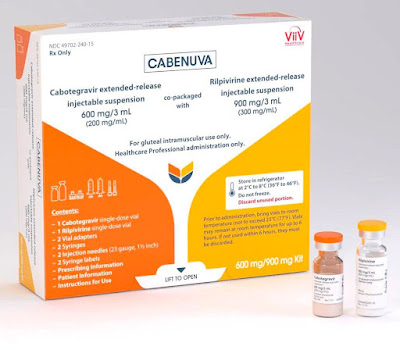
Cabenuva
Photo Source: The New York Times

Cabenuva is meant for those who are virologically suppressed on a stable regimen and who have no history of treatment failure or known resistance to cabotegravir or rilpivirine. Proper administration requires one month of daily administration of rilpivirine and cabotegravir in pill form to assess tolerance before beginning the monthly injections of Cabenuva. 

Continued research into daily Cabenuva proved that it is effective. Its efficacy has proven to be so positive that on February 1, 2022, the FDA approved it for two-month injectable treatment. Therefore, some patients can be treated with only six sets of injections annually instead of twelve. The extended label approval of Cabenuva from one to two months is based on the ATLAS-2M phase IIIb trial results. An ongoing clinical trial shows that in terms of virologic suppression, every two-month dosing is not inferior to monthly dosing. ATLAS-2M is being conducted in Australia, Argentina, Canada, France, Germany, Italy, Mexico, Russia, South Africa, South Korea, Spain, Sweden, and the United States.[6]

The most common adverse reactions were fever, injection site reactions, fatigue, headache, musculoskeletal pain, nausea, sleep disorders, dizziness, and rash. The type and frequency of experienced adverse reactions were similar in those receiving the injection monthly or every two months. Additionally, the rates of serious adverse events or withdrawal due to adverse events were similar between the two groups.

This new FDA approval has the potential to be life-changing for those where Cabenuva treatment is appropriate. For further information on ATLAS-2M, please see https://clinicaltrials.gov/ct2/show/NCT03299049.

[1] Peabody, R. (2017, May). Viral load. Retrieved from https://www.aidsmap.com/about-hiv/viral-load#:~:text=The%20results%20of%20a%20viral,100%2C000%20would%20be%20considered%20high
[2] NIH. (2020, June 12). 10 Things to know about HIV suppression. Retrieved from https://www.niaid.nih.gov/diseases-conditions/10-things-know-about-hiv-suppression#:~:text=Daily%20antiretroviral%20therapy%20can%20reduce,to%20keep%20the%20virus%20suppressed
[3] Peabody, R. (2019, July). Adherence to HIV treatment. Retrieved from https://www.aidsmap.com/about-hiv/adherence-hiv-treatment
[4] Genberg, B. L., Lee, Y., Rogers, W. H., & Wilson, I. B. (2015). Four types of barriers to adherence of antiretroviral therapy are associated with decreased adherence over time. AIDS and behavior, 19(1), 85–92. https://doi.org/10.1007/s10461-014-0775-2
[5] Janssen Pharmaceuticals. (2022, February 1). U.S. FDA approves CABENUVA (rilpivirine and cabotegravir) for use every two months, expanding the label of the first and only long-acting HIV treatment. Retrieved from https://www.janssen.com/us/sites/www_janssen_com_usa/files/us_fda_approves_cabenuva_rilpivirine_and_cabotegravir_for_use_every_two_months_expanding_the_label_of_the_first_and_only_long_acting_hiv_treatment.pdf
[6] ViiV Healthcare. (2022, February 1). ViiV Healthcare announces us FDA approval of Cabenuva (cabotegravir, rilpivirine) for use every two months, expanding the label of the first and only complete long-acting hiv treatment. Retrieved from https://viivhealthcare.com/en-us/media-center/news/press-releases/2022/january/viiv-healthcare-announces-us-fda-approval-of-cabenuva/

Disclaimer: Guest blogs do not necessarily reflect the views of the ADAP Advocacy Association, but rather they provide a neutral platform whereby the author serves to promote open, honest discussion about public health-related issues and updates.

Thursday, April 8, 2021

Cabenuva is a Shot 💉 of Hope for People Living with HIV/AIDS

By: Brandon M. Macsata, CEO, ADAP Advocacy Association

On January 21, 2021, a shot of hope was provided by the U.S. Food & Drug Administration (FDA) in the forty-year fight against HIV/AIDS with the agency's approval of the first extended-release, injectable drug regimen. Administered once a month, Cabenuva (cabotegravir and rilpivirine, injectable formulation) further progressed the HIV treatment evolution – which once included people living with HIV/AIDS (PLWHA) taking up to a dozen pills...down to three pills...then two pills...and eventually leading to the single-tablet regimen. Ask anyone living with AIDS Survivor Syndrome (A.S.S.), it is a development of particular importance because there was a time when the words 'hope' and 'HIV' weren't necessarily used in the same sentence.

The foundations for the advances in HIV treatment regimens, such as Cabenuva, are linked to the transformative work behind the creation of the AIDS Drug Assistance Program (ADAP) and its eventual federal funding thanks to the National ADAP Working Group (NAWG). Created in the 1990s, when advocates were mistrustful of the pharmaceutical industry and critical of the government’s slow response to the epidemic. Likewise, the industry was skeptical of some of the advocacy community’s brass-knuckles tactics, however necessary they were at the time. But ADAP's existence helped to change that paradigm.[1] 

More recently, Operation Warp Speed and the search for vaccines against Covid-19 have demonstrated what pharmaceutical innovation can achieve. It also caused many PLWHAs to reflect, What the Global Covid-19 Vaccine Means to HIV? Nonetheless, Cabenuva offers us some hope on the treatment front!

The FDA announcement included a statement by John Farley, M.D., M.P.H., director of the Office of Infectious Diseases in the FDA’s Center for Drug Evaluation and Research, which read: “Currently, the standard of care for patients with HIV includes patients taking daily pills to adequately manage their condition. This approval will allow some patients the option of receiving once-monthly injections in lieu of a daily oral treatment regimen. Having this treatment available for some patients provides an alternative for managing this chronic condition.”

Rendering-of-the-packaging-and-vials-containing-its-new-HIV-treatment-Cabenuva_ViiV-Healthcare-AP
Photo Source: Associated Press

Cabenuva was developed in partnership by ViiV Healthcare and Janssen Pharmaceutical Companies, and it offers a way to maintain viral suppression with only 12 treatments a year. As a complete regimen for the treatment of human immunodeficiency virus type 1 (HIV-1) infection in adults, Cabenuva replaces a current antiretroviral regimen in those who are virologically suppressed on a stable antiretroviral regimen with no history of treatment failure and with no known or suspected resistance to either cabotegravir or rilpivirine.[2] 

Lynn Baxter, Head of North America, ViiV Healthcare, said in the ViiV Healthcare statement: "Today’s FDA approval of Cabenuva represents a shift in the way HIV is treated, offering people living with HIV a completely new approach to care. Cabenuva reduces the treatment dosing days from 365 days to 12 days per year. At ViiV Healthcare, we are dedicated to ensuring no one living with HIV is left behind, and adding this first-of-its-kind regimen to our industry-leading portfolio of innovative medicines reinforces our mission."[3]

As Paul Stoffels, M.D., Vice Chairman of the Executive Committee and Chief Scientific Officer of Johnson & Johnson, says in Janssen's announcement, "While much more remains to be done to make HIV history, today's milestone reminds us how far medical innovation has come since the first reported cases of the virus almost 40 years ago."[4]

The Body's David Malebranche, M.D., M.P.H. penned, Cabenuva for HIV Treatment: Everything You Need to Know, which is an excellent resource for patients interested in learning more about the new injectable therapy. Dr. Malebranche tackles general information about the new drug, how to take it, potential side effects and drug interactions, as well as the costs.[5] A must read! 

For Warren Alexander O'Meara-Dates, diagnosed with HIV in November 2009, it was an easy decision to switch once he learned that his health insurance carrier would cover the new treatment. O'Meara-Dates summarized, "On April 6th, I had my first injection and now, I no longer have to manage taking oral medication everyday with my busy lifestyle. I'm humble and grateful that I've progressed to a point where this was an option and encourage anyone who meet the criteria to strongly consider it."

In the early years of the HIV epidemic, treatment advances were often hampered by some significant challenges faced by people taking the medicines. Aside from the stigma – which was very real for people forced with lugging around countless pill bottless – there were other issues. Some medicines required food, while others needed to be taken on an empty stomach. Morning versus night management. Navigating the potential drug interactions was a difficult task. And the side effects were numerous, and often severe.

HIV Long-Term Survivors Awareness Day
Photo Source: HLTSAD.org

Some long-term survivors have already hailed the single-tablet regimen, and now they expressed similar enthusiasm for Cabenuva for HIV treatment. Joey Wynn, a former board member of the ADAP Advocacy Association who has been living with HIV for 34 years, contends not since the advent of the protease inhibitor class have we seen such a watershed moment in the history and evolution of HIV therapy. 

"Having a continuous therapeutic level of medication over a very long period (weeks or months, not days) guarantees a better chance at remaining undetectable," Wynn said. "This impacts us as people with HIV, as well as helping our community viral load remain as low as possible as well. This will greatly reduce the rate of spread, helping us to end the epidemic in our lifetimes!"

With Cabenuva's introduction into the HIV therapy options, Wynn has so much hope for the future, for the HIV community, and for himself. 

But personal circumstances do play a role in how the news has been received by the community. According to Tez Anderson, founder of Let's Kick ASS—AIDS Survivor Syndrome, injectables are great if they help people stay in HIV care and treatment, but they are largely irrelevant for long-term survivors on salvage therapy. 

"Personally, I’m good with taking pills because they simply are routine and I never miss any doses," argued Anderson. "Despite injectable medications on the market to treat multi-drug resistant HIV-infection, such as Trogarzo, I’ve shied away from taking it. Frankly, I treat my pills like my friends and they do not take up as much time as having to go get shots." 

Anderson acknowledges injectables do provide a valuable tool in the HIV treatment toolbox, whether Cabenuva for those people virally suppressed or Trogarzo for those people multi-drug resistant.

According to Theratechnologies, "Up to 25,000 Americans with HIV are currently multidrug resistant, of which 12,000 are in urgent need of a new treatment option because their current treatment regimen is failing them and their viral load has risen to detectable levels, jeopardizing their health and making HIV transmittable."[6]

In the end, it boils down to treatment adherence. Sticking firmly to an HIV medication regiment is probably the single most important thing PLWHAs can do to help themselves remain healthy with an undetectable viral load. 

"Generally speaking about all health-related conditions, non-adherence results in additional healthcare costs, more hospital admissions, and approximately 125,000 deaths annually," said Glen Pietrandoni, Vice-President of Industry Relations for Avita Pharmacy. "Cost is often identified as the biggest barrier to better medication adherence, but other barriers certainly exist. Replacing daily oral HIV medication with twelve treatments over the course of the year cannot be overlooked as a way to improve adherence." 

The face of the HIV epidemic has changed over the last four decades, and with it so has treatment. One dozen pills taken daily has steadily been replaced with the groundbreaking injectable treatment, done monthly. New treatment options, such as Cabenuva, are offering hope. A new day has dawned in the fight to end the HIV epidemic, truly.

Disclaimer: Guest blogs do not necessarily reflect the views of the ADAP Advocacy Association, but rather they provide a neutral platform whereby the author serves to promote open, honest discussion about public health-related issues and updates.

[1] Jeffrey R. Lewis (2020, February 6). The Lion of Modern-Day HIV/AIDS Advocacy. The ADAP Blog. Retrieved online at https://adapadvocacyassociation.blogspot.com/2020/02/the-lion-of-modern-day-hivaids-advocacy.html.

[2] U.S. Food & Drug Administration (2021, January 21). FDA Approves First Extended-Release, Injectable Drug Regimen for Adults Living with HIV. United States Department of Health & Human Services. Retrieved online at https://www.fda.gov/news-events/press-announcements/fda-approves-first-extended-release-injectable-drug-regimen-adults-living-hiv.

[3] ViiV Healthcare (2021, January 21). ViiV Healthcare announces FDA approval of Cabenuva (cabotegravir, rilpivirine), the first and only complete long-acting regimen for HIV treatment. Retrieved online at https://viivhealthcare.com/en-us/us-news/us-articles/2021/viiv-healthcare-announces-fda-approval-of-cabenuva--cabotegravir/. 

[4] Janssen United States (2021, January 21). Janssen Announces U.S. FDA Approval of CABENUVA (rilpivirine and cabotegravir), the First Long-Acting Regimen for the Treatment of HIV. Johnson & Johnson. Retrieved online at https://www.jnj.com/:~:text=Janssen%20Announces%20U.S.%20FDA%20Approval%20of%20CABENUVA%20(rilpivirine,new%20once-monthly%20injectable%20option%20for%20maintaining%20viral%20suppression.

[5] David Malebranche, M.D., M.P.H. (2021, February 22). Cabenuva for HIV Treatment: Everything You Need to Know. The Body. Retrieved online at https://www.thebody.com/health/hiv-cabenuva?ic=700100.

[6] Theratechnologies (2018, March 6). Theratechnologies Announces FDA Approval of Breakthrough Therapy, Trogarzo™ (ibalizumab-uiyk) Injection, the First HIV-1 Inhibitor and Long-Acting Monoclonal Antibody for Multidrug Resistant HIV-1. Cision News Wire. Retrieved online at https://www.prnewswire.com/news-releases/theratechnologies-announces-fda-approval-of-breakthrough-therapy-trogarzo-ibalizumab-uiyk-injection-the-first-hiv-1-inhibitor-and-long-acting-monoclonal-antibody-for-multidrug-resistant-hiv-1-300609280.html.

Thursday, March 26, 2020

Nation's HIV Drug Supply Secure Despite Coronavirus Pandemic

By: Brandon M. Macsata, CEO, ADAP Advocacy Association

****UPDATED APRIL 24, 2020 - 5:22 P.M. EST*****

The ADAP Advocacy Association has fielded countless inquiries from people living with HIV/AIDS expressing concerns over the novel Coronavirus ("COVID-19") and its impact on the nation's drug supply chain. Namely, their concerns have centered around potential drug shortages of the anti-retroviral medications for the treatment of HIV/AIDS. No such drug shortages are foreseen for these medications over the coming year, thanks to the assurances extended by the drug manufacturers AbbVie, Janssen Pharmaceuticals, Gilead Sciences, Merck. Theratechnologies, and ViiV Healthcare.

Drug Supply
Photo Source: master control.com

The ADAP Advocacy Association contacted each company about the patient community concerns, and the respective drug manufacturers provided the following statements.
  • ABBVIE STATEMENT:
"AbbVie is closely monitoring product demand and supply levels throughout our global network to ensure adequate and effective distribution. While helping respond to the COVID-19 crisis is a high priority, AbbVie is committed to protecting the supply of Kaletra/Aluvia for HIV patients. AbbVie is actively assessing the increased demand for Kaletra/Aluvia and has taken steps to increase supply for COVID-19 patients without impacting treatment supply for HIV patients. Our priority is to ensure uninterrupted supply for HIV patients around the world."

Read the AbbVie statement online.
  • GILEAD SCIENCES STATEMENT:
"Over the last several weeks, we know you have heard from many of your constituents who are concerned the novel coronavirus pandemic could impact their ability to obtain HIV medication. We wanted to reach out to assure you there are currently no manufacturing concerns or supply shortages with any Gilead products, including our HIV portfolio.

Gilead’s global commercial supply chain is robust and resilient with the right processes in place, geographic diversity in our supply chain and enough of the materials required to make our medicines. We have done this purposefully and carefully to enable continued supply of Gilead’s medicines in a challenging situation like the one we face today. As a result, we are not seeing, and we do not anticipate, shortages of Gilead marketed products, including our HIV medicines, in the foreseeable future.

Our supply network provides both flexibility and redundancy, and our inventory levels are robust, with no immediate or foreseeable risk to our supply chain. For more information, please see this article on Gilead.com. We are also working closely with our partners to monitor travel restrictions and border closings. There are currently no restrictions or delays limiting the transport of goods, including medications.

Some wholesalers have proactively implemented allocation limits on several pharmaceutical products, including HIV medications. In the event that pharmacies experience a temporary lack of inventory, they should contact their wholesaler to request an exception to these limits. When necessary and approved by the wholesaler, Gilead is able to drop-ship directly to a pharmacy. A complete list of authorized distributors can be found here.

Additionally, while we have paused enrollment for some clinical studies, we have made important exceptions for studies where patient outcomes are critically impacted. This includes studies of our investigational HIV capsid inhibitor GS-6207 in people who have multi-drug resistant HIV and therefore have limited treatment options. We will also continue to prepare for new study initiations in the face of temporary delays to most study enrollments.

During this uncertain time, it is more important than ever that we stay in close communication. We do not see any potential disruption to our supply chain now or in the foreseeable future. Gilead is committed to ensuring you have up-to-date information on our efforts to help the HIV community respond to the novel coronavirus pandemic and will keep you apprised of any changes."

Read the Gilead Sciences statement online.
  • JANSSEN PHARMACEUTICALS STATEMENT:
"In our role as a global health leader, Johnson & Johnson is closely monitoring the COVID-19 (coronavirus) situation and taking steps to help prevent the spread of the virus as well as exploring the potential for a vaccine.

We have robust business continuity plans in place across our global supply chain network to prepare for unforeseen events and to meet the needs of the patients, customers and consumers who depend on our products.  These steps include maintaining critical inventory at major distribution centers away from high-risk areas and working with external suppliers to support our preparedness plans.

We are closely monitoring product demand and supply levels across our global network to ensure adequate and effective distribution, and working diligently to meet patient, customer and consumer need.

Below is a summary by sector:

​​​​​​​- Pharmaceutical: While this remains a dynamic situation, we do not foresee pharmaceutical supply interruptions related to COVID-19 at this time.

- Medical Devices: While this remains a dynamic situation, the vast majority of our global medical device manufacturing is running at or near normal capacity, and we are not experiencing product supply interruptions at this time.

- Consumer: We are experiencing increased consumer-driven demand with certain products and markets, which we are currently meeting in a controlled manner. We are taking all possible measures to maximize product availability.

As a leader in global health, our top priority remains our patients, customers and employees. We are partnering with global and local health authorities to address immediate and long-term health care needs, to ensure sustainable supply of our critical medicines, as well as to research potential vaccines and therapeutics.

We will remain on the front lines of this health crisis, bringing our full resources and minds to combat it."
  • MERCK STATEMENT:
"We continue to track the COVID-19 outbreak closely and are focused on the safety of our employees and their families, continuity of supply and clinical trials, and supporting communities affected by this outbreak. Our thoughts are with the people of all affected areas. We would also like to extend our sincere appreciation to the many health care providers and volunteers who are doing so much to help affected patients and communities.

While supply and demand vary by product, we are not aware of any significant near-term impacts from COVID-19 on the production and supply of Merck's medicines and vaccines.  We have also assessed potential longer-term impacts of the outbreak. The situation is fluid, but at this point we do not anticipate impacts to our supply chain unless the outbreak were to continue for an extended period of time."

Read the full Merck statement online.

Read the supplemental Merck statement online.
  • THERATECHNOLOGIES STATEMENT:
"At Theratechnologies, we presently have enough inventory, here in the U.S., for our 3 products and expect to be able to provide Trogarzo®, EGRIFTA SV™ or EGRIFTA® to all currently prescribed and new patients during the next 12 months. In addition, the production for all of our products is not affected at this stage by the COVID19 situation."
  • ViiV HEALTHCARE STATEMENT:
"In these uncertain times, the safety and well-being of our employees, customers, partners, and people living with HIV remains ViiV Healthcare’s top priority. As the coronavirus (COVID-19) continues to affect communities in the US and around the world, our hearts go out to those impacted, and we want to share our response to the evolving situation.

We have been closely monitoring the COVID-19 pandemic and its impact. We believe it is our responsibility to prioritize two things:

- our commitment to supporting the health and safety of our employees, customers, partners, and people living with HIV;

- protecting our ability to manufacture and supply medicines

Consistent with our values and role as the only global healthcare company solely focused on HIV, we will continue to make decisions informed by the latest science and in consultation with leading health authorities.

In-line with these principles, we have implemented a variety of measures to help prevent spread of disease and minimize disruption to our operations.

- Ensuring medicine supply and patient access. At this time, even with loosened restrictions on early and various quantity refills by US government and private payers, there is no impact to supply of our medicines in the US as a result of the COVID-19 pandemic. We are continuing to closely monitor the situation and will keep you updated on any changes. We have supply chain planning in place for our products, which includes measures to secure reliable supply, such as holding strategic stock as well as working with our wholesalers, pharmacies and direct purchasers to ensure they are responding to the demand for our medicines from providers and people living with HIV.

- Caring for our people and communities. We have taken several temporary measures to protect the well-being of our employees and the communities in which we operate. We have directed our field teams to suspend all face-to-face interactions and refrain from visits to clinical offices, healthcare centers and other customer offices. Virtual interactions will be implemented to ensure we continue to provide support and ensure adequate supply and access to resources and our medicines.

- Contributing to the fight against COVID-19. We are conducting some exploratory research to see if our medicines may have the potential to demonstrate impact, although it is too early to speculate on any benefit. We are pleased that our major shareholder, GSK, is contributing its science and expertise where they can have most impact on the outbreak. They recently announced a research collaboration with Clover Biopharmaceuticals, providing their pandemic vaccine adjuvant technology to scientists at Clover who will use their cutting-edge research to evaluate the combination of GSK’s adjuvant with its promising vaccine candidate, S-Trimer.

Patient focus is one of our core values and we are proud of our employees and their commitment to people living with HIV during these challenging times.

The situation is changing rapidly, and we are closely monitoring this as we seek to safeguard the health and well-being of our employees, limit the spread of the disease, and continue to make our products available to all who need them. We will continue our vigilance in assessing the situation."

Read the ViiV Healthcare statement online.

The U.S. Food & Drug Administration (“FDA”) has made available information on the current drug shortages online at https://www.fda.gov/drugs/drug-safety-and-availability/drug-shortages.

Disclaimer: Guest blogs do not necessarily reflect the views of the ADAP Advocacy Association, but rather they provide a neutral platform whereby the author serves to promote open, honest discussion about public health-related issues and updates.

Thursday, December 6, 2018

Transgender Reflection & Remembrance

By: Jen Laws, Board Member, ADAP Advocacy Association, and HIV/transgender health advocate

The ADAP Advocacy Association would like to honor our transgender brothers and sisters by recognizing the tragic losses, as well as victorious gains affected populations experience throughout the year.

In light of the New York Time’s report the Trump administrations is seeking to create a unified, yet exceptionally limited definition of “sex” to the exclusion and limitations of civil right protections for transgender people, we’d like to recognize our industry partners who vocalized opposition to this move.

Transgender Awareness
Photo Source: Stopstreetharassment.org

In addition to ongoing work in policy and grants support the following actions were taken by key industry partners:
With the recent observance of the annual Transgender Day of Remembrance (November 20th), this year, in the United States, 22 documented transgender people were murdered and countless transgender lives lost to suicide. We take the time to honor the lives of our community’s losses and encourage our partners to join us and their local communities in recognizing these lives and the struggles transgender people face every day.
  • Christa Leigh Steele-Knudslien, 42, was the first known case of deadly violence against the transgender community in 2018. A local news outlet reports that she was found dead in her home on Friday night in North Adams, Massachusetts. She was a trans beauty pageant organizer. According to reports, Leigh Steele-Knudslien's husband, Mark, turned himself in Friday night, admitting to killing his wife. January 8, 2018.
  • Viccky Gutierrez, 33, is the second reported transgender person killed in the United States in 2018. She died after being stabbed and her apartment in Los Angeles was set on fire while she and her dog were trapped inside. Kevyn Ramirez, 29, of Los Angeles was charged with murder and arson after admitting to stabbing Gutierrez in her home after a dispute and then setting fire to the apartment January 12, 2018.
  • Tonya Harvey, 35, is the third known transgender person to be murdered in 2018. Harvey was shot to death shortly before 5:30 pm in Buffalo, New York.
  • Celine Walker, 36, was shot to death in Jacksonville, Florida on February 4, 2018. Sources claim that Walker's body was found with fatal gunshot wounds in an Extended Stay America hotel at about 8 p.m. and pronounced dead at the scene. Additionally, Walker's family and friends publicly shared their disgust toward Jacksonville Sheriff's Department and the Florida Sun Times-Union misgendering her
  • Phylicia Mitchell, 45, was shot in the chest around 6 p.m. outside her home on West 112th Street near Detroit Avenue, in the Cleveland's Edgewater neighborhood.
  • Zakaria Fry, 28, was found dead in the town of Stanley, New Mexico, on February 19, 2018. She went missing in New Mexico in mid-January, and her body was later found 40 miles outside of Albuquerque on February 19. Rancher Fidel Montoya found one body in a trash bin along the road, and another body was recovered about two miles away. Police confirmed them to be Fry and her roommate Eugene Ray on Tuesday, February 27, 2018.
  • Amia Tyrae Berryman, 28, suffered multiple fatal gunshot wounds outside of a motel in East Baton Rouge, Louisiana on March 26, 2018.
  • Sasha Wall, 29, is the eighth known transgender person to be murdered in 2018. Sasha was fatally shot on April 1 in Chesterfield County, South Carolina. Her body was found with multiple gunshot wounds and slumped over her car's steering wheel on Sunday, April 1, 2018.
  • Carla Patricia Flores-Pavon, 18, was strangled to death in her Dallas apartment May 9
  • Nino Fortson, 36, a transgender man fatally shot multiple times during an argument May 13 in Atlanta.
  • Antash'a English, 38, known to friends as Antash'a, died June 1, 2018 in Jacksonville, Florida
  • Gigi Pierce, 28, a transgender woman fatally shot dead in a hotel on the Southside of Jacksonville, Florida on June 24, 2018.
  • Diamond Stephens was 39 years old Black transgender woman who was shot to death on June 18 in Meridian, Mississippi.
  • Keisha Wells,was 54, died in a parking lot due to a gunshot wound to the abdomen on June 23 in Cleveland.
  • Sasha Garden was 27-year-old transgender woman, was found dead in Orlando on July 19
  • Dejanay Stanton was 24, was shot to death early in the morning of August 30 on the south side of Chicago
  • Vontashia Bell was 18, suffered a fatal gunshot wound August 30 in Shreveport, Louisiana
  • Shantee Tucker was 30, was shot to death September 5 on a Philadelphia street by someone firing from inside a pickup truck.
  • London Moore was 20, was found shot to death September 8 in North Port, Fl.
  • Nikki Enriquez was 28, of Laredo, Texas, was found dead near Interstate 35 in south Texas September 15.suspect is Juan David Ortiz.]
  • Ciara Minaj Carter Frazier age 31, of Chicago, Illinois, was found dead with stab wounds on October 3, in the West Garfield Park neighborhood.
The ADAP Advocacy Association remains committed to providing valuable resources to better serve and advocate for transgender people affected by HIV. Community & industry partners interested in learning more about implementing Transgender advocacy policy recommendations and action can contact us at info@adapadvocacyassociation.org.


Disclaimer: Guest blogs do not necessarily reflect the views of the ADAP Advocacy Association, but rather they provide a neutral platform whereby the author serves to promote open, honest discussion about public health-related issues and updates.

Thursday, March 22, 2018

Kudos to Janssen for its 2017 U.S. Transparency Report

By: Brandon M. Macsata, CEO, ADAP Advocacy Association

On March 20th, Janssen Pharmaceutical Companies of Johnson & Johnson hosted a stakeholder meeting in Washington, DC to unveil its "2017 Janssen U.S. Transparency Report" and also promote a dialogue on value, access, and pricing transparency. It is the second time the company has released the comprehensive report, and as such the ADAP Advocacy Association extends its kudos to them for doing so. Patient advocacy groups are often left out of these conversations, yet patients are the people who have the most to gain from transparency. Numerous disease patient advocacy groups were also in attendance, including groups representing people living with diabetes, rheumatoid arthritis, and various mental health conditions.

(Editor's Note: This blog is not intended to be an endorsement of any product made by Janssen Pharmaceutical Companies of Johnson & Johnson but rather acknowledge their efforts to educate stakeholders on their corporate responsibility)

The transparency report highlights four key areas, including Janssen's ongoing investments in new medicines, value assessments, pricing and patient access, and resources for patients. An increasing amount of the public policy discussion has focused on drug pricing, so the information conveyed by Janssen in the report helps patient advocacy groups like ours (and others) refine their areas of interest. It is also important to gain insight into Janssen's work to develop new medicines considering the complexities of the current health care system.

The purpose behind the transparency report is spelled out in a letter from the company leaders, Jennifer Taubert, company group chairman, and Anastasia G. Daifotis, MD, chief scientific officer:
"We want this information to be useful to all our stakeholders: patients, families, caregivers, and advocates, who are asking questions about out-of-pocket costs for medicines and what resources are available to help them; health care professionals, who are increasingly being asked to consider the overall value of the medicines they prescribe; policymakers, who are working to make policy changes to help their constituents get the care they need; and others in the health care system, like payers, who consider value and price information when they make decisions about coverage and access."
The report can be downloaded online at Janssen.com/2017ustransparencyreport.

Report cover for the "2017 Janssen U.S. Transparency Report" available online at https://jnj-janssen.brightspotcdn.com/b9/96/70c52ba14482a97c48bdfebf0471/2017-janssen-us-transparency-report-march2018.PDF.

The stakeholder meeting also featured an interactive panel discussion on Innovation, Pricing & Patient Access, as well as another one on Moving to a Value-Based Approach. Each included representatives from Janssen Pharmaceutical Companies, but also independent experts who were asked to share their insight. The two panels offered good analysis on the oddities of the current health care system, and some tough questions from the audience about what needs to change.

The panels discussed numerous issues, including medication adherence, rebates, insurance discriminatory design, valued-based contracting, importation, among others.

Adam Fein, CEO of the Drug Channels Institute, outlined the problem with the "gross-to-net bubble," as he phrased it. For example, whereas the average net prices offered by Janssen declined by 4.6% last year, it is unlikely the reductions were passed along to consumers. Interestingly too, Fein noted that 9 out of 10 drugs on the market are relatively inexpensive with low-cost generics available. However, it is the 1:10 specialty drugs that are the true cost-drivers.

Dan Leonard, President of the National Pharmaceutical Council, addressed the question over value by noting sick people are currently subsidizing the healthy people. Leonard's analysis echoed the recent remarks by U.S. Food & Drug Administration (FDA) Commissioner Dr. Scott Gottlieb. Leonard also touched on how most insurance benefits are valued from the point of sale, except for drug costs due to the complexities of the existing market (i.e., rebates).

One of the more notable — and troubling — observations was shared by Janssen's own, Dr. Anastasia Daifotis. Upon answering a question from a stakeholder in attendance at the event, she said transparency is important because it sheds light on the rise in non-medical switching and how these patient decisions are being driven by budget and not appropriate patient care.

The ADAP Advocacy Association recognizes that the cost of pharmaceuticals is an important part of the broader conversation about the current health care system. In fact, many of the specialty drugs mentioned earlier in this blog directly impact the HIV/AIDS community, and unfortunately we've witnessed patient cost-sharing for these therapies increase under many insurance exchanges. We encourage more conversations like the one hosted by Janssen, and also to reserve a seat at the table for the patient perspective. It is imperative!