Wednesday, November 25, 2020

The Quest for an HIV Cure Looms Large

By: Sarah Hooper, intern, ADAP Advocacy Association, and senior at East Carolina University

Earlier this year, it was revealed by the National Institutes of Health (NIH) that it would pump $14.6 million into a HIV research program headed up by the University of Southern California (USC) and the Fred Hutchinson Cancer Research Center. The aim of the research program is to eliminate the need for HIV patients to take daily medication, and to hopefully achieve an overall cure. 
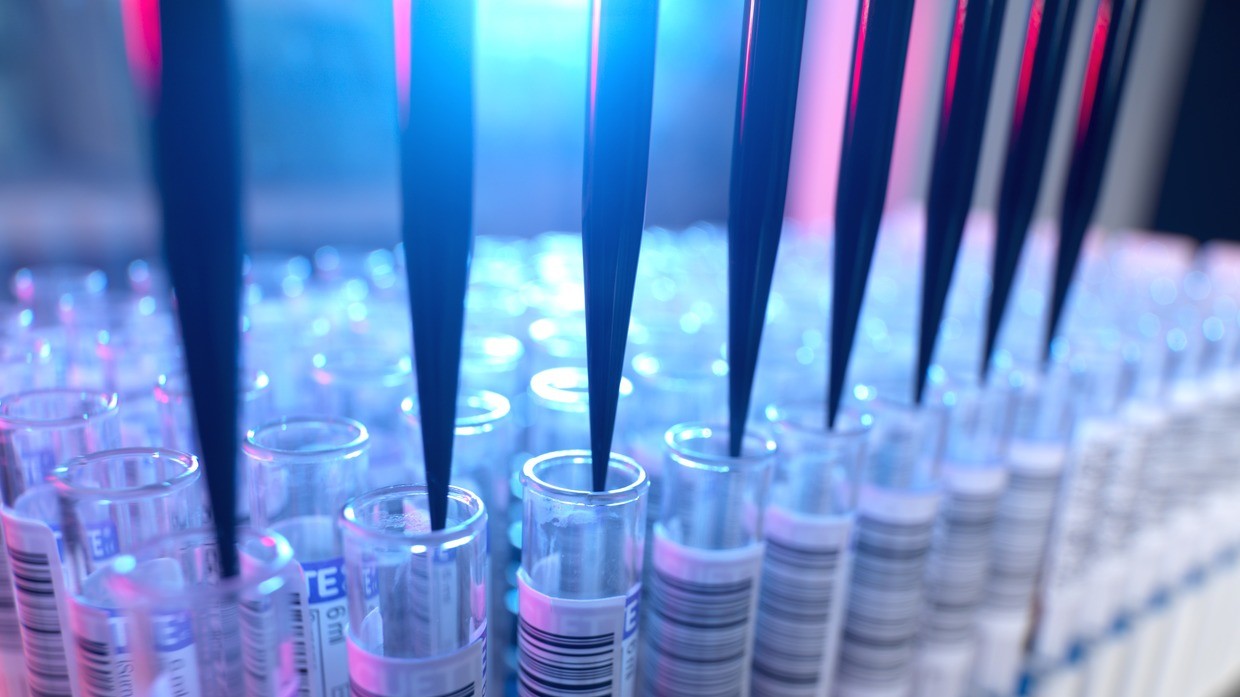
Photo Source: RT News App

According to End Points News, the therapy would allow a patient’s own stem cells to fight the HIV infection and allow them to make new immune cells when the infection is fought. (End Point News)

“The approach was inspired by three patients who appear to have been cured of the virus — all of whom received blood stem cell transplants from donors who carried a mutation in the CCR5 gene. One of them, dubbed the “Berlin patient,” had been off antiretroviral drugs from 2007,” End Point News said.

In 2006, Timothy Ray Brown (also known as the Berlin patient) was diagnosed with myeloid leukemia. In 2007, Brown received two bone marrow transplants, and halted his HIV medications in the process (ScienceMag). Since the bone marrow transplant, researchers have only found traces of HIV, none of which is able to replicate in Brown’s system- effectively curing him of HIV.

NIH’s new research program is using similar technology in its search to find a cure for HIV. By using stem cells to fight the disease, the need for medication is much lesser, as one’s own body can fight HIV. However, the process Brown went through to fully cure himself of HIV is intense.

“The first is the process of conditioning, in which doctors destroyed Brown’s own immune system with chemotherapy and whole-body irradiation to prepare him for his bone marrow transplant. His oncologist, Gero Hütter, who was then with the Free University of Berlin, also took an extra step that he thought might not only cure the leukemia but also help rid Brown’s body of HIV. He found a bone marrow donor who had a rare mutation in a gene that cripples a key receptor on white blood cells the virus uses to establish an infection. The third possibility is his new immune system attacked remnants of his old one that held HIV-infected cells, a process known as graft versus host disease,” ScienceMag said. 

In September 2020, Brown passed away from his cancer, and the HIV community mourned his loss.

Photo Source: HIV Plus Magazine

The search for a cure to HIV has been ongoing since the virus was discovered. Treatment with antiretrovirals has been a massive step away from a death sentence and towards a normal life for HIV patients. The issue with the HIV virus is it can be hidden in cells while being suppressed by current HIV treatment. The only HIV patients who have been successfully cured of the virus were also undergoing intense treatments for a separate cancer diagnosis, according to ViiV Healthcare. 

These patients underwent a bone marrow transplant in which an HIV free bone marrow was placed in their body, which is a high-risk surgery as is. 

“While their treatments were extremely high risk and not amenable to wide scale implementation, these instances of cure bring hope of what is possible in our efforts to end the HIV epidemic,” ViiV Healthcare said. 

The NIH initiative to eliminate the need for daily medication is an incredible effort made available by years of previous research and effective treatment. If successful, this effort could change the lives of millions of HIV patients in the United States and around the world. 

References:

  • A cure for HIV the end goal. (n.d.). Retrieved September 17, 2020, from https://viivhealthcare.com/en-gb/our-stories/innovation-hiv-science/towards-a-cure-exploring-cure-and-remission-in-hiv/
  • DeFeudis, N. (2020, September 03). Researchers teamed up to develop a 'three in one' HIV treatment - and the NIH is throwing in $14.6M. Retrieved September 16, 2020, from https://endpts.com/researchers-teamed-up-to-develop-a-three-in-one-hiv-treatment-and-the-nih-is-throwing-in-14-6m/
  • Jon Cohen Sep. 25, 2., Meredith Wadman Sep. 16, 2., Adrian Cho Sep. 15, 2., Ian Morse Sep. 14, 2., Eli Cahan Sep. 14, 2., Scott Waldman, E., . . . Rebekah Tuchscherer Aug. 26, 2. (2017, December 10). How did the 'Berlin patient' rid himself of HIV? Retrieved September 16, 2020, from https://www.sciencemag.org/news/2014/09/how-did-berlin-patient-rid-himself-hiv

Disclaimer: Guest blogs do not necessarily reflect the views of the ADAP Advocacy Association, but rather they provide a neutral platform whereby the author serves to promote open, honest discussion about public health-related issues and updates.

Thursday, November 19, 2020

How Drug Imports Can Endanger Patients

By: Brandon M. Macsata, CEO, ADAP Advocacy Association

I was diagnosed with HIV just shy of my 30th birthday. That day, everything changed. I was apprehensive about my prognosis, my treatment plan, and my ability to live a normal life.

Brandon M. Macsata, 2001
That was me in 2001 (pre-Dx)

Fortunately, medical advances have turned HIV from a certain death sentence into a manageable condition. Still, like all Americans who depend on complex medications to stay healthy, I worry about high drug prices, and this concern has only intensified amid the COVID-19 pandemic. Especially since some of the proposed "solutions" to high drug prices would put patients' health at risk.

Just recently, the Trump administration announced that it would allow states to import prescription medications from Canada with the aim of saving money for consumers. Doing so, though, could expose millions of Americans to counterfeit drugs, while achieving little in the way of savings.

I've seen firsthand how importation schemes can put patients at risk.

Shortly after learning I was HIV-positive, I ordered my anti-retroviral drugs from an online Canadian pharmacy. For two months, I received medications via mail without ever wondering where they were sourced or whether they contained the active ingredients I needed to keep me alive.

Then my doctor intervened. She told me that drugs purchased through online storefronts are often adulterated or counterfeit—in fact, the global trade in fake medicines is a $30 billion-a-year business. Unknowingly, I had been rolling the dice with my health.

There are two types of counterfeit drugs. The first contains potentially deadly substances—everything from arsenic to antifreeze. The second contains few, if any, active ingredients. Though pills in the latter category don’t contain actual poisons, they can be just as deadly.  Anti-retroviral drugs have to be taken exactly as prescribed; missing even a few doses can allow the virus to reemerge.

There is no mechanism in place to regulate the quality of drugs imported by American patients. A senior official at Health Canada explicitly told the US surgeon general that her agency "does not assure that products being sold to U.S. citizens are safe, effective, and of high quality." The FDA, meanwhile, plainly states that it "cannot ensure the safety and effectiveness of drugs that it has not approved."

Canadian Drugs
Photo Source: PolicyMed.com

Moreover, drugs purportedly from Canada could come from anywhere. A 2017 study by the National Association of Boards of Pharmacy found that three-quarters of online pharmacies claiming to sell Canadian drugs actually sourced their products from places like India, Singapore, and Hong Kong, all major suppliers of counterfeits. Back in 2005, the FDA reported that only 15% of imported drugs marketed as Canadian actually originated in Canada. The other 85% came from "27 countries around the globe," meaning that many likely didn't go through rigorous quality control.

It's relatively easy to get hoodwinked by online pharmacies that promise quality drugs at bargain prices. CanadaDrugs.com, for instance, started out in 2001 as a seemingly reputable online pharmacy. But soon it turned to distributors outside of Canada to secure medicines. In 2018, a U.S. court prosecuted and fined the company for selling fake cancer drugs to American doctors.

Counterfeiters have shown they are willing to prey on people living with all kinds of diseases, including HIV. In 2011, a British regulatory agency discovered that two fake HIV medications had infiltrated the market and were circulating among patients.

Opening the door to drug imports would allow that kind of thing to happen here, putting us all at risk. And it's not even certain that legalizing importation would cut costs. The FDA acknowledges that it is "unable to estimate the cost savings" from President Trump's new plan. Former FDA Commissioner Scott Gottlieb wrote that "when importation of foreign drugs is done under a regulated scheme, it really wouldn't save money."

Right now, Americans are anxious enough about our health. Let's not add drug imports to our list of things to worry about.

This opinion piece was also published in the November 1st edition of the International Business Times.

Disclaimer: Guest blogs do not necessarily reflect the views of the ADAP Advocacy Association, but rather they provide a neutral platform whereby the author serves to promote open, honest discussion about public health-related issues and updates.

Thursday, November 12, 2020

Biden & Science Win; Trump & Stigma Lose

By: Brandon M. Macsata, CEO, ADAP Advocacy Association

On Saturday, November 7th at 11:25 AM Eastern Standard Time, people living with HIV/AIDS breathed a collective sigh of relief as the Associated Press called the 2020 Election, and recognized Joseph R. Biden, Jr. as the 46th President-Elect of the United States. In that very moment, science bested stigma. The electoral landslide turned the page on a dark chapter in this nation's history. As a 501(c)(3) nonprofit organization the ADAP Advocacy Association stayed neutral during the election for obvious reasons, but we welcomed the news with open arms!

Soon to be gone are Donald J. Trump's constant attacks on vulnerable populations disproportionately impacted by HIV/AIDS - such as the LGBTQ community, Muslims, racial & ethnic minorities, and immigrants. They will be replaced by compassion, empathy, and a keen understanding that sound public health policies are rooted in science.

Since 2016, HIV-related stigma was fueled by government sanctioned healthcare discriminationeliminating most non-discrimination protections, and the discharge of military service members living with HIV/AIDS, only naming a few. Not to mention there were numerous misguided public health changes harmful to the HIV community driven by politics rather than sound policy, such as drug importation, pro-insurance co-pay accumulator regulationsraiding Ryan White funding for immigrant deportation, and proposed budget cuts. And don't forget how Trump’s anti-FDA Tweets undermine public health!

And that doesn't even consider the nearly 250,000 deaths due to COVID-19 resulting from Trump's lack of presidential leadership. But our nation's poor response to the coronavirus didn't come as any surprise considering that Trump tapped anti-LGBTQ, anti-science Vice-President Mike Pence. After all, Pence was the same guy who, as Indiana's Governor, oversaw one of the Hoosier State’s worse HIV outbreaks in the state's history.

But all of that darkness is about to change...

“You deserve a partner in the White House to fight with conviction and win the battles ahead.”

Starting on January 20, 2021, a brighter future awaits the LGBTQ community under the Biden-Harris Administration's commitment to advance equality. This change alone is significant, considering how new HIV-infections continue to disproportionately impact much of the LGBTQ community. Since the 1990s, President-Elect Biden has been a strong supporter of the Ryan White HIV/AIDS Program and its AIDS Drug Assistance Program, as well as a staunch ally of President George W. Bush's President’s Emergency Plan for AIDS Relief (PEPFAR). 

Jirair Ratevosian, M.P.H., who served as the Legislative Director for HIV/AIDS Caucus Co-Chair Rep. Barbara Lee, summarized Biden's support for HIV-related causes (The Body, 2020):

"The vice president’s prioritization of HIV/AIDS programs continued after his Senate career. The Obama-Biden administration delivered major advances in prevention and treatment efforts for people living with HIV. The Affordable Care Act (ACA) assisted Americans living with HIV by eliminating preexisting conditions and provided them with much-needed health insurance. In addition, the Obama-Biden administration eliminated the entry ban for tourists and immigrants living with HIV; ensured HIV testing would be covered under the ACA; implemented a comprehensive National HIV/AIDS Strategy; and directed federal agencies to examine the intersection of HIV with violence against women and gender-related health disparities. The programs under ACA had an important impact on addressing HIV prevention and treatment in communities of color."

Biden has made his intentions clear: "You deserve a partner in the White House to fight with conviction and win the battles ahead. Together we’ll pass the Equality Act, protect LGBTQ+ youth, expand access to health care, support LGBTQ+ workers, win full rights for transgender Americans, recommit to ending the HIV/AIDS epidemic by 2025, advance LGBTQ+ rights around the globe, not just at home" (Artavia, 2020). 

Women - especially women of color - will also have a brighter future under the Biden-Harris Administration. Vice-President-Elect Kamala Harris will be well-positioned to ensure more is done for African American women and Latina women, who as we all know are disproportionally impacted by HIV/AIDS in the United States.

Biden's record on public health isn't perfect, but it is far better than what we've witnessed the last four years. The ADAP Advocacy Association stands ready to aid the Biden-Harris Administration's efforts to return our nation's HIV epidemic response to science-based policies.

References:

  • Artavia, David (2020, September 25). Joe Biden Recommits to Ending HIV, Passing Equality Act, LGBT+ Rights. Out. Retrieved online at https://www.out.com/politics/2020/9/25/joe-biden-recommits-ending-hiv-passing-equality-act-lgbt-rights. 
  • Ratevosian, Jirair (2020, July 27). Joe Biden Is Our Strongest Option to End the HIV Epidemic. The Body. Retrieved online at https://www.thebody.com/article/joe-biden-strongest-option-to-end-hiv-epidemic.

Disclaimer: Guest blogs do not necessarily reflect the views of the ADAP Advocacy Association, but rather they provide a neutral platform whereby the author serves to promote open, honest discussion about public health-related issues and updates. 

Thursday, November 5, 2020

HIV & COVID-19 in Southern Black Communities

By: Venton C. Hill-Jones, Chief Executive Officer, Southern Black Policy & Advocacy Network

It is no secret that Black Americans in the U.S. South lead our nation in diagnoses and deaths caused by HIV, cancer, diabetes, hypertension, obesity, high cholesterol and lack of mental health resources. Knowing this, it came as no surprise that the Black community would also lead the nation per capita in diagnosed and undiagnosed cases of COVID-19, as well as the virus’ mortality rate. According to amfAR, The Foundation for AIDS Research, Black communities are facing a disproportionate impact of COVID-19 in the U.S. South. 

In a May 2020 study conducted by amfAR, it was reported that in the United States: “COVID-19 diagnoses and deaths increased in counties with a greater proportion of Black residents. While disproportionately Black counties constitute only 22% percent of U.S. counties, they account for 52% and 58% of COVID-19 cases and deaths, respectively. Ninety-one percent of disproportionately Black counties are located in the Southern U.S.” 

During the COVID-19 pandemic, SBPAN has worked to utilize social media and digital engagement (web meetings, virtual conferences, etc.) to continue the dialogue with Black public health and community leaders representing, and serving, these Southern Black communities. Through our engagement, we have found that many leaders feel that, prior to COVID-19 pandemic, conversations and actions surrounding the overarching state of public health in the South were limited. As a result, Black communities living in the U.S. South face a disproportionally high number of health disparities directly linked to the social and economic barriers rooted in the unique history of racism, religion, segregation, and slavery in the U.S. South. Because of this environment, the U.S. South remains the epicenter of health disparities that continue to reduce the morbidity and mortality of Black communities living in this part of the United States.

As we navigate the COVID-19 pandemic, social unrest and the ongoing call for racial equity in the South, we must focus our conversations and mobilization efforts on addressing intersecting epidemics and social challenges. Now is not the time to regress in having open dialogues, showing human solidarity and human perseverance, nor showing collective support for our society. Look at how promptly we bonded together to administer personal prevention essentials (PPE), enacted federal/state legislations and local ordinances to assist families and individuals with food, housing, and supplemental income that have been financially impacted, or ensured everyone that wants to get tested has the unencumbered availability to do so. Now imagine if we utilized those same strategies, focus, and fortitude and applied them to the same public health emergencies that will remain once COVID-19 is gone?  

People living with HIV/AIDS in the Black community mirror the same external barriers that require the exact same meaningful impact that we have responded to COVID-19 with. There are basic human right essentials including employment and housing that we need all local municipalities to pass anti-discrimination ordinances against. Only through solidarity and perseverance can we collectively make further progress in addressing health disparities for southern Blacks."

About the Southern Black Policy & Advocacy Network. SBPAN is a non-profit 501(c)(3) organization that was created in 2018 to improve health, social, and economic conditions facing Black communities living in the U.S. South. SBPAN's mission is to improve health outcomes and reduce social, and economic disparities impacting Black communities living in the U.S. South through training, education, advocacy and mobilization. SBPAN is committed to building and strengthening programs and partnerships focused on improving the health and quality of life for diverse populations of Black southern communities in the U.S., specifically those living at the intersection of marginalized Black communities including, but not limited to those who are same gender loving (SGL), lesbian, gay, bisexual, transgender (LGBT), youth, women, and persons over the age of 55. Donate to Southern Black Policy and Advocacy Network.

Disclaimer: Guest blogs do not necessarily reflect the views of the ADAP Advocacy Association, but rather they provide a neutral platform whereby the author serves to promote open, honest discussion about public health-related issues and updates. 

Thursday, October 29, 2020

COVID-19 is Exacerbating Existing Epidemics

By: Connie Reese, Founder & Executive Director, Simply Amazing You Are

As a domestic violence survivor, and advocate for survivors of domestic violence and intimate partner violence ("DV/ IPV"), it is important to recognize that people are less likely (and less able) to seek help. Isolation by an abuser or shame often prevent it. The COVID19 public health crisis has left even some of the longest standing integrated courts, designed to deal with protection orders and victim assistance, scrambling to cope with modernizing, introducing technology and restructuring interpreter services. 

In unincorporated Miami-Dade, DV/IPV cases increased nearly 20 percent in April 2020, during the COVID "shelter-in-place" orders (The Women’s Fund Miami-Dade, 2020). While amazing local organizations, like the Women's Fund Miami-Dade, have focused awareness campaigns, it has been the experience of our organization, Simply Amazing You Are ("SAYA"), that these campaigns are most effective for those already connected to services with mandated reporters and close relationships with systems of justice. 

Domestic Violence
Photo Source: USC Suzanne Dworak-Peck School of Social Work

Due to lack of investment in stable, transitional housing (MiamiDade.gov lists only 2 transitional housing providers and 2 emergency shelters – of which congregate living risks in the time of COVID make them even less safe), much of the community needing the most help are at a loss or the system doesn't move fast enough to provide adequate interventions and in some cases are now no longer accessible at all due to victim/survivors' lack of broadband access. As much as some pundits bemoaned smartphones as a tool subsidized by anti-poverty programing, for many of my clients, those phones are the difference between life and death by way of a simple internet connection. 

Complicating considerations for at risk communities, the Center for Disease Control & Prevention ("CDC") recognizes "...studies suggest that IPV can be both a risk factor for HIV, and a consequence of HIV" (CDC, 2014). With Miami-Dade's historically high rate of new HIV diagnoses, reduced access for community-based HIV testing, and lack of investment in areas like Brownsville and Liberty City as a matter of geographic segregation and ghettoization, the area is poised to be an example of how public policy fails to address intersections of health.

Advocates and funders would do well to consider the most good can be achieved by making remarkable investments in local community-based organizations, rooted in neighborhood-oriented community outreach and "shoe leather" service provision. Much of the local community can't meaningfully enjoy the temporary flexibility for telehealth and linkage to care and services because the very entities providing these services were not prepared or supported in becoming prepared for such modernizations. And Miami is not unique.

Across the nation, deeply impoverished neighborhoods experience the same barriers to care.

We are quickly running out of time to change the inevitable course of increased domestic violence, deaths from domestic violence, more cases of COVID-19, more HIV diagnoses, less care, and less public trust in these entities meant to serve us and keep us safe. That's the core of this need, as our systems show just how fragile they are, as we see existing disparities become exacerbated, communities getting fewer of their needs met will ultimately come to trust us, all of us, less and less. The time to act, the time to make unprecedented, bold moves, is now.

About Simply Amazing Your Are. SAYA is an empowerment focused intimate partner violence prevention and intervention non-profit organization in Miami, FL. SAYA's programming includes direct assistance like escape planning and protective order assistance, as well as policy advocacy campaigns, referral for support services, and linkage to care and victim services navigation. SAYA currently relies on a word-of-mouth model in order to ensure the safety of our clients. Through the COVID pandemic, SAYA has also partnered with Panera Bread end night donations to provide to IPV survivors facing homelessness or the risk of homeless. Donate to Simply Amazing You Are.

SAYA, Inc.

References: 

  • Centers for Disease Control & Prevention (February 2014). Intersection of Intimate Partner Violence and HIV in Women. U.S. Department of Health & Human Services. Retrieved online at https://www.cdc.gov/violenceprevention/pdf/ipv/13_243567_green_aag-a.pdf?response_type=embed#:~:text=Studies%20of%20HIV%2DPositive%20Women,and%20a%20consequence%20of%20HIV.
  • Women’s Fund Miami-Dade (2020, July 17). The Women’s Fund Miami-Dade Launches Domestic Violence Awareness Campaign. PRWeb.com. Retrieved online at https://www.prweb.com/releases/the_womens_fund_miami_dade_launches_domestic_violence_awareness_campaign/prweb17265119.htm. 

Disclaimer: Guest blogs do not necessarily reflect the views of the ADAP Advocacy Association, but rather they provide a neutral platform whereby the author serves to promote open, honest discussion about public health-related issues and updates. 

Thursday, October 22, 2020

During COVID-19, Strength is Knowing that its Okay Not to be Okay

By: Khadijah Abdullah, Founder & Executive Director, Reaching All HIV+ Muslims in America

In May, my Uncle passed away from COVID-19. Grief hit our family hard, especially his youngest daughter, my cousin Erica. She had just lost her older brother to a heart attack a year prior. She felt the weight of their deaths on her shoulders. 

Unfortunately just a couple weeks ago, on October 9th she unexpectedly passed away as well. She leaves behind a 4 year old son who is a cancer survivor and requires special care. As you can imagine my family is devastated. 

Childhood photo of Khadijah Abdullah

Grief hits differently when it is someone you love. We never know the day nor the hour, but we know we will all die someday. But when it happens, it still hurts.

When COVID-19 first hit, many of us did not understand its severity until we lost someone close and/or the numbers increased drastically over a short period of time. The news constantly fed us information about COVID-19 and many retreated to their homes and sealed their front doors shut.

But what about Black, Brown and Indigenous people?


We are hit the hardest by COVID-19.

According to the Centers for Disease Control and Prevention (CDC), factors that contribute to risk of us getting sick with COVID-19 are: discrimination, healthcare access and utlization, occupation, educational, income, wealth gaps, and housing

Many of us do not have the luxury of sheltering in place. If we did, we would not be able to eat or feed our families. We have to keep a roof over our heads. We can’t afford to just simply not work. We don’t have the luxury of wealth. Essential workers often times falls on the backs of Black, Brown and Indigenous Folx.

COVID-19 has had and continues to have an impact on many families across the world, including my own. In the US alone, over 8 million people tested positive for COVID-19 thus far. As the Executive Director of Reaching All HIV+ Muslims In America (RAHMA), I have seen the effects it has on those we serve as well, including our team. Moving to a virtual world without warning has caused Zoom fatigue and attempting to find balance in a constantly changing world. Mental health is of the utmost importance and we just strive to do the best we can. Sometimes this looks like taking time off to regroup and that’s okay. 

Strength is knowing that its okay not to be okay. We are human.

We have also taken a few steps to provide relief and support to Black, Indigenous and People of Color (BIPOC) affected by COVID-19. In recognition of National Faith HIV & AIDS Awareness Day (NFHAAD), we led a town hall titled: “Get out and Vote: HIV & COVID-19 are on the Ballot.” This town hall covered the importance of voting, how our lives depend on it and why we must appoint elected officials who actually value our lives. We invited speakers from the Black AIDS Institute, Positive Women’s Network, Dr. Abdul El-Sayed and more.

Get out and Vote: HIV & COVID-19 are on the Ballot

Due to my personal experiences with COVID-19 and wanting to help amplify prevention efforts as much as I can, I have also become a Faith Ambassador with the COVID-19 Prevention Network. Our goal is to collaborate with BIPOC faith communities, address the effects COVID-19 has on us, disparities, prevention efforts and how we can respond effectively.  

COVID-19 is not going anywhere anytime soon. This is a harsh reality we have to face. In order for us to come out of this alive, we have to take care of self. COVID-19 is an invisible force to be reckoned with and we have to be equipped with knowledge to defend ourselves. 
Our lives depend on it

About Reaching All HIV+ Muslims in America: RAHMA addresses HIV, AIDS, Female Genital Mutilation/Cutting (FGM/C), Sexual Health and Gender-Based Violence (GBV) in faith communities through education, advocacy, and empowerment. Their programs include a retreat for HIV+ Muslims and their allies, sexual health & HIV trainings and development og a virtual FGM/C toolkit for survivors and health care providers, created in collaboration with the George Washington University, Milken School of Public Health hosted at https://fgmtoolkit.gwu.edu. RAHMA is also the founder of National Faith HIV & AIDS Awareness Day, which unites Muslim, Christian, Jewish, Buddhist, Sikh, Hindu and Baha'i faiths to take a stand against stigma in their congregations and raise awareness on HIV and AIDS. Donate to Reaching All HIV+ Muslims in America.

RAHMA

Disclaimer: Guest blogs do not necessarily reflect the views of the ADAP Advocacy Association, but rather they provide a neutral platform whereby the author serves to promote open, honest discussion about public health-related issues and updates. 

Thursday, October 15, 2020

Love in the Time of COVID-19

By: Riley Johnson, Executive Director, RAD Remedy

As many readers may know, COVID-19 is a novel coronavirus for which there is currently no vaccine available in the United States. But what folks may not know is that many state public health departments managing COVID-19 do not collect data on sexual orientation and gender identity, meaning there is minimal public health data available about the impact of COVID-19 on transgender people, including trans folks living with HIV. Like non-pandemic times though, trans organizations are able to provide an understanding of not only the ways in which trans folks are impacted but also how grassroots mutual aid efforts continue to sustain us.

Riley Johnson wearing mask

Trans Lifeline recently reported that between March and July 2020, they experienced a 40% increase in calls, and that number continues to climb (Fowers, 2018). Outside of COVID-19, trans people already experienced mental health issues at nearly four times the rate of the general population (Wanta, 2019). In addition, trans people can face increased risk for COVID-19 due to several issues: trans communities’ higher rate of smoking - 50% higher than the general population (National LGBT Cancer Network, 2020) - access to care barriers leave us less likely to get medical care, and existing health disparities mean more of us live in a state of compromised health, which can leave us more vulnerable to COVID-19 infection. Trans people also at times use binders and/or corsets which, while helpful presenting aids, can restrict breathing. Trans folks have also faced unexpected consequences of hospitals and surgical centers trying to cope with COVID-19. Transition surgeries have been classified as non-emergency and have been cancelled after trans patients have already waited months or even years, causing even more stress and depression. Trans Lifeline counselors also report many callers have talked of being forced to quarantine with families or partners who were unsupportive or abusive. Prior to COVID-19, many trans people engaged in sex work and street economies due to stigma and underemployment, and with the onset of the pandemic, many are continuing to do so to meet survival needs despite the increased risk of COVID-19 transmission due to lack of social distancing. And not insignificantly, many trans people are also reporting an increase in misgendering due to the use of masks for COVID-19, which, while helpful for prevention, may limit gendered visual cues such as facial hair and make-up.

At the same time, trans folks also have been targeted politically like never before, including a reinstatement of the trans military ban, an attempt to remove nondiscrimination protections in Section 1557 of the Affordable Care Act which would allow medical personnel to refuse to care for trans patients, proposed regulations that would all but ban LGBTQ asylum seekers, and proposed modifications to the Housing and Urban Development’s Equal Access Rule that would require trans folks who are houseless to stay in shelters associated with their assigned sex at birth. To be honest, dear reader, all of this oppression on top of the pandemic has been a bit much even for me.

So I began to ask myself - what does love and resilience look like in a time of COVID-19?

From a self-care and community care perspective, many trans people are looking after each other by reminding each other to unplug from social media and news cycles, to drink water and eat, and sharing quality goat and puppy content and curbside drop-offs of food. These small graces remind us that while the pandemic is ongoing and the world seems to be on fire, there is goodness, kindness, and adaptation too. Like we have for decades, trans people are still thriving and resilient in the face of uncertainty. On September 2, 2020, a federal district court issued an injunction which immediately blocks the Department of Health and Human Services’ attempt to allow discrimination against LGBTQ people on religious grounds. Grassroots mutual aid projects have also blossomed all over the U.S., including the TGNC Peoples COVID Crisis Fund of Louisiana, the Okra Project, and the Heavenly Angel Fund which assists Black trans women in getting tested for COVID-19 and provides care packages for those who have been tested. These are just a sample of the many efforts by and for trans people to uplift each other and help those who need it most. For a truly fantastic deep rabbit hole of mutual aid during COVID-19, check out COVID-19 Collective Care (http://bit.ly/covid19collectivecare). As Vivian Topping, a peer support facilitator at Trans Lifeline puts it, “Trans folks push really hard to support our people and be resilient. There’s still beauty. There’s still joy. There’s still a life to keep looking forward to .”

RAD Remedy featuring transgender advocates

I’d like to leave you with a quote from Dr. Lourdes Ashley Hunter, Executive Director of Trans Women of Color Collective: “Every breath a trans person takes is an act of revolution. Everyday, you will wake up in a world designed to destroy you, invalidate you and tell you that you don’t belong and that you have to assimilate to be accepted. Everyday you will also wake up with great purpose to dismantle that shit. Ashé.” Breathe deeply, sanitize, and mask up, friends. Whether it’s a pandemic or policy designed to oppress us, we are resolute, resourceful, and stronger than we know. 

About RAD Remedy: RAD Remedy is a national grassroots organization dedicated to connecting trans, gender non-conforming, intersex, and queer (TGIQ) folks to accurate, safe, respectful, and comprehensive care. The Referral Aggregator Database (RAD) is a comprehensive and nationally-collaborative database that combines the referral lists of trusted community organizations and the detailed reviews of TGIQ clients. In addition to the organization's database activities, RAD Remedy provides community-informed policy and practice guidance and consulting to organizations, agencies, and individual providers looking to help TGIQ communities thrive. Donate to RAD Remedy.

RAD Remedy

References:

  • Fowers, Alyssa, and William Wan (2020, August 18). "The volume has been turned up on everything': Pandemic places alarming pressure on transgender mental health. Washington Post. Retrieved online at https://www.washingtonpost.com/health/2020/08/18/coronavirus-transgender/?arc404=true.
  • National LGBT Cancer Network (2020). Coronavirus Information. Retrieved online at https://cancer-network.org/coronavirus-2019-lgbtq-info/.
  • Wanta, Jonathan, et. al. (2019). Mental Health Diagnoses Among Transgender Patients in the Clinical Setting: An All-Payer Electronic Health Record Study. Transgender Health. Retrieved online at https://www.liebertpub.com/doi/pdf/10.1089/trgh.2019.0029.

Disclaimer: Guest blogs do not necessarily reflect the views of the ADAP Advocacy Association, but rather they provide a neutral platform whereby the author serves to promote open, honest discussion about public health-related issues and updates.