Showing posts with label Fireside Chat. Show all posts

Thursday, August 20, 2026

Fireside Chat Retreat in Pittsburgh, PA Tackles Emerging Crisis Facing AIDS Drug Assistance Programs

By: Brandon M. Macsata, CEO, ADAP Advocacy & Marcus J. Hopkins, Health Policy Lead Consultant, ADAP Advocacy

ADAP Advocacy hosted its Health Fireside Chat retreat in Pittsburgh, Pennsylvania, with key stakeholder groups to discuss the adverse impact on patient care caused by the emerging financial crisis facing state AIDS Drug Assistance Programs (ADAP). The Health Fireside Chat was held on Friday, August 14th, and convened as part of its grassroots advocacy campaign, 'ADAP Saves Lives: End the Wait', in response to the resurfacing of ADAP waiting lists—now affecting over 1,000 clients. Nearly two dozen diverse health policy stakeholders attended the event.

President Franklin D. Roosevelt
Photo Source: Getty Images

The ADAP Crisis discussion —including waiting lists in two states, cost containment measures in over one dozen states, a summary of the fiscal health and stress of the programs nationwide, and patient fears over not having access to their medications—was designed to capture key observations, suggestions, and thoughts about how best to address the challenges being discussed at the Health Fireside Chat. The following represents the attendees:

  • Kate Abel, Merck
  • Michelle Anderson, Narrative Power Institute LLC (ADAP Advocacy consultant)
  • Guy Anthony, Black, Gifted & Whole Foundation (ADAP Advocacy Board Co-Chair)
  • Scott Bertani, HealthHIV
  • Duane Binion, True T Pittsburgh
  • Erin Bradshaw, Patient Advocate Foundation
  • Jeffrey S. Crowley, O’Neill Institute
  • Jose De Marco, ACT UP Philadelphia
  • Moira Foster, Pennsylvania Department of Health, Division of HIV Health
  • John Haines, Pennsylvania Department of Health, ADAP
  • Kathie Hiers, AIDS Alabama (retired)
  • Marcus J. Hopkins, Appalachian Learning Initiative (ADAP Advocacy consultant)
  • Tim Horn, NASTAD
  • Amanda Kornegay, Kornegay Consulting LLC (ADAP Advocacy consultant)
  • Stephanie Knupsky, PWN Pennsylvania
  • Brandon M. Macsata, ADAP Advocacy
  • Tom McDaniels, HIV-HEP Policy Institute
  • Judith Montenegro, Latino Commission on AIDS
  • Steve Novia, ViiV Healthcare
  • Michiel Peters, Global Coalition on Aging
  • David Spears, Magic Box LLC (ADAP Advocacy consultant)

Health Fireside Chat

To level set and provide background for discussions, attendees are sent suggested readings in advance. The following are just a few from the thorough list provided for this session:

ADAP Advocacy is pleased to share the following brief recap of the Health Fireside Chat:

The Health Fireside Chat focused on the issues facing the nation's state AIDS Drug Assistance Programs (ADAP), with special attention to how the funding paradigm has shifted over the past 20 years.

Tim Horn speaking
Photo Source: ADAP Advocacy

[Tim Horn, right, and Steve Novis, left]

Tim Horn, Director of Medication Access at the National Alliance of State and Territorial AIDS Directors (NASTAD), led the discussion and presented data from state ADAPs to NASTAD for calendar year 2025. While these data won't be published until 2027, Horn explained that they point to trouble ahead:

  • Enrollment in state ADAP has increased, likely due to a combination of the introduction of the Ending the HIV Epidemic (EHE) program and the ending of the Medicaid Continuous Enrollment provision introduced during the COVID-19 pandemic to ensure that patients were not disenrolled
  • Per-client drug expenditures have increased 1.5% annually from 2019 to 2025
  • Per-client insurance premium expenditures have increased 8.3% annually from 2019 to 2025, and increased by 22% from Quarter 1 2025 to Quarter 1 2026. Double-digit increases are expected again in 2027
  • Despite a decrease in enrollment from 2024 to 2025, costs increased in prescription drug costs (2.6%), premium expenditure (17.1%), and total core expenditures (3.0%)
  • From 2019 to 2025, per-client costs increased 9.6%, and per-client insurance premiums increased 61.3%. Total spending increased 55.7%
Horn also explained that the ~$75 million in ADAP Emergency Funds have remained stagnant for several years, but the number of state ADAPs applying has increased from an average of ~8 states each year to 34, making that $75 million significantly less impactful.

Additionally, federal ADAP funding has remained unchanged at $900 million per year since 2014, even as the program costs $2.4 billion annually. Most state ADAPs cover that difference through 340B Drug Pricing Program rebates, which now account for 52% of ADAP budgets.

This reliance on rebate funding places state ADAPs in the precarious position of relying upon private industries to essentially fund a government program.

Of significant concern to Horn is the fact that there is no specific carveout for Persons Living with HIV/AIDS (PLWHA) in the Medicaid work requirements imposed by the federal government, meaning that PLWHA who are currently enrolled in state Medicaid programs may be kicked off of Medicaid for being unable to work or overcome the significant administrative (paperwork) burden placed upon them in order to prove that they are meeting the work requirements.

This shift in Medicaid policy is likely to result in PLWHA falling back on state ADAPs as they are disenrolled from Medicaid, further straining already limited budgets.

Horn also highlighted that the shift to purchasing health insurance for clients, once heralded as a significant cost-saving measure for state ADAPs compared with the direct purchasing model, is becoming less cost-effective as premiums, deductibles, and co-pays increase.

After Horn's initial presentation, attendees discussed their myriad concerns about the state of ADAP and access to HIV care. Stephanie Knupsky of Positive Women's Network PA summed it up best:

"I am scared. I listen to [Tim Horn's data] and all I can think about is how it feels like our voices are being suffocated."

Fear, in fact, was one of the primary sentiments expressed at the Pittsburgh FSC. How was the fear summarized during the day's discussions? 
  • Fear that the Trump Administration and MAGA Republicans are purposely trying to destroy social safety net programs like Medicaid, SNAP, and ADAP;
  • Fear that Black and Brown Americans are being specifically slandered and targeted in an attempt to instill so much fear in them that they stop attempting to enroll in these programs;
  • Fear that immigration policies are going to result in even worse health outcomes for non-White populations;
  • Fear that patients will fall out of care and services;
  • Fear that the loss of access to HIV medications could result in the emergence of multidrug-resistant strains of the HIV virus;
  • Fear that the loss of the current generation of HIV advocates and activists has left younger replacements insufficiently trained and prepared to pick up the mantle when they have retired or passed away.
Some patient advocacy organizations, such as HealthHIV, ACT UP Philly, and AIDS Alabama, offered additional historical perspectives from the last ADAP Crisis. It was noted that the Positive Women's Network (PWN) was in its infancy during the last go-around, but today it stands in a much stronger position to help shape the public debate.

Scott Bertani speaking
Photo Source: ADAP Advocacy

[Scott Bertani, right, Brandon M. Macsata, center, Marcus J. Hopkins, left]

ADAP Advocacy shared details about the re-activation of its grassroots advocacy campaign, "ADAP Saves Lives: End the Wait," including the airing of its new digital public service announcement (PSA). The latest PSA builds on the landmark PSA – which aired on 210 media outlets from February 21, 2011 to April 3, 2011.

The newly released PSA features Texas-based HIV-positive advocate Michelle Anderson, who was among the advocates included in the 2011 PSA. It can be viewed online here: https://www.youtube.com/watch?v=jxt-RuYqWE8.

Additionally, ADAP Advocacy announced the launch of its new grassroots advocacy hub, available online here: https://www.adapadvocacy.org/adap-saves-lives. Presently, it showcases the two states with waiting lists, Iowa and Utah, as well as four other states being monitored by the organization. Those states include Florida, Illinois, Pennsylvania, and Texas. The grassroots advocacy hub will add more resources and tools to help patient advocates in those states, and the broader advocacy campaign is also building out state advocacy teams.

For advocates in Pennsylvania, representatives from ACT UP Philly and PWN Pennsylvania shared updates on their work, and much of the conversation focused on improving coordination among the groups. ADAP Advocacy pushed the narrative that all the bubbling fear among PLWHA needed to be channeled into advocacy, as it was during the previous ADAP Crisis.

Not all sentiments were fearful, however. One of the comments most frequently made by attendees was how surprised they were that ADAP Advocacy chose to bring a Fireside Chat event to Pittsburgh:

"So often, we have to travel elsewhere to attend these meetings. Everyone goes to Philadelphia, which might as well be another planet compared to the rest of Pennsylvania. We need more of these kinds of meetings in Pittsburgh."

And this is the clarion call for advocacy organizations:

So often, we focus on hosting events in large cities—New York, San Francisco, Atlanta, Chicago, Boston, Washington, DC—because they are easier and more convenient to reach by transportation.

This tendency reflects arguably the greatest disparity in public health:

The worst health outcomes in the U.S. rarely occur in our nation's major cities; instead, they lie in smaller cities, rural areas, and geographically isolated regions.

While we regularly speak of rural hospital closures and a lack of access to quality healthcare services in underserved areas, we rarely host meetings and conferences there. This inevitably excludes the patient voices we most need to hear, as they cannot afford to travel to those major cities without significant financial and time outlays. It's food for thought, as organizations plan these events.

Additional Health Fireside Chats are planned for 2026.

Disclaimer: All funders of the ADAP Advocacy Association are publicly listed on our website. 


Disclaimer: Guest blogs do not necessarily reflect the views of the ADAP Advocacy Association; rather, they provide a neutral platform for the author to promote open, honest discussion of public health-related issues and updates.

Thursday, October 5, 2023

Fireside Chat Retreat in Philadelphia, PA Tackles Pressing Public Health Issues

By: Brandon M. Macsata, CEO, ADAP Advocacy

ADAP Advocacy hosted its "Health Fireside Chat" retreat in Philadelphia, Pennsylvania among key stakeholder groups to discuss pertinent public health issues facing patients in the United States. The Health Fireside Chat convened Thursday, September 21st through Saturday, September 23rd. The growing threat to public health from the spread of medical misinformation and disinformation, reforming the 340B Drug Pricing Program to better serve patients rather than providers, and the effective implementation of longer-acting HIV treatment and prevention programs were evaluated and discussed by the 20 diverse stakeholders.

The Fireside Chat's “ice breaker” activity included some fun and games at Dave & Buster's with their pool tables, video games, carnival challenges, and virtual reality. Attendees enjoyed some bonding and laughter before collectively rolling up their sleeves and taking a deep dive into the policy discussions.

FDR Fireside Chat
Photo Source: Getty Images

The Health Fireside Chat included moderated white-board style discussion sessions on the following issues:

  • Public Health Alert: Medical Misinformation Can be Dangerous to Your Health — moderated by Rick Guasco, Acting Editor-in-Chief and Creative Director at Positively Aware
  • 340B Drug Discount Program: The Issues Spurring Discussion, Stakeholder Stances, and Possible Resolutions? — moderated by Tim Horn, Director, Medication Access at NASTAD
  • Long Acting Injectables: Effective Implementation of Longer-Acting HIV Treatment and PrEP Requires Delivery System Innovation — moderated by Jeffrey Crowley, Distinguished Scholar/Program Director, Infectious Disease Initiatives at the O'Neill Institute/Georgetown Law

The discussion sessions were designed to capture key observations, suggestions, and thoughts about how best to address the challenges being discussed at the Health Fireside Chat. The following represents the attendees:

  • Ninya Bostic, National Policy and Advocacy Director, IDV, Johnson & Johnson
  • Jeffrey S. Crowley, Distinguished Scholar & Program Director at the Infectious Disease Initiatives, O'Neill Institute for National and Global Health Law, Georgetown Law
  • Theresa Daugherty, Patient Advocate
  • David Gana, Patient Advocate
  • Alexander Garbera, Co-Chair, New Haven Mayor’s Task Force on AIDS, City of New Haven, CT
  • Dusty Garner, Patient Advocate
  • Rick Guasco, Acting Editor-in-Chief and Creative Director at Positively Aware
  • Tim Horn, Director, Medication Access at NASTAD
  • Riley Johnson, Founder, RAD Remedy
  • Thomas Johnson, Executive Director, Alliance to Save America’s 340B Program
  • Jen Laws, President & CEO, Community Access National Network
  • Darnell Lewis, Program Coordinator, RAO Community Health
  • Brandon M. Macsata, CEO, ADAP Advocacy
  • J. Maurice McCants-Pearsall, Government Relations Director (Southeast), ViiV Healthcare
  • Aisha McKenzie, Patient Advocate
  • Warren O’Meara-Dates, Founder & CEO, The 6:52 Project Foundation
  • Brian Smith, Alliance Development and Strategic Advocacy
  • Matt Toresco, CEO & CPO, Archo Advocacy LLC & Elavay
  • Stacey L. Worthy, Director, Healthcare Policy & Strategy, Johnson & Johnson
  • Joey Wynn, Chairman, Florida HIV/AIDS Advocacy Network

The Covid-19 pandemic is still ongoing. Covid-19 cases and hospitalizations are both on the rise again, according to data by the Centers for Disease Control & Prevention (CDC) With that in mind, ADAP Advocacy implemented strong Covid-19 safety protocols for the Health Fireside Chat, which included proof of vaccination/booster, robust self-administered testing (prior to travel, upon arrival, and after returning home), complimentary rapid self-test kits and hand sanitizer for each of the attendees, as well as guidelines for masks on commercial travel to the event, and optional masks during the sessions (which some attendees exercised without feeling shunned).

Health Fireside Chat

ADAP Advocacy is pleased to share the following brief recap of the Health Fireside Chat.

Medical Misinformation:

The first policy session, “Public Health Alert: Medical Misinformation Can be Dangerous to Your Health”, lead by the Positively Aware Magazine’s Rick Guasco, challenged guests to evaluate their own role in potentially sharing medical misinformation without even knowing it. Guasco highlighted that everyone can do something about misinformation, starting with being cognizant of how people can potentially spread it. A little information is a dangerous thing. Medical misinformation is information that is false, inaccurate, or misleading. A little misinformation can become the building block of lies and ignorance. As such, medical disinformation is misinformation with a purpose. According to the Kaiser Family Foundation's recent poll, most Americans encounter health misinformation, and most aren’t sure whether it’s true or false local TV.

Drawing on KFF's Misinformation Pilot Poll, KFF released three follow-up reports examining exposure to, and belief in, health misinformation among Black adults, Hispanic adults, and rural communities.

Guasco shared what he viewed as the best three ways to combat medical misinformation and disinformation. They included 1) promoting the truth by proactively talking about health literacy, 2) pre-bunking fake medical news by putting counter-arguments out in anticipation, and 3) de-bunking fake medical news, but it is more difficult because it is harder to change minds once the misinformation and disinformation is spread. Significant conversation centered around lingering medical mistrust in the Black community after the Tuskegee Airmen experiments. Rev. Alexander Garbera offered an excellent quote to summarize how to combat the dangers associated with medical misinformation and disinformation: "Combat fear with empathy."

Fake News
Photo Source: Florida International University

The following materials were shared with retreat attendees:

ADAP Advocacy would like to publicly acknowledge and thank Rick Guasco for facilitating this important discussion.

340B Drug Discount Program:

As a backdrop to the discussion over the 340B Drug Discount Program, an opinion piece dropped calling out the hypocrisy behind the forces fighting reform. NASTAD's Tim Horn kicked-off the discussion with an overview of the program, including an analysis on how 340B intersects with the Ryan White HIV/AIDS Program, including State AIDS Drug Assistance Programs (ADAP). In that, some challenges were addressed – such as explosive program growth, lack of transparency, and calls for more oversight. There was particular focus on ADAPs and their specific programmatic use of the 340B dollars exclusively for patient care, and that in many ways it represents the "gold standard" among Covered Entities participating in the program. The discussion also centered around some of the pros and cons associated with ongoing reform proposals; they included contract pharmacy restrictions, discriminatory reimbursement laws, and possible federal legislation (e.g., ASAP 340B). The conversation touched the rising medical debt crisis in the United State (of which, most medical debt is actually hospital-associated debt), declining charity care among hospitals, as well as the adverse impact on patients via provider consolidation. Ongoing scrutiny over the lack of transparency in the program continues to grow, evidenced by the Request for Information (RFI) issued by a group of bipartisan senators, including Senator John Thune (R-SD), Senator Debbie Stabenow (D-MI), Senator Shelley Moore Capito (R-WV), Senator Tammy Baldwin (D-WI), Senator Jerry Moran (R-KS), and Senator Benjamin Cardin (D-MD). Read the joint statement by ADAP Advocacy and CANN, here.

Photo Source: Positively Aware

The following materials were shared with retreat attendees:

ADAP Advocacy would like to publicly acknowledge and thank Tim Horn for facilitating this important discussion.

Editor's Note: The ADAP Advocacy Association has offered opinions on 340B over the last several years, including Industry’s Changes to 340B Drug Discount Program (April 2022), 340B – Reply Hazy, Try Again (January 2020), The Federal 340B Program: A Call to Order (March 2019), and 340B Program: Don't Throw the Baby Out with the Bathwater (March 2017)

Long-Acting Injectables:

The O'Neill Institute for National and Global Health Law recently published a brief, Effective Implementation of Longer-Acting HIV Treatment and PrEP Requires Delivery System Innovation. The O'Neill Institute summarized long-acting injectables:

"Scientific advancements resulting from our long-term national commitment to HIV research have begun producing new products both for HIV treatment and prevention that do not require daily dosing. The first standalone longer-acting (LA) FDA-approved products are delivered by intramuscular injection every 1-2 months, but future products may require far less frequent injections or could come in other forms such as small implants under the skin or oral medications. These products represent exciting advances because they give users more options to stay engaged in the HIV treatment or prevention continuum. While many patients and providers speak of how transformative these products can be, access to these products is limited and a myriad of barriers prevent individuals from accessing them. Deliberate policy actions are needed to ensure that these innovations do not bypass the individuals and communities that stand to benefit the most from them."

Read the brief and its related materials. 

Jeffrey S. Crowley led this important discussion. While early in the implementation of these products, several barriers have arisen that must be overcome.  Among these are:

  1. Adapting our current clinics and health care programs to allow for greater scale;
  2. Overcoming insurance and financing barriers to access;
  3. Addressing regulatory and financing barriers to new delivery models, such as greater use of pharmacies, mobile clinics, or self-administration; and,
  4. Ensuring that innovations in HIV services delivery reduces rather than increases equity.

Some perspective was also shared on the work done by the O'Neill Institute in this area. Dusty Garner offered his perspective on some of the challenges he has encountered accessing his LAI treatment. Additionally, several members of the ADAP Advocacy's ADAP Injectables Advisory Committee, including Jen Laws, Riley Johnson, and Warren O-Dates, offered their perspectives on LAIs and the challenges being faced by patients.

Long-Acting Injectables
Photo Source: European AIDS Treatment Group

The following materials were shared with retreat attendees: 

ADAP Advocacy would like to publicly acknowledge and thank Jeffrey S. Crowley for facilitating this important discussion.

Additional Fireside Chats are planned for 2023 in New Orleans, Louisiana.

Disclaimer: Guest blogs do not necessarily reflect the views of the ADAP Advocacy Association, but rather they provide a neutral platform whereby the author serves to promote open, honest discussion about public health-related issues and updates.

Thursday, May 11, 2023

Fireside Chat Retreat in Nashville, TN Tackles Pressing Public Health Issues

By: Brandon M. Macsata, CEO, ADAP Advocacy Association & Jen Laws, Board Co-Chair, ADAP Advocacy Association

The ADAP Advocacy Association hosted its "Health Fireside Chat" retreat in Nashville, Tennessee among key stakeholder groups to discuss pertinent public health issues facing patients in the United States. The Health Fireside Chat convened Thursday, April 27th through Saturday, April 29th. The state of Tennessee cutting funding for HIV prevention, detection and treatment programs, a growing chorus calling for reforms to the 340B Drug Pricing Program, and the intersection between U=U (undetectable equals untransmittable) and reforming HIV criminalization laws were evaluated and discussed by the 24 diverse stakeholders.

The series was rebranded to encompass a broader focus on public health, changing from the HIV/AIDS Fireside Chat to the Health Fireside Chat. Unlike previous Fireside Chats, Nashville’s event added an “ice breaker” activity, themed in light of the hosting city – a line dancing lesson, as well as an informal town hall meeting convened in partnership with Positively Aware. The additional half day of activities — including the ice breaker, townhall meeting, and meet and greet — allowed attendees to settle into conversation expediently after having a solid hour of good laughs, encouragement, and bonding.

FDR Fireside Chat
Photo Source: Getty Images

The townhall meeting, which was facilitated by Rick Guasco, Acting Editor-in-Chief of Positively Aware, started with recognition that Nashville was explicitly chosen as a hosting city due to the state of Tennessee’s rejection of federal HIV prevention dollars. While a later discussion was specific to that issue, the town hall dug into underlying (and broader) concerns around systemic discrimination as a driver of today’s HIV epidemic. Digging into how racism, as an example, manifests can be a touchy subject in any group, even among those who generally align. Such a charged set of topics, especially among HIV’s thought-leadership, can and does lead to transformational moments, particularly because creating a space of “internal” advocacy provides a chance for us to experience, and navigate, conflict amongst ourselves. That conflict and navigation also provides us a chance to grow together and to break down silos of interest, work, and thought. And this townhall did exactly that.

The Health Fireside Chat included moderated white-board style discussion sessions on the following issues:

  • Tension in Tennessee: Is an HIV Access to Care & Treatment Crisis Looming? — moderated by Jeffrey S. Crowley, Distinguished Scholar/Program Director, Infectious Disease Initiatives at the O'Neill Institute/Georgetown Law
  • 340B Drug Discount Program: The Issues Spurring Discussion, Stakeholder Stances, and Possible Resolutions? — moderated by Kassy Perry, President & CEO, Perry Communications Group
  • U=U: Is 'Undetectable Equals Untransmittable' Changing the Landscape for HIV Criminalization Laws? — moderated by Murray Penner, Executive Director, U=U plus, and S. Mandisa Moore-O'Neal, Executive Director, The Center for HIV Law & Policy

The discussion sessions were designed to capture key observations, suggestions, and thoughts about how best to address the challenges being discussed at the Health Fireside Chat. The following represents the attendees:

  • Guy Anthony, President & Founder, Black, Gifted & Whole Foundation
  • Jeffrey S. Crowley, Distinguished Scholar & Program Director at the Infectious Disease Initiatives, O'Neill Institute for National and Global Health Law, Georgetown Law
  • Brady Etzkorn-Morris, Executive Assistant for Global Operations, Prevention Access Campaign
  • Earl Fowlkes, President & CEO, Center for Black Equity
  • Rick Guasco, Acting Editor-in-Chief, Positively Aware 
  • Hilary Hansen, Global Public Affairs Head, Oncology, Sanofi
  • Kathie Hiers, President & CEO, AIDS Alabama
  • Marcus Hopkins, Founder & Executive Director, Appalachian Learning Initiative
  • Mark Hubbard, Patient Advocate
  • Vanessa Lathan, HIV Health Policy Director, Black Ladies in Public Health
  • Jen Laws, President & CEO, Community Access National Network
  • David Wyley Long, Change The Pattern Associate, Southern AIDS Coalition 
  • Brandon M. Macsata, CEO, ADAP Advocacy Association
  • Judith Montenegro, Program Director, Latino Commission on AIDS
  • Mandisa Moore-O’Neal, Executive Director, Center for HIV Law & Policy
  • Warren O’Meara-Dates, Founder & CEO, The 6:52 Project Foundation
  • Murray Penner, Executive Director, U=U plus
  • Kassy Perry, President & CEO, Perry Communications Group
  • Amanda Pratter, Associate Director, Policy Advocacy and Alliances, Gilead Sciences
  • Gwen Rathbun, Associate Director, Alliance Development, Merck
  • Alan Richardson, EVP of Strategic Patient Solutions, Patient Advocate Foundation
  • Donna Sabatino, Director State Policy & Advocacy, The AIDS Institute
  • Andrew Scott, Director of Strategic Alliances and Issue Advocacy, Bristol Myers Squibb
  • Robert Suttle, Patient Advocate

The Covid-19 pandemic is still ongoing. Covid-19 has killed at least 1,129,573 people and infected over 104 million in the United States since January 2020, according to data by the Centers for Disease Control & Prevention (CDC).

With that in mind, the ADAP Advocacy Association implemented strong Covid-19 safety protocols for the Health Fireside Chat, which included proof of vaccination/booster, robust self-administered testing (prior to travel, upon arrival, and after returning home), complimentary rapid self-test kits and hand sanitizer for each of the attendees, as well as guidelines for masks on commercial travel to the event, and optional masks during the sessions (which some attendees exercised without feeling shunned). 

Health Fireside Chat

 The ADAP Advocacy Association is pleased to share the following brief recap of the Health Fireside Chat.

Tension in Tennessee:

The first policy session, “Tension in Tennessee: Is an HIV Access to Care & Treatment Crisis Looming?”, lead by the O’Neill Institute’s Jeffrey S. Crowley, invited local advocates to discuss their internal view of Tennessee’s “troubles” with some national advocacy representation. While much of the discussion focused on the details of local communication and national assumptions, some discussion on how the state may implement its newly allocated funding (will the state’s budget continue to fund prevention efforts next year?), much of the conversation that followed was explicitly about how local advocates can communicate and collaborate with national advocacy efforts. What became clear from that conversation is much of the national and state level advocacy we tend to reflect fondly of when speaking on decades past is relatively fragile and not well-coordinated. Planning bodies have diminished to largely being provider groups and some don’t even meet – despite a statutory requirement to do exist. An attendee with capacity building expertise pointed out the need for investment in this space. Many planning bodies have been weakened by atrophy, others have faced a demographic shift (and as a result a change in the barriers and assistance needed in order to appropriately activate affected community). The discussion as a whole highlighted the extreme silos working against a cohesive and collaborative advocacy network necessary to support ending the HIV epidemic.

Tennessee Governor Bill Lee
Photo Source: Rolling Stone

 The following materials were shared with retreat attendees:

The ADAP Advocacy Association would like to publicly acknowledge and thank Jeffrey S. Crowley for facilitating this important discussion.

340B Drug Discount Program:

340B remains an important issue for HIV advocates. As such, “340B Drug Discount Program: The Issues Spurring Discussion, Stakeholder Stances, and Possible Resolutions?“ was the focus of the second policy session. Some of the advocates in attendance knew little about the program, so the discussion provided an excellent educational opportunity on how the discount drug program works. Laser focused on issues of health equity, Kassy Perry of Perry Communications Group lead the group to dig in – and quickly. Advocates less familiar with 340B were readily able to identify the need for reform when assessing reductions in charity care and increases in medical debt. The group readily recognized 340B as a powerful tool toward addressing health disparities, especially economic consequences for patients, and where those consequences can and do negatively impact entire areas of patients’ lives. Attendees from industry partners listened intently as advocates described their concerns and the need for the program to better reflect the intent in which it was established. Equally important, what is being proposed in New York has alarmed both patients and providers alike.

There was considerable conversation over the news about a new coalition, designed to support true safety-net providers and the communities they serve. The Alliance to Save America’s 340B Program (ASAP 340B) is a partnership of community health centers, patient, provider, and consumer advocates, and leaders from the biopharmaceutical industry. The ADAP Advocacy Association and the Community Access National Network have joined the alliance, and numerous groups in attendance expressed interest in also joining the fight to make 340B reflect the needs of patients, and not hospitals and mega providers. 

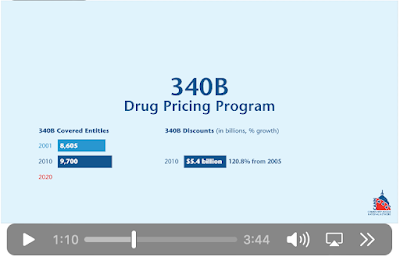
340B Drug Pricing Program
Photo Source: CANN YouTube Channel

The following materials were shared with retreat attendees:

The ADAP Advocacy Association would like to publicly acknowledge and thank Kassy Perry for facilitating this important discussion.

Editor's Note: The ADAP Advocacy Association has offered opinions on 340B over the last several years, including Industry’s Changes to 340B Drug Discount Program (April 2022), 340B – Reply Hazy, Try Again (January 2020), The Federal 340B Program: A Call to Order (March 2019), and 340B Program: Don't Throw the Baby Out with the Bathwater (March 2017)

U = U:

The final policy session, “U=U: Is 'Undetectable Equals Untransmittable' Changing the Landscape for HIV Criminalization Laws?“, focused on the intersection of issues between U=U and reforming HIV Criminalization Laws with the conversation hosted by Mandisa Moore-O’Neal, executive director of the Center for HIV Law and Policy, and Murray Penner, executive director of U=U Plus. Mandisa shared with the group the exceptional nature of HIV criminalization laws, but also how general criminal codes are out of date, furthering the HIV epidemic, and nearly exclusively used against Black and Brown people living with HIV. Mandisa also discussed how these laws can and are leveraged to further domestic violence (and coercive control). Murray then discussed how laws which allow for “affirmative defenses” only help those people living with HIV which can readily access and maintain care. All of which emphasized that the design of these laws assume that because someone is living with HIV, they are necessarily presumed “guilty”. Advocates discussed how to break silos, including the potential to partner in prosecutor and public defender education efforts. Advocates focused on health or with strong relationships with their local health departments, for example, might wish to participate in education efforts alongside legal advocacy organizations or a state Bar.

HIV Criminalization in the United States
Photo Source: CHLP

The following materials were shared with retreat attendees: 

The ADAP Advocacy Association would like to publicly acknowledge and thank Murray Penner and Mandisa Moore-O'Neal for facilitating this important discussion.

Additional Fireside Chats are planned for 2023 in Philadelphia, Pennsylvania, and New Orleans, Louisiana.

Disclaimer: Guest blogs do not necessarily reflect the views of the ADAP Advocacy Association, but rather they provide a neutral platform whereby the author serves to promote open, honest discussion about public health-related issues and updates.

Thursday, October 13, 2022

Fireside Chat Retreat in Chicago, IL Tackles Pressing Public Health Issues

By: Brandon M. Macsata, CEO, ADAP Advocacy Association

The ADAP Advocacy Association hosted its "Fireside Chat" retreat in Chicago, Illinois among key stakeholder groups to discuss pertinent public health issues facing patients in the United States. The Fireside Chat took place on Thursday, September 29th, and Friday, September 30th. Counterfeit Drugs, 340B Drug Pricing Program, and Covid-19 were evaluated and discussed by the 22 diverse stakeholders.

FDR Fireside Chat
Photo Source: Getty Images

The Fireside Chat included moderated white-board style discussion sessions on the following issues:

  • Counterfeit Medicines: What Can We Do to Protect the US Drug Supply Chain from Nefarious Activities — moderated by Shabbir Imber Safdar, Executive Director, Partnership for Safe Medicines (PSM)
  • 340B Drug Discount Program: The Issues Spurring Discussion, Stakeholder Stances, and Possible Resolutions — moderated by Brandon M. Macsata, CEO, ADAP Advocacy Association
  • Covid-19: What is its Impact on HIV, Viral Hepatitis, Sexually Transmitted Infections (STIs), and Substance Use Disorder — moderated by Jen Laws, President & CEO, Community Access National Network (CANN) & Board Member, ADAP Advocacy Association

The discussion sessions were designed to capture key observations, suggestions, and thoughts about how best to address the challenges being discussed at the Fireside Chat. The following represents the attendees:

  • Tez Anderson, Executive Director, Let’s Kick ASS – AIDS Survivor Syndrome
  • Jeff Berry, Executive Director, The Reunion Project
  • Tori Cooper, Director of Community Engagement, Human Rights Campaign
  • Jeffrey S. Crowley, Distinguished Scholar & Program Director at the Infectious Disease Initiatives, O'Neill Institute for National and Global Health Law, Georgetown Law
  • Erin Darling, Associate Vice-President and Counsel, Federal Policy, Merck
  • Heather Eagleton, Director, Government Relations (Midwest), ViiV Healthcare
  • Karen King, fierce Patient Advocate
  • Lisa Johnson-Lett, Peer Support Specialist, AIDS Alabama
  • Jen Laws, President & CEO, Community Access National Network
  • Darnell Lewis, Patient Advocate
  • Brandon M. Macsata, CEO, ADAP Advocacy Association
  • Mike Maginn, HIV Prevention Director, Illinois Public Health Association
  • Aisha McKenzie, Consultant – Event Producer and Administrative Project Management
  • Judith Montenegro, Program Director, Latino Commission on AIDS
  • Murray Penner, Executive Director, North America, Prevention Access Campaign
  • Glen Pietrandoni, Chief Advocacy Officer, Avita Pharmacy
  • Kalvin Pugh, Sr. Manager, Community Engagement at International Association of Providers of AIDS Care
  • Shabbir Imber Safdar, Executive Director, Partnership for Safe Medicines (PSM)
  • Larry Scott-Walker, Executive Director, THRIVE Support Services
  • Sara Stevens, Head, U.S. Issue Advocacy, Novartis
  • Scott Suckow, Senior Consultant, Perry Communications Group
  • Varela, Milani, Patient Advocate, Getting to Zero-Illinois Community Advisory Board

The Covid-19 pandemic is still ongoing. Covid-19 has killed at least 1,051,277 people and infected about 95.4 million in the United States since January 2020, according to data by Johns Hopkins University (CNN, 2022).

With that in mind, the ADAP Advocacy Association implemented strong Covid-19 safety protocols for the Fireside Chat, which included proof of vaccination/booster, robust self-administered testing (prior to travel, upon arrival, and after returning home), complimentary rapid self-test kits and hand sanitizer for each of the attendees, as well as guidelines for masks on commercial travel to the event, and optional masks during the sessions (which some attendees exercised without feeling shunned). 

September 29th marked the one year anniversary of Bill Arnold's passing, so Brandon M. Macsata took a few moments to reflect on his life and his dedication to improving access to care and treatment for all patients, regardless of their ability to pay. 

Bill Arnold standing at Cape Agulhas, South Africa
Bill Arnold standing at Cape Agulhas, South Africa

The ADAP Advocacy Association is pleased to share the following brief recap of the Fireside Chat.

Counterfeit Medicines:

Shabbir Imber Safdar provided a basic overview on the drug supply chain and the ongoing threat poised by counterfeit medicines seeping into it, which is what he often says keeps him up at night. Safdar offered a primer on the Track-and-Trace system, which determines a drug’s current and past locations, and an explanation on how it protects the drug supply chain. To that end, attendees were shared two bottles of medicines; one reflected how a legitimate prescription bottle would look, compared to a counterfeit bottle. The Track-and-Trace systems leverages both technology and regulation to maintain a safe drug supply chain in the United States.

As part of the discussion, Safdar shared some major drug safety incidents in the United States over the last twenty years. They included fake blood thinners recently found in Mexico, counterfeit and diverted HIV medications distributed to pharmacies, counterfeit COVID-19 tests, masks, and unapproved treatments, diverted and unsafe PrEP medications fraudulently obtained and sold to pharmacies and dispensed to patients, counterfeit oncology medicines, and counterfeit IUDs.

There was a deep dive into the recent news on how Gilead Sciences discovered $250 million of counterfeit Biktarvy and Descovy. On August 5, 2021, Gilead Sciences released a press release stating that it had become aware of counterfeit and tampered versions of Biktarvy and Descovy in the supply chain in the United States. The press release resulted from a sealed lawsuit Gilead filed against the sources of the counterfeit in July of 2021. The U.S. District Court of the Eastern District of New York unsealed the documents on January 18, 2022, revealing the details. Stakeholders discussed the reasons why patients are forced to look for alternative sources for their medications.

Additionally, significant discussion centered around the false belief that drug importation would solve ongoing issues over the amount of money Americans pay for their prescription drugs. All cost-estimates yield basically zero savings to federal publicly-financed programs, as well as little help for patients. In reality, consumers in the United States are the largest importers of counterfeit drugs via fake online pharmacies, as well as traveling over the border into Mexico (where the drug supply chain is extremely prone to nefarious activity. With respect to ordering medications online from overseas, some of that could be changing once the United States Postal Service finally implements its small package electronic notification system, which was part of the "STOP Act of 2017" (The Strengthen Opioid Misuse Prevention).

Track-and-Trace on package
Photo Source: pharmaspective.com

 The following materials were shared with retreat attendees:

The ADAP Advocacy Association would like to publicly acknowledge and thank Shabbir Imber Safdar for facilitating this important discussion.

340B Drug Discount Program:

There are probably fewer issues that generate such passion than the need to reform the 340B Drug Discount Program. Macsata (me) offered his perspective on clarifying the purpose and intent of the 340B program, including why reforming the program is in the best interest of the patient community. The program was a well-intended attempt to increase access to prescription drugs for low-income, uninsured patients, and in many ways it has succeeded in doing so. There is no doubt that the program has plugged the funding gaps for many Covered Entities – including Ryan White grantees, and Federally Qualified Health Centers – and that, by in large, federal grantees are not abusing the program to the extent done by hospitals. 

Insufficient funding increases approved by Congress coupled with the lack of buy-in from state legislatures for additional dollars has led many federal grantees to overly rely on their 340B revenue. No matter the program's success, it is no excuse to turn a blind eye to the waste, fraud and abuse that actually serves to hamper even greater patient access, nor is it fruitful to grant a pass to federal and state legislators for failing to appropriate adequate funding for public safety-net programs.

In 2021, annual 340B-related purchases by Covered Entities totaled $43.9 billion, up from only $12.2 billion only six short years ago. Whereas hospitals accounted for most of the growth,[1] federal grantees also benefited from the lucrative revenue stream. In theory, that is good news because it would mean more patients are gaining access to prescription drugs. But in practice, providers are not required by law to apply the discounted savings to patients and there are numerous reports where "charity care" offered to patients has declined over the same six year period. Ryan White grantees, however, aren't absent from program abuse, with several attendees identifying excessive executive compensation as an example. One participant rightly and repeatedly reminded the group, “there are no requirements as to how those dollars are spent.”

In fact, a recent study concluded: "Seventy-two percent of private, nonprofit hospitals had a fair share deficit, meaning they spend less on charity care and community investment than they received in tax breaks."[2] The abuses by hospitals has resulted in a growing number of pharmaceutical manufacturers to place restrictions on their 340B discounts, which isn't necessarily a good thing especially if those restrictions are inadvertently hurting federal grantees. The ADAP Advocacy Association and the Community Access National Network (CANN), back in October 2020, issued a Dear Colleague letter to our industry partners in the pharmaceutical manufacturing space surrounding HIV therapies. The letter sought a carve-out for Ryan White grantees. 

During the discussion, stakeholders kept coming back to a question one attendee asked, "Where does the patient in all of this mess?" Clearly the hospitals benefit from the program, as do federal grantees, as well as contract pharmacies and pharmacy benefit managers (PBMs). In each case, dollars can be tied directly to the program's participants measured by the revenue being reported...except for the patients. It begged the question: Is the program benefitting providers, or patients? That question became more evident because three recent studies found that consumers in the United States are burdened by $195 billion in medical debt. Yes, billion!

Generally, there was agreement that the 340B Drug Discount Program is long-overdue for an update. Diving into the specifics over what needs to be reform saw a bit more variation of opinion. 

340B Drug Pricing Program
Photo Source: CANN YouTube Channel

The following materials were shared with retreat attendees:

Editor's Note: The ADAP Advocacy Association has offered opinions on 340B over the last several years, including Industry’s Changes to 340B Drug Discount Program (April 2022), 340B – Reply Hazy, Try Again (January 2020), The Federal 340B Program: A Call to Order (March 2019), and 340B Program: Don't Throw the Baby Out with the Bathwater (March 2017)

Covid-19's Impact on Public Health:

Covid-19’s impact on public health programs remains constant, evidenced by a slew of recent news reports documenting area after area falling behind with respect to efforts on prevention, testing, and treatment. Jen Laws took the liberty of deviating the discussion away from policy issues in favor of assessing patient advocacy and provider services as a response. With concentration on sustainability and succession planning, participants reflected how the crisis phase of the pandemic highlighted not just the weaknesses in public health programs, but also re-emphasized the need for HIV advocacy to consider appropriate succession planning and mentorship, as much as our service organization partners need to find room in their budgets to hire enough staff to not burn out their existing staff. 

Reminding the audience, Laws reflected, “Because eventually Bill Arnold dies.” The statement hit home for the room’s audience, referring to the empty seat draped in the fishing vest with the AIDS red ribbon on the lapel once worn by our Lion of HIV/AIDS advocacy. The group agreed that agencies need to plan better, and they have to be willing to make these investments now, not later. 

The discussion also focused on how the Covid-19 challenges have been further complicated by the emergence of yet another public health crisis: Monkeypox. The public health infrastructure is literally at a breaking point, which isn't helped by ongoing public attacks by certain politicians seeking nothing more than soundbites. 

Sign that reads: Get Tested for COVID Today"
Photo Source: MedPage Today

The following materials were shared with retreat attendees: 

The ADAP Advocacy Association would like to publicly acknowledge and thank Jen Laws for facilitating this important discussion.

Additional Fireside Chats are planned for 2023.

[1] Pitts, Peter J. and Robert Popovian (Fall 2022). 340B and the Warped Rhetoric of Healthcare Compassion. Food and Drug Law Institute. Retrieved online at https://www.fdli.org/2022/09/340b-and-the-warped-rhetoric-of-healthcare-compassion/

Disclaimer: Guest blogs do not necessarily reflect the views of the ADAP Advocacy Association, but rather they provide a neutral platform whereby the author serves to promote open, honest discussion about public health-related issues and updates.