Thursday, June 15, 2023

What’s Needed to Fix a Vital Drug Discount Program

By: Brandon M. Macsata, CEO, ADAP Advocacy Association & Guy Anthony, Founder & President, Black, Gifted & Whole Foundation

****Reprinted with permission from POZ****

Thirty years ago, when Congress passed the Public Health Service Act, no one could have imagined that section 340B of the law would become the lightning rod that it is today. The little-known provision created a program to help America’s safety net health care providers bring affordable care and discounted medicines to vulnerable, low-income patients. 

Rx pill bottles wrapped in dollar bills
Photo Source: POZ | iStock

The initial concept was simple and effective. Pharmaceutical manufacturers provide steeply discounted drugs to hospitals, providers, and clinics that serve uninsured and underinsured patients living with HIV/AIDS, and safety net providers dedicated to reaching the most vulnerable and underserved communities. The support that the 340B program provided to Ryan White Clinics and hemophilia treatment centers was critical in addressing the HIV/AIDS crisis through the 1990s. Today, when people living with HIV can successfully manage the disease with highly effective therapies, it remains essential.

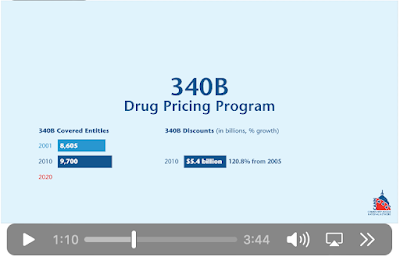
But the program and the true safety-net clinics that rely on it is teetering on the brink of collapse due to statutory silence in key areas. It turns out that the attraction of using significant savings on medicines to boost profit margins has been irresistible to some for-profit entities, at the expense of the safety net. The for-profit entities dipping into the 340B program’s discounted prescription drugs now include, among others, well-resourced hospitals in wealthier zip codes, pharmacy benefit managers (PBMs), and a vast network of contracted pharmacies (also largely located in wealthier zip codes). The numbers on this point speak volumes: 340B discounted drug purchases amounted to $38 billion in 2020, more than 15 times what it was in 2005. As Congressman Bucshon noted, wouldn’t you expect a 15x increase in the amount of charity care that is available in this country?

The realities of how the 340B program is currently implemented is a clear indication that stronger accountability and transparency are urgently needed so that the program can begin to work as intended, and patients don’t continue to get left behind. Abuses of the program have been exhaustively documented by government watchdogs and others including analysis by an advocacy group for cancer patients that found that hospitals are overcharging patients for a common breast cancer drug. The research found that hospitals pay a discounted price of just over $43,000 for a year’s supply of the drug,   while charging patients over $217,000 for the same medicine, reaping a profit of more than $173,000 from just one patient, thanks to the program designed to help the nation’s poorest citizens. 

Patients are bearing serious consequences from the lack of clarity in the 340B program and the loss of critical resources safety-net providers depend on. As organizations that provide essential services and education for the HIV/AIDS community, we know this program must be better defined if it is to work as intended. We also know that Congress has a central role to play in making that happen. 

We can only achieve changes that work in the interest of the safety net if the diverse 340B community works together, rather than at odds with itself. That’s where the newly-formed Alliance to Save America’s 340B Program (ASAP 340B) comes into play. The Alliance’s 10 policy principles provide a critical foundation for Washington decision makers to change the trajectory of the program and improve administration and oversight at the federal level. The Principles are designed to ensure greater transparency and accountability; determine a “patient definition” with with stronger safeguards; establish clear criteria for 340B contract pharmacy arrangements to improve access; prevent middlemen and for-profit entities from profiting off the 340B program; and update and strengthen 340B hospital eligibility requirements.

ASAP 340B
Photo Source: ASAP 340B

Inaction will – not could but will – very soon have serious ramifications on the care that our community receives. Yet despite the diverse organizations that have come to the table to bring about change, not everyone agrees. A cacophony of voices – including some from the HIV community – has expressed concern or displeasure with the idea of bringing ideas to the table that would enhance transparency, accountability, and most importantly, deliver long-time certainty to the program. But notably, no comprehensive, viable alternatives have been offered. 

Congress and the administration have made it clear that making prescription drugs more affordable should be a major public health priority. Fixing the 340B program can move the needle on that goal, bringing health care affordability to our nation’s most underserved patients and communities.

This opinion piece was also published on June 7th in POZ.

Disclaimer: Guest blogs do not necessarily reflect the views of the ADAP Advocacy Association, but rather they provide a neutral platform whereby the author serves to promote open, honest discussion about public health-related issues and updates.

Thursday, June 8, 2023

HRSA Offers Guidance on Buprenorphine

By: Ranier Simons, ADAP Blog Guest Contributor

There is a higher prevalence of substance use disorder (SUD) among people living with HIV/AIDS (PLWHA) compared to the population at large.[1] Among PLWHA, nearly 50 percent report a current or past history of substance use disorders (SUD).[2] As such, in May 2023, the HIV/AIDS Bureau of the Health Resources and Services Administration (HRSA) sent a letter to all Ryan White HIV/AIDS Program (RWHAP) Part B Aids Drug Assistance Program (ADAP) recipients encouraging them to include medications used to treat SUD in their formularies. HRSA additionally emphasized adding buprenorphine and naloxone.[3] 

Ryan White HIV/AIDS Program - Part B
Photo Source: HRSA

Buprenorphine is used to treat opioid addiction as an agonist treatment. It is a long-acting drug compared to the short-acting opioids to which people have addictions, such as heroin and oxycodone. Buprenorphine stays in the blood for 24-36 hours, in contrast to shorter-acting drugs people abuse that require consumption multiple times a day to prevent withdrawal symptoms.[4] Proper dosage of buprenorphine does not cause a euphoric high, and it allows substance abusers to stabilize their lives and gain control. Any drug can be abused and overdosed. However, an overdose of buprenorphine is less likely than an overdose of methadone, another medication used for agonist treatment. Naloxone is a drug that can temporarily reverse the effects of an opioid overdose giving a person time to allow medical assistance to arrive.

Roughly 40 percent of ADAPs do not have buprenorphine or naloxone on their formularies.[3] While most health insurance plans cover medications to treat SUD, 37.4 percent of ADAP patients have no health coverage.[3] Each ADAP determines the composition of its formulary. They use advisory boards of professionals to examine their populations and determine the cost/benefit analysis of including certain medications. ADAP clients without health insurance who also have SUD are left without the means to obtain SUD drugs that could drastically improve their lives.

PLWHA dealing with substance use addictions have poorer health outcomes than those without addictions. Drug abuse causes inconsistent antiretroviral adherence resulting in lower rates of viral suppression. SUD causes people to not engage in behaviors necessary for a productive, stable existence. Additionally, substance abuse can result in dangerous drug interactions between therapeutic medications and the drugs being abused, in addition to excessive wear on organs such as the liver and kidneys. To effectively fight the HIV/AIDS epidemic, it is vital to treat PLWHA wholistically. This means dealing with their mental and physical co-morbidities in addition to their HIV.

Addiction
Photo Source: Baton Rouge Behavioral Hospital

The World Health Organization (WHO) also recognizes the importance of buprenorphine and naloxone. Both are listed on the 2021 22nd WHO model list of essential medicines, which is updated every two years. The essential medicine list are medicines: “that satisfy the priority health care needs of a population…selected with due regard to disease prevalence and public health relevance, evidence of efficacy and safety and comparative cost-effectiveness…intended to be available in functioning health systems at all times, in appropriate dosage forms, of assured quality and at prices individuals and health systems can afford…“[5] 

RWHAP's ADAP manual states that ADAPs may include medications used to treat chronic medical and mental health conditions in addition to some of the mandatory requirements, such as including at least one drug from each class of HIV antiretroviral medications.[6] If more ADAPs heed the suggestion of the HRSA letter, more PLWHA with substance addictions can get treatment and relief. Many ADAPs are facing funding challenges. However, including buprenorphine and naloxone would be worthwhile formulary additions as their usage is evidence-based.

[1] Shiau, S., Arpadi, S. M., Yin, M. T., & Martins, S. S. (2017). Patterns of drug use and HIV infection among adults in a nationally representative sample. Addictive behaviors, 68, 39–44. https://doi.org/10.1016/j.addbeh.2017.01.015

[2] Durvasula, R., & Miller, T. R. (2014). Substance abuse treatment in persons with HIV/AIDS: challenges in managing triple diagnosis. Behavioral medicine (Washington, D.C.), 40(2), 43–52. https://doi.org/10.1080/08964289.2013.866540

[3] HRSA. (2023, May 11). Ryan White Letter. Retrieved from https://ryanwhite.hrsa.gov/sites/default/files/ryanwhite/grants/rwhap-partb-aids-drug-assistance.pdf

[4] Centre for Addiction and Mental Health. (2023). Buprenorphine. Retrieved from https://www.camh.ca/en/health-info/mental-illness-and-addiction-index/buprenorphine#:~:text=Overview,pain%20relief%20for%20seven%20days

[5] World Health Organization. (2023). WHO model list of essential medicines - 22nd list, 2021. Retrieved from https://www.who.int/publications/i/item/WHO-MHP-HPS-EML-2021.02

[6] HRSA. (2016). AIDS Drug Assistance Program Manual. Retrieved from https://ryanwhite.hrsa.gov/sites/default/files/ryanwhite/resources/adap-manual.pdf

Disclaimer: Guest blogs do not necessarily reflect the views of the ADAP Advocacy Association, but rather they provide a neutral platform whereby the author serves to promote open, honest discussion about public health-related issues and updates.  

Thursday, June 1, 2023

Did South Carolina Just Weaken Patient Choice Protections for Specialty Drugs?

By: Ranier Simons, ADAP Blog Guest Contributor

An undeniable fact with largely universal consensus is that the United States needs healthcare reform. Healthcare reform is an overhauling of the healthcare system to achieve what the Institute for Healthcare Improvement describes as the Triple Aim: “improving the patient experience of care (including quality and satisfaction), improving the health of populations, and reducing the per capita cost of health care.”[1] The Affordable Care Act (ACA) is the most recent attempt to reach the Triple Aim by increasing insurance access, mandating levels of quality, and trying to make healthcare more affordable. The challenge of healthcare reform is that healthcare is a system. By definition, a system has moving components that not only move independently but also are interdependent upon other parts of the system. Regarding healthcare, the moving parts of the system are smaller systems. South Carolina recently attempted to make some positive changes to the healthcare infrastructure in that state, though it is unclear if all the changes will actually benefit patients.

South Carolina state flag
Photo Source: Greenville Legal

It is important to remember that regulation is one tool used to attempt the improvement of the many U.S. healthcare system components. Through legislative regulation, lawmakers try to create frameworks to optimize how various healthcare system component’s function. A significant component of healthcare is prescription medication. Pharmacies, pharmacy benefit managers (PBMs), and insurance plans are several players in the prescription medication system. Presently, the costs and availability of drugs are primarily controlled by PBMs. Insurance companies employ pharmacy benefit managers who control which drugs appear on plan formularies, negotiate the prices insurance plans pay for prescriptions, decide which pharmacies can participate in a plan’s network, and more.[3,5]

While many components within the U.S. healthcare system operate under detailed and enforced regulation, PBMs do not. They are largely unregulated. To maximize their profits, they participate in multiple practices that create challenges for insurance plans, pharmacies, and ultimately patients, driving up costs and creating inefficiencies in patient care.[3,5] South Carolina has been working through legislation to curtail and regulate the activity of PBMs - including Senate Bill 520 (SB520), part of the Pharmacy Audit Protection Act - which was recently passed by the state legislature.[2]

One of many excessive practices by PBMs to drive profit is pharmacy audit. A pharmacist with over 30 years experience providing care to patients living with HIV/AIDS summarized, “Pharmacists are constantly being audited by strong-arm PBMs. They often go after the high-cost drugs and deny claims for minor infractions. It’s a bullying tactic.” SB520 aims to protect pharmacies from unjust audits by PBMs. The bill defines explicitly the structure of what entity can be designated a PBM; it explains what PBMs operationally can and cannot do, defines the rights of pharmacies in general and in the face of a PBM audit, gives patients freedom of choice in utilizing in-network pharmacies, and much more. PBMs use numerous abusive audit practices to drive profit, including audit fees, denying claims for minor clerical errors forcing pharmacies to pay back money for drugs they were reimbursed, and making it difficult for pharmacies to re-bill PBMs after winning audit appeals.
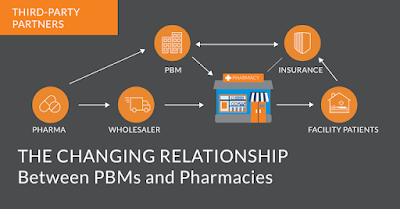
Chart showing flow between pharmacies and PBMs
Photo Source: Framework LTC

The bill is essentially a step in the right direction. However, multiple payers lobbied to add verbiage potentially adversely affecting HIV patients and others. Section 38-71-2245, subsection (A) states: “A pharmacy benefits manager may neither limit an insured from selecting an in-network pharmacy or pharmacist of the insured's choice nor deny the right of a pharmacy or pharmacist to participate in a network if the pharmacy or pharmacist meets the requirements for network participation set forth by the pharmacy benefits manager, and the pharmacy or pharmacist agrees to the contract terms, conditions, and rates of reimbursements.”[2]  This section protects patient choice of pharmacists. 

Payers asked for the following verbiage added to the section: 

“Notwithstanding subsection (A), a pharmacy benefits manager may, for specialized delivery drugs, specify requirements for network participation that: (1) directly relate to the ability of the pharmacy or pharmacist to store, handle, or deliver a prescription drug in a manner that ensures the quality, integrity, or safety of the drug, its delivery, or its use; or  (2) relate to quality metrics that affect a pharmacy's or pharmacist's ability to participate, provided that the pharmacy benefits manager applies such terms equally to all network participants. (C) For prescription drugs that qualify as a high-cost prescription drug, subsection (A) of this section does not apply to a pharmacy benefits manager. A high-cost prescription drug is defined as a prescription drug whose current or prior year's annual average wholesale price exceeded 300 percent of the Federal Poverty Level for a single-member household. (D) A pharmacy benefits manager must provide notification of any changes to all applicable specialized delivery drug lists and high-cost prescription drug lists and must make such lists available on a website and upon request to participating pharmacies. A pharmacy may appeal a classification determination to the Department of Insurance.”[2]

The verbiage states that patient choice protections do not apply to specialty or high-cost prescription drugs. In section 38-71-2200, the bill defines specialized delivery drugs as “a prescription drug that meets a majority of the following criteria, as set forth by the manufacturer, FDA, or other applicable law or regulatory body and: (a) requires special handling or storage; (b) requires complex and extended patient education or counseling; (c) requires intensive monitoring; (d) requires clinical oversight; or (e) requires product support services; and the drug is used to treat chronic and complex, or rare medical conditions  (i) that can be progressive; or (ii) that can be debilitating or fatal if left untreated or under-treated.”[2]

Given the broad definition of specialty and high-cost prescription drugs, the bill allows PBMs to manipulate how HIV antiretrovirals and related treatments are filled. The pharmacist consulted on this issue also explains, "It’s a way for PBMs to mandate that these prescriptions need to be filled from their central mail pharmacies. Since most HIV ARVs are oral and do not require special handling, access has commonly been allowed at retail. The high cost is what’s driving this change. Also, most independent pharmacies don’t mind not having to fill these drugs because of the high cost. For HIV-focused pharmacies, these prescriptions and patients will no longer have access to trained pharmacists and relationships with providers… will all go to mail and automation.” 

He further explains that: “In exchange for fewer audits on specialty drugs, since the retail pharmacies won't be filling them anymore, the managed care organizations will allow more access to more regular prescriptions at retail pharmacies, a move that a lot of non-specialty pharmacies like because it allows them to serve more patients. They’re trading away HIV patients for more ‘non-specialty’ patients.”

Photo Source: SNF Solutions

The bill's definition of “specialized delivery” drugs affects other types of drugs as well. Using the example of antibiotics for a UTI for an elderly person, Jen Laws, President & CEO of Community Access National Network (CANN), explains: “Under the requirements set forth, most antibiotics lose efficacy when exposed to high heat, might require education as to contraindications for patients with other co-occurring conditions, will require monitoring for clearance of infection, and these types of infections can be progressive or debilitating in elderly patients. And while this is an extreme example, it is possible under the bill as written. Given payer willingness to abuse carve-outs and loopholes in laws, it's egregious to define ‘specialty’ so broadly, especially as medicine becomes more and more personalized.”

Increased financial burden on HIV patients and providers is another bill outcome. ARVs are not always defined as specialty drugs on formularies, and thus, many times, they are on lower tiers of formularies that only require cost-sharing of fixed lower copays. Since the bill allows PBMs to define all ARVs as specialty drugs, they can move them to higher formulary tiers, which have much higher cost-sharing practices, such as significantly higher copays and coinsurance. This creates a significantly increased out-of-pocket financial burden on patients and covered entities that are covering the 340B patient copay cost.  

Compounding the increased financial burden is the usage of copay accumulators. Patients in the past who used manufacturer copay assistance programs could apply the copay card payments to their insurance deductible and out-of-pocket costs. Presently, many insurers use copay accumulators, which allow the copay assistance programs to pay the copays but do not allow the payments to count towards deductibles or out-of-pocket expense limits. Thus, the insurance companies are essentially being paid twice by requiring the insured to still must pay their deductibles and out-of-pocket limits after exhausting copay assistance cards. Additionally, patients are in danger of being unable to afford their medication since they would be responsible for paying the full price of their medications after the copay assistance was exhausted up until the limits of completely paying their deductibles.[4]

This bill is an example of the challenges of healthcare reform. It is easy for well-intentioned legislation to be tainted by opposing interests. It is imperative to be vigilant about whom we select as legislative representation and stay informed about legislation being written that affects our daily lives.

[1] Institute for Healthcare Improvement. (2023). The IHI Triple Aim. Retrieved from https://www.ihi.org/Engage/Initiatives/TripleAim/Pages/default.aspx

[2] South Carolina State House. (2023). S0520. Retrieved from https://www.scstatehouse.gov/sess125_2023-2024/bills/520.htm

[3] Royce, T., Schenkel, C., Kirkwood, K., Levit, L., Levit, K., Kircher, S. (2020). Impact of pharmacy benefit managers on oncology practices and patients. JCO Oncology Practice 16(5) 276-284. DOI: 10.1200/JOP.19.00606

[4] National Conference of State Legislatures. (2023, February 23). Copayment Adjustment Programs. Retrieved from https://www.ncsl.org/health/copayment-adjustment-programs#:~:text=When%20a%20patient's%20health%20plan,out%2Dof%2Dpocket%20maximums

[5] Healthcare Value Hub. (2018, January). Pharmacy benefit managers: Can they return to their client-centered origins? Retrieved from https://www.healthcarevaluehub.org/advocate-resources/publications/pharmacy-benefit-managers-can-they-return-their-client-centered-origins

Disclaimer: Guest blogs do not necessarily reflect the views of the ADAP Advocacy Association, but rather they provide a neutral platform whereby the author serves to promote open, honest discussion about public health-related issues and updates.  

Thursday, May 25, 2023

An Expression of Support for Basic Human Decency

By: Brandon M. Macsata, CEO, ADAP Advocacy Association & Jen Laws, President & CEO, Community Access National Network

Earlier this week, ADAP Advocacy Association and Community Access National Network (CANN) issued a joint statement announcing an embargo of each respective organization’s patient advocacy and education activities within the state of Florida. Both organizations also cited a need to protect advocates and patients from outside of the state from the very real dangers associated with traveling to the state, while also emphasizing that both organizations will continue to support local advocates in the state as they work to create positive public policy changes for Floridians living with HIV. The decision to adjoin both the ADAP Advocacy Association and the Community Access National Network to the previously issued formal travel advisory by the NAACP wasn’t taken lightly because maintaining strong ties to the community is important in generating effective advocacy. The move was not a political statement either, but rather an expression of support for basic human decency.

JOINT STATEMENT ON TRAVEL ADVISORY IN THE STATE OF FLORIDA FOR PEOPLE LIVING WITH HIV On behalf of the ADAP Advocacy Association and Community Access National Network (CANN)

The announcement comes after the state’s governor, Ron DeSantis, signed into law a series of bills targeted toward harming Black, Brown, LGBTQ+, and immigrant people. The transgender community was probably singled out more viciously than any of the marginalized communities throughout this hate-inspired Florida Legislative Session. Make no mistake about it why this effort to enflame a “culture war” is an issue of organizational values and something quite personal to both of us. The non-trans guy here taking issue with the fact that the trans guy here now cannot take “a leak” without fear of being charged with a felony has nothing to do with politics and everything to do with basic human rights.

The fact is we both previously lived in the state for many years – it’s where we started our HIV policy work, even before we knew one another. It is where we met over a decade ago. Upon reflection, we still can regularly be found discussing mutual friends from Florida, those still living and those who have passed on, in different phases of their lives.  

From recalling Bishop S.F. Makalani-MaHee's testimony to the Florida Legislature in 2016, against a bathroom bill (which failed that year), to his death on Transgender Day of Remembrance in 2017, part of this internal discussion was a reflection on the deep history he had with advocates serving both the Transgender and HIV communities of the state. What we’re witnessing right now in Florida is challenging for us, personally and professionally, but state-sponsored discrimination, hate, and stigma drew a line that cannot be ignored.

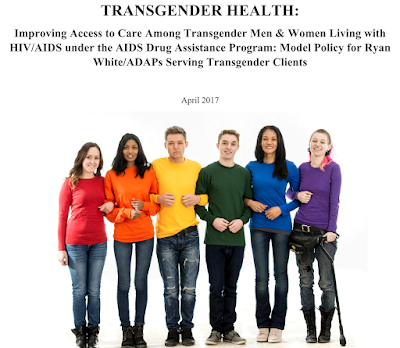
In 2017, Human Rights Watch published an important report, Living At Risk: Transgender Women, HIV, and Human Rights in South Florida, and the very same year ADAP Advocacy Association published it’s issue paper, Transgender Health: Improving Access to Care Among Transgender Men & Women Living with HIV/AIDS Under the AIDS Drug Assistance Program. Both of us worked on the ADAP project, and it was important for a transgender advocate (Jen) with lived experience to lead in writing model policies meant to serve Transgender People Living with HIV. The decision to issue a travel advisory in Florida for people living with HIV is rooted in disparities and areas of improvement emphasized in those two reports.

TRANSGENDER HEALTH: Improving Access to Care Among Transgender Men & Women Living with HIV/AIDS under the AIDS Drug Assistance Program: Model Policy for Ryan White/ADAPs Serving Transgender Clients - (April 2017)
Photo Source: ADAP Advocacy Association

Much of our hearts belong to Florida for the dedication and innovation the people of this state can and do offer, despite every unnecessary public policy challenge they face. People like Mick Sullivan and Donna Sabatino (formerly with Tibotec Therapeutics), Connie Reese and her amazing work with Simply Amazing You Are (SAYA) in Miami-Dade County, Riley Johnson promoting trans equality in accessing medical care via RAD Remedy, Michael Ruppal’s leadership with The AIDS Institute, and the late Tiffany Marrero, who served to voice the experiences of vertical transmission patients and Black Women and only recently left us. Heck, Trelvis Randolph and Maria Mejia both reside in South Florida, and they serve on CANN’s board of directors. These folks not only are colleagues, but they are friends and expressing concern over traveling to a place once call “home” saddens us.

But some things are larger than us. Recognizing the inherent roots of racism, which has prompted the NAACP to issue a travel advisory, our joint statement read, in part:

The state of Florida's moves to harm Transgender people, Black and Brown communities, and immigrant families undermines the exceptional work the state's Health Department has done in the last several years and only serves to further existing health disparities affecting these communities, particularly as it relates to HIV. For example, according to Florida's own data, while Black and Hispanic/Latino communities make up about 15.6% and 26.7% of the state's population, respectively, these same communities represent 37.7% and 39.6% of HIV diagnoses. Put another way, in Florida, while white people experience a rate of HIV diagnoses of 8.5 per 100,000 people, that rate among Black communities is 51.8 and for Hispanic/Latino communities it's 31.7.

Similarly, Florida has, in years past, made extraordinary strides in ensuring transgender people can access HIV related care, specifically by integrating best practices and guidance from the Health Resources and Services Administration (HRSA) on integrating gender affirming care into HIV care provision. Indeed, as a result of these moves, transgender women represent some of the greatest successes in linkage to care, retention in care, and viral load suppression of any demographic in the state. Recently signed bills prohibiting state contracted clinics from providing gender affirming care will have a dramatic affect in reversing these long sought after wins. 

Make no mistake, we are frustrated with an apparent lack of involvement from the federal agency charged with implementing the Ryan White HIV/AIDS Program. Because Ryan White program dollars are passed through the state and then contracted with counties, local areas, or directly with a provider, and because other health initiatives of the state are also part of how providers in Florida acquire funding to provide public health services, they may be prohibited from providing gender affirming care at all - regardless of where those dollars originate (state or Federal).

It is incumbent upon HRSA to provide guidance beyond ‘allowable’ uses and inform that state it has contractual, fiduciary responsibilities associated with its grant and subrecipient contracts to ensure these dollars serve these communities. HRSA must move beyond the language of ‘allowable’ uses to ‘expected integration of best practices.’

In many situations, we have been willing and able to confront harsh environments. Indeed, we recognize the need to be present in the spaces where political forces wish to silence us. However, Florida has crossed a line in becoming hostile to the very existence of Black and Brown and Immigrant and Transgender people, those same communities most affected by HIV. The people who enacted these hateful laws were motivated by hateful politics; our response is motivated by concern for the people we’re charged with representing in our community…many of whom feel silenced. This is a line which we cannot cross and still consider ourselves as living the values we espouse.

We came to the difficult decision that neither the ADAP Advocacy Association or Community Access National Network will host any advocacy or educational event in the state of Florida. We will continue to support local advocates and people living with HIV residing in the state, including scholarship support for intrastate travel by local advocates. We will continue to offer analysis on the state's activities. But we will not ask advocates from outside of the state to risk their mental health or physical safety to travel to the state.

Disclaimer: Guest blogs do not necessarily reflect the views of the ADAP Advocacy Association, but rather they provide a neutral platform whereby the author serves to promote open, honest discussion about public health-related issues and updates.

Thursday, May 18, 2023

Affordable Care Act Marketplace Plans & Drug Benefit Design

By: Ranier Simons, ADAP Blog Guest Contributor

Healthcare insurance policy and finance are not abstract entities relegated to the arenas of political debate and Wall Street discourse. The convoluted machinations of how money flows in healthcare insurance finance affect the bank account of anyone who has ever been prescribed a prescription drug. People living with HIV are very aware of the importance of understanding how insurance operates regarding paying for expensive antiretroviral medications that cost thousands of dollars per month. 

HIV/AIDS
Photo Source: Sciworthy

When choosing insurance plans, one of the most important aspects people living with HIV/AIDS (PLWHA) consider is how or if a particular plan covers their anti-retroviral (ARV) therapy. AIDS Drug Assistance Programs (ADAP) also pay close attention to drug coverage and drug pricing, given that they help provide medications to those who are uninsured as well as those who are underinsured. The Affordable Care Act (ACA) has enabled many PLWHA to access lifesaving medicines. However, the drug benefit design of many qualified health plans (QHP) participating in the ACA Marketplaces can hinder expeditious access to efficacious drugs.

A recent study examined how insurance benefit design affects antiretroviral access. The study focused on the changes in insurance coverage of Biktarvy (bictegravir/emtricitabine/tenofovir alafenamide) and Triumeq (dolutegravir/abacavir/lamivudine). These two drugs are first-line single-tablet regimens that have proven to be very effective. The U.S. Food & Drug Administration (FDA) approved Triumeq in 2014 and Biktarvy in 2018. Current treatment guidelines suggest that PLWHA start ART as soon as possible upon diagnosis, same day if possible. However, the study showed that access to novel treatments, such as Triumeq and Biktarvy, is slowed by delayed QHP coverage and benefit design.[1]

Tweet by Rohan Khazanchi, MD, MPH
Photo Source: Rohan Khazanchi, MD, MPH | Twitter

The study assessed individual and small-group QHPs’ responses to the two new regimens. For the years 2018-2020, researchers examined coverage, cost sharing, specialty tiering, prior authorization (PA), and out-of-pocket (OOP) costs for Triumeq and Biktarvy nationally under QHP’s. Coverage refers to if a plan does or does not offer a drug in its formulary. Cost sharing refers to copays and coinsurance for drugs. A copay is a set fee patients pay for a prescription, whereas coinsurance is a percentage of a drug’s wholesale cost. Specialty tiering is the designation insurance drug formularies give to medications based on their costs. The higher the tier, the more of the costs are passed onto the consumer. More expensive drugs, such as ART, are in the higher tiers. Prior authorization is the bureaucratic process requiring healthcare providers to get pre-approval from a health plan before a drug is prescribed for the patient to qualify for payment coverage.

For 2018, 2019, and 2020, respectively, the study identified 19,533, 17,007, and 21,547 QHPs.[1] Overall, in 2018, 93% of the QHPs covered Triumeq, but only 60% covered Biktarvy. Triumeq coverage increased to 97% in 2019 and decreased to 91% in 2020. Biktarvy coverage decreased to 59% in 2019 but sharply increased to 86% in 2020. Concerning coinsurance, over the entire study period, a higher percentage of QHP’s required coinsurance for Biktarvy than Triumeq. The study also explicitly assessed coverage comparisons in EHE (Ending the HIV Epidemic Initiative) Phase I priority jurisdictions. Overall, across all three years studied, in both EHE and non-EHE jurisdictions, more QHPs covered Triumeq than Biktarvy. Interestingly, Biktarvy QHP coverage in 2020 was higher in EHE jurisdictions (90%) compared to non-EHE jurisdictions (85%). Biktarvy coverage in EHE jurisdictions increased from 74% in 2018 to 90% in 2020 due to increased coverage with coinsurance and copays. The study also found differences in prior authorization requirements. The prevalence of PA requirements for Triumeq was very low (2%, 2%, and 1% for 2018, 2019, and 2020, respectively).[1] PA prevalence was higher for Biktarvy, with 5% in 2018 and 8% in 2019. In 2020 all QHP had eliminated Biktarvy PAs except for 18 plans in Washington State.

HIV/AIDS medicines
Photo Source: HIVinfo

A multi-center, phase 3, double-blind, randomized control clinical trial of treatment naïve PLWHA showed that Biktarvy had the efficacy of viral suppression equal to Triumeq.[2,3] Additionally, it showed that Biktarvy had no evidence of treatment-emergent resistance and was better tolerated gastrointestinal due to its formulation and smaller pill size. Moreover, Biktarvy does not contain abacavir and thus does not require HLA-B*5701 testing making it a good candidate for same-day ARV initiation.[1] 

Evidence-based data showed Biktarvy to be a better candidate for first-line drug treatment for many than Triumeq. Yet, as stated previously, QHPs lagged in coverage of Biktarvy compared to Triumeq, even in EHE priority-1 jurisdictions. There were higher OOP costs given that more QHP’s required coinsurance for Biktarvy, and PA requirements were also initially more frequent for Biktarvy.

The critical takeaway from the study is that QHPs can slow the adoption of new HIV single-pill regimens by non-coverage decisions and other hurdles that limit access.[1] This does not stop at single-pill regimens. Ongoing HIV research continues to produce novel and innovative treatments such as Cabenuva and Sunlenca. Insurance companies base their coverage decisions mainly on the costs of the medications. Strident efforts are needed to create regulations to lower drug pricing. Additionally, cost-sharing measures need to evolve, such as basing patient coinsurance on post-PBM discounted drug prices instead of pre-discounted prices.[1] 

Increasing the pricing of novel and effective medication challenges ADAP’s ability to continue to help people. Additionally, prohibitive OOP costs for patients discourage medication adherence and treatment initiation. Many structural barriers to HIV treatment equality exist. Runaway pharmaceutical pricing and insurance drug coverage that is not scientifically evidence-based should not be amidst those barriers.

[1] Khazanchi, R., Powers, S., Killelea, A. et al. Access to a novel first-line single-tablet HIV antiretroviral regimen in Affordable Care Act Marketplace plans, 2018–2020. J of Pharm Policy and Pract 16, 57 (2023). https://doi.org/10.1186/s40545-023-00559-8

[2] Acosta RK, Willkom M, Martin R, et al. Resistance analysis of Bictegravir–Emtricitabine–Tenofovir Alafenamide in HIV-1 treatment-naive patients through 48 weeks. Antimicrob Agents Chemother. 2019;63(5):e02533-18. https://doi.org/10.1128/AAC.02533-18

[3] Coffey S, Bacchetti P, Sachdev D, et al. RAPID antiretroviral therapy: high virologic suppression rates with immediate antiretroviral therapy initiation in a vulnerable urban clinic population. AIDS. 2019;33(5):825–32. https://doi.org/10.1097/QAD.0000000000002124

Disclaimer: Guest blogs do not necessarily reflect the views of the ADAP Advocacy Association, but rather they provide a neutral platform whereby the author serves to promote open, honest discussion about public health-related issues and updates.  

Thursday, May 11, 2023

Fireside Chat Retreat in Nashville, TN Tackles Pressing Public Health Issues

By: Brandon M. Macsata, CEO, ADAP Advocacy Association & Jen Laws, Board Co-Chair, ADAP Advocacy Association

The ADAP Advocacy Association hosted its "Health Fireside Chat" retreat in Nashville, Tennessee among key stakeholder groups to discuss pertinent public health issues facing patients in the United States. The Health Fireside Chat convened Thursday, April 27th through Saturday, April 29th. The state of Tennessee cutting funding for HIV prevention, detection and treatment programs, a growing chorus calling for reforms to the 340B Drug Pricing Program, and the intersection between U=U (undetectable equals untransmittable) and reforming HIV criminalization laws were evaluated and discussed by the 24 diverse stakeholders.

The series was rebranded to encompass a broader focus on public health, changing from the HIV/AIDS Fireside Chat to the Health Fireside Chat. Unlike previous Fireside Chats, Nashville’s event added an “ice breaker” activity, themed in light of the hosting city – a line dancing lesson, as well as an informal town hall meeting convened in partnership with Positively Aware. The additional half day of activities  including the ice breaker, townhall meeting, and meet and greet  allowed attendees to settle into conversation expediently after having a solid hour of good laughs, encouragement, and bonding.

FDR Fireside Chat
Photo Source: Getty Images

The townhall meeting, which was facilitated by Rick Guasco, Acting Editor-in-Chief of Positively Aware, started with recognition that Nashville was explicitly chosen as a hosting city due to the state of Tennessee’s rejection of federal HIV prevention dollars. While a later discussion was specific to that issue, the town hall dug into underlying (and broader) concerns around systemic discrimination as a driver of today’s HIV epidemic. Digging into how racism, as an example, manifests can be a touchy subject in any group, even among those who generally align. Such a charged set of topics, especially among HIV’s thought-leadership, can and does lead to transformational moments, particularly because creating a space of “internal” advocacy provides a chance for us to experience, and navigate, conflict amongst ourselves. That conflict and navigation also provides us a chance to grow together and to break down silos of interest, work, and thought. And this townhall did exactly that.

The Health Fireside Chat included moderated white-board style discussion sessions on the following issues:

  • Tension in Tennessee: Is an HIV Access to Care & Treatment Crisis Looming? — moderated by Jeffrey S. Crowley, Distinguished Scholar/Program Director, Infectious Disease Initiatives at the O'Neill Institute/Georgetown Law
  • 340B Drug Discount Program: The Issues Spurring Discussion, Stakeholder Stances, and Possible Resolutions? — moderated by Kassy Perry, President & CEO, Perry Communications Group
  • U=U: Is 'Undetectable Equals Untransmittable' Changing the Landscape for HIV Criminalization Laws? — moderated by Murray Penner, Executive Director, U=U plus, and S. Mandisa Moore-O'Neal, Executive Director, The Center for HIV Law & Policy

The discussion sessions were designed to capture key observations, suggestions, and thoughts about how best to address the challenges being discussed at the Health Fireside Chat. The following represents the attendees:

  • Guy Anthony, President & Founder, Black, Gifted & Whole Foundation
  • Jeffrey S. Crowley, Distinguished Scholar & Program Director at the Infectious Disease Initiatives, O'Neill Institute for National and Global Health Law, Georgetown Law
  • Brady Etzkorn-Morris, Executive Assistant for Global Operations, Prevention Access Campaign
  • Earl Fowlkes, President & CEO, Center for Black Equity
  • Rick Guasco, Acting Editor-in-Chief, Positively Aware 
  • Hilary Hansen, Global Public Affairs Head, Oncology, Sanofi
  • Kathie Hiers, President & CEO, AIDS Alabama
  • Marcus Hopkins, Founder & Executive Director, Appalachian Learning Initiative
  • Mark Hubbard, Patient Advocate
  • Vanessa Lathan, HIV Health Policy Director, Black Ladies in Public Health
  • Jen Laws, President & CEO, Community Access National Network
  • David Wyley Long, Change The Pattern Associate, Southern AIDS Coalition 
  • Brandon M. Macsata, CEO, ADAP Advocacy Association
  • Judith Montenegro, Program Director, Latino Commission on AIDS
  • Mandisa Moore-O’Neal, Executive Director, Center for HIV Law & Policy
  • Warren O’Meara-Dates, Founder & CEO, The 6:52 Project Foundation
  • Murray Penner, Executive Director, U=U plus
  • Kassy Perry, President & CEO, Perry Communications Group
  • Amanda Pratter, Associate Director, Policy Advocacy and Alliances, Gilead Sciences
  • Gwen Rathbun, Associate Director, Alliance Development, Merck
  • Alan Richardson, EVP of Strategic Patient Solutions, Patient Advocate Foundation
  • Donna Sabatino, Director State Policy & Advocacy, The AIDS Institute
  • Andrew Scott, Director of Strategic Alliances and Issue Advocacy, Bristol Myers Squibb
  • Robert Suttle, Patient Advocate

The Covid-19 pandemic is still ongoing. Covid-19 has killed at least 1,129,573 people and infected over 104 million in the United States since January 2020, according to data by the Centers for Disease Control & Prevention (CDC).

With that in mind, the ADAP Advocacy Association implemented strong Covid-19 safety protocols for the Health Fireside Chat, which included proof of vaccination/booster, robust self-administered testing (prior to travel, upon arrival, and after returning home), complimentary rapid self-test kits and hand sanitizer for each of the attendees, as well as guidelines for masks on commercial travel to the event, and optional masks during the sessions (which some attendees exercised without feeling shunned). 

Health Fireside Chat

 The ADAP Advocacy Association is pleased to share the following brief recap of the Health Fireside Chat.

Tension in Tennessee:

The first policy session, “Tension in Tennessee: Is an HIV Access to Care & Treatment Crisis Looming?”, lead by the O’Neill Institute’s Jeffrey S. Crowley, invited local advocates to discuss their internal view of Tennessee’s “troubles” with some national advocacy representation. While much of the discussion focused on the details of local communication and national assumptions, some discussion on how the state may implement its newly allocated funding (will the state’s budget continue to fund prevention efforts next year?), much of the conversation that followed was explicitly about how local advocates can communicate and collaborate with national advocacy efforts. What became clear from that conversation is much of the national and state level advocacy we tend to reflect fondly of when speaking on decades past is relatively fragile and not well-coordinated. Planning bodies have diminished to largely being provider groups and some don’t even meet – despite a statutory requirement to do exist. An attendee with capacity building expertise pointed out the need for investment in this space. Many planning bodies have been weakened by atrophy, others have faced a demographic shift (and as a result a change in the barriers and assistance needed in order to appropriately activate affected community). The discussion as a whole highlighted the extreme silos working against a cohesive and collaborative advocacy network necessary to support ending the HIV epidemic.

Tennessee Governor Bill Lee
Photo Source: Rolling Stone

 The following materials were shared with retreat attendees:

The ADAP Advocacy Association would like to publicly acknowledge and thank Jeffrey S. Crowley for facilitating this important discussion.

340B Drug Discount Program:

340B remains an important issue for HIV advocates. As such, “340B Drug Discount Program: The Issues Spurring Discussion, Stakeholder Stances, and Possible Resolutions?“ was the focus of the second policy session. Some of the advocates in attendance knew little about the program, so the discussion provided an excellent educational opportunity on how the discount drug program works. Laser focused on issues of health equity, Kassy Perry of Perry Communications Group lead the group to dig in – and quickly. Advocates less familiar with 340B were readily able to identify the need for reform when assessing reductions in charity care and increases in medical debt. The group readily recognized 340B as a powerful tool toward addressing health disparities, especially economic consequences for patients, and where those consequences can and do negatively impact entire areas of patients’ lives. Attendees from industry partners listened intently as advocates described their concerns and the need for the program to better reflect the intent in which it was established. Equally important, what is being proposed in New York has alarmed both patients and providers alike.

There was considerable conversation over the news about a new coalition, designed to support true safety-net providers and the communities they serve. The Alliance to Save America’s 340B Program (ASAP 340B) is a partnership of community health centers, patient, provider, and consumer advocates, and leaders from the biopharmaceutical industry. The ADAP Advocacy Association and the Community Access National Network have joined the alliance, and numerous groups in attendance expressed interest in also joining the fight to make 340B reflect the needs of patients, and not hospitals and mega providers. 

340B Drug Pricing Program
Photo Source: CANN YouTube Channel

The following materials were shared with retreat attendees:

The ADAP Advocacy Association would like to publicly acknowledge and thank Kassy Perry for facilitating this important discussion.

Editor's Note: The ADAP Advocacy Association has offered opinions on 340B over the last several years, including Industry’s Changes to 340B Drug Discount Program (April 2022), 340B – Reply Hazy, Try Again (January 2020), The Federal 340B Program: A Call to Order (March 2019), and 340B Program: Don't Throw the Baby Out with the Bathwater (March 2017)

U = U:

The final policy session, “U=U: Is 'Undetectable Equals Untransmittable' Changing the Landscape for HIV Criminalization Laws?“, focused on the intersection of issues between U=U and reforming HIV Criminalization Laws with the conversation hosted by Mandisa Moore-O’Neal, executive director of the Center for HIV Law and Policy, and Murray Penner, executive director of U=U Plus. Mandisa shared with the group the exceptional nature of HIV criminalization laws, but also how general criminal codes are out of date, furthering the HIV epidemic, and nearly exclusively used against Black and Brown people living with HIV. Mandisa also discussed how these laws can and are leveraged to further domestic violence (and coercive control). Murray then discussed how laws which allow for “affirmative defenses” only help those people living with HIV which can readily access and maintain care. All of which emphasized that the design of these laws assume that because someone is living with HIV, they are necessarily presumed “guilty”. Advocates discussed how to break silos, including the potential to partner in prosecutor and public defender education efforts. Advocates focused on health or with strong relationships with their local health departments, for example, might wish to participate in education efforts alongside legal advocacy organizations or a state Bar.

HIV Criminalization in the United States
Photo Source: CHLP

The following materials were shared with retreat attendees: 

The ADAP Advocacy Association would like to publicly acknowledge and thank Murray Penner and Mandisa Moore-O'Neal for facilitating this important discussion.

Additional Fireside Chats are planned for 2023 in Philadelphia, Pennsylvania, and New Orleans, Louisiana.

Disclaimer: Guest blogs do not necessarily reflect the views of the ADAP Advocacy Association, but rather they provide a neutral platform whereby the author serves to promote open, honest discussion about public health-related issues and updates.

Thursday, May 4, 2023

The State of Aging with HIV - Flash Forward to Today

By: Scott Bertani, Director of Advocacy, HealthHIV

Despite high rates of viral suppression and engagement in care, 94% of respondents agreed that more advocacy efforts are needed to address the needs of people aging with HIV. This reflects the increasingly complex reality of providing comprehensive care to older persons with HIV (OPWH). While medical providers are often adept at addressing HIV, there remains a significant need for enhanced training and medical education that prepares providers to develop interventions that address, not only the many comorbid conditions associated with aging with HIV, but also the pervasive and intersecting systemic barriers that face OPWH, including housing instability, gaps in social support and insurance coverage, and stigma.

HealthHIV - State of Aging with HIV

And for some 60% of our respondents, they have been HIV positive for longer than they were not. Hammered by mounting obstacles—reduced quality of life polypharmacy, multimorbidity, mental illness and increasing barriers to care—an emerging portrait of frustration and ire among OPWH is building.

For these folks, the challenge of lifelong disease management, (dreamed and dashed) hopes for a near horizon cure; comorbidities and cognitive declines; anxiety and depression; substance use; loss of agency and finances–all have taken a compounding heath outcome toll. And for many, the toll feels due.

And when faced with growing long-term care needs, and the complexity of ageism and minority stressors–race, ethnicity, sexual orientation, and gender identity issues... of being forced back into the closet, the resiliency-well is nearly (if not already) dry.

To be fair, we did survey lots of positivity among our PWH in their journeys with HIV and Aging (28%)—reminded by words like "manageable", "grateful", "hopeful" and "rewarding". But in 2023, that sentiment seems to be running low. Some 72% described their QoL, in less than joyful words.

In sum, the state of aging with HIV can be distilled down to one word: CHALLENGING. In fact, upwards of 50% of our respondents used that same word to describe their complex, but beautiful lives.

But what of Advocacy? Advocacy, too, seems to be of an urgent, almost universal cry (a 94% wailing, in fact)–across both access and treatment challenges. But even there, with an overwhelming response of wanting more to be done, we saw no linear "right here, right now" pathway, only more predilections to consider. Across the care continuum, across care coordination, across finding better biomarkers to alert us; across SDoH, across... (fill in the blank).

Keep that in mind. Throughout this landscape report, we hope to capture not only the relevant data (those key findings from what we surveyed) in a visually interesting way, but in a relatable, actionable narrative that paints the urgent story of the face(s) of today's HIV and Aging.

Word Cloud highlighted by the word: CHALLENGING

The survey implications, themselves (below) represent crucial sites for future research, advocacy, and policy interventions to improve clinical care and quality of life for people aging with HIV:

  • Building a competent workforce of HIV gerontologists is crucial to address the multifaceted issues confronting PLWH as they grow older.
  • Efficient coordination of care between healthcare providers is essential to ensure that OPWH receive the comprehensive support they need.
  • Addressing social determinants of health is fundamental to improve health outcomes as health extends beyond the clinic setting.
  • Access to safe and stable housing is needed as fixed incomes and housing emergencies escalate for OPWH.

Policymakers at all levels need to address a wide range of health, social and economic factors that impact all PWH, but particularly among older PWH and their ability to maintain their health and their agency, independence and ability to remain in and a part of their communities.

By addressing the unique psychosocial and multi-complexities needs of this group can help providers better meet their patients' care needs (mind, mobility, multi-complexities) while also improving their quality of life (what matters most).

In order to do that, it's critical in ensuring that health and social service providers not only deliver culturally competent care, but deliver it with confidence—in that they are as representative, inclusive and linguistically appropriate as possible.

In essence, it means optimizing (and enhancing) care coordination while also sustaining that workforce; supporting community organizing and advocacy agencies; and encouraging bottom-up community mobilization and stakeholder involvement—re-envisaging the adage of "Nothing about us without us."  

Disclaimer: Guest blogs do not necessarily reflect the views of the ADAP Advocacy Association, but rather they provide a neutral platform whereby the author serves to promote open, honest discussion about public health-related issues and updates.