Thursday, September 9, 2021

#YourVaccineIsWaiting Public Awareness Campaign Targets Marginalized Groups Living with HIV/AIDS

By: Brandon M. Macsata, CEO, ADAP Advocacy Association

The ADAP Advocacy Association recently launched its public awareness campaign - 'Your Vaccine Is Waiting' - targeting marginalized groups living with HIV/AIDS on their need to get vaccinated against Covid-19. Designed to raise awareness, it came in response to learning that numerous segments of the HIV community were among those characterized as vaccine hesitant. The campaign includes four public service announcements, produced by Brandagement, LLC

#YourVaccineIsWaiting

According to the World Health Organization, HIV increases the risk for severe Covid-19 by six percent (6%) and the risk of dying of Covid-19 in the hospital by thirty percent (30%).[1] Yet, vaccine hesitancy among the HIV community remains a very real issue in the United States, as well as abroad in other countries.

#YourVaccineIsWaiting continues our organization's commitment to focusing on the intersection between these two ongoing epidemics. Earlier this year, we blogged about the importance of the immunocompromised getting vaccinated against Covid-19. Fast-forward to now, four amazing advocates living with HIV/AIDS were asked to share their personal perspectives on why getting the jab was important to them, but also for the marginalized groups they represent. 

Tez Anderson, a long-term survivor living with HIV, shares why he decided to get vaccinated against Covid-19. He resides in San Francisco, California. Tez’s message aims to help convince long-term survivors to get vaccinated and further protect themselves.

Tez Anderson

In urban cities with large LGBTQ communities, HIV and Covid-19 has presented dual challenges for older residents. Listen to his message to the long-term survivor community: https://www.youtube.com/watch?v=s9Z0qiwoe00

Jen Laws, a transgender community organizer living with HIV, shares why he decided to get vaccinated against Covid-19. He resides in Slidell, Louisiana. Jen’s message aims to help convince the transgender community to get vaccinated and further protect themselves. 

Jen Laws

According to the Williams Institute, among transgender people 25.9% report being in poor health, 32.2% have not seen a medical provider in the last year due to cost, and 34.6% expressed their gender identity could result in denial of quality care. Listen to his message to the transgender community: https://www.youtube.com/watch?v=8W_ZmVDxO74&t=259s.

Michelle Anderson, a community activist and policy associate living with HIV, shares why she decided to get vaccinated against Covid-19. She lives in Waxahachie, Texas. Michelle’s message aims to help convince African Americans to get vaccinated and further protect themselves.

Michelle Anderson

In states with large urban communities, Covid-19 has disproportionately impacted African Americans. Listen to her message to the African American community: https://www.youtube.com/watch?v=7AJ440_kE68&t=213s.

Jonathan J. Pena, MSW, licensed clinical social worker associate living with HIV, shares why he decided to get vaccinated against Covid-19. He lives in Morrisville, North Carolina.

Jonathan J. Pena, MSW

There are over 250,000 Hispanic/Latino Americans living with HIV/AIDS in the United States. One in five new HIV diagnosis in the United States were among Hispanic/Latino men (22%). Listen to his message to the Hispanic/Latino community: https://www.youtube.com/watch?v=mPWXIonBtTI&t=233s.

Why is our ongoing public awareness campaign important? According to research conducted by Johns Hopkins Medicine, Pfizer/BioNTech's vaccine induces a robust immune response in people living with HIV.[2] 

“Previous research has suggested a suboptimal response to COVID-19 vaccines in people living with HIV; however, these studies did not fully characterize and define that response, both for cellular [where the immune system directly attacks infected cells] and humoral [where the immune system circulates virus-fighting antibodies] immunity,” says study senior author Joel Blankson, M.D., Ph.D., professor of medicine at the Johns Hopkins University School of Medicine. “What we found with the widely used Pfizer/BioNTech vaccine was just the opposite, as it induces robust immune responses in people living with HIV comparable to those seen in healthy people.”[3]

The HIV community has waited decades for the development of a vaccine to defend against acquiring the human immunodeficiency virus, and yet we have one available for the other ongoing epidemic. SARS-CoV-2 has already taken 659,813 souls (and counting) from us in the United States, alone. Our community must meet the challenges presented by Covid-19 with the same intensity and rigor that we've done in the fight against HIV/AIDS over the last forty years. That is why, #YourVaccineIsWaiting.

[1] World Health Organization (2021, July 15). WHO warns that HIV infection increases risk of severe and critical COVID-19. Retrieved online at https://www.who.int/news/item/15-07-2021-who-warns-that-hiv-infection-increases-risk-of-severe-and-critical-covid-19.
[2] Johns Hopkines Medicine (2021, August 11). COVID-19 NEWS: Johns Hopkins Medicine Study Shows Vaccine Likely Protects People with HIV. Retrieved online at https://www.hopkinsmedicine.org/news/newsroom/news-releases/covid-19-news-johns-hopkins-medicine-study-shows-vaccine-likely-protects-people-with-hiv.
[3] Johns Hopkines Medicine (2021, August 11). COVID-19 NEWS: Johns Hopkins Medicine Study Shows Vaccine Likely Protects People with HIV. Retrieved online at https://www.hopkinsmedicine.org/news/newsroom/news-releases/covid-19-news-johns-hopkins-medicine-study-shows-vaccine-likely-protects-people-with-hiv.

Disclaimer: Guest blogs do not necessarily reflect the views of the ADAP Advocacy Association, but rather they provide a neutral platform whereby the author serves to promote open, honest discussion about public health-related issues and updates.

Thursday, September 2, 2021

Deja Vu All Over Again: Counterfeit Biktarvy® & Descovy® Anti-HIV Medicines

By: Brandon M. Macsata, CEO, ADAP Advocacy Association

Baseball Hall-of-Fame legend Yogi Berra coined the infamous phrase, "It's deja vu all over again". For the HIV community, it finds itself once again confronting the sad reality that antiretroviral (ARV) therapy isn't immune from counterfeit and tampered medicines. The latest counterfeit warning - involving products manufactured by Gilead Sciences - represents the second such ARV-related counterfeit scheme in less than one year.

Earlier this year, we raised similar concerns over fake Symtuza® entering the U.S. drug supply chain. It came in response to Janssen Pharmaceutical Companies of Johnson & Johnson issuing a drug warning alert in late 2020 about the counterfeit HIV drug. There were no reported adverse events related to the use of the counterfeit product, but it nonetheless sounded the alarm over fake HIV medications potentially reaching medicine cabinets in American households.

Fast-forward to August 2021, Gilead Sciences alerted the U.S. Food & Drug Administration (FDA) that fake meds for its once-daily single tablet HIV treatment regimen Biktarvy® (bictegravir 50 mg, emtricitabine 200 mg, and tenofovir alafenamide 25 mg tablets) and its HIV treatment and prevention medication Descovy® (emtricitabine 200 mg and tenofovir alafenamide 25 mg tablets) were within U.S. drug distribution networks.[1]

“The safety of individuals taking Gilead medication is always our first priority,” said Merdad Parsey, MD, PhD, Chief Medical Officer, Gilead Sciences. “We are taking aggressive action to ensure that healthcare providers and people who rely on our medicines can confidently distinguish authentic Gilead products from counterfeit drugs.”[2]

Gilead Warns of Counterfeit HIV Medication Being Distributed in the United States
Photo Source: Gilead Sciences

According to Gilead Science, "counterfeit and tampered medicines can bring serious and sometimes life-threatening health risks to individuals." It is also important to note that these medicines are: 

  • not the same as authentic medicine in terms quality, safety, and/or efficacy;
  • not guaranteed to contain the correct drug or active ingredients;
  • not likely to meet purity standards; and
  • not inspected for unsafe manufacturing conditions or secure supply chains.[3]

Gilead Sciences' full statement is available online here: https://www.gilead.com/news-and-press/company-statements/gilead-warns-of-counterfeit-hiv-medication-being-distributed-in-the-united-states

Fortunately, it appears that there have been no reported adverse events related to the use of the counterfeit product. Advocates credit the U.S. drug supply chain's internal safety protocols.

Shabbir J. Safdar, Executive Director of the Partnership for Safe Medicines, summarized, "U.S. licensed pharmacies are the safest in the world. They're so safe we often go years without seeing a fake medication in the legitimate supply chain like this. But the consequences of a fake medication in a licensed pharmacy is serious and life threatening, given the numbers of patients that could be affected. We're grateful to see how fast both Gilead's security team and the FDA have responded."

Any patient who fears they may have received counterfeit Gilead medications should immediately report the medicine to their doctor and pharmacy and Gilead Product Quality Complaints at 1-800-445-3235 or QualityComplaints@gilead.com.

People living with HIV/AIDS, or any chronic condition, need to have confidence that they're getting a safe prescription medicine. The assurance in knowing that the product has been rigorously tested with a safety-seal as appropriate for treatment is vitally important for the patient advocacy community. Forty-years into the epidemic it is clear that drug manufacturers, government agencies, and patients must remain vigilant to combat threats to the nation's drug supply chain.

[1] Gilead Sciences (2021, August 5). Gilead Warns of Counterfeit HIV Medication Being Distributed in the United States. Retrieved online at https://www.gilead.com/news-and-press/company-statements/gilead-warns-of-counterfeit-hiv-medication-being-distributed-in-the-united-states.
[2] Gilead Sciences (2021, August 5). Gilead Warns of Counterfeit HIV Medication Being Distributed in the United States. Retrieved online at https://www.gilead.com/news-and-press/company-statements/gilead-warns-of-counterfeit-hiv-medication-being-distributed-in-the-united-states.
[3] Gilead Sciences (2021, August 5). Gilead Warns of Counterfeit HIV Medication Being Distributed in the United States. Retrieved online at https://www.gilead.com/news-and-press/company-statements/gilead-warns-of-counterfeit-hiv-medication-being-distributed-in-the-united-states.

Disclaimer: Guest blogs do not necessarily reflect the views of the ADAP Advocacy Association, but rather they provide a neutral platform whereby the author serves to promote open, honest discussion about public health-related issues and updates.   

Thursday, August 26, 2021

Reflections from an HIV Advocate's Journey: Guy Anthony

By: Guy Anthony, Board Member, ADAP Advocacy Association, and President/CEO, Black, Gifted & Whole Foundation

I do not know for sure; but being silent about my HIV diagnosis may have been the easier path to take. But it surely would have been the less rewarding path. 

Shortly after I was diagnosed, I had a mentor tell me, “if we do not tell our own stories, then our stories die along with us, or others are left to determine the story about us.” At that moment, I knew that I had to tell my story. I knew that I could not let it die or let others write it for me. I knew what I was going through would help others, especially other Black gay boys. I had a voice to amplify the message of one of the most marginalized groups in society. I knew I could not be silent about my disease. 

The very moment I was diagnosed, I felt the weight of the stigmas associated with HIV/AIDS creeping upon me. That feeling was crushing yet I felt drawn to help stop the stigma. I have dedicated my adult life to neutralizing local and global stigmas associated with HIV/AIDS. 

Pos(+)itively Beautiful: A Book of Affirmations, Advice & Advocacy (Volume 1)

Always an ARTivist (artist and activist), I released Pos(+)tively Beautiful: Affirmations, Advocacy & Advice, a collection of narratives, imagery, and affirming anecdotes, on World AIDS Day in 2012. I also began to work with newly diagnosed Black gay men to mentor them through the reality of their diagnosis, their health care options, and assist them with treatment adherence. By working with these men, I helped them achieve viral suppression and helped to reduce the stigma that HIV/AIDS is a death sentence. 

Seeing the tenacity, drive, and strong will of these Black gay men pushed me further and I began to receive recognitions for my work. I served on Washington, DC’s Ryan White Planning Council and helped to oversee the spending of millions of dollars in HIV funding for the city of Washington, DC. I have been invited as a regular contributor for AIDS.gov and POZ.com, where I have gotten to share articles about mental health and HIV, reflections to my younger self, and how art saved my life

Guy Anthony
Photo Source: POZ Magazine

In 2015, Brandon M. Macsata invited me to deliver the opening advocacy keynote at the ADAP Advocacy Association's 7th Annual AIDS Drug Assistance Program Conference in Washington, DC. "Your Seat at the Table" was my message back then to advocates living with HIV, and it remains so today. Only one year later, I was seated on the board of directors for the ADAP Advocacy Association.

I was named one of the top 100 HIV prevention leaders under 30 by POZ Magazine, one of the top 100 Black LGBTQ/SGL Emerging Leaders to Watch by National Black Justice Coalition, one of DBQ Magazine’s LOUD 100, and one of the Top 35 Millennial Influencers by Next Big Thing Inc. 

As a gay, HIV positive, Black man I knew I still had more to offer. I created Black, Gifted, and Whole to celebrate the brilliance and resilience of Black gay men like myself and provide scholarships to Black Queer folx attending college. Black, Gifted, and Whole was recently named one of the six Black Companies You Should Know by Ebony Magazine. I also currently serve as a brand ambassador for Janssen Pharmaceuticals, one of the country’s largest pharmaceutical companies, to help ensure all HIV/AIDS positive gay men are aware of their pharmaceutical options. 

Guy Anthony

In 2020, I was included on Metrosource Magazine’s list of People We Love. While I am grateful for the love and recognition I have received, I am forever fulfilled and humbled by the opportunity to lift up gay, Black voices and show the world the power of my community.

Disclaimer: Guest blogs do not necessarily reflect the views of the ADAP Advocacy Association, but rather they provide a neutral platform whereby the author serves to promote open, honest discussion about public health-related issues and updates.  

Thursday, August 19, 2021

Reflections from an HIV Advocate's Journey: Arianna Lint

By: Arianna Lint, President and Founder, Arianna's Center/ Translatina Florida

Today, I am a proud Trans Latina, openly living with HIV, but my journey to get here wasn’t easy. Originally from Peru, I knew that to live life as my authentic self, I would need to leave, and that’s why I came to the United States. My American life began in New York, and as a someone navigating my transition and unable to speak English my options were limited and so like many trans women, I survived as sex worker. For several years I struggled, enduring stigma, discrimination, and violence, while I saved my money as best I could. What kept me focused was that I had a dream.

That dream was I would move to Florida and start a new life. My HIV diagnosis came at a very difficult time as I was finally realizing my move to Florida. It was during the process of attempting to purchase life insurance that I found out that I was HIV-positive. I was devastated, lost, and felt very alone. My saving grace was the love and support of my family. I’ve always been incredibly close to my family, in particular my mother. Their support and acceptance have played a huge role in my life and after my HIV diagnosis I was at a loss for how to disclose my status to them. I experienced feelings of shame and was terrified of disappointing them, and so for almost 4 years I hid my status from them. 

When I found the strength to confide in my mother, she shared with me that she knew I was HIV positive. Apparently, she had found my HIV medications some years beforehand but had never said anything, instead waiting until I was ready to share my status with her. This was heartbreaking, knowing that she had been living with this knowledge for so long and knowing the worry she had been carrying with her. I’m one of the lucky ones though because she is my biggest supporter in everything I do. Not everyone in our community is so fortunate though and much stigma and rejection continue to exist particularly from transgender women of color living with HIV. 

Above all else it was the strength afforded to me by my mother that inspired me to become the unrelenting HIV advocate and transgender leader I am today. Her love and support along with that of my chosen family has helped me realize my dreams. I have a strong support system of traditional family and those friends and allies that have become “family” along the way. From opening my own agency, Arianna’s Center, which has been uplifting the lives of trans women of color for the last six years,  focused on providing services and advocacy from the trans community in Florida and Puerto Rico,  to becoming an international ambassador for the U=U campaign, to speaking and leading sessions at conferences throughout the country and Puerto Rico, and also being a recognized media spokesperson nationwide for trans issues, that love of my family, biological and chosen, has been my fuel for success.

Disclaimer: Guest blogs do not necessarily reflect the views of the ADAP Advocacy Association, but rather they provide a neutral platform whereby the author serves to promote open, honest discussion about public health-related issues and updates.  

Thursday, August 12, 2021

Reflections from an HIV Advocate's Journey: Maria Mejia

By: Maria Mejia, Board Member, Community Access National Network, and HIV advocate

Where do I start ? I dont want to sound tragic. I have lived so many things in these 33 years of living with this, hum, condition called HIV! I remeber being told as a little teen that I had AIDS in a time it was a death sentence...and people were dropping like flies. It was so scary for me, as a teen. I saw what was on television, with gay white men full of these black spots, and a little angel, Ryan White, who was constantly harassed just for wanting to go to school. I thought to myself if they do that to him what are they going to do to me? For the longest time, only my mother and little brother knew about my status.

I remember some television clips while i was living in my country, Colombia, where in my mind I returned to die! I saw marches. I saw much pain and sorrow! I witness people with AIDS being put into black garbage bags, and many funeral homes didn't even want to touch the bodies. The trauma has been described as a soldier coming back from war full of mental or physical wounds. We have lost so many brothers and sisters!!! 

Maria Mejia

I have survived, but like with many other long-term survivors, left with PTSD, anxiety, depression and survivors guilt. I urge people in the health system to make a special assessment for LONG TERM SURVIVORS and our unique needs. We are still here and we are still fighting. I remember in those early days, I had no medication, support system, support groups, social media or anything whatsoever.

After I almost died with 39 t-cells and Cancer in my uterus, I DECIDED TO LIVE! I started treatment here in the United States, retuning here because we had nothing in Colombia. I also started my grassroots work in activism ! Twenty-four years of hard work to help myself, and others all over the Globe. I am one of those examples that I wish would have been in my life after my diagnosis. Now, I have survived and I know exactly what my mission and purpose is until I go to the light.

Covid-19 came to trigger me and many of my friends! It is so horrible that almost 30 of my friends around of the Globe have passed away!!! Many left their meds form of suicide. Many from Cancer because they didn't get the proper diagnostics and treatment, including La Francis, who was one of my dearest friends from Spain. She basically had parallel stories with me. I don't know where to start to grief! 

I try to keep a positive mindset and push my spirit to go on. But, I hate Covid-19 !!! It has changed many peoples lives. 

The similarities with HIV/AIDS is scary. The stigma, shame, death, fear of the unknown, dying alone, and the black garbage bags. With all that being said. I urge everyone to help one another!!! Many of us are in isolation and many have relapsed on substances, and intimate partner violence is way up. It is so sad to see...but we must continue the fight and try to be strong.

Maria Mejia

It is hard to live with TWO pandemics at once, but it goes to show our resilience. Please continue pushing, continue fighting, and continue loving yourself and your brothers and sisters! I wish everyone much love and light. Until the next time...

Disclaimer: Guest blogs do not necessarily reflect the views of the ADAP Advocacy Association, but rather they provide a neutral platform whereby the author serves to promote open, honest discussion about public health-related issues and updates. 
Thursday, August 5, 2021

Reflections from an HIV Advocate's Journey: Theresa Nowlin

By: Theresa Nowlin, Board Member, ADAP Advocacy Association, and HIV advocate 

I have been living with HIV since 1986, and living my truth in recovery since 1995. Oddly, I didn't know anything about recovery nor did I think living life without self-medicating was even possible for me. In fact, I thought that it was my life, and that it was the way I would die.

Theresa Nowlin

At age 11, I started using heroin. I knew nothing about addiction or the fact that you can get addicted to heroin. I went through my first withdrawal at age 16. I didn't even know how it would feel to experience withdrawal because heroin had become such a 'normal' part of my life. My life would change...for the better.

In 1990, I got pregnant with my son, Mark. At the time, a child born had only a 60% chance of being HIV-negative and a 40% chance of being born HIV-positive. I got on methadone and that's when I learned recovery was possible for me. Though I got enrolled in the local clinic in 1990 it took me until 1995 to totally leave heroin alone. That's when my journey to recovery began, but not without many challenges. 

In 1993, I got pregnant with second son (my sunshine), Sean, but mother-to-child transmission positivity rates had only slightly improved - there was a 80% chance that he would be HIV-negative and an 20% chance that he will be HIV-positive. By the Grace of God, both of my boys are HIV-negative. And for that, I am very grateful.

Since the birth of my second son, I have become a strong proponent of anti-retroviral therapy because these medications have not only saved my life, but they helped me grow so much by building a life with my children. I'm not saying that my journey was easy, but it's a lot better than chasing drugs. I was on methadone until 2007, and that year is when I started taking Suboxone. For me, it was a game changer. I feel so much better about myself, because I don't have to go to the clinic every day and see everyone passing drugs and talking about we're going to cop. For me, it feeds into my addiction.

I participated in Narcotics Anonymous therapy group counseling and the Boston Living Center's group programs, which is where I learned about addiction and how to use recovery tools to help me. I don't think I could have ever stopped using drugs if it wasn't for medication assistance treatment. It changed my life...for the better! 

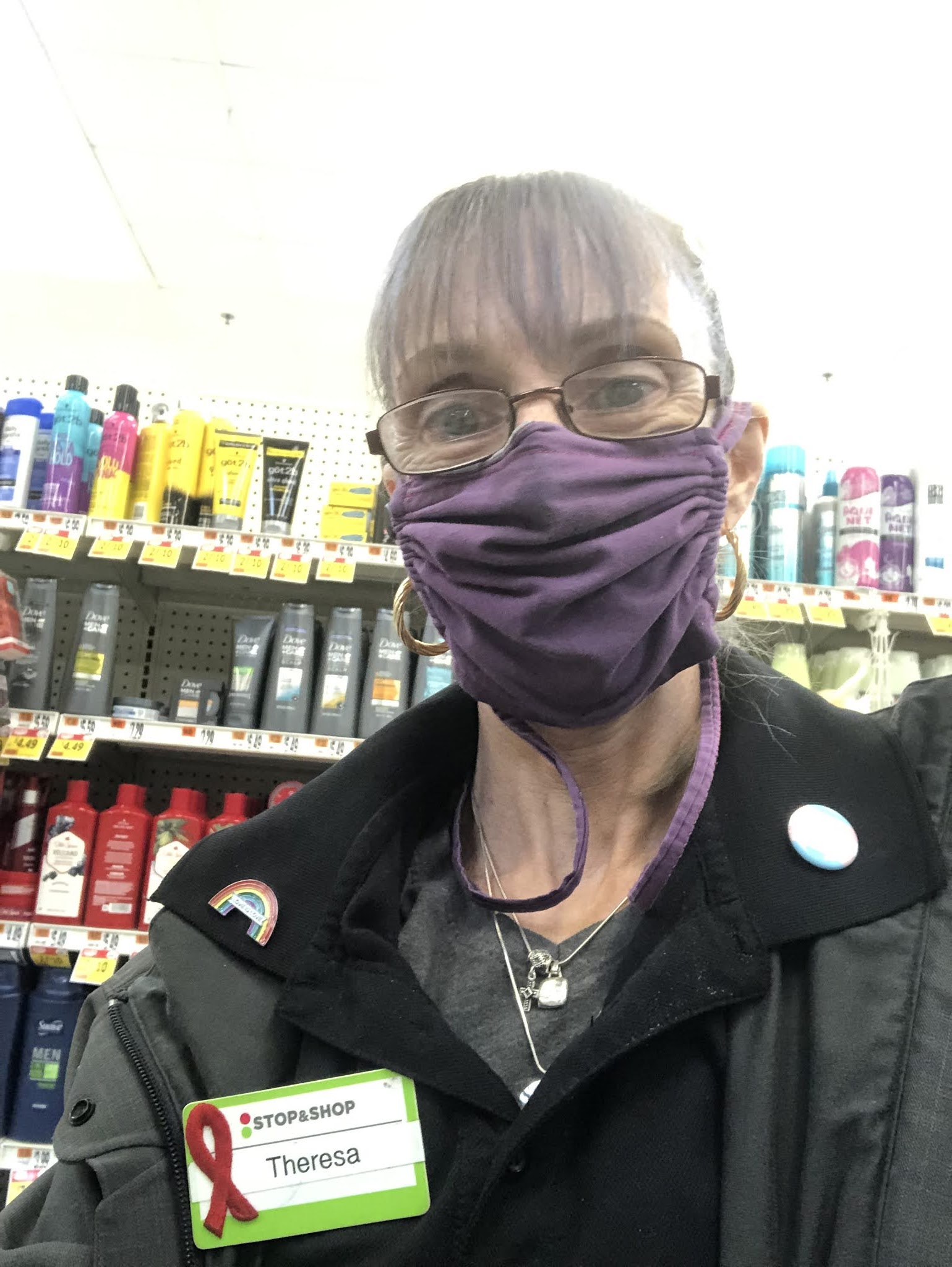
Since 1995, I have accomplished so much in my life. I have witnessed so many sunsets with clear eyes. Because of recovery, I raised my boys. Because of recovery, I have become a HIV peer advocate and activist. Because of my recovery, I have learned to use my voice to fight stigma and discrimination for both HIV and substance-use disorder. I'm now dedicating much of my advocacy toward Ending the Epidemic, such as participating in the Getting to Zero HIV Infection Academy (that's me on the left in the photo).

Today, advocacy is a central part of my life. I serve on my local hospital consumer advisory board. I belong to the Positive Women's Network (PWN), which is a national women's HIV advocacy organization. I serve on the board of directors for the ADAP Advocacy Association. I fight for more public health funding, locally and federally. I educate anyone who will listen that HIV isn't over and why it's important to know your status, get tested regularly, and get on PrEP, if possible.

I am proud to be sober in my recovery. I am adherent to my medication therapy and regular doctors visits. I am a voice for marginalized communities most-impacted by addiction and HIV/AIDS. And most important, I am the mother of two beautiful boys who helped to change my life. 

Disclaimer: Guest blogs do not necessarily reflect the views of the ADAP Advocacy Association, but rather they provide a neutral platform whereby the author serves to promote open, honest discussion about public health-related issues and updates. 

Thursday, July 29, 2021

Improving ADAP Recertification: Reducing Barriers to Care & Achieving Equity for People Living with HIV

By: Jen Laws, Board Member, ADAP Advocacy Association, and HIV/transgender health advocate

The Biden Administration has repeatedly asserted a priority to achieving social equity by specifically addressing the systemic barriers to a freer, fairer society. Among one of the greatest barriers to equity is the financial burdens associated with complicated health conditions, an issue readily acknowledged by the administration’s special enrollment period (SEP) for the federal health care marketplace and expanded subsidies inclusion in the American Rescue Plan (ARP). 

In reviewing this policy priority, the Biden Administration must consider the practical barriers created by burdensome application processes, particularly among programs aimed at helping the most marginalized and systemically disadvantaged among us. For people living with HIV/AIDS (PLWHAs), the eligibility recertification process for services under the Ryan White HIV/AIDS Program (RWHAP) – specifically in an effort to maintain medication access via AIDS Drug Assistance Programs (Part B)  is exceedingly burdensome. It represents a prime opportunity to reduce barriers to care. To that end, earlier this week the ADAP Advocacy Association called upon the Health Resources & Services Administration (HRSA) to improve the ADAP eligibility recertification process.

At current, in order for impoverished PLWHAs to access and maintain RWHAP-related benefits, they must first prove their HIV status, need based on other available benefits, and income upon applying for these benefits. Additionally, every six months thereafter, clients must prove their need based on other available benefits and income. For many states, this process includes multiple, required, in-person visits, verification of adherence to prescribed medication, verification of efforts toward seeking other public benefits, and verification of income. Some states allow for “self-attestation of no change” in terms of income and benefits.

Dr. David Malebranche points out, this is an unnecessary and overly burdensome process not just for clients but for providers as well, “[It] makes my job difficult because often patients are given time with me that is sucked up by them having to see the benefits counselor, which throws a wrench in the entire clinic schedule and puts everything behind. It's bad for patient care and causes staff/provider burnout.”

@DMalebranche: Two things need to happen with the AIDS Drug Assistance Program (ADAP) that helps uninsured people living with #HIV get no-cost medication: 1. Recertification should be every year instead of every 6 months. 2. An online recertification system to upload required documents.
Twitter - @DMalebranche

(Screen capture, Twitter - @DMalebranche: "Two things need to happen with the AIDS Drug Assistance Program (ADAP) that helps uninsured people living with #HIV get no-cost medication: 1. Recertification should be every year instead of every 6 months. 2. An online recertification system to upload required documents.”)

Dr. Malebranche went further to describe how between patients and providers, paperwork burdens can be untraditional in the sense of having to access multiple portals or websites or produce paper documents. Lack of investment in supporting clinic resources, specifically in recruiting and retaining staffing talent among benefits and/or case managers, has left several of his clients either lacking reminders to begin recertification or late reminders – resulting in the client falling out of care.  “That's just a few. Many of those issues can be tackled and improved, but people just don't want to on the local, state, and federal level.,” Dr. Malebranche continued, “And it just doesn’t follow the science. I have clients that don’t need to come see me every 6 months. Some of my clients don’t need to come in but once a year, if not for recertification.”

Indeed, the statutory requirement of ADAP grant recipients (states) and subrecipients does NOT include any specific time frame requirement for recertification. That policy is largely the result of an interpretation by HRSA through a “policy clarification notice” (PCN) for “[r]ecipients and their subrecipients are expected to vigorously pursue eligibility for other funding sources…” 

Ultimately, HRSA decided this means states and their contractors providing RWHAP services must mask impoverished PLWHA to jump through exceeding challenging hoops every 6 months to prove their need and the help they need cannot be provided by anyone else. Absent that directive – which, again, has no statutory basis – HRSA has given little direction as to how states must verify the need of RWHAP services for PLWHA within the state. Instead, HRSA routinely provides other suggestions – lacking the strength of guidance - often responding to lamentation of PLWHA and subrecipients providing direct services about the burden of certain state processes. 

In the wake of Covid-19 being declared a national public health emergency, HRSA issued further clarification to PCN 13-02, regarding processes related to eligibility for services under the RWHAP. Last updated on September 22, 2020, HRSA’s answer to all posted “frequently asked questions” regarding client recertification reads as follows:

"The health and safety of Ryan White HIV/AIDS Program (RWHAP) recipients, providers, and clients remains of paramount importance to HRSA during the COVID-19 pandemic. HRSA HAB encourages recipients to exercise flexibility in their eligibility determination and six-month recertification processes to promote social distancing practices and implement remote (telephonic or electronic) documentation processes when possible. Policy Clarification Notice (PCN) 13-02: Clarifications on Ryan White Program Client Eligibility Determinations and Recertification Requirements (PDF - 173 KB) outlines existing requirements and flexibilities with regard to RWHAP client eligibility determination and six-month recertification. Some examples of eligibility and recertification practices that are not required as per PCN 13-02 include:

  • In-person actions related to eligibility
  • Handwritten client signatures to accompany self-attestation
  • Notarized documentation to support eligibility and recertification determination
  • Documentation of any changes in income at six-month recertification if the change does not impact RWHAP eligibility
  • Dis-enrolling clients from RWHAP services who are unable to recertify eligibility within a reasonable timeframe

RWHAP recipients and subrecipients assume the risk of recouping any RWHAP funds utilized for clients ultimately determined to be ineligible, and should instead charge an alternate payment source, or otherwise ensure that funds are returned to their RWHAP.

HRSA HAB encourages RWHAP recipients to reassess their organization's eligibility and recertification policies and procedures and remove any procedures that may impede social distancing or other public health strategies necessary to minimize Covid-19 transmission, or that impose any additional requirements beyond those specified in PCN 13-02."

In this, again, HRSA abdicates directing states to invest in making RWHAP services, and thus ADAPs, more meaningfully accessible to PLWHAs who need these services the most. In this particular area, the Biden Administration has an opportunity to both reduce barriers to care and prosperity for PLWHAs but to also change HRSA’s approach to modernization in a way that helps this administration achieve its goals in Ending the HIV Epidemic, domestically.

Burdensome Paperwork
Photo Source: The Washington Free Beacon

Dr. Malebranche agreed. “I shouldn’t have to hope a sample of antiretroviral medication will get a client through until their recertification finally gets seen. My clients shouldn’t have to worry more about the paperwork than getting their care and, frankly, that’s where we’re at. And we’re losing people to care because of it.” Dr. Malebranche said an ideal would be annual recertification, a single portal/website, and proper funding in order to fully staff the needs of a clinic, client, and reporting would go a long way to meeting the needs of the moment. 

We need a uniform message between program operations, eligibility, and requirements and the message the Centers for Disease Control & Prevention, state health departments, and providers are supposed to be delivering: it’s time to meet people where they’re at. That means updating PCN 13-02 to allow for annual recertification and fund model program designs from the ground up. Answers to “FAQs” aren’t meaningful, if they lack enforcement and funding.

“I think now is a perfect time to revise things with ADAP. We've seen how the pandemic has disrupted care for people living with HIV, sexual and reproductive health and PrEP/PEP - why not make some modifications that have been needed for years now while we are having to make changes anyway?” 

An analysis of the State ADAP recertification process is available online at https://tinyurl.com/ctf5t696.

Disclaimer: Guest blogs do not necessarily reflect the views of the ADAP Advocacy Association, but rather they provide a neutral platform whereby the author serves to promote open, honest discussion about public health-related issues and updates.