Showing posts with label prescription drug affordability boards. Show all posts

Thursday, February 12, 2026

Why Modifying Protected Drug Classes Creates a Slippery Slope for Patients Living with HIV

By: Scott Bertani, Director of Advocacy at HealthHIV

As a Person living with HIV who was diagnosed in Denver in the mid-1990s, during a period when treatment options were limited and access was fragile (to say the least), I relied on the Denver Blue Card for my care and access to medications and, during particularly precarious periods, on donation houses and informal community networks to stay alive when formal systems fell short. I lost many friends during those years, and I remember clearly what it meant to live before truly effective HIV antiretroviral therapy existed. The Colorado Department of Health Care Policy and Financing’s (HCPF)  consideration of modifying protected drug classes and allowing the use of prior authorization for select drugs threatens to undermine that progress.

Modify Protected Drug Classes
Photo Source: Manatt | January 27, 2026

In 1996, when protease inhibitors first came online, they did more than change treatment guidelines—they saved people who would not have been alive the following month. The shift was so profound that one of our local bars, Proteus, was euphemistically renamed by many of us as "Protease," reflecting how seismic that moment felt within the community. 

Back then, cherished friends and bar owners—many connected through BJ’s and the Carousel Ball—helped establish the Tavern Guild as a way to formalize what BJ’s, Mike’s on Broadway, Charlie’s, Blush & Blu, and similar LGBTQ-safe spaces had long done informally—strengthen access to community-based resources, collective buying power, mutual aid, and care. Their work reinforced what many of us already knew from lived experience: progress in HIV has never been driven by medicine alone, but by the constant interaction between clinical innovation, policy decisions, and community infrastructure. That history—contemporary with the Denver Principles—shapes how I read Policy Action 6: not as an abstract cost-containment proposal, but as a set of decisions that land on real people whose health, stability, and longevity depend on continuity of care. It’s why—I feel—that the Colorado Department of Health Care Policy and Financing’s (HCPF) consideration of modifying protected drug classes and allowing prior authorization for select HIV drugs risks reintroducing access barriers we have long since left behind.

(With that, I relinquish the soapbox and turn to Colorado’s HCPF proposed Policy Action 6—grounded in lived-experience and the principle that has guided HIV policy and advocacy for decades: "Nothing about us, without us").

Across HIV prevention and care, we see the same pattern repeat: funding debates occur in one lane, policy design in another, implementation somewhere else, and the consequences show up downstream with patients, providers, and communities. The uncomfortable question is who ultimately absorbs the cost—both quantitatively and qualitatively—when that chain breaks. 

Cost growth is a legitimate concern. It has long been debated across ecosystems affecting HIV treatment—by Prescription Drug Affordability Boards; Medicaid and provider and therapeutics committees; Medicare benefit designers; AIDS Drug Assistance Programs (ADAPs); the Affordable Care Act Marketplace; employer-sponsored coverage; and others. In response, states and payers have operationalized those concerns through cost-containment mechanisms such as formulary redesign, eligibility adjustments, and increased scrutiny of high-cost antiretroviral therapies, particularly widely used single-tablet regimens that account for a significant share of HIV drug spending, as reflected in recent IPAY 2028 actions under the Inflation Reduction Act.

Policy Action 6 emerges from this same cost-growth context. However, reintroducing prior authorization and step therapy for communicable disease medications—especially HIV drugs—introduces predictable treatment delays and administrative barriers that undermine adherence and viral suppression. Any savings analysis, including evidence-based spending and utilization patterns, should therefore account for downstream clinical and system costs, not just pharmacy spending and rebate leverage.

Prior Authorization Form
Photo Source: PharmacyTimes.com | Image Credit: © piter2121

In practice, utilization management often shifts costs out of the pharmacy benefit and into care coordination, emergency coverage, and re-engagement efforts. Those costs do not disappear; they reappear elsewhere in the system and are shouldered by Ryan White providers, safety-net clinics, and public health programs. In those settings, administrative delays, regimen uncertainty, and coverage churn undermine stability before it is ever achieved. That disruption is managed by Title XIX targeted case management, Ryan White medical case management and non-medical supportive services, and Part C clinic staff and administrators. This list is not exhaustive and is rarely reimbursed at a level that reflects improved health outcomes.

While Policy Action 6 is framed as a measured return to utilization management that would apply prospectively after July 2027 and preserve continuity for patients deemed "stable," the greatest disruption from prior authorization and step therapy occurs upstream—during initiation or rapid starts, regimen switches and re-initiation, and early treatment.

As a result, these programs must devote—often divert—additional staff time to care coordination, enrollment troubleshooting, and compliance management. That operational burden adds strain through burnout, retention challenges, and reduced workforce readiness, particularly when churn occurs at both the reimbursement level and the policy level, including through federal and HRSA requirements.

Cost containment is vital to the implementation of a healthy Colorado, including for people enrolled in public assistance programs, as the Department of Health affirms. However, rebate strategies that rely on utilization management function by introducing administrative hurdles—not by changing clinical care—and those hurdles directly affect whether people remain on treatment and stay virally suppressed.

In many ways, this is a Palisade peaches–to–Rocky Ford cantaloupe comparison: both are nutritious, but the differences are wide, not narrow—much like lifelong HIV medication management in the real world. Short-term utilization metrics do not account for resistance history, hepatitis B co-infection, or clinically meaningful differences across integrase strand transfer inhibitor (INSTI) classes, including the higher resistance barriers and durability of second-generation INSTIs compared with earlier agents. Nor do they reflect the realities of aging with HIV, including low CD4 nadirs and the long-term durability of immune recovery. When treatment decisions intersect with comorbidities and acute stressors—such as COVID-19, influenza, or measles—disruptions over decades of care can compound treatment fatigue, adherence challenges, and cumulative harm in ways utilization controls are not designed to absorb.

Colorado's statutory framework already reflects this concern. Section 10-16-152 paused prior authorization and step therapy for HIV medications and required a study—explicitly including qualitative patient and provider experience—before any policy reversal. That structure recognizes that access, treatment stability, and adherence are central to cost-effective HIV care, and that utilization management assumptions should be tested rather than presumed.

Washington's experience provides a relevant real-world test of the same assumptions underlying Policy Action 6, including the expectation that utilization management can be reintroduced without destabilizing treatment or shifting costs downstream. Through a legislatively directed budget proviso, Washington required the Health Care Authority (HCA) to remove prior authorization for all FDA-approved HIV antiviral drugs under Apple Health beginning January 1, 2023, and to report annually on utilization, expenditures, and regimen switching. That proviso—adopted in SB 5092, section 118.6.a—also prompted the convening of the HIV Medication Access Workgroup (HMAW).

Through the HMAW process, stakeholders consistently documented that prior authorization, step therapy, and regimen disruption introduced administrative friction that delayed access, destabilized effective treatment, and increased churn within Medicaid HIV care. Participants emphasized that utilization management strategies intended to favor lower-cost or multi-tablet regimens did not operate in isolation, but shifted costs downstream to Ryan White providers, safety-net clinics, and public health systems tasked with mitigating treatment interruptions and re-engaging patients. In this context, "continued access" often existed on paper while continuity of care eroded in practice.

Frustrated patient at pharmacy counter
Photo Source: ADAP Advocacy | iStock Rights Purchased

As required by the proviso, HCA published its 2024 legislative report on HIV antiviral drugs, analyzing utilization, expenditures, and available health outcomes data following the removal of prior authorization. Viral load data were available for approximately 42 percent of Apple Health clients receiving HIV treatment in 2022—more than 3,000 individuals—representing a substantial real-world Medicaid population. While HCA appropriately cautioned that this subset cannot be assumed to represent all clients, it did not characterize the data as unreliable or dismiss observed differences across regimen types.

Within this cohort, patients initiating treatment on single-tablet regimens demonstrated higher rates of viral suppression than those starting on multi-tablet regimens or switching regimens. Although insufficient to establish causality, these findings establish directionality and challenge the assumption that regimen form and administrative disruption are clinically neutral—particularly in Medicaid settings shaped by utilization management, coverage churn, and administrative delay.

Preventing a single HIV infection avoids hundreds of thousands of dollars in lifetime medical costs, with some estimates exceeding one million dollars depending on treatment scenarios. Given these well-established costs, policy decisions that risk even modest reductions in adherence or viral suppression should not be evaluated solely on short-term pharmacy spending or rebate leverage.

Notably, Washington ultimately codified the policy direction reflected in the proviso and stakeholder findings. In 2025, the Legislature enacted SB 5577, requiring Medicaid coverage of all FDA-approved HIV antiviral drugs without prior authorization or step therapy for both fee-for-service and managed care enrollees, effective July 1, 2025. This statutory action reflects a legislative determination that, for HIV treatment, utilization management introduces unacceptable risk to treatment stability and system sustainability.

The lack of complete outcomes data argues for caution, not for reinstating prior authorization and step therapy based on projected savings alone. Policy Action 6 assumes these controls can be reintroduced for HIV drugs without disrupting care or shifting costs outside the pharmacy benefit—an assumption that has not been supported by real-world experience. That assumption is not only incorrect, but—I feel—potentially harmful for Persons living with HIV in Colorado.

Disclaimer: Guest blogs do not necessarily reflect the views of the ADAP Advocacy Association, but rather they provide a neutral platform whereby the author serves to promote open, honest discussion about public health-related issues and updates.

References:

[1] Martin, K. (2025, August 06). The 340B Drug Pricing Program: How It Works and Why It’s Controversial. Commonwealth Fund. https://doi.org/10.26099/210h-wv98

[2] Rojas, Dutch. (2025, January 29). The Charity That Pays Like Wall Street. The Rojas Report. https://dutchrojas.substack.com/p/the-charity-that-pays-like-wall-street?utm_campaign=email-post&r=3z1yhv&utm_source=substack&utm_medium=email

Thursday, October 30, 2025

Why are Price Cap Proposals on Medicines Dangerous to Pharmacies and Patients?

By: Shabbir Imber Safdar, ADAP Advocacy Board Member and Executive Director, Partnership for Safe Medicines

**Reposted with Permission from PSM**

Price cap proposals, like upper payment limits currently being debated by prescription drug affordability boards (PDABs) and Medicare maximum fair prices (MFPs), often assume a simple drug/price supply chain which doesn’t reflect reality in the United States. They also don’t account for the fact that members of the drug/price supply chain will react to price caps in ways that could bankrupt pharmacies and reduce patient access.

Colorado approved an upper payment limit on Enbrel a few days after we posted this. We anticipate that this decision will be bad for pharmacies and patients.

The U.S. healthcare system is uniquely complex

Pharmaceuticals in the United States have an incredibly complex supply chain. Everyone agrees that more should be done to address the cost of medicine, but developing workable cost-reduction policies is challenging. This is because unlike a hardware store, where the maker, distributor, and retailer of a hammer are linear and all actors fear competition, the U.S. healthcare market is far more complex.

Healthcare system players like pharmacy benefit managers (PBMs) gatekeep patients from their local pharmacies. It’s as if the maker or distributor of a hammer could tell your local hardware store whether customers could use your hardware store and what you were allowed to charge for the hammer, regardless of how much it costs for you to buy it.

A teachable moment

Recently Dr. Emily Zadvorny of the Colorado Pharmacists Society provided public comment to the Colorado Prescription Drug Affordability Board about their efforts to set upper payment limits for several medicines. Several other states are in this process, and the federal government has been engaged in setting MFPs for medicines in Medicare.

Dr. Zadvorny’s testimony underscored problems with price-setting policy solutions to healthcare costs in the U.S.

"...up to 90% of independent pharmacies are already saying they will not participate in the medication in the Medicare Drug Price Negotiation Program, precisely because there is no guarantee that they can not be underwater on those drugs." [Dr. Emily Zadvorny, 7/11/2025]

Dr. Zadvorny was talking about multiple risks to pharmacies and to patients, which we’ll explain below.

PBM reactions to price caps that affect pharmacy

Most price cap proposals only concern themselves with the maximum price manufacturers, distributors, pharmacies, and insurance companies can charge or reimburse for a medicine. Reducing the maximum price means that players, such as PBMs, will make less money when drugs are dispensed to patients.

Policies like UPLs and MFPs don’t always prevent monopolistic players like PBMs from lowering reimbursements to maintain their profits under the price cap. For example, imagine a medicine that costs a pharmacy $1,000 to purchase. The PBM makes $150 on that medicine and reimburses the pharmacy $1,010. If a price cap says that you can only charge $500 for the medicine, the PBM is likely to lower the reimbursement for the pharmacy to $350. The PBM maintains their $150 profit, and the pharmacy loses money.

Even if the UPL rules say that a medicine can only be sold for $500 and must be reimbursed at the same price of $500, the pharmacy will make $0. Your local hardware store cannot stay in business buying and selling items for $0 profit, and neither can your local pharmacy. How will it pay for salaries, rent, insurance, utilities, and other costs of doing business?

Are Pharmacy Benefit Managers’ below-cost reimbursement practices creating opportunities for criminals to enter the legitimate supply chain?
This 2-page summary explains the problem of PBM under reimbursements

Pharmacies as financial lenders to the healthcare system

The Medicare MFP system sets a maximum reimbursement Medicare will pay for a medicine, but leaves the cost of medicines untouched. It requires drug manufacturers to rebate pharmacies for the difference between the two. If the manufacturer is not required to compensate the pharmacy for their full cost, it will be catastrophic. Pharmacies can not stay in business without being made whole on their costs or without making profits.

However, there is another problem: The time between when pharmacies purchase medicine and when they are fully reimbursed is an enormous interest-free loan that pharmacies, which are already operating on razor thin margins, cannot afford. Estimates are that this could be thirty days, or even more. In January 2025, 3Axis Advisors found that under Medicare’s drug price negotiation program pharmacies could see a weekly cash flow shortfall of $10,838.25 compared to prior operations. Nearly 2,300 pharmacies shut their doors during 2024, primarily for financial viability reasons, and cash flow problems because of these proposals will accelerate closures.

Cover of 3 Axis Advisors report, Unpacking the Financial Impacts of Medicare Drug Price Negotiation, Jan 2025
Read Unpacking the Financial Impacts of Medicare Drug Price Negotiation on the 3Axis site

What effect will this have on patients?

Many pharmacies have already decided not to stock price-controlled medications rather than risk financial ruin. In fact, the National Community Pharmacists Association (NCPA) January 2025 survey of independent pharmacies found that over 90 percent of independent pharmacies may decide, or have already decided, not to stock price controlled drugs from the Medicare Drug Price Negotiation Program.

Patients cannot get quality healthcare from a pharmacy that’s out of business or that can’t afford to stock the medicine that patients need. Additionally, PBMs may make less profitable price-controlled medicines harder to obtain by placing them on a harder to reach tier, or by hiking patient co-pays, which also impedes access.

Community pharmacies are wary of stocking price controlled drugs from the Medicare Drug Price Negotiation Program (NCPA member survey, January 2025)

Don’t pharmacies make their money on “dispensing fees” anyway, instead of the cost of medicine itself?

Dr. Zadvorny brought this up in her public comment:

We did get [a dispensing fee] into the rules. We got it into the law. But what I heard earlier today that concerns me is that it would be left up to private contracts to ensure that. I can tell you right now that a lot of private contracts are either pennies for a dispensing fee, or sometimes it's not even made whole.

It can be $0. I think if there's any possibility to pay for this, for the board to ensure that there's a fair dispensing fee, I would absolutely implore you to do that. The state of Colorado does gather, cost of dispensing surveys. And there is data on what the real cost of dispensing a medication is. I would encourage that the dispensing fee that's included in these UPL [upper payment limit] drugs is no less than what is in that data from the cost of dispensing survey. [Dr. Emily Zadvorny, 7/11/2025]

Dr. Zadvorny is referring to PBMs giving pharmacies a dispensing fee of a penny (yes, an actual penny) or a few cents for the cost of all the work that goes into dispensing a medicine. This, combined with reimbursements for the cost, or sometimes less than the cost of medicine, explains why pharmacies are wary of proposals that might incentivize PBMs to cut their reimbursements further.

The actual cost of dispensing has been studied in Colorado and at the national level. The state of Colorado does an annual survey of dispensing fees to ensure that fees paid to pharmacies for serving Colorado Medicaid members are aligned with the actual costs of dispensing. In 2025, that cost was estimated at $9.31 to $13.40 per prescription for non-rural pharmacies, based on volume.

A 2020 NCPA study determined a normal dispensing fee should be $12.40, with a higher fee of $73.58 for specialty medicines. Many of the medicines the Colorado PDAB are looking at for upper payment limits are considered specialty medicines.

Example from PBM contract showing no payment of dispensing fees.
Example from a 2023 PBM contract showing no payment of dispensing fees

Why can’t we have negotiated prices like Canada?

The Canadian healthcare system for medicine has shortcomings around patient access that we don’t talk about. However, one advantage they do have is a lack of pharmacy benefit managers. PBMs exist in Canada, but do not dictate the terms of every other player in the system as they do in the U.S. healthcare system.

What should we be doing instead?

Stakeholders from all across the supply chain are nearly unanimous in their calls for PBM reform. The business practices of PBMs hamper patient access and bankrupt pharmacies that provide critical patient care.

Managed Medicaid reform

States looking for savings ideas could learn a great deal from states that have reformed the role of PBMs in their Medicaid programs. West Virginia and North Dakota carved prescription drug benefits out of their managed program and saved $54 million and $17 million respectively in a single year. Kentucky moved to a single PBM in 2020 and documented $282.7 million in savings for the 2021-2022 cycle. For more information on savings in this area, see this NCPA publication “Medicaid Managed Care Reform.”

PBM reform to reduce costs in the private insurance market

The Washington State Pharmacists Association, the Washington Health Alliance, and 3Axis Advisors recently undertook the largest state-focused study of the drivers of prescription drug costs. They studied prescription drug costs in the state using data collected from plan sponsors and pharmacies. They found that:

  • Markups at PBM-affiliated mail-order pharmacies were more than three times higher than those at retail pharmacies.
  • Plan sponsor (employer) costs increased by 30 percent, while commercial pharmacy reimbursement decreased by 3% between 2020-2023.
  • PBMs charged employers vastly different amounts for the same prescription medications.
  • PBMs drove an increase in employer health care costs over the past four years.

The evidence is that PBMs are increasing costs and decreasing reimbursements, taking money from all other players in the supply chain in ways that benefit themselves. Reforming their role in healthcare by putting strict guardrails on their business practices would create enormous cost reductions and increase access for every other stakeholder.  The full study is available online.

Original Post: Why are price cap proposals on medicines dangerous to pharmacies and patients?

Disclaimer: Guest blogs do not necessarily reflect the views of the ADAP Advocacy Association, but rather they provide a neutral platform whereby the author serves to promote open, honest discussion about public health-related issues and updates.    

Thursday, June 19, 2025

Fireside Chat Retreat in Minneapolis, MN Tackles Inflation Reduction Act's Adverse Impact on Patient Care

By: Brandon M. Macsata, CEO, ADAP Advocacy & Ranier Simons, ADAP Blog Guest Contributor

ADAP Advocacy hosted its Health Fireside Chat retreat in Minneapolis, Minnesota, among key stakeholder groups to discuss the adverse impact on patient care being caused by the Inflation Reduction Act (IRA). The Health Fireside Chat was held from Thursday, June 12th, to Saturday, June 14th. An analysis of the IRA's drug price controls—including its pill penalty provisions, challenges community pharmacies are facing, more restrictive drug formularies increasing, non-medical switching, and patients absorbing greater costs due to shifts from co-pays to co-insurance—were all evaluated and discussed by the 24 diverse stakeholders.

FDR Fireside Chat
Photo Source: Getty Images

The IRA discussion was designed to capture key observations, suggestions, and thoughts about how best to address the challenges being discussed at the Health Fireside Chat. The following represents the attendees:

  • Meg Beaven, Senior Director, Rational 360
  • Ninya Bostic,  National Policy & Advocacy Director, Johnson & Johnson
  • Grant Cale, Senior Director, Alliance Development Lead, U.S. Policy and Government Affairs, Bristol Myers Squibb
  • Tori Cooper, Director of Community Engagement, Human Rights Campaign
  • Jeffery S. Crowley, Director of the Center for HIV and Infectious Disease Policy at the O’Neill Institute
  • Olivier Viel, Associate Director, Policy and Government Affairs, Merck
  • Jazlyn Gallego, Policy and Advocacy Manager, Cancer Support Community
  • Max Grechko, Associate Director, Strategic Alliances and Issue Advocacy, Novartis
  • Rick Guasco, Editor-in-Chief, Positively Aware
  • Connie Jorstad, Director of Government Relations, ViiV Healthcare
  • Patrick Ingram, Implementation Project Manager, Midwest AETC
  • Kristy Kibler, CEO, Lupus Colorado
  • Amanda Kornegay, Owner, Kornegay Consulting, LLC
  • Jen Laws, President & CEO, Community Access National Network
  • Darnell Lewis, Paramedic Crew Chief & Patient Advocate
  • Brandon M. Mascata, CEO, ADAP Advocacy
  • Heidi Mesik, Senior Director, PhRMA
  • Michiel Peters, Head of Advocacy Initiatives, Global Coalition on Aging
  • Kalvin Pugh, Director of State Policy, 340B, Community Access National Network
  • Ranier Simons, Consultant, ADAP Advocacy
  • Jason Sterne, Director, Policy Advocacy and Alliances, Gilead
  • Scott Suckow, Senior Consultant, Perry Communications Group
  • Matt Toresco, CEO, Archo Advocacy
  • Monique Whitney, Executive Director, Pharmacists United for Truth and Transparency
Health Fireside Chat

To level set and provide background for discussions, attendees are sent suggested readings in advance. The following are just a few from the thorough list provided for this session:

ADAP Advocacy is pleased to share the following brief recap of the Health Fireside Chat.

The overarching theme of the discussions was how varying aspects of issues, directly or indirectly related to the IRA, can affect patients and their access to medical care. Drug pricing was a significant thread throughout the gathering. Participants expressed a consensus that the pricing of pharmaceuticals is a complex system involving many players, with patients often being stuck in the middle or positioned at the bottom. High prescription drug expenditures are partially the result of multiple bad actors making profits at the expense of the masses who need drugs for their care. The discussion largely mirrored the conclusions reached by Kenneth E. Thorpe in his June 2024 piece in Health Affairs, "Penny Wise And Pound Foolish: IRA Impact On Chronic Disease Costs In Medicare."

In-depth dialogue occurred surrounding the IRA's effects on independent, community pharmacies. These pharmacies, in particular, routinely operate within thin margins or sometimes at a loss. Due to issues such as under-reimbursement, many pharmacies are already closing. The IRA’s Maximum Fair Price (MFP) key provision for Medicare drug price negotiation has the potential to harm pharmacies further. The MFP could negatively impact pharmacies by lowering reimbursement rates, further causing financial strain. Discourse revealed that many independent pharmacies are quietly already stating they will not be stocking many of the medications subject to the MFP because they cannot afford to. Independent pharmacies are the lifeblood of communities where larger pharmacies are not present. Closing due to financial strain would rob citizens of auxiliary services and preventative care services, in addition to drug access.

CMS recently released the negotiated prices of the first 10 drugs in the Medicare Drug Price Negotiation Program, which begins Jan. 1, 2026. Under this program, pharmacies will likely be waiting over 30 days for the manufacturer to refund payments, and the average pharmacy will have to float over $27,000 every month waiting to be made whole from manufacturer refund payments. Does this effect your decision continue to stock these drugs?
Photo Source: National Community Pharmacy Association

The conflict involving pharmacy benefit managers (PBMs) and their pharmacies was also discussed. There has been an uptick in state legislation aimed at preventing PBMs from owning and operating pharmacies in the states where they do business. Vertical integration is a problem as it allows pharmacy steering and predatory independent pharmacy contracting. When PBMs own and operate pharmacies, they manipulate pricing to their advantage, steering patients to their networks at higher costs. They also offer independent pharmacies less favorable contracts, lower reimbursements, and higher fees, among other disadvantages. Attendees gleaned from the discourse that vertical integration is considered self-dealing, which is a form of fraud. It is not ethical for a health plan to own a pharmacy, just as it is not ethical for a PBM to own one.

Moreover, under the IRA, if pharmacies choose not to participate in the MFP under the Medicare Drug Price Negotiation program, they are, in essence, excluded from participating in Medicare Part D for the drugs in question. Independent pharmacies are not in favor of the new IRA mechanism because their cash flow would be split between reimbursement from CMS and refunds from drug manufacturers to make up the difference. Pharmacies would have to suffer delays in cash flow waiting to be made whole, with the possibility of not being made whole at all. The conversation specifically acknowledged that CMS is acting as a payer without any understanding of care delivery for multiple disease states.

During the period spent discussing strategy and solutions, the underlying focus was on messaging. The concern was how to effectively convey the right message to the public and into the marketplace. Some attendees suggested that the pharmaceutical industry should be more proactive in generating opposition to the current administration. It was acknowledged that “big pharma” has taken steps, especially through extending relationships with advocacy groups. However, there remains a notion that the pharmaceutical industry needs to embrace the concept that “dead people do not buy medications.” This means that they should embrace concerted efforts to protect patients and patient access, not just from a position of altruism but as a sensible business strategy. The reality is, as Dr. Adam J. Fein of the Drug Channels Institute has pointed out, "a growing number of Part B drugs now have inflation-adjusted coinsurance rates that are rising, not falling...[and] in many cases, the rate dips temporarily before snapping back to the standard 20%." It begs the question: Are patients paying more?

Observations on these data: The overall number of adjustments has increased over time. The total number of J-codes that had a change in coinsurance rate almost quadrupled in the most recent quarter (69) compared to when coinsurance adjustments were first implemented (18). Many drugs saw coinsurance rates rise compared to the prior quarter. For the first quarter of 2025 (the most recently reported period), the coinsurance rate increased for 31 J-codes and decreased for 38 J-codes. For the preceding quarter, the coinsurance rate increased for 52 J-codes and decreased for only 19 J-codes. Many coinsurance rates have reverted back to 20%. Over the eight-quarter period, 63% of the 96 J-codes had a coinsurance rate that returned to the standard 20% figure at least once.
Photo Source: Drug Channels Institute

Discussions of messaging also zeroed in on patient perception. The issues surrounding the IRA and its various aspects are complex, even for those well-versed in the issue. Attendees emphasized the importance of engaging patients by creating messaging that is simple yet resonates with their humanity in ways they understand. The price is being conflated with out-of-pocket costs, and messaging needs to highlight how the IRA can increase out-of-pocket costs for patients.

The Cancer Support Community (CSC) has developed patient-centered principles to help guide its advocacy work, which is available online. These patient-centered principles are also included in CSC's sign-on letter on the EPIC Act, to which ADAP Advocacy also signed.

With so many of the IRA's targeted drug price controls falling on chronic health conditions and rare diseases, such as cancer and HIV, they have the potential to fuel already exacerbated health disparities among medically underserved communities. The sole focus on "price" largely ignores the money saved by treating these conditions with life-altering and life-saving therapeutics. Sadly, proponents of these anti-patient drug price controls—including several groups financed by Arnold Ventures' special interests efforts pushing harmful state drug affordability boards, or PDABs—leverage potentially harmful metrics. Among them is the dehumanizing quality-adjusted life years (QALYs). 

Suggestions included campaign-style messaging that utilizes both traditional and non-traditional media to educate patients by making the message more personal. Presenting the public with stories that explain how specific policies directly affect aspects of their daily lives is a way to empower patients and transform the patient community into a voting bloc. Populist patient-centered messaging and actions promote community building to engage policymakers as well as empower citizens. 

Going forward, discussions also emphasized the importance of finding ways to navigate within the confines of the challenging current administration, as its operations are adversarial, unpredictable, and unprecedented. The consensus indicated that an effective way to do this is to make “new friends.” This means engaging with untapped entities, such as labor unions, insurance commissions, Ryan White service providers, and disability groups. Many entities that potentially could be drastically affected by the IRA and other issues are unaware of their risk of adverse outcomes. Forging new avenues of communication with groups like these is a way to create infrastructure that can effect change.

Woven throughout the day's policy analysis was recognition that patient advocacy groups need to push back harder against the fallacy that their advocacy efforts aren't genuine simply because they accept financial support from drug manufacturers. Ongoing attempts to discredit patient advocacy by faux news outlets, such as the 340B Report, ignore the realities that patients and drug manufacturers often have shared interests, and that the financial support provided by industry acknowledges those values. It is also disingenuous to have patients living with chronic health conditions and rare diseases be faulted by paternalistic critics who aren't patients themselves.

ADAP Advocacy would like to publicly acknowledge and thank Jen Laws, Heidi Mesik, Michiel Peters, Jazlyn Gallego, and Matt Toresco for co-facilitating this critically important discussion.

Additional Fireside Chats are planned for 2025 in Atlanta (September).

Disclaimer: Guest blogs do not necessarily reflect the views of the ADAP Advocacy Association, but rather they provide a neutral platform whereby the author serves to promote open, honest discussion about public health-related issues and updates.

Thursday, December 12, 2024

Fireside Chat Retreat in Washington, DC Tackles Pressing Public Health Issues

By: Brandon M. Macsata, CEO, ADAP Advocacy, and Ranier Simons, ADAP Blog Guest Contributor

ADAP Advocacy hosted its Health Fireside Chat retreat in Washington, DC, as part of a broader health policy retreat convened collaboratively with the Community Access National Network (CANN) and its Industry Advisory Group. Board members from both organizations, as well as respective consultants and funders, assembled to discuss pertinent public health issues facing patients in the United States. The Health Fireside Chat convened on Friday, December 6th. The 27 diverse stakeholders discussed Trump Two, one-party rule returning to the nation’s capital, Inflation Reduction Act, 340B Drug Pricing Program, Prescription Drug Affordability Boards (PDABs), AIDS Drug Assistance Program’s drug formularies, and long-acting injectables. 

President FDR sitting by a fireplace
Photo Source: Getty Images

The Health Fireside Chat kicked off with a political recap from political commentator Mark Halperin, editor-in-chief - 2WAY Interactive. During the 2024 presidential election, Halperin had scooped that President Joe Biden was dropping out of the presidential race days before the news broke, as well as three weeks prior to the election sounding the alarm that the Harris-Walz campaign was in big trouble in the swing states' suburbs. 

Halperin shared his perspectives on what a second Trump Administration might look like, both from a potentially positive viewpoint, as well as a not-so-positive one. He offered some predictions on the Cabinet nominations, again noting where some could serve as potential change agents to improve public health – but also emphasized the unpredictability behind some of those same nominees if confirmed by the U.S. Senate. Halperin offered strong advice on the need to “get in the room” for the important conversations, which he argued won’t happen by merely attacking the incoming administration. Despite the extremes of both parties gaining more power, he offered examples whereby the “center” still holds a lot of weight over the legislative process to do good. Halperin took questions about what Trump Two and the GOP-led Congress might do for HIV, sharing even more advice on how to navigate those waters.

Mark Halperin discusses political landscape and public health
Mark Halperin discusses political landscape and health policy

The day-long strategy session was designed to capture key observations, suggestions, and thoughts about how best to address the challenges being discussed at the Health Fireside Chat. The following represents the attendees:

  • Guy Anthony, President & Founder, Black, Gifted & Whole Foundation
  • Donna Christensen, former Member of Congress
  • Erin Darling, Associate Vice Pres. & Counsel, Federal Policy, Merck
  • Amy Dempster, Director, Issue Advocacy and Alliances, Genentech
  • Robert Dorsey, Chief of Staff, DC Department of Small & Local Business Development
  • Alexander Garbera, Member, New Haven Mayor’s Task Force on AIDS, City of New Haven, CT
  • Dusty Garner, Patient Advocate
  • Patrick Ingram, Implementation Project Manager, Midwest AETC
  • Ashley John, Director, Issue Advocacy, Novartis
  • Lisa Johnson-Lett, Peer Support Specialist, AIDS Alabama
  • Amanda Kornegay, President, Kornegay Consulting
  • Jen Laws, President & CEO, Community Access National Network
  • Darnell Lewis, Patient Advocate
  • Brandon M. Macsata, CEO, ADAP Advocacy
  • Travis Manint, Policy Consultant, Community Access National Network
  • Maria Mejia, Patient Advocate
  • Judith Montenegro, Program Director, Latino Commission on AIDS
  • Theresa Nowlin, Patient Advocate
  • Kassy Perry, President & CEO, Perry Communications Group
  • Amanda Pratter, Director, Policy Advocacy, Gilead Sciences
  • Kalvin Pugh, Policy Consultant, Community Access National Network
  • Josh Roll, Director, Strategic Alliances & Issue Advocacy, Bristol Myers Squibb
  • Ranier Simons, Policy Consultant, Community Access National Network
  • Cindy Snyder, Retired
  • David Spears, Creatives Consultant, ADAP Advocacy
  • Jennifer Vaughan, Patient Advocate
  • Joey Wynn, Grants & Contract Manager, Holy Cross Hospital

Health Fireside Chats

ADAP Advocacy is pleased to share the following brief recap of the Health Fireside Chat.

This particular Fireside chat did not have its standard format of specific formal presentations followed by discussion. It was more free flowing, consisting of an exchange of ideas surrounding many sub-topics and all surrounding public policy strategies. One of the most important threads of discourse was navigating policy and advocacy work in dealing with the incoming Trump Administration. A significant concern is figuring out how to manage hostile spaces in order to effect needed change.

The reality is that Trump is the president-elect. Moreover, albeit narrow, Republicans do have majority control across the board. This potentially makes it harder to achieve policy and advocacy goals because effecting change requires being in the room at the table when things are being done. A prevailing sentiment is that those rooms and tables are not welcome to racially and ethnically diverse, sexually diverse, and vulnerable communities that traditionally are adversely affected by and targeted by right-wing conservative ideology and policies. Yet, on some issues, Republican interests could be better aligned with patient interests on things like access to therapies (i.e., right-to-try), or reforming the abuses by big hospital systems and mega service providers under the 340B Drug Pricing Program.

An important focus of group discourse surrounded staying true to marginalized communities while speaking truth to power. The consensus is “wins” can be scored in unfriendly spaces by focusing on common ground, and in doing so doesn’t negate the deeply rooted concerns in other policy or political areas. As the late Bill Arnold often argued, “In this space, you have to leave your personal politics at the door if you’re going to achieve anything meaningful.” One example that was cited was the success in harm reduction policies by the North Carolina Harm Reduction in the Tarheel State.

diverse group of people at table
Photo Source: JazzHR.com

Similarly, it is essential to not leave certain groups behind when broader community discussions are happening around legislation. It is necessary for advocates to figure out how to strategically call out grievances without compromising opportunities to access the players required to effect change. Sometimes, it is a matter of identifying the appropriate messenger for a specific audience. This does not mean the sociologically identified middle-aged white woman or cis-gendered heterosexual white male must be the vehicle to get a seat at every table. It does mean it’s wise to navigate relationships and understand the parties involved to determine the best messengers for different steps of strategic processes. The group had strong consensus that more women of color need to be invited to these proverbial tables. If for nothing else, t requires trust between the messengers and the communities they represent. The most effective messengers for an issue may not always look like or have the lived experience of some of the people for which they are representing. Thus, trust must be built in that they are effectively representing the needs and interests of affected communities when messengers are operating in hostile spaces. Humanizing issues with policymakers is a way to work through the muck and mire of ideological toxicity.

Another significant portion of this Fireside Chat discourse revolved around federal versus state issues. ADAP Advocacy collaborates with CANN to effect change on state and federal matters, as both have specific inroads of expertise. It is increasingly likely that more issues will be impacted at the state level more so than at the federal level. For example, there is a lot 340B-related activity and PDAB (Prescription Drug Affordability Board) legislation occurring on the state level. On the federal level, PEPFAR, Ending the HIV Epidemic, and the possibility of a Ryan White reauthorization are several issues of concern. There is strong evidence to suggest that the new incoming Republican majority in Congress plans to take a hard look at all the sunset programmatic laws as a way to achieve "savings" in the federal budget.

CANN shared a recently released video on PDABs, and how these boards are embarking on inadvertently creating a service delivery crisis for patients living with HIV. The video can be viewed online, here. Additionally, ADAP Advocacy shared a sneak peek of its new patient-centric advocacy tool highlighting why the 340B Program needs reform. Some discussion centered around California's Proposition 34, and embracing what voters achieved to bring better accountability and transparency to the 340B program. 

PDAB video showing business man climbing up a ladder rested again coins stacked-up very high, with a percentage sign sitting on top of them.
Photo Source: CANN

HIV is the tip of the spear that opens the door to conversation that makes room for navigating other community issues. Group discourse emphasized the need to strengthen the “Grassroots-to-Capitol Hill” pipeline of advocacy and influence. It was deemed necessary to enhance communication among major advocacy organizations such that there is a commonality of messaging on major issues when Capitol Hill interests inquire for guidance about community concerns. Additionally, it is necessary to identify members, such as some in the House, who can be ‘allies’ knowingly or unknowingly, to help influence the influencers to target things in a bipartisan manner to move the needle in favor of vulnerable and marginalized communities. Most importantly, it is imperative to open their eyes to how positively affecting change for these communities is beneficial to the general population as well.

ADAP Advocacy’s Health Fireside Chats are deeply rooted in the diverse voices who contribute valuable insight from various spaces of their expertise and lived experiences, all focused on the same issue of effecting positive change. In addition to lively and productive group discussion, individual spontaneous conversations occur between people who would otherwise not be in the same room. Virtual meetings are effective and have their place. However, there are times when the power and value of being physically present is undeniable.

Additional Fireside Chats are planned for 2025.

Disclaimer: Guest blogs do not necessarily reflect the views of the ADAP Advocacy Association, but rather they provide a neutral platform whereby the author serves to promote open, honest discussion about public health-related issues and updates. 

Thursday, September 12, 2024

Fireside Chat Retreat in New Haven, CT Tackles Pressing Public Health Issues

By: Brandon M. Macsata, CEO, ADAP Advocacy

ADAP Advocacy hosted its Health Fireside Chat retreat in New Haven, Connecticut among key stakeholder groups to discuss pertinent public health issues facing patients in the United States. The Health Fireside Chat convened Thursday, September 5th through Saturday, September 7th. An analysis of the negative impact pharmacy benefit managers (PBMs) are having on the nation's drug supply chain, how state prescription drug "affordability" boards (PDABs) are threatening to undermine the 'Ending the HIV Epidemic' initiative, and the explosive growth in executive compensation among Covered Entities participating in the 340B Drug Pricing Program were each evaluated and discussed by the 31 diverse stakeholders.

FDR Fireside Chat
Photo Source: Getty Images

The Health Fireside Chat kicked-off with a stakeholders reception. The retreat also featured three moderated white-board style discussion sessions on the following issues:

  • Ripple Effect: How PBMs and Counterfeit Drugs Threaten Patients — moderated by Shabbir Imber Safdar, Executive Director at Partnership for Safe Medicines (PSM) 
  • Prescription Drug Affordability Boards: A Threat to Ending the HIV Epidemic — moderated Jen Laws, President & CEO at Community Access National Network (CANN)
  • 340B Greed: Rising Revenues, Rising Executive Compensation, Rising Medical Debt...but Lower Charity Care — moderated by Brandon M. Macsata, CEO at ADAP Advocacy & Marcus J. Hopkins, Executive Director, Appalachian Learning Initiative (APPLI)

The discussion sessions were designed to capture key observations, suggestions, and thoughts about how best to address the challenges being discussed at the Health Fireside Chat. The following represents the attendees:

  • Tez Anderson, Executive Director, Let's Kick ASS (AIDS Survivor Syndrome)
  • Guy Anthony, President & Founder, Black, Gifted & Whole Foundation
  • Ninya Bostic, National Policy and Advocacy Director, IDV, Johnson & Johnson
  • Erin Bradshaw, EVP, Advancement of Patient Services & Navigation, Patient Advocate Fndn.
  • Caleb Brown, Patient Advocate, and Research Associate, Yale University 
  • De’Shea Coney, Vaccine Access and Equity Coordinator, Iowa Department of Health
  • Brady Etzkorn-Morris, Patient Advocate
  • Earl Fowlkes, President & CEO, Center for Black Equity — unable to attend
  • Vanessa Gannon, Head, Issue Advocacy, Genentech — unable to attend
  • Alexander Garbera, Member, New Haven Mayor’s Task Force on AIDS, City of New Haven, CT
  • Dusty Garner, Patient Advocate
  • Kelsey Haddow, Patient Engagement, Rare Access Action Project (RAAP) 
  • Marcus J. Hopkins, Founder & Executive Director, Appalachian Learning Initiative
  • Lisa Johnson-Lett, Peer Support Specialist, AIDS Alabama
  • Ben Kelly, Senior Vice President of Pharmacy Management, Maxor National Pharmacy Services — unable to attend
  • Jax Kelly, President, Let's Kick ASS (AIDS Survivor Syndrome) Palm Springs
  • Karen King, Harm Reduction Specialist
  • Kamaria Laffrey, Co-Executive Director, The SERO Project
  • Jen Laws, President & CEO, Community Access National Network
  • Kevin Lish, Patient Advocate, and Finance Director, SERO Project
  • Brandon M. Macsata, CEO, ADAP Advocacy
  • Judith Montenegro, Program Director, Latino Commission on AIDS
  • Steve Novis, Director, Community Alliances & Government Relations, ViiV Healthcare
  • Warren O'Meara-Dates, Founder & CEO, The 6:52 Project Foundation — unable to attend
  • David Pable, Patient Advocate
  • Kalvin Pugh, Patient Advocate
  • Shabbir Imber Safdar, Executive Director, Partnership for Safe Medicines
  • Dmitri Siegel, Alliance Development Director, Bristol-Myers Squibb
  • Ranier Simons, Policy Consultant, Community Access National Network
  • Jonathan Sosa, Patient Advocate
  • Robert Suttle, Patient Advocate
  • Nicole Tomassetti, Government Affairs Associate, Capitol Strategies Group
  • Jeremy Toney, Patient Advocate, and Research Coordinator, Henry Ford Health
  • Denise Tucker, Executive Director, State Policy, Merck
  • Olivier Viel, Associate Director, Policy & Government Affairs, Merck

Health Fireside Chat

ADAP Advocacy is pleased to share the following brief recap of the Health Fireside Chat.

Pharmacy Benefit Managers:

The first policy session was Ripple Effect: How PBMs and Counterfeit Drugs Threaten Patients, which was led by the Partnership for Safe Medicine's (PSM) Executive Director, Shabbir Imber Safdar. PSM is committed to the safety of prescription drugs and protecting consumers against counterfeit, substandard or otherwise unsafe medicines. Shabbir shared some general background on PBMs, and what they have to do with the cost of medicines. In doing so, Shabbir also dissected the role PBMs play in the cost a pharmacy pays for and gets reimbursed for medicine they dispense you? Using several attendees as props, attendees witnessed how pharmacies often lose money on filling high-cost prescriptions, as well as how patients unknowingly put other patients at risk by selling their prescriptions to criminal counterfeiter rings pretending to be "Buyers Clubs" trying to help patients. The discussion also did a deep dive on online pharmacy-only marketplaces, and how these criminal rings get these diverted and counterfeit medicine.

Be on the lookout for profiles and chats like these

Earlier this year, PSM published a report unveiling how criminal entities exploit vulnerabilities in the supply chain, made worse by PBMs, whose reimbursement policies often leave pharmacies on the edge of financial viability. According to that report, "Over the past decade, PBMs have been cutting the reimbursements pharmacies receive for the medicine they dispense to insured patients into smaller and smaller amounts. In many places, those reimbursements don’t fully cover the acquisition cost of medicine. Pharmacies now routinely dispense medication that they lose money on."

The discussion also largely centered around how the problem is being exacerbated by these criminal rings are using dating apps, such as Grindr, to targeted unsuspecting patients. Earlier this year, ADAP Advocacy, in collaboration with PSM, issued an important safety alert warning Grindr's users to stop selling their HIV and other medications on the popular gay dating App. Medicine buyback schemes falsely claim to be "Buyers Clubs" making medicine available to people who cannot afford them. In reality criminals buy medicine, and sometimes empty bottles, from patients and sell them at a discount to unsuspecting pharmacies who dispense it to patient victims. The safety alert urged Grindr's users to be more mindful of patient safety.

The following materials were shared with retreat attendees:
ADAP Advocacy would like to publicly acknowledge and thank Shabbir for facilitating this important discussion.

PDABs:

The discussion, Prescription Drug Affordability Boards: A Threat to Ending the HIV Epidemic, was led by the Community Access National Network's (CANN) President & CEO Jen Laws. CANN focuses on public policy issues relating to HIV/AIDS and viral hepatitis. Previously characterizing PDABs as "price control wolves in sheep's clothing", Jen once again stressed the potential dangers behind these entities making potentially life and death decisions without having all of the facts and real-world implications of how those decisions could adversely impact patient care. Aside from cancer drugs, antiretroviral therapies for HIV are disproportionally being targeted by PDABs in numerous states. The mechanism being eyed by these boards to "control" drug costs is what is known as the Upper Payment Limit (UPL), which is the maximum reimbursement rate above which purchasers throughout the state may not pay for prescription drug products.

Prescription Drug Affordability Boards: A Threat to Ending the HIV Epidemic?
Photo Source: CANN

Earlier this year, CANN untangled the warnings and concerns regarding PDABs. On the surface, they are presented as a simple solution to a complex issue. As further background, Jen pointed to an analysis done by CANN's State Policy Consultant, Ranier Simons, in which he summarized: "The complex problem is the extremely high healthcare expenditure in the United States. Accessing modern healthcare results in high amounts of spending from costs associated with hospitals and other facilities, medical technology creation and utilization, and even prescription drugs. Although prescription drug expenditures are only a small part of the billions spent annually on healthcare, the price of prescriptions is the low-hanging fruit that PDABs aim to attack. The money patients pay for prescription drugs is assuredly a financial burden for many. However, while PDABs aim to expressly lower the direct cost of prescription drugs for patients, their trajectory does not achieve that goal. Their actions have the potential to cause access issues in addition to potentially increasing out-of-pocket costs to consumers. This is especially true since the primary means PDABs lean toward to lower costs is the upper payment limit. Moreover, while CANN has a focus on PDAB potential outcomes regarding HIV drugs, all drugs are of concern, given that people living with HIV (PLWH) have multiple co-morbidities. Any threat to any drug utilized by vulnerable chronic disease communities is a threat to all."  

Jen walked attendees through how 340B rebates, often the lifeline for smaller, community-based providers, could be drastically reduced as a result of the "affordability determinations" being made by PDABs. He noted how CANN has routinely pushed back against the fast-paced approach in some states to rush into making affordability determinations, including submitting testimony to the PDABs in both Colorado and Maryland. Jen outlined why UPL adjustments won’t address patient access or affordability, nor will is save patients a dime. He demonstrated his point with a fictitious provider and the 340B rebates it would receive under current law, as compared to the amount after UPL adjustments. Most providers would be forced to cut services, layoff staff, and potentially cease operations.

The following materials were shared with retreat attendees: 

ADAP Advocacy would like to publicly acknowledge and thank Jen for facilitating this important discussion.

340B:

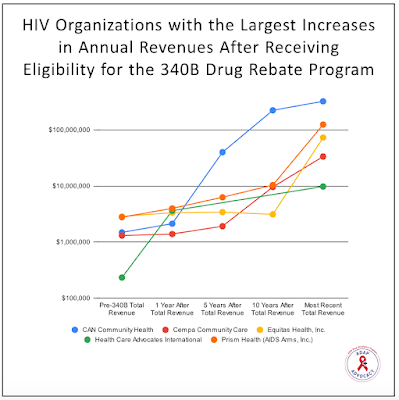
Marcus J. Hopkins, Founder & Executive Director, Appalachian Learning Initiative, concluded the retreat with a discussion focused on the 340B Drug Pricing Program and its potential impacts on the annual revenues and executive compensation amounts at Covered Entities that are eligible to receive rebates from the program, as well as the provision of charity care at cost by hospital entities who qualify. There has been an exponential increase in the number of Covered Entities from 1992 to 2021, increasing from just ~1,000 entities in 1992 to over 50,000 in 2021 (increasing from 12,700 in 2020 as a result of relaxed standards and enforcement due to the COVID-19 pandemic), which Jen Laws, President & CEO of the Community Access National Network, explained, along with additional insights from other attendees with professional knowledge of the program, that the first major increase that occurred in 2010 happened because the Health Resources Services Administration (HRSA)—the federal agency in charge of administering the program—lifted the cap on the number of contract pharmacies with which covered entities could provide medications. This decision essentially allowed organizations that did not have an on-site pharmacy to contract with external pharmacies to provide their services either at another in-person location or via mail delivery, which was becoming a more popular way to provide medications in the late-2000s and early-2010s.

HIV Organizations with the Largest Increases in Annual Revenues After Receiving Eligibility for the 340B Drug Rebate Program

The discussion brought attention to many of the barriers encountered when attempting to access information about 340B revenues from Covered Entities other than those that qualified as an AIDS Drug Assistance Program (ADAP) entity, including (but not limited to):

  • The total lack of transparency required by HRSA for non-ADAP covered entities to disclose the amount of revenues received from the program or how those revenues are utilized;
  • The numerous methods through which hospitals are able to legally create multiple other legal entities to shift funds, profits, and losses away from the primary hospital, and;
  • The ability of hospitals to purchase other hospitals and private practices and counting those purchases as both revenues increases and losses on separate line items in the federal and state tax filings.

This brought up the issue of vertical integration—the practice of a company purchasing and controlling different stages within a chain of goods or services. For example, large hospital systems across the United States have spent much of the last two decades purchasing regional hospitals, local private practices, and private pharmacies, essentially making themselves the largest single employers in many states. This benefits the hospital system by increasing their revenues through ensuring that they are essentially the only providers of healthcare services and medications in a region. This allows them to absorb the 340B revenues from many of these entities, as each entity they purchase (known as "child sites") then fall under their 340B eligibility. Major hospital systems, such as Bon Secours Mercy Health based in Virginia, have been accused of using 340B revenues (which are supposed to be utilized to increase the availability and affordability of care for lower-income patients) to open new locations in more affluent areas in order to decrease the amount of uncompensated care and increase the amount of paid services, further driving up annual revenues.

Questions centered around how ADAP Advocacy (and CANN) can better elucidate abuses in the 340B program by hospital entities and mega service providers, but also highlighting good faith actors—Covered Entities who are using the program as it was intended to be used—in order to better compare and contrast the difference between Covered Entities.

The following materials were shared with retreat attendees:

ADAP Advocacy would like to publicly acknowledge and thank Marcus for facilitating this important discussion.

Additional Fireside Chats are planned for 2024 in New York City (December).

Disclaimer: Guest blogs do not necessarily reflect the views of the ADAP Advocacy Association, but rather they provide a neutral platform whereby the author serves to promote open, honest discussion about public health-related issues and updates.

Thursday, July 11, 2024

PDABs: A Threat to Ending the HIV Epidemic?

By: Ranier Simons, ADAP Blog Guest Contributor

****Blog original published on June 18th and reprinted with permission from the Community Access National Network****

The Community Access National Network (CANN) continues to be active in the advocacy and policy space concerning Prescription Drug Advisory Boards (PDABs), also known as Prescription Drug Affordability Boards. PDAB activity is growing and advancing. Not only are more states considering or working through PDAB creation legislation, but a few recent drug-specific advisory board decisions have already been made. 

State AIDS Drug Assistance Programs, or ADAPs, are largely dependent on savings and revenues from 340B
Photo Source: CANN

[CLICK IMAGE TO ENLARGE]

A previous blog post untangles the warnings and concerns regarding PDABs. On the surface, they are presented as a simple solution to a complex issue. The complex problem is the extremely high healthcare expenditure in the United States. Accessing modern healthcare results in high amounts of spending from costs associated with hospitals and other facilities, medical technology creation and utilization, and even prescription drugs. Although prescription drug expenditures are only a small part of the billions spent annually on healthcare, the price of prescriptions is the low-hanging fruit that PDABs aim to attack. The money patients pay for prescription drugs is assuredly a financial burden for many. However, while PDABs aim to expressly lower the direct cost of prescription drugs for patients, their trajectory does not achieve that goal. Their actions have the potential to cause access issues in addition to potentially increasing out-of-pocket costs to consumers. This is especially true since the primary means PDABs lean toward to lower costs is the upper payment limit. Moreover, while CANN has a focus on PDAB potential outcomes regarding HIV drugs, all drugs are of concern, given that people living with HIV (PLWH) have multiple co-morbidities. Any threat to any drug utilized by vulnerable chronic disease communities is a threat to all.

Currently, CANN is monitoring several states that are looking to activate boards or already have active boards. Those states are Colorado, Maine, Maryland, Minnesota, New Hampshire, New Jersey, Ohio, Oregon, and Washington. Attending virtual PDAB meeting sessions, engaging by contributing both written and verbal commentary/testimony, and communicating with nationwide advocacy partners have revealed trends and developing paradigms that are problematic. Currently, the PDAB that is most far along in processes is Colorado. They have already deemed two medications, Enbrel and Cosentyx, as unaffordable, thus making them eligible for a UPL. Although every state’s PDAB is different operationally, due to the language of the legislation they are created by, states are watching Colorado. They will watch each other and potentially network in the future.

A sweeping, troublesome focus of PDABs is price. The stated intent of PDABs is to reduce the out-of-pocket costs patients pay for prescription drugs. However, the focus of analysis and discussion is how much manufacturers charge for drugs instead of how much patients pay. Focusing on drug prices could potentially lower the costs of drugs for the system, i.e., health plans, sponsors, and payers, but that does not directly help the patient cost burden.

A UPL sets a limit on the reimbursement rates of entities such as state health plans. It does not directly affect what patients pay out of pocket or change what manufacturers charge for drugs. A recent board discussion revealed the thought process that a UPL would equal more drug pricing transparency, eliminate hidden price variation caused by opaque rebates and discount structures, and increase patient access. Additionally, an assumption with consensus was that a lower price via UPL suggests an insurance company would be less likely to put a drug on a higher tier, less likely to require prior authorizations and be a barrier to pricing issues caused by payer vertical integration. These thought processes are not sound.

PDABs are considering "price controls" to set the cost of prescription drugs by setting an "upper payment limit".
Photo Source: CANN

[CLICK IMAGE TO ENLARGE]

A UPL does not automatically lower the price of a drug. It has no bearing on what a manufacturer charges for a medication. A manufacturer would have to voluntarily lower its price to be at or near the UPL. Additionally, if a UPL were set to be lower than the acquisition cost for pharmacies, pharmacies would lose money stocking medications. They cannot operate at a constant loss which lowers patient access since some pharmacies would have to stop carrying certain medications. If a pharmacy can’t fill a prescription, patients are put at risk due to treatment interruptions or even treatment cessation. Deliberations on boards proceed with the assumption that a UPL would not hinder access, with no discussions of contingency plans or safeguards to guard access against unintended consequences. Unfortunately, the prevailing attitude is that loss of access to medications as a result of UPLs is an unwarranted fear. 

UPLs also threaten the 340B Drug Pricing Program. The value of 340B is found in the spread between reimbursement rates and a reduced acquisition cost by way of drug manufacturer 340B rebates. UPLs will significantly reduce reimbursement rates, devaluing the funding realized by 340B rebates. Taking dollars out of the 340B program means that entities benefiting from 340B rebates will lose the ability to provide services to the vulnerable communities they serve. Furthermore, state AIDS Drug Assistance Programs (ADAP) heavily depend on savings and revenues from the 340B program. For states like Michigan, New Jersey, and Oregon, roughly 70 percent of their state ADAP budgets comes from 340B funding, and Oregon doesn’t receive any state contribution. According to NASTAD, a majority of ADAP clients live at or below 300% of the Federal Poverty Level. Thus, even if they qualify for Medicaid, they still need assistance.

Percentage pie charts showing revenue allocation for ADAPs
Photo Source: CANN

[CLICK IMAGE TO ENLARGE]

In reality, insurance plan benefit design is what directly translates into what patients pay out of pocket. The convoluted utilization of tools such as copays, coinsurance, high cost-sharing tiers, and copay accumulators directly determines direct patient expenditures. Most importantly, a drug’s price doesn’t determine the utilization management techniques an insurance plan uses. Many different factors are at play there, and those factors benefit many parties but not patients.

Drug manufacturers have patient assistance programs (PAP) that actually directly lower consumer out-of-pocket costs. One type of PAP is copay assistance programs that help pay most or all of the copays patients pay for medications due to their insurance plans. Another type of PAP is where a manufacturer will provide medications entirely for free for those who are uninsured, underinsured, those whose insurance does not cover a particular medication, or those who cannot afford their copay or coinsurance while not qualifying for other help. 

Although PAPs directly facilitate low out-of-pocket costs and bolster access, they are deleteriously used to support UPLs in PDAB board deliberations. The circular argument is that the mere existence of PAPs indicates that manufacturer drug pricing is too high. Additionally, discourse hints at the sentiment that PAPs are self-serving to drug manufacturers because it enables them to enjoy considerable tax advantages under the guise of charitable giving. As Jen Laws, CEO of Community Access National Network, points out, drug manufacturers have PAPs because “they are being made to shoulder discriminatory, profit-driven plan designs and supplement the under-reimbursement issue, all while patients are subject to predatory practices by payors.” 

PDABs, those currently active and those that are upcoming, are well-intentioned in wanting to lower drug pricing for consumers. They state that when identifying drugs they deem are unaffordable for consumers, they will consider other ways to reduce costs besides just the UPL. However, although things such as PBM reform and effecting policy change regulating insurance plans are superior options, the UPL remains the de facto consideration. It is essential that patients learn about and stay aware of PDAB activity. Above all, it is imperative that patients engage with PDABs because they are not receiving enough feedback from consumers and caregivers. Their deliberations are based on minuscule sample sizes of survey responses and low turn-out, with opportunities for in-person or virtual commentary from the public.

Boards feel as if they are aggressively seeking patient engagement but aren’t receiving it. Regardless of the veracity of PDAB's efforts to obtain robust patient-centered data, it is imperative that patients and caregivers stay informed and intentionally make their voices heard. Being vocal and active does make positive change happen. As a result of education efforts from patient advocacy groups and FQHCs regarding the damage of UPLs on 340B funding, this week, Oregon’s PDAB decided to revamp its entire affordability review process. CANN is committed to continued education, engagement, and advocacy to empower patients individually and collectively, irrespective of medical condition.

Go to original blog post.

Go to blog post infographic.

Disclaimer: Guest blogs do not necessarily reflect the views of the ADAP Advocacy Association, but rather they provide a neutral platform whereby the author serves to promote open, honest discussion about public health-related issues and updates.