Showing posts with label HIV discrimination. Show all posts

Thursday, March 6, 2025

Maryland and North Dakota Take Steps to Kick Their HIV Criminalizations Back to the 1980s

By: Ranier Simons, ADAP Blog Guest Contributor

HIV criminalization laws represent the worst of society’s response to the AIDS epidemic, rooted in fear, homophobia, and hysteria…and a lot of misinformation. The United States was the first nation to enact HIV-specific criminal laws, dating back to 1986-87. HIV criminalization laws still exist, but the wheels of progress are slowly chipping away at them as medical advances have changed HIV/AIDS from a death sentence to a manageable chronic disease. Equally important is the growing acceptance of the science behind “Undetectable Equals Untransmittable” (U=U), which has weakened the argument for these outdated, inhuman laws. Recently, two states, Maryland and North Dakota, passed bills to remove HIV criminalization laws from their statutes.

The Marshall Project: He’s in an Ohio Prison for Exposing Someone to HIV - Even Though He Couldn’t Transmit the Virus
Photo Source: CHLP | The Marshall Project

Yet, many states still have active HIV criminalization laws in place. From 2008 to 2013, at least 180 people living with HIV/AIDS (PLWHA) were arrested or charged under HIV criminalization laws (Tang, 2024). These HIV statutes have not been updated to reflect evidence-based science and are predatory towards PLWHA. As of February 2025, 32 states have offenses that criminalize exposure to and/or transmission of HIV (CHLP, 2025). In 1994, Texas was the first state to repeal its HIV criminalization law (CHLP, 2020). The reality is that much work remains to kick HIV criminalization laws back to the 1980s, and some states are doing it!

In February of this year, Senate Bill 356 and House Bill 39 passed in both Maryland chambers. Both bills are repeals of a section of the Maryland code that specifically criminalized the intentional transfer of HIV from one person to another. The statute declared the knowing transmission of or attempted transmission of HIV a misdemeanor subject to a fine of up to $2,500 or a jail term with a maximum of three years, or both. Legislators passed the bills with the understanding that the law was not an effective means of protecting public health. Delegate Kris Fair stated (seen below), “The law was, for right or wrong, thought to help curb the transmission of HIV…What public health experts and criminal justice organizations have taught us … is that we’ve actually seen the exact opposite.” (Brown, 2025).

Del. Kris Fair (D-Frederick) sponsored House Bill 39, to repeal a law that makes it a crime to knowingly spread HIV. It received bipartisan approval from the House this week. (Photo by Danielle J. Brown/Maryland Matters).
Photo Source: Maryland Matters | Photo by Danielle J. Brown

Also, on February 20, 2025, North Dakota passed House Bill 1217. This repeals a section of the code regarding the willful transfer of bodily fluid containing HIV. ‘Transfer’ here is defined as “engage in sexual activity by genital-genital contact, oral-genital contact, or anal-genital contact, or to permit the reuse of a hypodermic syringe, needle, or similar device without sterilization.” The law being repealed states that a person who knowingly transfers HIV to another person without their knowledge can be charged with a Class A felony with a maximum penalty of 20 years in prison and a maximum fine of $20,000. The bill changes the crime from a felony to a misdemeanor (Gall, 2025). In North Dakota, HIV is the only disease attributed to a felony charge, whereas other STI transmission crimes are misdemeanors. The bill now needs to be considered in the House.

Both states acknowledge that HIV criminalization is discriminatory. Singularly carving out HIV as a disease requiring enhanced criminal penalties increases stigma, is a disincentive for the public to normalize testing, and disproportionately affects specific populations. Fear of potential criminal prosecution means that people will be more hesitant to seek testing and subsequently must disclose their status to their partners (Yang, 2018). Additionally, it can adversely affect the trust within the doctor-patient relationship, resulting in delayed antiretroviral treatment initiation, poorer treatment outcomes, and adversely affecting public health. 

Medical science has made the possibility of HIV transmission effectively non-existent by PLWHA, who are undetectable on treatment. “U=U” is not a catchy slogan – it is an evidence-based scientific reality. Requiring an individual to indisputably prove their disclosure of their status if accused of exposure without consent is virtually impossible (Lazzarini, 2013). When HIV criminalization laws are in place, people can nefariously use them against people, such as a spurned partner retaliating against a former partner when a relationship does not end on good terms. Predatory laws harm PLWHA because being convicted does not even require actual HIV transmission to occur or proof of intent to deliberately pass the virus on to someone. 

U=U
Photo Source: Red Bubble

HIV criminalization laws also disproportionately affect marginalized groups, such as communities of color, specifically black men. Racial inequities and social determinants of health have already been shown to increase the likelihood of black male exposure to the criminal legal system (AIDS Vu, 2021). When HIV criminalization laws add enhanced sentencing or create violations that otherwise would not exist, they exacerbate targeted adverse outcomes. In Maryland, for example, Black people are 30% of the population, 71% of those who are PLWHA, and 82% of HIV-related criminal cases. Black men, specifically, are 68% of those accused in HIV-related cases despite comprising only 14% of the state population and 44% of Maryland PLWHA (UCLA, 2024).

Maryland and North Dakota’s recent bills to eliminate HIV criminalization are positive steps, but much more needs to be done. The number of states that currently have laws specifically targeting HIV for violations outside of standard communicable disease statutes or heightened sentencing is unacceptable. The stigma and hindrance to widespread testing of HIV criminalization add to the numerous barriers to ending the HIV epidemic in the United States. It would be easily conquerable if laws would catch up to science.

[1]  AIDSVu. (2021, May 10). HIV Criminalization. Retrieved from https://aidsvu.org/news-updates/hivcriminalization/#:~:text=HIV%20criminalization%20laws%20have%20also,transgender%20women%2C%20and%20sex%20workers.

[2] Brown, J. (2025, February 22). Bills to repeal ‘antiquated’ law criminalizing transfer of HIV sail through House, Senate. Retrieved from https://marylandmatters.org/2025/02/22/bills-to-repeal-antiquated-law-criminalizing-transfer-of-hiv-sail-through-house-senate

[3] The Center for HIV Law and Policy (CHLP). (2020). HIV CRIMINAL LAW REFORM: BEFORE & AFTER: Texas. Retrieved from https://www.hivlawandpolicy.org/sites/default/files/HIV%20Criminal%20Law%20Reform%20Before%20and%20After%20Texas%2C%20CHLP%202020.pdf

[4] The Center for HIV Law and Policy (CHLP). (February, 2025). Mapping HIV Criminalization Laws in the U.S. Retrieved from https://www.hivlawandpolicy.org/sites/default/files/2025-02/Mapping%20HIV%20Criminalization%20Laws%20in%20the%20US%2C%20CHLP%202025.pdf

[5] Gall, P. (2025, February 20). House Bill to reduce HIV transmission penalty advances in North Dakota. Retrieved from https://www.ksjbam.com/2025/02/20/intentional-hiv-transmission-charge-may-be-lowered-from-felony-to-misdemeanor/#:~:text=House%20Bill%201217%20passed%20on,to%20the%20Senate%20for%20consideration.

[6] Lazzarini, Z., Galletly, C. L., Mykhalovskiy, E., Harsono, D., O'Keefe, E., Singer, M., & Levine, R. J. (2013). Criminalization of HIV transmission and exposure: research and policy agenda. American Journal of Public Health, 103(8), 1350–1353. https://doi.org/10.2105/AJPH.2013.301267

[7] UCLA School of Law Williams Institute. (2024, January). Enforcement of HIV Criminalization in Maryland. Retrieved from https://williamsinstitute.law.ucla.edu/wp-content/uploads/HIV-Criminalization-MD-Jan-2024.pdf

[8] Tang, Catherine (2024). Our country's dark history of persecuting people with HIV. HIV Plus Magazine. Retrieved from https://www.hivplusmag.com/stigma/us-history-hiv-criminalization.

[9] Yang, Y. T., & Underhill, K. (2018). Rethinking Criminalization of HIV Exposure — Lessons from California’s New Legislation. New England Journal of Medicine, 378(13), 1174–1175. https://doi.org/10.1056/nejmp1716981

Disclaimer: Guest blogs do not necessarily reflect the views of the ADAP Advocacy Association, but rather they provide a neutral platform whereby the author serves to promote open, honest discussion about public health-related issues and updates. 

Wednesday, January 22, 2025

Harvard Pilgrim Health Care Offered Discriminatory Plans to People Living with HIV

By: Ranier Simons, ADAP Blog Guest Contributor

Discrimination is nothing new for people living with HIV/AIDS (PLWHAs), as it impacts multiple facets of their daily lives. Aside from HIV-related discrimination in employment, housing, healthcare, and criminal justice, an often-overlooked area is insurance. Discriminatory plan design refers to the barriers health insurance companies impose on PLWHAs thereby limiting access to care and treatment for years, advocacy groups have battled insurers with public scrutiny and, in some cases, litigation (Andrews, 2016.) Despite some coverage improvements, complaints and lawsuits continue as insurers maintain practices in non-compliance with federal law. 

The Affordable Care Act guarantees quality, affordable healthcare for all Americans.
Photo Source: AIDS Foundation of Chicago

One recent large plan instance of discriminatory coverage involved Harvard Pilgrim Health Care (HPHC). In November of 2024, the HIV+Hepatitis Policy Institute filed discrimination complaints against HPHC because their Core 4-Tier and Core 5-Tier plans in Maine, New Hampshire, and Rhode Island contained inadequate coverage of HIV antiretrovirals in violation of the ACA. In solidarity of the cause, several other groups sent a letter to the insurer. A few of the groups included were the Federal AIDS Policy Partnership (FAPP), HealthHIV, NASTAD, and AIDS Alabama (HIV+HEP, 2024).

The U.S. Department of Health and Human Services (HHS) guidelines recommend four preferred treatment regimens as initial HIV antiretroviral therapy: Biktarvy, Dovato, Symtuza, or a combination of Tivicay with either Truvada or Descovy (“Guidelines for the Use of Antiretroviral Agents in Adults and Adolescents With HIV,” n.d.). The plans only covered Dovato or Tivicay + Truvada. Biktarvy is a single-pill regiment prescribed to over 49% of PLWH and should be covered (HIV+HEP, 2024). Dovato was covered but is not appropriate for PLWH with high viral loads or HIV that is resistant to lamivudine or dolutegravir. The plans excluded Symtuza, even though it is the only recommended treatment for PLWH who have taken long-acting injectable PrEP (cabotegravir) and have possible HIV resistance to Integrase strand transfer inhibitors (INSTI) (HIV+HEP, 2024). There are other clinical situations where HHS guidelines recommend Delstrigo, Odefsey, Triumeq, and a combination of Prezcobix and Epzicom as initial regimen alternative therapies. The plans covered only Odefsy and Triumeq (HIV+HEP, 2024).

When patients lose access to covered medications, they not only experience lapses in treatment but sometimes must change to treatments that are not the best for them. Sometimes, even alternative therapies still result in a financial burden or non-adherence due to treatment. If a patient is moved from a single-pill regimen to a multi-pill treatment, they are likely to have issues staying consistent with their treatment plan (HIV+HEP, 2024). Lack of coverage on one plan may also force a patient to choose a different one that may cover their needed medication but has adverse financial effects.

Recommended therapy table included in complaint against Harvard Pilgrim Health Care
Photo Source: HIV + HEP Policy Institute

As a result of advocacy bringing public awareness directed at state policy leadership and insurance carriers, HPHC reversed its problematic coverage decisions and updated the Maine, New Hampshire, and Rhode Island formularies at the end of December. For 2025, they now cover eight complete initial HIV treatment regimens: Biktarvy, Dovato, Symtuza, Tivicay (in combination with Truvada or Descovy), Delstrigo, Odefsey, Triumeq, and Prezcobix (in combination with abacavir and lamivudine) (HPHC, 2025). While this is progress, the medications are located on the highest drug tiers of the formularies. This may render the formularies clinically effective, but they are still cost-prohibitive. Drugs on the highest formularies have the highest cost-sharing for patients, requiring them to pay significant percentages of the drug's prices as co-insurance. A high financial burden is still a barrier to access and effective care. 

As Tim Horn, Director of Medication Access with NASTAD, points out, “Relegating virtually all branded antiretrovirals to the highest cost-sharing tiers has been associated with co-insurance that typically exceeds 25% of the retail cost of the prescribed antiretroviral drug product(s), which can be considerable costs, certainly for plan beneficiaries but also for safety net programs like state ADAPs.” Director Horn also adds, “ADAP-funded insurance programs providing premium and cost-sharing support for people living with HIV are likely important factors in these carriers' decisions to ultimately engage in discriminatory formulary design practices. Of course, it is vitally important that ADAPs are able to provide premium and cost-sharing support for their clients and, likely, a significant proportion of otherwise uninsured people living with HIV in these states.”

Insurance companies do not want ADAPs to utilize their plans because they are a built-in permanent population of covered lives requiring expensive medication. Director Horn further explains, “Carriers, particularly those operating in states where few other carriers or Marketplace plans, likely consider ADAPs making their plans affordable for people living with HIV as a risk to their bottom lines. The result, as we saw with the initial Harvard Pilgrim Health decision to remove a huge swath of important antiretroviral drugs from its core formularies in three states, can be profoundly cynical and discriminatory practices that can have serious repercussions for both people living with HIV and the vitally important, yet fiscally constrained, HIV programs, such as state ADAPs.”

According to Carl Schmid, Executive Director of the HIV+Hepatitis Policy Institute, more vigorous enforcement would be a solution to discriminatory plan design. For example, in Texas, the Affordable Care Act guidelines are not enforced by the state insurance regulator but are enforced by the federal government. Moreover, the federal government constructs templates delineating ACA appropriate coverage guidelines for insurance plans to follow. Schmid explains that the templates in use are outdated, thus not reflecting current best practices. Hence, the federal government is not effectively engaging in enforcement. 

HIV + HEP Policy Institute

Unfortunately, advocacy groups and public outcry are how most insurance companies’ discriminatory plan malfeasance comes to light. Currently, many other grievances are being elevated and watched. Two, in particular, involve Medica and Community Health Choice Texas. HIV + HEP Policy Institute filed complaints against Medica in Minnesota and Iowa for inadequate recommended coverage in addition to placing all HIV antiretrovirals on their highest tiers. Their filing in Texas against Community Health Choice was also regarding inadequate HIV drug coverage regarding treatment guidelines (Burke, 2024).

The vigilance of advocacy groups, patients, and other entities is the only robust tool against discriminatory plan design. Until more effective federal and state enforcement occurs, there will not be any consistent ethical and legal behavior in the industry. The law, regulations, guidance, and implementation all must be aligned. As Schmid states, “Insurers will try to get away with as much as they can until they are caught.”

Patients living with HIV experiencing similar health plan discriminatory design are encouraged to alert the HIV + HEP Policy Institute at https://hivhep.org/contact/.

[1] Andrews, M. (2016, October 18). 7 Insurers Alleged To Use Skimpy Drug Coverage To Discourage HIV Patients. Retrieved from https://kffhealthnews.org/news/7-insurers-alleged-to-use-skimpy-drug-coverage-to-discourage-hiv-patients/

[2] Burke, J. (2024, December 17). Press Release. Retrieved fromhttps://hivhep.org/wp-content/uploads/2024/12/hiv-discrimination-complaints-maine-harvard-pilgrim-12.17.24.pdf

[3] Guidelines for the use of antiretroviral agents in adults and adolescents with HIV. (n.d.). In Centers for Disease Control and Prevention, U.S. Food and Drug Administration, Health Resource and Services Administration, & National Institutes of Health, Guidelines for the Use of Antiretroviral Agents in Adults and Adolescents With HIV. https://clinicalinfo.hiv.gov/sites/default/files/guidelines/documents/adult-adolescent-arv/tables-adult-adolescent-arv.pdf

[4] Harvard Pilgrim Health Care. (2025, January 2). Press Release. Retrieved from https://www.harvardpilgrim.org/public/news-detail?nt=HPH_News_C&nid=1471978029629

[5] HIV + HEP Policy Institute. (2024, November 8). Substandard & Discriminatory HIV Medication Coverage & Plan Design by Harvard Pilgrim Health Care. Retrieved from https://hivhep.org/wp-content/uploads/2024/11/maine-harvard-pilgrim-HIV-complaint-11.8.24.pdf

Disclaimer: Guest blogs do not necessarily reflect the views of the ADAP Advocacy Association, but rather they provide a neutral platform whereby the author serves to promote open, honest discussion about public health-related issues and updates. 

Thursday, May 16, 2024

Federal Court Sides with Patients Over CVS Health's Attempt to Gut Non-Discrimination Protections

By: Ranier Simons, ADAP Blog Guest Contributor

The increasing consolidation of corporate health entities is of significant concern because of the vast number of lives affected. When companies control a substantial market share of services and products, every business practice has pervasive outcomes since so many end users are dependent on them. This is especially notable in the arena of prescription drug benefit management, where CVS Health is one of the most prominent players. CVS Health has a history of actions and practices that have proven to be problematic in the lives of many patients and consumers. Moreover, their practices have habitually adversely affected people living with HIV/AIDS (PLWHA). Recently, CVS unsuccessfully tried to evade a discrimination lawsuit due to their practices.

CVS Pharmacy sign
Photo Source: TheBody

In 2018, seven plaintiffs filed a class action lawsuit against CVS Health Corporation, claiming CVS discriminated against PLWHA based on their prescription plans' design and denying them meaningful access to their health benefits.[1] The employer-sponsored health plan the patients utilized, whose pharmacy benefits were managed by CVS, required them to use mail-order specialty pharmacy services or CVS chain pharmacy services to obtain their HIV medication and receive the in-network pricing. They could not use their preferred in-network community pharmacies without incurring significantly higher out-of-pocket costs.

Utilizing preferred in-network pharmacies results in optimal patient care and utilization of services. Local pharmacies allow face-to-face interactions with pharmacists familiar with patients’ medical histories and related needs. Additionally, they are often geographically more accessible than the CVS chain pharmacies. Mail-order dispensing can result in delayed medication, lost or stolen medication, damage to medicines due to exposure to the elements, and even privacy concerns.

Repeatedly, the plaintiffs petitioned both their employer and CVS to ‘opt-out’ to be able to use their preferred in-network pharmacy choices, which were considered in-network for non-HIV medications. Despite repeated communications and requests, neither CVS nor their employers allowed them to opt out.[1] As such, they brought the lawsuit alleging that CVS was engaged in discrimination based on HIV disability under the Affordable Care Act. CVS moved to have the case dismissed on several grounds.[2] Firstly, they argued that the case had no merit because several of the plaintiffs are now deceased. They also argued the case should be dismissed because a couple of plaintiffs are now on different plans not currently associated with the problematic CVS benefit issue in question. Most notably, they claimed that they were not aware that their policies directly affected the rights of a federally protected class. Additionally, they argued that the employers were responsible for not allowing the plaintiffs to opt-out, not CVS.

Hands raising
Photo Source: Chronic Disease Coalition

In April 2024, U.S. District Judge Edward Chen ruled that CVS’ request for dismissal would not be granted.[2] He ruled that CVS’s actions fulfilled the requirements of proving deliberate indifference. The legal term means that CVS was fully aware of the damage the benefit plan specifically had on the PLWHA’s medically necessary access to HIV medications but failed to act on it by making reasonable accommodations.[2] In addition to the well-documented communications between the plaintiffs and CVS, CVS internal reports indicated that CVS had been given previous legal guidance that their benefit design could be deemed discriminatory to a protected class. 

Judge Chen also ruled that CVS could not blame the employer. CVS was fully able to modify a plan structure whenever it wanted. Moreover, the plans CVS presented to employers to select for coverage contained financial incentives for forcing the use of mail-order and CVS-specific branded pharmacies for HIV medication and other specialty drugs.[2] It was proven that CVS had other plans that allowed patients to opt out but did not make those options available for the employers in question. Unfortunately, Judge Chen ruled against the plaintiffs, stating they could not sue for monetary damages from the thousands of dollars they had paid out of pocket to get their medications from their preferred community pharmacies. Regardless, the plaintiffs legally have standing for the case to proceed because of Chen’s denial of the dismissal. 

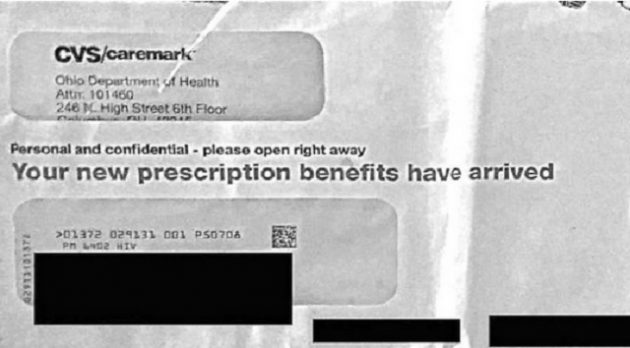
As a result, CVS was sued in a separate lawsuit in 2018 for errantly publicly disclosing the HIV status of over 6,000 Ohio residents.[3] The Ohio AIDS Drug Assistance Program (OhDAP) had a contract with CVS where CVS provided HIV medications to OhDAP clients and handled communications with those members. The suit alleged that in the third quarter of 2017, CVS mailed out a letter containing membership cards, information about how to obtain HIV medications, and other program information to 6,000 clients. This mailing was in an envelope with a clear plastic window with a short reference code for the mailing list, ‘PM 6402 HIV’ printed above the recipient’s name. The plaintiffs sought legal remedy because the mailer "resulted in the potential or actual disclosure of recipients' HIV status to numerous individuals, including their families, friends, roommates, landlords, neighbors, mail carriers, and complete strangers."[4]

CVS Caremark mailer
Photo Source: KRSO

The mailing was not only negligent in its handling of protected health information but was seemingly profit-driven. At the time of the mailing, many of the recipients did not have an established relationship with CVS. The mailer was sent regardless of whether the recipients were active CVS pharmacy customers. It was a way to market the usage of not only CVS pharmacy benefit products but also its general health care delivery services.[5] In 2020, CVS agreed to settle the lawsuit for $4.35 million.[6]

CVS is not the only problematic player in the corporate healthcare arena. However, their actions and core paradigms are consistently antagonistic to the best interests of PLWHA and others utilizing specialty drugs. In a briefing presented to payors in 2021, CVS Caremark listed strategies it would employ to save money. Regarding activities in response to new drugs in the market, some of its planned actions included: initially blocking coverage of new drugs, reviewing for clinical appropriateness and cost-effectiveness prior to formulary decision, applying aggressive clinically appropriate utilization management criteria with rigorous approval requirements, strongly favoring generic use requiring objective evidence of need for newer agents, and selecting preferred agents generating lowest net cost option in each category.[7]

Jen Laws, CEO of Community Access National Network, summarily describes CVS, stating: “CVS engages in aggressive self-dealing practices and anti-competitive contract efforts to eliminate competition, drive patients to their own pharmacies (including by way of under reimbursement to independent, non-chain pharmacies and higher cost-sharing for patients utilizing their trusted pharmacies), and roundly limit access to care by weaponizing their PBM.” It seems that keeping a continued focus on CVS will be necessary to highlight and act against present and future practices that harm patients.

[1] Third Amended Class Action Complaint. (2023, October 24) ). Retrieved from https://consumerwatchdog.org/wp-content/uploads/2023/11/2023-10-24-241_Third-Amended-Complaint.pdf

[2] John Doe One et al. v. CVS Pharmacy Ruling. (2024, April 18). Retrieved from https://www.courthousenews.com/cvs-medication-program-discriminates-against-hiv-aids-patients-judge-says/john-doe-one-et-al-v-cvs-pharmacy-et-al-mtd-ruling/

[3] Doe One et al. v. CVS Health Corporation et al. (2018, March 21). Retrieved from https://dockets.justia.com/docket/ohio/ohsdce/2:2018cv00238/211764

[4] Faul, A. (2018, March 29). CVS Health unintentionally revealed HIV status of 6,000 customers: Lawsuit. Retrieved fromhttps://abcnews.go.com/Health/cvs-health-unintentionally-revealed-hiv-status-6000-customers/story?id=54095674

[5] Schladen, M. (2018, June 29). State, CVS sued over HIV mailing. Retrieved from https://www.dispatch.com/story/news/politics/elections/2018/06/29/state-cvs-sued-over-hiv/11624806007/

[6] AIMED Alliance. (2020, May 15). CVS Health to Settle Lawsuit for Revealing HIV Status of Over 4,500 Patients. Retrieved fromhttps://aimedalliance.org/cvs-health-to-settle-lawsuit-for-revealing-hiv-status-of-over-4500-patients/

[7] Accetta, L. (2021). Expanding therapies, indications and implications for payors: Pipeline trends that will drive change in 2022. Retrieved from https://business.caremark.com/insights/2021/expanding-therapies-indications-and-implications-payors.html   

Disclaimer: Guest blogs do not necessarily reflect the views of the ADAP Advocacy Association, but rather they provide a neutral platform whereby the author serves to promote open, honest discussion about public health-related issues and updates.  

Thursday, May 5, 2022

Historic Victory for HIV-Positive Military Service Members

By: Ranier Simons, ADAP Blog Guest Contributor

In the early years of the AIDS epidemic, fear and hysteria were founded on and fueled by paranoia of the unknown. Seroconversion predominately resulted in rapid onset of severe illnesses resulting in premature death. The lack of knowledge concerning modes of transmission, coupled with the stigma of what was then being labeled a predominantly ‘gay disease,’ resulted in multiple lanes of discrimination. Discrimination manifested in many forms of access denial, including housing, employment, and healthcare. In fact, HIV discrimination was specifically ‘codified’  in the military regulations. 

Military badges
Photo Source: Advocate

The Pentagon began mandatory HIV screening for recruits in 1985.[2] Those with positive test results were turned away. Active-duty members who tested positive were allowed to continue to serve. However, the stigma around the assumption that they would get too sick to function productively meant demotion of duty and ostracism. HIV-positive service members were also prosecuted for sodomy and disobedience, and some were discharged without medical coverage.[2] Anecdotal evidence indicates some were segregated into separate barracks for HIV-positive troops.

Medical advancements in the treatment of HIV have drastically changed the trajectory of the disease since the 1980s. HIV is no longer a death sentence, and life-expectancy is almost on par with non-infected individuals.[2] Moreover, current antiviral medications reduce the viral load to undetectable levels where the possibility of transmission is effectively eliminated even through sexual contact, or has been termed 'undetectable equals untransmissible’ (U=U).[3]

Despite the current state of medical and scientific understanding of HIV, the military has yet to change its outdated policies. Employers are legally prohibited from discrimination against HIV-positive individuals on a federal level by the Americans with Disabilities Act of 1990.[4] There are other protections afforded under the Rehabilitation Act of 1973, as amended. Regardless, the military still maintains HIV discriminatory practices.

The Pentagon presently bans HIV-positive people from enlisting in armed services and prohibits HIV-positive people from being commissioned out of military academies. Additionally, the Pentagon had a policy of banning HIV-positive service members from deployment even with undetectable viral loads on active antiretroviral therapy. 

The wheels of justice, however, seem poised to pump the brakes on the military's discriminatory policies. A federal district judge recently struck down part of the Defense Department’s current policy.

On April 6, 2022, in response to two different lawsuits, U.S. District Judge Leonie Brinkema ruled that U.S. service members can no longer be discharged or barred from becoming officers solely based on their positive HIV status.[4] Ra v. Austin and Roe & Woe v. Austin are two separate cases that were tried together. [4] In Harrison v. Austin, Sergeant Nick Harrison, who joined the military in 2000, sued the Army and the U.S. Department of Defense for denying his application to become a military lawyer with the JAG Corps due to his HIV status. He tested positive in 2012 after a tour of duty in Kuwait.[4]

Sergeant Nick Harrison
Sergeant Nick Harrison; Photo Source: Metro Weekly

In Roe & Voe v. Austin, the U.S Air Force attempted to discharge two active-duty airmen based on their HIV status. The discharge decision was based on a Trump-era policy of discharging service members who are undeployable for a period of 12 months. Since HIV-positive status barred the plaintiffs from deployment, they were subsequently undeployable for 12 months.[1]

Judge Brinkema’s ruling is a victory for the roughly two-thousand HIV-positive service members currently serving. This ruling also opens the door to future legal challenges involving the current policy preventing HIV-positive people from joining the military. Current military policy is not in line with current medical science and treatment innovation. Legal remedies to the detrimental results of outdated policy are sure to continue.

[1] Padgett, D. (2022, April 7). Landmark court victory: Military can’t boot people with HIV. Retrieved from https://www.hivplusmag.com/stigma/2022/4/07/landmark-court-victory-military-cant-boot-people-hiv
[2] Lalwani, N. (2021, July 22). The military's HIV policies are discriminatory and decades behind the times. Retrieved from https://www.washingtonpost.com/outlook/the-militarys-hiv-policies-are-discriminatory--and-decades-behind-the-times/2021/07/22/616fa480-e8c0-11eb-8950-d73b3e93ff7f_story.html
[3] 
RW Eisinger, CW Dieffenbach, AS Fauci. HIV viral load and transmissibility of HIV infection: undetectable equals untransmittable. Journal of the American Medical Association DOI: 10.1001/jama.2018.21167 (2019)
[4] Ryan, B. (2022, April 7). Judge strikes down military's limits on service members with HIV. Retrieved from https://www.nbcnews.com/nbc-out/out-news/judge-strikes-militarys-limits-service-members-hiv-rcna23513

Disclaimer: Guest blogs do not necessarily reflect the views of the ADAP Advocacy Association, but rather they provide a neutral platform whereby the author serves to promote open, honest discussion about public health-related issues and updates. 

Thursday, February 13, 2020

U.S. Court of Appeals Strikes Down Trump Administration's Discriminatory 'Deploy or Get Out' Policy

By: Sarah Hooper,  intern, ADAP Advocacy Association, and rising senior at East Carolina University

In January 2020, the U.S. Court of Appeals for the fourth circuit upheld a lower court ruling in Roe and Voe v. Esper, which allows the two HIV positive members of the air force to continue their service. This ruling also will prevent the discharge of any other airmen based on HIV status alone (Buhl, 2020).

Previously, the U.S. Air Force has justified the discharge of military service members living with HIV under the ‘Deploy or Get Out’ policy, which was first introduced in February of 2018. This policy stated that any service member who is deemed non-deployable for over a year would be subsequently discharged. This policy unfairly affected service members living with HIV, as the long-standing HIV policies within the Air Force and United States military consider HIV positive members non-deployable (Allen, 2018).

The plaintiffs in the Roe and Voe v. Esper case first requested a preliminary injunction in February 2018 in the district court for eastern Virginia.


The most recent case of Roe and Voe v. Esper was filed in December 2018 by Lambda Legal and the Modern Military Association of America, with pro bono co-counselors Winston and Strawn. After filing in December, the appeals court opinion concluded that since the government didn’t consider the low possibility of transmission of HIV, the Air Force denied the service members of their right as employees able to serve.

“These servicemembers, like other HIV-positive individuals with undetectable viral loads, have no symptoms of HIV. They take daily medication—usually one pill, for some people two—and need a regular, but routine blood test. They cannot transmit the virus through normal daily activities, and their risk of transmitting the virus through battlefield exposure, if the virus can be transmitted at all, is extremely low. Although transmission through blood transfusion is possible, these servicemembers have been ordered not to donate blood,” said the opinion (Lambda Legal).

According to the Center for HIV Law and Policy:

“Military policies and regulations – most of them codified in the Uniform Code of Military Justice – set forth consequences for conduct by service members living with or at risk of HIV,” (HIV Law and Policy).

According to The Body, Roe and Voe v. Esper case is one of three cases challenging military policies against service members living with HIV. Two others are currently being reviewed.

“Even though my commanding officer and doctors wanted me to stay in, the informal board recommended discharge, then a formal board of three members recommended discharge,” Roe said in reference to his experience with the Air Force.

Scott A. Schoettes is the HIV project director at the advocacy group Lambda Legal, who helped represent Roe and Voe in their plea at the court of appeals.

“The military is really the only employer in the United States that’s still allowed to do this. Everybody else you can hold accountable. You can sue under statutory protections for people living with HIV,” said Schoettes.

Roe and Voe will be able to continue serving in the Air Force under the recent court of appeals ruling.

References:
  • Buhl, L. (2020, January 16). Federal Court Upholds Injunction Preventing Discharge of HIV-Positive Airmen. The Body dot com. Retrieved from https://www.thebody.com/article/appeals-court-injunction-discharge-hiv-military?ap=2008
  • HIV Law and Policy Military. (n.d.). Retrieved from https://www.hivlawandpolicy.org/issues/military
  • Allen, S. (2018, September 19). The Danger of 'Deploy or Get Out' Facing HIV-Positive Troops. The Daily Beast. Retrieved from https://www.thedailybeast.com/the-danger-of-deploy-or-get-out-facing-hiv-positive-troops
  • Opinion: Roe and Voe v. Esper. (2020, January 10). Retrieved from https://www.lambdalegal.org/in-court/legal-docs/roe_va_20200110_opinion
Disclaimer: Guest blogs do not necessarily reflect the views of the ADAP Advocacy Association, but rather they provide a neutral platform whereby the author serves to promote open, honest discussion about public health-related issues and updates.