Thursday, October 27, 2022

HRSA Releases Annual Ryan White Client-Level Report, 2020 - Program Enrollment Varies

By: Marcus J. Hopkins, Founder & Executive Director, Appalachian Learning Initiative

The Health Resources and Services Administration (HRSA) has released the AIDS Drug Assistance Program (ADAP) Annual Client-Level Data Report, 2020. These data reflect the demographic characteristics of clients served by the ADAP program from 2016-2020. This is the second Annual Client-Level Report released in 2020, with the first covering years 2016-2019, and is the first report to include client-level information from the first year of the COVID-19 global pandemic.

Increasing ADAP Enrollment

In 2020, 300,785 clients were served by state ADAP programs across the United States—an increase of more than 3,500 clients from 2019. While this represents a 1.3% increase in national enrollment numbers from 2019 to 2020, 7 states and 2 territories (Guam & U.S. Virginia Islands) saw enrollment increases or decreases of greater than 10% (Figure 1). 

Client enrollment regularly decreases and increases based on a number of factors, including but not limited to:

  • Clients becoming newly eligible or ineligible based upon their income
  • Clients moving from state ADAP programs to state Medicaid programs
  • An increase in new HIV diagnoses and, with the delivery of competent case management services, being enrolled in the program
  • Clients moving into or out of states
  • Clients passing away

2020, however, was unique due to the impacts of the onset of the COVID-19 global pandemic. The original expectation was that increases in unemployment would drive large increases in ADAP enrollment across the U.S. While national enrollment did increase by 1.6%, 31 jurisdictions actually saw decreases in ADAP enrollment from 2019 to 2020 (Table 1).

Because no one state’s ADAP program is identical to another, the reasons for enrollment increases and decreases are highly specific to each state. That said, significant increases and decreases should be carefully examined to identify service disparities, particularly in states where patients face numerous barriers to accessing care and treatment.

Figure 1. Change in State AIDS Drug Assistance Programs (ADAPs) Enrollment, 2019 to 2020

Map showing change in State AIDS Drug Assistance Programs (ADAPs) enrollment 2020
Photo Source: HRSA, 2022

The Demographics of ADAP

78.1% of ADAP clients are cisgender male (i.e., non-transgender male; hereafter referred to as “male”)—a figure that has remained largely unchanged since 2015, and 20.4% were cisgender female (i.e., non-transgender female; hereafter referred to as “female”). 1.6% of ADAP clients identified as transgender (1.3% as transgender female, 0.1% as transgender male, and 0.1% as another gender identity; the total does not equal 1.6% due to rounding). 

Similarly, the racial and ethnic demographics of ADAP clients have remained largely unchanged since 2015, with 39.5% of enrollees being Black Americans, 27.6% being Hispanic/Latino, 29.6% being White, and less than 2% each are Asian, American Indian/Alaska Native, Native Hawaiian/Pacific Islander, and people of multiple races. Of the women who are clients of ADAP, over half (56.5%) are Black. ADAP clients from non-White demographics are consistently younger than White enrollees. 60.5% of White enrollees are aged 50+ years, compared with just 48% of clients who are American Indian/Alaska Native, 40.3% of Native Hawaiians/Pacific Islanders, 39.6% of Black Americans, 38.8% of multiracial clients, 37.8% of Hispanic/Latino clients, and 34.4% of Asian clients.

Additionally, ADAP enrollees have continued to overwhelmingly be at the lowest end of the income eligibility scale, with 49.1% of clients earning between 0% - 100% of the Federal Poverty Level (FPL)—$12,760/year for an individual in 2020.

These demographics have all remained largely unchanged over the past decade in no small part because they are reflective of the HIV epidemic, in and of itself. New HIV diagnoses continue to be disproportionately identified in Black, Brown, and lower-income communities. As a result, those clients compose the majority of ADAP clients.

Health Coverage of ADAP Clients

In 2020, 37.4% of all ADAP clients had no healthcare coverage, whatsoever, including private and employer-sponsored insurance, Medicaid coverage, Medicare coverage, Veterans Administration coverage, Indian Health Services coverage, and other types of coverage. This varies by race, with just 20.7% of White clients lacking healthcare coverage compared with 48.2% of Hispanic clients and 42.8% of Black clients. It also varies by gender, with 37.8% of male clients lacking coverage and 36.2% for females. Trans folx and gender non-conforming individuals were disproportionately impacted by a lack of healthcare coverage, with 34.9% of transgender male clients, 52.6% of transgender female clients, and 59.5% of clients with different gender identities lacking coverage.

With the exception of persons who identify as transgender females, every gender demographic saw at least a 1% increase in the number of clients with private individual insurance from 2019 to 2020. Transgender men saw the largest increased in the number of privately insured clients from 2019 to 2020, with just 16.4% of transgender men being privately insured in 2019 and 26.2% being insured in 2020.

Services Utilization of ADAP Clients

The percentage of clients who received only full-pay medication assistance (where ADAP pays the full cost of medications) decreased from 52.6% in 2015 to 47.5% in 2020. This number is expected to decrease as more ADAP programs begin transitioning clients over to other payor models, such as insurance continuation programs, medication co-pay/deductible assistance, or insurance premium assistance. Each of these models represents cost savings for ADAP programs over the full-pay medication assistance service, as the ADAP programs are no longer paying the full cost of medications.

Breaking these services down by Health and Human Services (HHS) Region (Figure 2):

  • Region 1, which comprises the New England states, had the highest percentage of ADAP clients using medication co-pay/deductible services, with 42.2% of clients using that service.
  • Region 6, which comprises the American South-Central part of the U.S., had the highest percentage of ADAP clients receiving full-pay medication assistance (69.7%), followed by Region 4, which comprises most of the rest of the American South (60.1%)
  • Regions 7 and 8, which comprise the central Midwest and Mountain West, had the highest percentages of ADAP clients utilizing multiple ADAP services (49.6% and 46.3%, respectively).

Figure 2. Map of United States Department of Health and Human Services Regions

United States Department of Health & Human Services Region Map
Photo Source: HRSA, 2022

Potential Concerns for ADAPs

An emergent concern for state ADAP programs has presented itself in the form of the Monkeypox Virus (MPV) outbreak in the United States.

According to a paper published in September 2022, among 1,969 persons diagnosed with MPV in eight U.S. jurisdictions—California, Los Angeles County, San Francisco, the District of Columbia, Georgia, Illinois, Chicago, and New York state—38% were identified in People Living with HIV/AIDS (PLWHA). Additionally, 41% of those diagnosed had been diagnosed with a Sexually Transmitted Infection (STI) in the preceding year. Among persons with MPV, hospitalization was more common in PLWHA than in those without HIV infection (Curran, et al., 2022).

The concern among many HIV advocates is that MPV may become endemic in the MSM community, particularly among those living with HIV. This aligns with additional concerns on the part of infectious disease and public health experts that COVID-19 may end up becoming endemic.

(Editor's Note: The following portion of this post remains unchanged from our coverage of the 2019 ADAP Client-Level Report in June/July 2022 as circumstances have remained the same since that time).

There are some concerns being circulated that ADAP enrollment may begin increasing in the near future. The onset of the COVID-19 global pandemic resulted in the Secretary of HHS declaring quarterly national Public Health Emergencies (PHEs) beginning in January 2020 (Office of the Assistant Secretary for Preparedness and Response, 2022). One of the provisions of the PHE declarations required states to keep people enrolled in state Medicaid programs throughout the PHE in order to receive the temporary increase in the federal share of Medicaid costs. 

When the Secretary fails to renew the PHE, this provision, along with the increased federal funding, will end, meaning that state Medicaid programs will likely begin redetermining eligibility. This could result in an influx of clients moving off of Medicaid and back onto state ADAP programs, which are statutorily required to be the “payor of last resort.”

Additional concerns exist around the reauthorization of the Ryan White HIV/AIDS Program (RWHAP), which has not been reauthorized since 2009. Because the law has no sunset provision, meaning that it can be funded in perpetuity. There have been consistent concerns about reopening RWHAP for reauthorization for fear that Republicans in Congress will gut the program. These concerns have been voiced since at least 2013. As a result, there is little advocacy in favor of reauthorization.

Ultimately, the ADAP program is currently as “safe” as it’s ever been. Waitlists are virtually a thing of the past, meaning that eligible patients are able to gain access to the medications that they need. The ADAP Advocacy Association will continue to monitor the program for both successes and challenges.

To download Table 1 - ADAP enrollment from 2019 to 2020, click here.

References:

  • Curran, K.G., Eberly, K., Russell, O.O., et al. (2022, September 09). HIV and Sexually Transmitted Infections Among Persons with Monkeypox — Eight U.S. Jurisdictions, May 17–July 22, 2022. MMWR Weekly 71(36), 1141-1147. http://dx.doi.org/10.15585/mmwr.mm7136a1
  • Health Resources and Services Administration. (2022, August). Ryan White HIV/AIDS Program AIDS Drug Assistance Program (ADAP) Annual Client-Level Data Report 2020. Rockville, MD: United States Department of Health and Human Services: Health Resources and Services Administration: HIV/AIDS Bureau: Division of Policy and Data https://ryanwhite.hrsa.gov/sites/default/files/ryanwhite/data/hrsa-adap-data-report-2020.pdf
  • Office of the Assistant Secretary for Preparedness and Response. (2022, April 12). Renewal of Determination That A Public Health Emergency Exists. Washington, DC: United States Department of Health and Human Services: Office of the Assistant Secretary for Preparedness and Response: Public Health Emergency Declarations. https://aspr.hhs.gov/legal/PHE/Pages/COVID19-12Apr2022.aspx 

Disclaimer: Guest blogs do not necessarily reflect the views of the ADAP Advocacy Association, but rather they provide a neutral platform whereby the author serves to promote open, honest discussion about public health-related issues and updates. 

Thursday, October 20, 2022

Rapid HIV Transmission Clusters

By: Ranier Simons, ADAP Blog Guest Contributor

Despite the many medical and scientific advances in the fight against HIV/AIDS, the numbers of new infections and AIDS-related deaths remain markedly high. Globally, in 2021, there were 1.5 million new infections and 650,000 AIDS deaths.[1] Avoidable HIV infections occur among developing and first-world countries, including the United States. The U.S. Centers for Disease Control & Prevention (CDC) reported one such troubling trend in the September 23, 2022, Morbidity and Mortality Weekly Report (MMWR): clusters of rapid HIV transmission among gay, bisexual and other MSM (men who have sex with men).

MSM accounted for 68 percent of new HIV diagnoses in the United States, in 2020. The recent MMWR report examined clusters of rapid HIV transmission identified by the National HIV Surveillance System (NHSS). The NHSS is the primary source for monitoring HIV in the United States. The surveillance system gathers, analyzes, and reports a plethora of information regarding new and existing HIV infections. The CDC provides funding and partners with local and state health departments to collect the data.[2] Part of this data includes HIV-1 nucleotide sequences taken from the bloodwork of infected individuals. Utilizing this database, researchers identified large molecular clusters of rapid transmission. In other words, they could identify clusters of people who shared the same ‘flavor’ of the HIV virus.

TABLE 1. Characteristics of persons in large HIV clusters primarily among gay, bisexual, and other men who have sex with men (N = 29) — United States, 2021*
Photo Source: CDC, MMWR

But as the ADAP Advocacy Association noted several years ago, NHSS also is associated with numerous patient concerns, namely privacy infringement and fueling stigma. Whereas some public health advocates may argue such surveillance is necessary in the fight against HIV/AIDS, others remain skeptical whether the benefits outweigh the risks. For the purpose of this particular blog, that debate will be set aside.

Identifying clusters enables public health professionals to identify demographic and geographic areas of HIV transmission. One hundred and thirty-six rapid transmission clusters were identified during 2018-2019 and followed through to December 2021. Rapid transmission was defined as a cluster with five or more diagnoses in the most recent 12 months.[3] A large cluster was defined as one that grew to contain more than 25 people as of December 2021. Thirty-eight large clusters were detected in 2018-2019. MSM comprised the majority of 29 of those 38 clusters. Also, most clusters of rapid HIV transmission were among MSM. The median growth rate was nine people added to a cluster per year.[3] The MSM majority clusters existed in many different regions of the country, most involving multiple states.

There were 2,901 people in the 136 molecular clusters with rapid transmission. The 38 large clusters contained 1,533 (53%) of the 2,901. The 29 clusters of those 38, which were primarily MSM, contained 985 people. Six clusters were primarily people who injected drugs, and three had no defined transmission category.

HIV Test
Photo Source: POZ

Concerning racial or ethnic groups, as of December 2021, African-Americans were the largest group in 13 of the large MSM clusters, Caucasians were the largest group in nine of the clusters, and Hispanic people were the largest in seven of them.[3] Geographically, the most common region in 14 of the 29 MSM clusters was the South, and 23 clusters included people from multiple regions.[3] As a whole, 70 % lived in large centralized metropolitan areas or large fringe metropolitan areas, and 20% lived in medium metropolitan regions.[3]

Clusters indicate areas where intervention efforts are not successful. Continuing cluster analysis will demonstrate how treatment, prevention, and testing efforts must be modified to be more effective in the affected communities. The rate of transmission in the large MSM clusters was six times the overall U.S. population average for transmission.[3] Approximately 80% of new HIV transmissions are from people unaware of their status or not receiving regular care.[4] The September report is a wake-up call to the desperate need for an effective concerted, multi-pronged social, political, and financial revolution if we are to reach the goal of eradicating HIV.

[1] UNAIDS. (2022) Millions of lives at risk as progress against AIDS falters. Retrieved from https://www.unaids.org/en/resources/presscentre/pressreleaseandstatementarchive/2022/july/20220727_global-aids-update
[2] Centers for Disease Control and Prevention. (2021, August 9). HIV Statistics Center. Retrived from https://www.cdc.gov/hiv/statistics/index.html
[3] 
Perez, S. PhD et. al (2022). Clusters of Rapid HIV Transmission Among Gay, Bisexual, and Other Men Who Have Sex with Men — United States, 2018–2021. Morbidity and Mortality Weekly Report, 71(38), 1201-1206, https://doi.org/10.15585/mmwr.mm7138a1
[4] 
Li, Zihao PhD et. al. (2019). Vital Signs: HIV Transmission Along the Continuum of Care — United States, 2016. Morbidity and Mortality Weekly Report, 68(11), 267-272, https://doi.org/10.15585/mmwr.mm6811e1

Disclaimer: Guest blogs do not necessarily reflect the views of the ADAP Advocacy Association, but rather they provide a neutral platform whereby the author serves to promote open, honest discussion about public health-related issues and updates. 

Thursday, October 13, 2022

Fireside Chat Retreat in Chicago, IL Tackles Pressing Public Health Issues

By: Brandon M. Macsata, CEO, ADAP Advocacy Association

The ADAP Advocacy Association hosted its "Fireside Chat" retreat in Chicago, Illinois among key stakeholder groups to discuss pertinent public health issues facing patients in the United States. The Fireside Chat took place on Thursday, September 29th, and Friday, September 30th. Counterfeit Drugs, 340B Drug Pricing Program, and Covid-19 were evaluated and discussed by the 22 diverse stakeholders.

FDR Fireside Chat
Photo Source: Getty Images

The Fireside Chat included moderated white-board style discussion sessions on the following issues:

  • Counterfeit Medicines: What Can We Do to Protect the US Drug Supply Chain from Nefarious Activities — moderated by Shabbir Imber Safdar, Executive Director, Partnership for Safe Medicines (PSM)
  • 340B Drug Discount Program: The Issues Spurring Discussion, Stakeholder Stances, and Possible Resolutions — moderated by Brandon M. Macsata, CEO, ADAP Advocacy Association
  • Covid-19: What is its Impact on HIV, Viral Hepatitis, Sexually Transmitted Infections (STIs), and Substance Use Disorder — moderated by Jen Laws, President & CEO, Community Access National Network (CANN) & Board Member, ADAP Advocacy Association

The discussion sessions were designed to capture key observations, suggestions, and thoughts about how best to address the challenges being discussed at the Fireside Chat. The following represents the attendees:

  • Tez Anderson, Executive Director, Let’s Kick ASS – AIDS Survivor Syndrome
  • Jeff Berry, Executive Director, The Reunion Project
  • Tori Cooper, Director of Community Engagement, Human Rights Campaign
  • Jeffrey S. Crowley, Distinguished Scholar & Program Director at the Infectious Disease Initiatives, O'Neill Institute for National and Global Health Law, Georgetown Law
  • Erin Darling, Associate Vice-President and Counsel, Federal Policy, Merck
  • Heather Eagleton, Director, Government Relations (Midwest), ViiV Healthcare
  • Karen King, fierce Patient Advocate
  • Lisa Johnson-Lett, Peer Support Specialist, AIDS Alabama
  • Jen Laws, President & CEO, Community Access National Network
  • Darnell Lewis, Patient Advocate
  • Brandon M. Macsata, CEO, ADAP Advocacy Association
  • Mike Maginn, HIV Prevention Director, Illinois Public Health Association
  • Aisha McKenzie, Consultant – Event Producer and Administrative Project Management
  • Judith Montenegro, Program Director, Latino Commission on AIDS
  • Murray Penner, Executive Director, North America, Prevention Access Campaign
  • Glen Pietrandoni, Chief Advocacy Officer, Avita Pharmacy
  • Kalvin Pugh, Sr. Manager, Community Engagement at International Association of Providers of AIDS Care
  • Shabbir Imber Safdar, Executive Director, Partnership for Safe Medicines (PSM)
  • Larry Scott-Walker, Executive Director, THRIVE Support Services
  • Sara Stevens, Head, U.S. Issue Advocacy, Novartis
  • Scott Suckow, Senior Consultant, Perry Communications Group
  • Varela, Milani, Patient Advocate, Getting to Zero-Illinois Community Advisory Board

The Covid-19 pandemic is still ongoing. Covid-19 has killed at least 1,051,277 people and infected about 95.4 million in the United States since January 2020, according to data by Johns Hopkins University (CNN, 2022).

With that in mind, the ADAP Advocacy Association implemented strong Covid-19 safety protocols for the Fireside Chat, which included proof of vaccination/booster, robust self-administered testing (prior to travel, upon arrival, and after returning home), complimentary rapid self-test kits and hand sanitizer for each of the attendees, as well as guidelines for masks on commercial travel to the event, and optional masks during the sessions (which some attendees exercised without feeling shunned). 

September 29th marked the one year anniversary of Bill Arnold's passing, so Brandon M. Macsata took a few moments to reflect on his life and his dedication to improving access to care and treatment for all patients, regardless of their ability to pay. 

Bill Arnold standing at Cape Agulhas, South Africa
Bill Arnold standing at Cape Agulhas, South Africa

The ADAP Advocacy Association is pleased to share the following brief recap of the Fireside Chat.

Counterfeit Medicines:

Shabbir Imber Safdar provided a basic overview on the drug supply chain and the ongoing threat poised by counterfeit medicines seeping into it, which is what he often says keeps him up at night. Safdar offered a primer on the Track-and-Trace system, which determines a drug’s current and past locations, and an explanation on how it protects the drug supply chain. To that end, attendees were shared two bottles of medicines; one reflected how a legitimate prescription bottle would look, compared to a counterfeit bottle. The Track-and-Trace systems leverages both technology and regulation to maintain a safe drug supply chain in the United States.

As part of the discussion, Safdar shared some major drug safety incidents in the United States over the last twenty years. They included fake blood thinners recently found in Mexico, counterfeit and diverted HIV medications distributed to pharmacies, counterfeit COVID-19 tests, masks, and unapproved treatments, diverted and unsafe PrEP medications fraudulently obtained and sold to pharmacies and dispensed to patients, counterfeit oncology medicines, and counterfeit IUDs.

There was a deep dive into the recent news on how Gilead Sciences discovered $250 million of counterfeit Biktarvy and Descovy. On August 5, 2021, Gilead Sciences released a press release stating that it had become aware of counterfeit and tampered versions of Biktarvy and Descovy in the supply chain in the United States. The press release resulted from a sealed lawsuit Gilead filed against the sources of the counterfeit in July of 2021. The U.S. District Court of the Eastern District of New York unsealed the documents on January 18, 2022, revealing the details. Stakeholders discussed the reasons why patients are forced to look for alternative sources for their medications.

Additionally, significant discussion centered around the false belief that drug importation would solve ongoing issues over the amount of money Americans pay for their prescription drugs. All cost-estimates yield basically zero savings to federal publicly-financed programs, as well as little help for patients. In reality, consumers in the United States are the largest importers of counterfeit drugs via fake online pharmacies, as well as traveling over the border into Mexico (where the drug supply chain is extremely prone to nefarious activity. With respect to ordering medications online from overseas, some of that could be changing once the United States Postal Service finally implements its small package electronic notification system, which was part of the "STOP Act of 2017" (The Strengthen Opioid Misuse Prevention).

Track-and-Trace on package
Photo Source: pharmaspective.com

 The following materials were shared with retreat attendees:

The ADAP Advocacy Association would like to publicly acknowledge and thank Shabbir Imber Safdar for facilitating this important discussion.

340B Drug Discount Program:

There are probably fewer issues that generate such passion than the need to reform the 340B Drug Discount Program. Macsata (me) offered his perspective on clarifying the purpose and intent of the 340B program, including why reforming the program is in the best interest of the patient community. The program was a well-intended attempt to increase access to prescription drugs for low-income, uninsured patients, and in many ways it has succeeded in doing so. There is no doubt that the program has plugged the funding gaps for many Covered Entities – including Ryan White grantees, and Federally Qualified Health Centers – and that, by in large, federal grantees are not abusing the program to the extent done by hospitals. 

Insufficient funding increases approved by Congress coupled with the lack of buy-in from state legislatures for additional dollars has led many federal grantees to overly rely on their 340B revenue. No matter the program's success, it is no excuse to turn a blind eye to the waste, fraud and abuse that actually serves to hamper even greater patient access, nor is it fruitful to grant a pass to federal and state legislators for failing to appropriate adequate funding for public safety-net programs.

In 2021, annual 340B-related purchases by Covered Entities totaled $43.9 billion, up from only $12.2 billion only six short years ago. Whereas hospitals accounted for most of the growth,[1] federal grantees also benefited from the lucrative revenue stream. In theory, that is good news because it would mean more patients are gaining access to prescription drugs. But in practice, providers are not required by law to apply the discounted savings to patients and there are numerous reports where "charity care" offered to patients has declined over the same six year period. Ryan White grantees, however, aren't absent from program abuse, with several attendees identifying excessive executive compensation as an example. One participant rightly and repeatedly reminded the group, “there are no requirements as to how those dollars are spent.”

In fact, a recent study concluded: "Seventy-two percent of private, nonprofit hospitals had a fair share deficit, meaning they spend less on charity care and community investment than they received in tax breaks."[2] The abuses by hospitals has resulted in a growing number of pharmaceutical manufacturers to place restrictions on their 340B discounts, which isn't necessarily a good thing especially if those restrictions are inadvertently hurting federal grantees. The ADAP Advocacy Association and the Community Access National Network (CANN), back in October 2020, issued a Dear Colleague letter to our industry partners in the pharmaceutical manufacturing space surrounding HIV therapies. The letter sought a carve-out for Ryan White grantees. 

During the discussion, stakeholders kept coming back to a question one attendee asked, "Where does the patient in all of this mess?" Clearly the hospitals benefit from the program, as do federal grantees, as well as contract pharmacies and pharmacy benefit managers (PBMs). In each case, dollars can be tied directly to the program's participants measured by the revenue being reported...except for the patients. It begged the question: Is the program benefitting providers, or patients? That question became more evident because three recent studies found that consumers in the United States are burdened by $195 billion in medical debt. Yes, billion!

Generally, there was agreement that the 340B Drug Discount Program is long-overdue for an update. Diving into the specifics over what needs to be reform saw a bit more variation of opinion. 

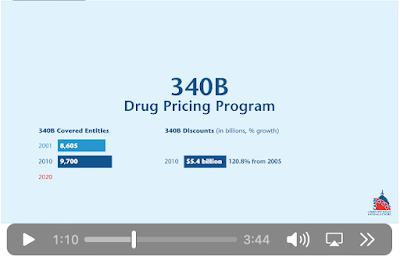
340B Drug Pricing Program
Photo Source: CANN YouTube Channel

The following materials were shared with retreat attendees:

Editor's Note: The ADAP Advocacy Association has offered opinions on 340B over the last several years, including Industry’s Changes to 340B Drug Discount Program (April 2022), 340B – Reply Hazy, Try Again (January 2020), The Federal 340B Program: A Call to Order (March 2019), and 340B Program: Don't Throw the Baby Out with the Bathwater (March 2017)

Covid-19's Impact on Public Health:

Covid-19’s impact on public health programs remains constant, evidenced by a slew of recent news reports documenting area after area falling behind with respect to efforts on prevention, testing, and treatment. Jen Laws took the liberty of deviating the discussion away from policy issues in favor of assessing patient advocacy and provider services as a response. With concentration on sustainability and succession planning, participants reflected how the crisis phase of the pandemic highlighted not just the weaknesses in public health programs, but also re-emphasized the need for HIV advocacy to consider appropriate succession planning and mentorship, as much as our service organization partners need to find room in their budgets to hire enough staff to not burn out their existing staff. 

Reminding the audience, Laws reflected, “Because eventually Bill Arnold dies.” The statement hit home for the room’s audience, referring to the empty seat draped in the fishing vest with the AIDS red ribbon on the lapel once worn by our Lion of HIV/AIDS advocacy. The group agreed that agencies need to plan better, and they have to be willing to make these investments now, not later. 

The discussion also focused on how the Covid-19 challenges have been further complicated by the emergence of yet another public health crisis: Monkeypox. The public health infrastructure is literally at a breaking point, which isn't helped by ongoing public attacks by certain politicians seeking nothing more than soundbites. 

Sign that reads: Get Tested for COVID Today"
Photo Source: MedPage Today

The following materials were shared with retreat attendees: 

The ADAP Advocacy Association would like to publicly acknowledge and thank Jen Laws for facilitating this important discussion.

Additional Fireside Chats are planned for 2023.

[1] Pitts, Peter J. and Robert Popovian (Fall 2022). 340B and the Warped Rhetoric of Healthcare Compassion. Food and Drug Law Institute. Retrieved online at https://www.fdli.org/2022/09/340b-and-the-warped-rhetoric-of-healthcare-compassion/

Disclaimer: Guest blogs do not necessarily reflect the views of the ADAP Advocacy Association, but rather they provide a neutral platform whereby the author serves to promote open, honest discussion about public health-related issues and updates.

Thursday, October 6, 2022

Surge in STI Rates Cause Alarm

By: Ranier Simons, ADAP Blog Guest Contributor

Public health in the United States has been challenged heavily in recent years with the coronavirus, meningococcal disease, and monkeypox virus. Newly released data, from the U.S. Centers for Disease Control & Prevention (CDC), paints a grim picture evidenced by the rates of sexually transmitted infections (STIs) sharply increasing during this time.[1] Personal behavior choices, regarding sexual activity, are one of many factors contributing to unfavorable STI numbers. For example, research is indicating that MSM (men who have sex with men) who are taking PrEP are using condoms less.[2] The protection provided by PrEP against HIV is causing MSM to have a false sense of security even though it does not protect against other STI’s.[3] However, behavior modification is only part of the discourse towards solutions.[4] Issues with insufficient public health funding, persistent social stigma, demonizing politics, and inconsistent policy comprise the scaffolding that undergirds the increased STIs rates.

Common STDs (STIs)
Photo Source: ACT for Youth

Recent CDC reporting of the preliminary data indicates 2.5 million reported cases of chlamydia, gonorrhea, and syphilis in 2021.[1] The numbers will increase as 2021 numbers continue to be reported in 2022. New cases of chlamydia, gonorrhea, and syphilis all increased. In 2021, syphilis infection rates reached the highest level since 1991 and the total number of cases was the highest since 1948.[5] There was a 26% increase in new syphilis infections from 2020 to 2021 in contrast to a 7% increase from 2019 to 2020.[6] The number of gonorrhea and chlamydia infections increased 4%. HIV cases also increased 16% in 2021 from 2020.[5] Increased numbers of congenital syphilis cases coincided with the increase in overall syphilis infections. Higher congenital syphilis numbers mean more child deaths, deformities, blindness, and stillbirths.[5]

Higher STI numbers indicates increases in sexual activity. Surges in sexual activity can partially be attributed to people becoming more active as covid lockdowns ended and people relaxed their social distancing practices. Data also indicates increased substance abuse during the pandemic has led to more unprotected sex and other less safe sexual practices.[5] 

Prevention and treatment are the best ways to combat STIs. However, existing barriers hamper  efforts. During the pandemic, many people lost their jobs which meant a loss of health insurance. Additionally, many free clinics paused in-person testing and some closed. Funding issues existed even before the pandemic. Elizabeth Finley, Director of Communications for the National Coalition of STI Directors states: “The programs and safety net clinics that provide essential services have long been operating on shoestring budgets and are at a breaking point – a trend accelerated by the devastating impact of COVID-19 and monkeypox…It’s long past time to increase program budgets so that they can respond to the exploding number of infections in their communities and to create a dedicated funding stream for STI clinical services.”

The federal Title X program is an example of a funding challenge. In its most recent spending bill, Congress kept the program funding flat at $286 million dollars instead of increasing it. Many state health departments and independent sexual health clinics are part of the Title X family planning program. Keeping funding flat means that the U.S. Department of Health and Human Services had to shift resources to try and reach the areas of the country with the most need. Thus, many providers in the program, in states with high STI rates, received large budget cuts.[7] Title X providers reach those who fear getting an STI test or treatment at a regular doctor’s office for fear of it showing up on insurance statements; especially youth still on parents’ insurance policies. 

Word Cloud for sexually transmitted diseases
Photo Source: Signature Care

Jen Laws, President and CEO of Community Access National Network, states: “Social stigma associated with sex is an extraordinary contributing factor in both the rise of STIs and the refusal of legislators to appropriately fund treatment and prevention programs. The current socio-political environment is toxic – rhetoric demonizing LGBTQ people and ignoring the educational needs of adolescents only fosters an environment where it's increasingly dangerous for patients to seek the care and advice they need to navigate a healthy sex life.”

The Biden Administration has proposed to increase Title X funding to $400 million for 2023, but that will not help the current situation. Other solutions involve the current infrastructure as well as private industry. Leandro Mena, the CDC’s director of STI prevention, suggests that drug addiction treatment facilities should add STI services, and the private sector needs to develop more effective STI tests, treatments, and vaccines.[7] Home test kits for STI’s would be a worthwhile private sector development effort. Kits will make it easier for people to find out if they have an STI as well as take steps to prevent spread in the same manner that home coronavirus test kits do.

A multi-pronged approach is required to battle surging STI rates. Proper funding is required, private sector interest and innovation is necessary, normalizing sexual health as a part of wholistic healthcare, and increasing education efforts. Even though money is a large part of the equation, a paradigm shift is also key to effective change.

[1] CDC. 2022. Preliminary 2021 STI Surveillance Data. Retrieved from https://www.cdc.gov/STI/statistics/2021/default.htm
[2] Hendrie, D. (2018, June 7). Rapid uptake of PrEP linked to declining condom use. Retrieved from https://www1.racgp.org.au/newsgp/clinical/rapid-uptake-of-prep-linked-to-declining-condom-us
[3] 
Nelson, R., Nagata, J. Condom Use for Anal Sex in the Era of Pre-exposure Prophylaxis (PrEP). Journal of Adolescent Health. 2022. 71(2). 245. DOI: https://doi.org/10.1016/j.jadohealth.2022.05.014
[4] 
Samuel, K. (2020, Nov 30). How PrEP users decide whether to use condoms. Retrieved from https://www.aidsmap.com/news/nov-2020/how-prep-users-decide-whether-use-condoms
[5] 
Stobbe, M. (2022, September 19). Out of control STI situation prompts call for changes. Retrieved from https://apnews.com/article/monkeypox-science-health-covid-epidemics-aaac64591251293f45c225d3fe963d0c?utm_campaign=KHN%3A%20First%20Edition&utm_medium=email&_hsmi=226604169&_hsenc=p2ANqtz-9DxmD1qskNMHydAQMYYJt6z-rEy9GkI1vckbWlm85Rf6g4BgWoG5YdpKYLf4iD7wLXHxxFxmWJ3bIHEHk5BX0HmKU0Ng&utm_content=226604169&utm_source=hs_email
6] Muller, M. (2022, September 19) Syphilis cases in the US Surged 26% last year, along with other STIs. Retrieved from https://www.bloomberg.com/news/articles/2022-09-19/us-sees-sharp-rise-in-some-sexually-transmitted-infections
7] Ollstein, A. (2022, April 12) STIs are surging. The funding to fight them is not. Retrieved from https://www.politico.com/news/2022/04/12/STIs-funding-00024678

Disclaimer: Guest blogs do not necessarily reflect the views of the ADAP Advocacy Association, but rather they provide a neutral platform whereby the author serves to promote open, honest discussion about public health-related issues and updates. 

Wednesday, September 28, 2022

Congress’s PDUFA Delay Puts Patients at Risk

By: Brandon M. Macsata, CEO, ADAP Advocacy Association 

As Congress returned from their August recess, Americans could be forgiven for thinking that major healthcare legislation is off the table for the rest of the year following the passage of the Inflation Reduction Act – the budget reconciliation bill that included numerous healthcare-related provisions. However, Congress must pass legislation that has enormous ramifications for prescription drug availability and the development of new medications by September 30th: if lawmakers don’t act by this deadline, current and future patients dependent upon effective treatments could pay a very steep price. Despite a last-minute deal amongst squabbling lawmakers, it cannot be stressed enough how important is this legislation.

U.S. Food & Drug Administration's headquarters
Photo Source: Physicians Committee for Responsible Medicine

Those of us who are alive today because of pharmaceutical innovation and a well-funded U.S. Food and Drug Administration (FDA) understand the stakes involved here. I’m a 20-year HIV long-term survivor, and I’m only alive today because of the safe, effective medications that were brought to market in a timely manner. Today, my HIV is undetectable. Recently, I also initiated long-acting agent therapy so that, instead of taking pills every single day, I receive two injections every other month. Other patients may not be so lucky if, this fall, the FDA must start laying off professionals and operating short-handed because of a lack of funds. 

Every five years, Congress reauthorizes the Prescription Drug User Fee Act (PDUFA), which provides critical financial resources to the FDA so it can hire the experts who review and approve new treatments and therapies. Each iteration of PDUFA also contains provisions to modernize the drug development and approval process, to keep the FDA on top of rapidly changing science and technologies. Congress has reauthorized PDUFA on a timely and strong bipartisan basis every five years since 1992. It is crucial that today’s Congress uphold this precedent and recognize the important role PDUFA plays in upholding the FDA’s drug review program as the worldwide. 

It is not enough for Congress to reauthorize PDUFA in a timely manner, though. It is also imperative that they pass a bill free of provisions that have nothing to do with supporting the FDA or the drug review and approval process. Some Members of Congress even want to go so far as attach proposals that would undermine drug safety, such as enabling the wholesale importation of prescription drugs from Canada.

Prescription drugs laid-out on a table
Photo Source: NBC San Diego

This is a bad and unworkable idea on its own merits and certainly shouldn’t be included in a bill intended to properly fund the FDA and support the drug review process. We already know that the Canadian government has said it won’t participate in a drug importation plan, given that country’s ongoing trouble with drug shortages. And, at a time in which many of our communities and our law enforcement agencies are already overwhelmed with an influx of counterfeit medications containing deadly doses of fentanyl, it would seem particularly unwise to welcome medicines of unknown foreign origin that have not been part of our closely-protected prescription drug supply chain. 

We are quickly approaching the deadline to reauthorize PDUFA and any debates around including irrelevant or controversial policies like importation will only slow an already delayed process down further. We do not have time to waste. Missing the reauthorization deadline for legislation that has broad bipartisan support is egregiously irresponsible. We are nearing the point at which staffers at the FDA will begin receiving notices that they are going to be furloughed due to the expiration of the current user fee law. Some of these talented people may choose to pursue positions in the private sector rather than have their salaries put at risk by political gamesmanship. 

If we lose regulatory expertise at the FDA, this is not an easily replaceable commodity. Patients like me will lose access to new treatments as the FDA finds its ability to study and approve new drugs and assure the public of their safety and effectiveness severely undermined. This is unacceptable. 

The clock is ticking. With Congress back in Washington, it needs to pass PDUFA without extraneous and irrelevant attachments. It’s not hyperbole to say that lives depend on it. Stop playing politics and put patient care first!

Disclaimer: Guest blogs do not necessarily reflect the views of the ADAP Advocacy Association, but rather they provide a neutral platform whereby the author serves to promote open, honest discussion about public health-related issues and updates. 

Thursday, September 22, 2022

Special Interests Favor S.4395, but Patients Oppose It...Here's Why

By: Brandon M. Macsata, CEO, ADAP Advocacy Association & Jen Laws, CEO, Community Access National Network

The very first words of the Ryan White HIV/AIDS Treatment Extension Act of 2009 read, “An Act to amend title XXVI of the Public Health Service Act to revise and extend the program for providing life-saving care for those with HIV/AIDS.” These words reflect the true legislative intent of the Act, which is to provide life-saving care and treatment for people with HIV/AIDS (PLWHA). For over thirty years, these words have represented a contract between our government and PLWHA, reflecting a commitment to patients. The Ryan White HIV/AIDS Program (RWHAP), as the payor of last resort, has literally served as the only lifeline for hundreds of thousands of patients in some of the most marginalized communities. That is why the ADAP Advocacy Association and the Community Access National Network (CANN) have led a national advocacy campaign to thwart any effort to undermine the legislative intent.

STOP S.4395 - Image of a stop sign with text "S.4395"

A proposed bill, S.4395 (otherwise known as the "Ryan White PrEP Availability Act"), would, for the first time in the 32-year history of this life-saving contract, open the Act to divert programmatic funding from PLWHA to people who are not living with HIV. The legislation is not only ill-conceived, it is potentially very dangerous. The special interests behind this legislation, as well as their inside-the-beltway lobbying tactics, do not reflect the general sense of the much broader HIV patient advocacy community. 

In fact, nearly 100 national, state, and local organizations joined the ADAP Advocacy Association and Community Access National Network in submitting a sign-on letter to Congress expressing the HIV patient advocacy community's collective concerns over the legislation. The sign-on letter was sent to Chair and Ranking Member of the Senate Committee on Health, Education, Labor & Pensions (HELP), Chair and Ranking Member of the House Committee on Energy & Commerce (E&C), and the Co-Chairs of the Congressional HIV/AIDS Caucus. Several of these offices applauded our efforts upon acknowledging receipt of the letter.

David Pable, who has been deeply embedded in South Carolina's patient advocacy community, expressed strong sentiments against the legislation. Pable said, "For almost 20 years, Ryan White has been a lifeline for me, and it was truly the safety net that saved my life. Ryan White-funded medical care, case management, and mental healthcare services have transform my life and the lives of countless others to survive and thrive." Pable's views are shared by nearly all PLWHA who learn about the potential danger lurking behind S.4395.

Over the years, Pable had the opportunity to be involved in many planning meetings for prevention services, including the need for an adequate PrEP program with dedicated funding. According to Pable, never in any of those meetings was it discussed as a good idea to funnel funding from the Ryan White Program to pay for PrEP. "Treatment, care and prevention make up three sides of the triangle," he said. "Together they each hold up the other, but take one piece away to support the other and eventually it will all fall apart." 

S.4395 would authorize the Health Resources & Services Administration (HRSA) to divert already limited resources away from providing care and treatment for PLWHA. The legislation reads, in part, "Any eligible area, State, or public or private nonprofit entity that receives a grant under part A, B, C, or D may use program income received from such a grant to provide to individuals who are at risk of acquiring HIV... drugs and biological products for pre-exposure prophylaxis (PrEP)... medical, laboratory, and counseling services related to such drugs and biological products...and referrals and linkages to appropriate services for the prevention of HIV."

The legislation is extremely ill-advised for numerous reasons. Amending the Ryan White Program (Pub.L. 101-381) would:

  • Open-up the law, (which is currently unauthorized) and thus subject it to potentially harmful changes in a hyper-partisan political environment. 
  • Change the purpose of the law, in that the purpose of the Ryan White Program is serving people living with HIV/AIDS.
  • Create yet another access barrier for the approximately 400,000 PLWHA who are not in care.
  • Further isolate PLWHA who are already disproportionally impacted by homelessness, hunger, substance use disorder, and undiagnosed and/or untreated mental health conditions. 
  • Impede Ending the HIV Epidemic's efforts to both increase enrollment and expand services for low-income PLWHA, especially since discretionary funding is already limited.

Unfortunately, special interests continue to push false narratives in their efforts to shove the harmful legislation through the Congress. Probably one of the most egregious claims, “The bill’s intent and text doesn’t take money from people living with HIV.” This is false! 

Indeed, legislative language reads, “To allow grantees under the HIV Health Care Services Program to allocate a portion of such funding for services to individuals at risk of acquiring HIV.” While subsection “B” of the legislation entitles the program as “voluntary” and to not allow federal grant dollars for the use of funding PrEP or PrEP services, it would allow federal grant dollars to be used for referrals – explicitly providing funding for people not living with HIV.

"$" sign surrounded by Rx pills
Photo Source: oncnursingnews.com

More concerning, special interests supporting the legislation conflate programmatic revenue as not grant dollars, as a somehow meaningful distinction. There is no difference in this distinction because each funded RWHAP recipient and subrecipient is required under current law to use their programmatic revenue to support providing services included in the grant – for people living with HIV. The design of these programs are significantly dependent on revenues generated from the 340B Drug Discount Program (340B) in order to meet the goals outlined in each of the grants. 

And that gets to the heart of the issue here. 340B's intent was “to stretch scarce federal resources as far as possible, reaching more eligible patients and providing more comprehensive services.” The program, amid much criticism, allows federal grants funding public health programs count on 340B revenues in order to show they can operate a sustainable program.

Let's be clear: S.4395 would divert RWHAP programmatic revenues – including 340B dollars – away from providing services and supports to PLWHA who are living at or below 400% of the federal poverty level (the income threshold for qualifying as eligible for receiving RWHAP funded services). It is important to remember that more than 50% of the patients receiving care from the State AIDS Drug Assistance Program are living at or below 100% of the federal poverty level. More than 250,000 patients, or approximately one quarter of all the estimated people living with HIV in the United States are earning less than $13,000 per year. 

Kathie Hiers, President & CEO of AIDS Alabama argued, "The HIV community needs to get its act together around funding for PrEP.  We have been told by the Director of the Office of National AIDS Policy that our messaging is not cohesive. At AIDS Alabama, we understand that stable PrEP programs are absolutely necessary if we ever hope to end HIV as an epidemic. However, raiding the Ryan White Program to fund prevention is not the answer, particularly as the needs of an aging HIV-positive population continue to grow."

As it stands, gaps in care still remain for too many marginalized communities. It isn't uncommon for patients to fall out of care because they have to prioritize work, or child care, or buying food, or finding affordable housing, or finding transportation. Funding to meet the needs for these patients is already stretched way too thin and the current inflationary pressures have only made things harder for far too many PLWHA. There are tens of thousands of people living with HIV who have no roof over their heads when they try to find a safe spot to sleep tonight.

Uncle Sam holding two signs, "Rob Peter" and "Pay Paul"
Photo Source: debralmorrison.com

Robbing Peter to pay Paul is not the solution to funding HIV prevention efforts in the United States. A better option to meet the needs of people who would benefit from PrEP, and that is additional HIV prevention funding. This approach would allow patient choice in medicines and support for ancillary services, provider education and outreach. Additionally, HIV prevention funding could be directed to communities that are most in need of prevention medicines and services, thereby providing more equitable access. This approach would also use and could strengthen the existing HIV prevention infrastructure.

One local health department official (who asked to remain anonymous) in Florida said the people behind the legislation did not understand the nuances between funding for HIV prevention and HIV treatment. We couldn't agree more!

The HIV+Hepatitis Policy Institute's Carl Schmid summarized, "It's not an issue of not wanting clinics that receive Ryan White Program funding to be engaged in PrEP, we think they are the perfect places for PrEP to be delivered. It is an issue of taking funding generated from caring and treating for people living with HIV away from the intended purpose of the Ryan White Program – to provide for people living with HIV. With so many people with HIV living longer, who are not in care or have fallen out of care, you would think that these Ryan White grantees would devote that money to people who are living with HIV, as it was intended."

With more than a decade of science to back the position that effectively treating PLWHA, ensuring viral suppression both empowers positive health outcomes for PLWHA and prevents new transmissions. One of the most startling and, frankly, concerning shifts in the public policy conversation regarding Ending the [domestic] HIV Epidemic is a move away from focusing on the needs of PLWHA in favor of PrEP. The policy issues at hand, including the necessary funding, should not be proposed as an “either/or” situation, but an “and” situation. The same things that make a person vulnerable to contracting HIV are the same things that are killing people already living with HIV. 

While the U.S. Centers for Disease Control and Prevention (CDC) 2020 Surveillance data found 70% of white PLWHA were virally suppressed, only 60% of their Black/African American peers were virally suppressed. Additionally, while the U.S. Department of Housing and Urban Development (HUD) reported a general homelessness rate across the country as about 0.2% of the population, the CDC’s 2019 data found that PLWHA among communities of color were experiencing homelessness at a rate of 11%. It cannot be understated how the power RWHAP dollars hold to address these disparities specifically affecting patients. Failing to do so not only betrays the contract at the center of the legislative intent, it perpetuates injustices levied against our peers, our family, and our community. Raiding precious dollars from this program is nothing short of consenting to the unjust neglect of our communities.

Said Murray Penner, U.S. Executive Director for Prevention Access Campaign: "The Ryan White Program is crucial for people living with HIV, providing treatment and supportive services to keep people healthy and undetectable so they will not sexually transmit HIV. With over 400,000 people living with HIV in the U.S. who are not virally suppressed, there is significant unmet need for additional services. S.4395 would move money out of the Ryan White Program, potentially leaving people without the crucial treatment and services that keep them healthy and prevent new transmissions. Ensuring that the Ryan White Program is fully funded is critical for us to improve the quality of life for people living with HIV and thus improve our country's viral suppression rate and help us end the HIV epidemic."

A cornerstone of the HIV patient advocacy community's success over the last 40 years has been its desire to come together for a common purpose, which has centered around the notion of do no harm! S.4395 and the special interests and inside-the-beltway lobbyists pushing it have failed to meet that test. Raiding Ryan White programmatic funding for PrEP would negatively impact patients. Trying to authorize or amend an already underfunded program, when there is still so much unmet need in its originally intended population, undermines the goals of the program. If we try to be everything to everyone, we will end up failing on all fronts. The powers that be in Congress have assured us that this legislation "ain't going anywhere" this year!

Disclaimer: Guest blogs do not necessarily reflect the views of the ADAP Advocacy Association, but rather they provide a neutral platform whereby the author serves to promote open, honest discussion about public health-related issues and updates.

Thursday, September 15, 2022

HIV & Monkeypox: More Answers Yield Even More Questions

By: Ranier Simons, ADAP Blog Guest Contributor

As the current Monkeypox outbreak continues to develop, so does ongoing research and discourse. A previous blog post, HIV & Monkeypox: What Patients Need to Know,[1] discussed early research regarding possible connections between HIV and Monkeypox. One main takeaway was that clinicians need to expand the list of symptoms they look for in Monkeypox infections. The current outbreak is not behaving as it has historically in the areas of Africa where it is endemic. Symptoms and related conditions can be mistaken for other sexually transmitted infections (STI's) or other illnesses. Additionally, it was noted that clinicians should adopt a heightened caution and suspicion of Monkeypox disease in at-risk groups. Recent research strongly reinforces the need for clinicians to increase their efforts to look for monkeypox disease in at-risk populations and the need for targeted education and messaging.

Male subject's back with Monkeypox lesions
Photo Source: Medical Express

A report published September 9, 2022, in the U.S. Center for Disease Control & Prevention's (CDC) Morbidity and Mortality Weekly Report (MMWR) shows that people who are HIV-positive or have STI’s are disproportionately represented among those infected with Monkeypox.[2] Data from health departments in eight different U.S. jurisdictions was analyzed to examine Monkeypox clinical differences regarding HIV and STI status. Out of the 1,969 people infected with Monkeypox, who were 18 years of age or older, 38% (755) were HIV-positive, 41% (816) had another STI diagnosed in the previous year, and 18% (363) had both.[2] Additionally, those people living with HIV and also infected with Monkeypox had a higher prevalence of having an STI diagnosis in the preceding year than those diagnosed with Monkeypox who were HIV-negative.

A similar study published September 4, 2022, in HIV Medicine with a much smaller cohort was conducted in Germany.[3] In this study, 546 monkeypox infections from 42 sites were analyzed. All of the subjects were men who have sex with men (MSM). There were 256 (46.9%) patients living with HIV, mostly with viral suppression, 232 (42.5%) were taking pre-exposure prophylaxis  (PrEP), and 58 (10.6%) had no HIV infection or PrEP use. 

The likelihood of hospitalization of HIV-positive patients diagnosed with Monkeypox is still unclear. The CDC study indicates that co-infection with HIV may increase the risk of hospitalization but, the German study does not.[4] The CDC study confirmed hospitalization records from around 1,300 out of the 1,969 subjects. Eight percent of those hospitalized were HIV-positive and 3% were not. Conversely, the German study did not show a significant difference in hospitalization rates. Among those 546 men the overall hospitalization rates were 4% regardless of HIV status.

Both studies have limitations thus, cannot be used to provide definitive generalizations regarding clinical differences in Monkeypox infections between MSM with or without HIV. However, what is abundantly clear is the increased prevalence of the Monkeypox infections amidst MSM living with HIV, with STI’s or both. Evidence shows the heightened prevalence of HIV in populations that regularly receive HIV and STI health services. Thus, it is imperative that clinicians increasingly offer Monkeypox testing to those being treated for HIV and other STI’s in addition to increasing HIV and STI testing for those being treated for monkeypox.

MPV Vaccine
Photo Source: ABC News / AP Photo / Neil Redmond, File

The ongoing research continues to support the observation that Monkeypox is being spread among MSM through social/sexual networks. Therefore, Monkeypox vaccination as prevention coupled with testing and treatment for HIV, Monkeypox and other STI’s remain to be where efforts need to be focused. The CDC reports that recent findings could lead to expanded Monkeypox vaccination recommendations. The findings may lead to vaccines being recommended for “people with recent STD infections, people with HIV, people taking pre-exposure prophylaxis (PrEP) medications to prevent HIV infection and, possibly, prostitutes”.[5] 

Continuing studies will eventually confirm whether HIV infection definitively causes worse outcomes with those infected with monkeypox and/or if simultaneous HIV/STI infection clinically makes someone  more susceptible to contracting Monkeypox. However, it is simultaneously important to work towards stopping the spread of the disease.

[1] Simobns, Ranier. (2022, September 1). HIV & Monkeypox: What Patients Need to Know. The ADAP Blog. Retrieved from https://adapadvocacyassociation.blogspot.com/2022/09/hiv-monkeypox-what-patients-need-to-know.html
[2] Hoffman, C. et al. (2022). Clinical characteristics of monkeypox virus infections among men with and without HIV: A large outbreak cohort in Germany. HIV Medicine. Retrieved from https://onlinelibrary.wiley.com/doi/10.1111/hiv.13378
[3] 
Tarin-Vincente, E., Alemany, A., et al. (2022). Clinical presentation and virological assessment of confirmed human monkeypox virus cases in Spain: a prospective observational cohort study. The Lancet. 400(10353), 661-669. DOI:https://doi.org/10.1016/S0140-6736(22)01436-2
[4] 
Hein, I. (2022, September 2022). People with HIV more likely to be hospitalized with Monkeypox? Retrieved from https://www.medpagetoday.com/infectiousdisease/hivaids/100628
[5] Stobbe, M. (2022, September 8). US may expand monkeypox vaccine eligibility to men with HIV. Retrieved from https://abcnews.go.com/Health/wireStory/us-expand-monkeypox-vaccine-eligibility-men-hiv-89545619

Disclaimer: Guest blogs do not necessarily reflect the views of the ADAP Advocacy Association, but rather they provide a neutral platform whereby the author serves to promote open, honest discussion about public health-related issues and updates.