Thursday, February 15, 2024

NHBS-Trans Sheds Light on HIV Prevalence Among Transwomen in the United States

By: Ranier Simons, ADAP Blog Guest Contributor

Transgender women have disproportionately higher rates of HIV. It Is estimated that 14% of transwomen in the United States are living with HIV. Numerous studies exist examining HIV in various populations and subgroups. However, data on the mechanisms of HIV in the transgender community is lacking. The Centers for Disease Control & Prevention (CDC) uses data to determine who is most at risk for HIV, and that data comes from healthcare providers. Unfortunately, for a long time, there was no mandate for providers to count transgender patients. Historically, transgender women were categorized as gay and bisexual men, although they have vastly different needs. The 2015 update to the National HIV/AIDS Strategy prioritized data collection for trans people, and its mandate went into effect in 2018. Recently, the CDC released data from a systematic biobehavioral study conducted to examine HIV risk factors among transwomen.[1,2,3]

HIV Prevalence Among Transgender Women in the United States
Photo Source: CDC

The CDC developed a surveillance system named National HIV Behavioral Surveillance Among Transgender Women (NHBS-Trans).[1] The purpose was to gather data specific to transgender women regarding HIV prevention, risk factors, testing services, and other social determinants affecting HIV treatment and overall health. From 2019 to 2020, the study gathered data from 1,609 transgender women from seven U.S. urban areas: Atlanta, Los Angeles, New Orleans, New York City, Philadelphia, San Francisco, and Seattle.[1] Trained interviewers administered anonymous questionnaires utilizing computer tablets and offered free blood rapid HIV testing. The participants were selected through respondent-driven sampling. This means that after an initial seed group of participants was identified through a referral from a community-based organization, they were asked to go out into their communities and recruit others. The study revealed that many factors contribute to the high rate of HIV among transwomen, with discrimination being one of the leading causes.

Approximately 42% of the study participants tested positive for HIV. Among the black subjects, 62% were living with HIV, 35% of the Hispanic and Latino participants, and 17% of the white participants.[2,4] The study data showed that the disproportionately high rate of HIV was due to factors such as lack of access to PrEP, discrimination in employment and healthcare access, homelessness, and even violence and harassment.[2,4]

Among all the participants, 17% had no health insurance, 7% had not visited a health provider in the past year leading up to the study, and 63% had household incomes at or below the poverty level. Additionally, 42% had experienced homelessness in the previous 12 months leading up to the study, 17% had been incarcerated, and 34% had received money or drugs in exchange for sex.[4] Employment discrimination was intertwined with a lack of healthcare access. People usually get healthcare coverage through their employment. Over 32% of the participants reported having great difficulty finding employment, with 10% stating they had been fired due to being transgender.[3,4] Without employment, many were without healthcare insurance. Lack of health insurance results in no access or poor access to HIV care and treatment, lack of access to PrEP, and lack of access to gender-affirming care.

Protesters holding signs that read, Trans Rights are Human Rights
Photo Source: iStock | Rights Purchased

Participants who were on Medicaid in states where Medicaid did not cover gender-affirming care were twice as likely to have difficulty finding employment.[3] Lack of employment leads to homelessness and housing instability. Moreover, difficulty finding employment leads some transgender women into sex work for survival, which is a high-risk factor for HIV transmission as well as an avenue into possible incarceration.[4] Lack of gender-affirming care also adversely affects HIV treatment and prevention. Studies have shown that transgender women receiving gender-affirming care are less likely to contract and transmit HIV.[5] This is due to the health education they receive with the care. Additionally, meeting the basic needs of identity allows transgender women to focus on other aspects of their health. Without gender-affirming healthcare, some transgender women take non-prescription hormones, which are potentially damaging to their health. Improper dosages, poor quality of medication, and lack of medical guidance can result in additional poor health outcomes. Moreover, some participants reported not seeking out PrEP or being inconsistent with their medicines out of fear of drug interactions with their hormone therapy. The study highlights the need to couple gender-affirming care with HIV prevention and treatment.

The study also revealed data regarding abuse and harassment. Approximately 54% of the transgender women in the study reported verbal abuse or harassment because of their identity, with 27% reporting physical abuse.[4] Of those reporting physical abuse, 15% reported the abuse from a sexual or intimate partner. Lack of social support and healthy surroundings adds to the mental stress and instability of the lives of these transgender women, which can also lead to illicit drug use as a way to cope. Eighteen percent of the participants had suicidal thoughts. Seven percent had previously made plans, and 4% had attempted suicide.

The study is not genuinely national since the sampling is from specific urban environments. However, it does highlight the dire need for more research to gather robust data regarding transgender women and HIV. Potentially, data can influence policymakers to create policies to facilitate beneficial access to HIV and gender-affirming care that improves their lives and respects their identities. It is essential to provide safe spaces where transgender women can receive culturally competent care coupled with access to medically sound interventions, prevention, and treatment specific to their needs. Policy intervention is also needed to remove transgender discrimination regarding employment and housing.

[1] Kanny D, Lee K, Olansky E, et al. Overview and Methodology of the National HIV Behavioral Surveillance Among Transgender Women — Seven Urban Areas, United States, 2019–2020. MMWR Suppl 2024;73(Suppl-1):1–8. DOI: http://dx.doi.org/10.15585/mmwr.su7301a1

[2] Adamczeski, R. (2024, January 28). Transgender women have a higher risk of HIV infections. A new CDC report reveals why. Retrieved from https://www.advocate.com/news/transgender-women-hiv-infections-discrimination

[3] Adamczeski, R. (2024, January 29). The real reason trans women have high HIV rates. Retrieved from https://www.hivplusmag.com/transgender/trans-women-high-hiv-rates

[4] Centers for Disease Control and Prevention. HIV Infection, Risk, Prevention, and Testing Behaviors Among Transgender Women—National HIV Behavioral Surveillance, 7 U.S. Cities, 2019–2020. HIV Surveillance Special Report 27. Retrieved from http://www.cdc.gov/hiv/library/reports/hiv-surveillance.html. Published April 2021.

[5] Owen, G. (2023, April 28th). Surprising study indicates trans women in gender-affirming care contract HIV less often. Retrieved from  https://www.lgbtqnation.com/2023/04/surprising-study-indicates-trans-women-in-gender-affirming-care-contract-hiv-less-often/

Disclaimer: Guest blogs do not necessarily reflect the views of the ADAP Advocacy Association, but rather they provide a neutral platform whereby the author serves to promote open, honest discussion about public health-related issues and updates. 

Thursday, February 8, 2024

Feds Tell States to Cover Hep C Medications, Regardless of Substance Use

By: Ranier Simons, ADAP Blog Guest Contributor

The right to health is a human right recognized in many international human rights documents, such as the 1966 International Covenant on Economic, Social, and Cultural Rights and the World Health Organization’s (WHO) Constitution.[1,2] According to the WHO, “Countries have a legal obligation to develop and implement legislation and policies that guarantee universal access to quality health services and address the root causes of health disparities, including poverty, stigma and discrimination.”[1] To that end, in recent history, the United States Departments of Justice (DOJ) and Health and Human Services (HHS) have found it necessary to intervene in order to protect citizens’ right to health. 

U.S. Department of Justice
Photo Source: U.S. Department of Justice

The DOJ Civil Rights Division issued a letter to state Medicaid administrators on January 24, 2024, reminding them of their obligation to ensure that their programs allow people who have both Substance Use Disorder (SUD) and Hepatitis C (HCV) to access direct-acting antivirals (DAAs).[3] In the letter, the DOJ and HHS reiterate Medicaid agencies are required to grant this access under the Americans with Disabilities Act (ADA). Under the Act, states cannot discriminate against people with disabilities, which includes SUD. SUD qualifies as a disability because it “substantially limits one or more major life activities and interferes with the operation of key bodily functions.”[5]

In 2022, the DOJ reached a settlement agreement with Alabama Medicaid after an investigation of its Medicaid policy. It was denying access to DAAs for people who had consumed drugs or alcohol six months prior to starting treatment and denying payment if they used any drugs during their treatment. The DOJ accused Alabama Medicaid of “imposing non-medically indicated sobriety restrictions for HCV treatment, in violation of the Americans with Disabilities Act (ADA).”[4] There was no scientifically evidence-based reasoning for the restriction. 

Alabama Medicaid agreed to multiple stipulations and reporting requirements as part of the settlement. They were required to reverse their sobriety policy for HCV treatment and agree not to create any further restrictions, such as requirements for drug or alcohol counseling.[4] Additionally, Alabama Medicaid had to notify Medicaid providers of the change and inform the  Alabama Board of Medical Examiners and the Alabama Department of Public Health.[4] One notable requirement was notification of all Medicaid recipients of the change, thus informing them of their rights. Interestingly, in the settlement, Alabama Medicaid denied any acknowledgment of any violation of the ADA but framed their cooperation as an amicable negotiated resolution to the matter.[4]

Substance Use Disorder
Photo Source: Arkansas Medical Society

The DOJ utilized the ADA in 2020 to reach a settlement with Massachusetts General Hospital.[6] Massachusetts General Hospital denied a cystic fibrosis patient access to be listed on the lung transplant list because he was taking suboxone, a drug used to treat dependence on opioids. The cystic fibrosis damaged his lungs so severely that he needed a lung transplant to live. As part of the settlement, Massachusetts General Hospital paid $170,000 to the patient and $80,000 to his mother.[6] The hospital additionally agreed to give ADA training to its staff and end its discriminatory policy. The patient ended up receiving a lung transplant at the University of Pennsylvania.[6] Selma Medical, Charwell Operating Nursing Facility, Athena Health Care Systems, Alliance Health, New England Orthopedic Surgeons, and King’s Daughters Medical Center are other providers that reached settlements with the DOJ after violating the ADA by denying healthcare to patients taking medication for SUD.[6] 

Utilizing the ADA to ensure health protections for people with SUD is a robust tool. However, under the ADA, protections against discrimination only extend to “a person in recovery who is no longer engaging in the current illegal use of drugs.”[7] Protections from being denied healthcare services is an exception or ‘carve-out’: “A person who is currently engaging in the illegal use of drugs can’t be denied healthcare or rehabilitation services because of their current use if they would otherwise qualify for these services.”[7] 

That is why the letter issued by the DOJ and HHS is important. Amplifying attention to the matter is a way to prevent harm before it happens since widespread understanding of the exception is lacking policy-wise and programmatically. Although people with SUD have rights, having to fight for their rights when denied care results in treatment delays and poor health outcomes. It is better to address and change policy before issues occur. The letter is guidance and an indication to entities that the DOJ can and will actively seek remedy against infractions. Optimistically, the threat of litigation is enough of a deterrent for entities to examine and modify their policies.

[1] World Health Organization. (2023, December 1). Human rights. Retrieved from https://www.who.int/news-room/fact-sheets/detail/human-rights-and-health#:~:text=The%20right%20to%20health%20and,of%20physical%20and%20mental%20health.

[2] Office of the United Nations High Commissioner for Human Rights. n.b. The Right to Health. Retrieved from https://www.ohchr.org/sites/default/files/Documents/Publications/Factsheet31.pdf

[3] Department of Justice. (2024, January). Letter to State Medicaid Administrators. Retrieved from https://www.justice.gov/d9/2024-01/dear_colleague_letter-state_medicaid_coverage_for_people_with_hcv_and_sud.pdf

[4] Settlement Agreement between the United States of America and the State of Alabama's Medicaid Agency. (2022, December 5). Retrieved from https://www.justice.gov/opa/press-release/file/1555501/download

[5] U.S. Department of Justice Civil Rights Divison. (2022, April 5). The ADA and Opioid Use Disorder: Combating Discrimination Against People in Treatment or Recovery. Retrieved from https://www.ada.gov/resources/opioid-use-disorder/#2-does-an-individual-in-treatment-or-recovery-from-opioid-use-disorder-have-a-disability-under-the-ada

[6] Rahim, H. (2023, Decemeber 26). Does the ADA protect people with substance use disorder from health care discrimination? Retrieved from https://blog.petrieflom.law.harvard.edu/2023/12/26/the-ada-as-protection-from-health-care-discrimination-towards-persons-with-substance-use-disorder/

[7] ADA National Network. (2020). The Americans With Disabilities Act, Addiction, and Recovery for State and Local Governments. Retrieved from https://adata.org/factsheet/ada-addiction-and-recovery-and-government

Disclaimer: Guest blogs do not necessarily reflect the views of the ADAP Advocacy Association, but rather they provide a neutral platform whereby the author serves to promote open, honest discussion about public health-related issues and updates. 

Thursday, February 1, 2024

Nicolas Overfield’s Avoidable Tragedy is a Symbolic Failure of Justice

By: Ranier Simons, ADAP Blog Guest Contributor

Access to timely, appropriate care is required for a high quality of life and optimal healthcare outcomes. Vulnerable populations face many challenges to proper care, especially people who are living with HIV (PLWH). Incarcerated PLWH endure compounded harm. The same people who are disproportionately represented in jails and prisons are also disproportionately represented by HIV. Recently reported in the media is the story of a young man, Nicholas Overfield, who lost his life because he was denied his HIV medication while in jail.[1]

Nicholas Overfield is shown with his mother, Lesley Overfield. She is suing El Dorado County and Wellpath Community Care, a company that contracts with governments to provide medical treatment in correctional facilities. (Overfield family)
Photo Source: Los Angeles Times | Overfield family

In February 2022, Nicholas Overfield was arrested and detained at El Dorado County Jail for failure to appear in court.[2] Upon his arrest, he informed the police that he was HIV positive and required his HIV medication daily to keep his HIV controlled.[2] His medication was present at this home, and his mother gave his medication to the police before they took him away.[2] On April 22, 2022, Nicholas’ mother visited him, and he was brought to her in a wheelchair because he was too weak to walk and was unable to speak.[2] The following day, his mother confronted a jail nurse demanding the medical care that he needed, and he subsequently ended up being rushed to the hospital that same night, requiring emergent care. After being hospitalized, he was placed into hospice care and died on June 21, 2022.[2]

Under the Eight Amendment of the U.S. Constitution, prisoners have a right to receive medical care, especially for serious medical issues, regardless of whether they are housed in a local, state, or federal jail or prison.[4] Mandisa Moore-O’Neal, Executive Director of the Center for HIV Law and Policy (CHLP), explains, “It is a fundamental duty to provide the necessary healthcare to those under your care and control, and yet jails and prisons across the country find so many ways to circumvent or all around avoid that duty.” 

It is well-documented that many inmates in jails and prisons receive substandard medical care.[3,5,6]. About 19% of inmates haven’t had a single health-related doctor visit since incarceration. The disjointed and weak infrastructure of incarceration health is especially life-threatening for people with chronic health conditions such as HIV. 

Sign that reads, "Medical neglect is cruel and unusual"
Photo Source: PBS News Hour

Incarcerated PLWH frequently have long delays in receiving medication, spotty administration of medication, or complete omission. This can result in drug resistance, which can make a person even sicker. In the case of Nicolas Overfield, because he was denied his medication, he progressed to AIDS.[2] His lack of proper care in jail also resulted in the failure of his body to fight off the encephalitis varicella-zoster virus that he contracted while incarcerated, which also contributed to his physical decline.[2]

Nicolas Overfield’s situation spotlights one of the contributing factors to poor prison healthcare, which is the outsourcing of prison healthcare to private contractors. Marcus J. Hopkins, founder & executive director of the Appalachian Learning Initiative (AAPLI), explains, “One of the biggest issues with carceral healthcare provision is that most of it occurs behind a wall of secrecy. As with most services, healthcare provision has been contracted out to private companies, such as Corizon and Wellcare, who use trade secrets laws—specifically the provisions that protect the negotiation of services and prices—to shield the exact services they provide.” 

This makes it hard to gather information since they are characteristically lax in reporting their data. A deep-diving Reuters study of over 500 jails revealed that from 2016-2018, jails relying on one of the five leading jail healthcare contractors had higher death rates than facilities where medical services are run by government agencies.[3] Often, some facilities, especially those in smaller jurisdictions with tighter budgets, will hire private contractors for ease of managing health services and to save money.[3]

Unfortunately, the means by which some private contractors save money is by denying care, such as not sending inmates to hospitals when care is needed. The contracts these private providers have sometimes do not have proper standards, staffing requirements, and protocols stipulating protocols for health monitoring and hospitalizations.[3] When inmates, especially those with chronic and mental health conditions, do not receive care, it is not only dangerous for their well-being but also the well-being of other inmates and staff. Inmates with documented mental health issues can be a danger to themselves and others when they are not effectively monitored and kept on their medications. Additionally, when inmates are not treated and screened for sexually transmitted diseases, diseases spread. Eventually, people in jails and prisons are released back into society. This is a danger to public health at large, releasing people with undocumented and uncontrolled diseases or ailments. 

Hand inside prison bars
Photo Source: The Lancet | Copyright © 2016 Sakhorn

The largest jail healthcare companies are Wellpath Holdings Inc., NaphCare Inc., Corizon, PrimeCare Medical Inc., and Armor Correctional Health Services Inc.[3] Wellpath is the company in charge of the jail where Nicolas Overfield was a pre-trial detainee. Not only is Wellpath private, but it is owned by a private equity firm, which would indicate that it has a targeted interest in saving money and making a profit.[3] Some private jail health contractors state that the levels of healthcare challenges of incarcerated populations are why they have higher death rates. However, studies have shown that when you control for the differences in the health of the overall population as compared to the general population, private prisons still have more deaths.[3]

Nicolas Overfield’s avoidable tragedy is a symbolic failure of justice. Ms. Moore-O’Neal expressed, “his incarceration sheds some light on the injustice that is our criminal legal system. The fact that he was even in jail because of a February 2022 arrest for failure to appear in court should have all of us appalled and ready to overhaul this entire system.” Many people like Nicolas Overfield sit in jails and suffer harm and neglect, sometimes fatally before they even make it to trial. Failure to provide constitutionally adequate medical care is not only a legal issue but a human rights issue.

[1] Kandel, J. (2024, January 19). ‘A shocking failure’: Inmate died after jail medical staff denied him HIV medication for months, lawsuit alleges. Retrieved from https://lawandcrime.com/lawsuit/a-shocking-failure-inmate-died-after-jail-medical-staff-denied-him-hiv-medication-for-months-lawsuit-alleges/

[2] Complaint for Damages OVERFIELD v. WELLPATH, et al. (2024, January 16). Retrieved from https://s3.documentcloud.org/documents/24369518/overfield-v-wellpath-complaint.pdf

[3] Szep, J., Parker, N., Eisler, P., Smith, G. (2020, October 26). Special Report: U.S. jails are outsourcing medical care — and the death toll is rising. Retrieved from https://www.reuters.com/article/idUSL1N2HG0MD/

[4] Estelle v. Gamble, 429 U.S. 97, 102 (1976).

[5] Levins, H. (2023, March 6). Reviewing The Flaws of U.S. Prisons and Jails’ Health Care System. Retrieved from https://ldi.upenn.edu/our-work/research-updates/the-flaws-of-u-s-prisons-and-jails-health-care-system/

[6] Wang, L. (2022, June). Chronic Punishment: The unmet health needs of people in state prisons. Retrieved from https://www.prisonpolicy.org/reports/chronicpunishment.html#insurance

Disclaimer: Guest blogs do not necessarily reflect the views of the ADAP Advocacy Association, but rather they provide a neutral platform whereby the author serves to promote open, honest discussion about public health-related issues and updates.

Thursday, January 25, 2024

For People Living with HIV, Why Covid-19 Still Matters

By: Ranier Simons, ADAP Blog Guest Contributor

Even though the COVID-19 pandemic emergency designation is no longer in effect, COVID-19 remains a very present public health issue. Research continues to unearth and examine its mechanisms and effects on the body. Understanding COVID-19 is vital for people living with HIV (PLWH) because co-infection with HIV has different consequences than for those who are HIV-negative. Studies continue to reveal the results of the interactions of HIV and COVID-19 and the realities of long Covid.

Living with HIV and Covid-19
Photo Source: HIV.gov

A significant difference discovered regarding HIV and COVID-19 is that PLWH are at a higher risk of being reinfected with COVID-19 after an initial bout. The Centers for Disease Control & Prevention (CDC) and the Chicago Department of Public Health studied 453,000 Chicago residents who contracted COVID-19. They found that 5.2% of HIV-negative people experienced reinfection, while the reinfection rate of PLWH was 6.7%.[1] Additionally, data showed that PLWH had higher primary vaccination plus booster rates than the general population at 31.8% and 27%, respectively.[1] This supports the hypothesis that HIV infection is a reinfection risk causal factor.

Increased risk of developing long Covid is another reality of the intersection of HIV and COVID-19. Long Covid is defined as a range of over 200 symptoms that linger or appear after an acute episode of Covid-19.[3,6] This wide range of symptoms can last months or years. Frequently reported symptoms of long covid include cognitive impairment (brain fog), incessant fatigue, loss of smell, muscle pain, shortness of breath, post-exertional malaise (inability to recover after exercise), and postural orthostatic tachycardia syndrome (POTS).[2,3,4] POTS is a relatively new term to describe a condition that has previously gone without a name. It is an issue with the autonomic nervous system that can cause fainting, rapid heartbeat, and dizziness.[5] Additionally, research presented at the 2023 Conference on Retroviruses and Opportunistic Infections (CROI), shows that not only are PLWH more likely to have persistent long Covid symptoms but have an increased risk of developing new diseases such as diabetes, heart disease, and cancer.[2,7]

Long Covid and HIV
Photo Source: Michael Peluso, MD | IAS 2023

Some possible causes of long Covid symptoms are inflammation, persistent SARS-CoV-2 infection, reactivation of existing pathogens, immune responses that don’t return to normal after acute infection, and "leaky gut" condition.[2] HIV is already known to cause microbial translocation, known as leaky gut. This means weakened intestinal wall permeability allows bacteria and their toxins into the bloodstream, causing disease. Since studies are showing that long Covid symptoms may be due to the SARS-CoV-2 virus causing loss of gut wall integrity, having HIV compounds that condition.[3] Research has also proven that PLWH have higher levels of chronic inflammation, which could compound the inflammation caused by Sars-CoV-2 that raises risks of long Covid.[3] PLWH have increased susceptibility to vascular disease and endothelial dysfunction.[8] This can worsen long Covid related clotting and heart problems.[2,8]

Continuing research is necessary to investigate all the nuances of HIV and Sars-CoV-2 infection. Most notably, it is essential to delineate how long Covid amidst PLWH differs from the general population. At present, it is imperative that PLWH continue to follow medical guidelines concerning staying up to date with COVID-19 vaccinations and remaining consistent in treating comorbid conditions. Research shows that vaccination does reduce the severity of long Covid symptoms, even though it is true that PLWH may experience long Covid at a higher rate than the general population.[2,3] Additionally, it is crucial that PLWH are included in clinical trials investigating treatments for long Covid symptoms.

[1] Kekatos.M. *2923, October 18). People with HIV at higher risk of COVID reinfection: CDC. Retrieved from https://abcnews.go.com/Health/people-hiv-higher-risk-covid-reinfection-cdc/story?id=104035803

[2] Highleyman, L. (2024, January 17). Are people with HIV at greater risk for long COVID. Retrieved from https://www.poz.com/article/people-hiv-greater-risk-long-covid

[3] Alcorn, K. (@023, June 13).More evidence that long COVID is more common in people with HIV. Retrieved from https://www.aidsmap.com/news/jun-2023/more-evidence-long-covid-more-common-people-hiv

[4] Davis, H., Assaf, G., McCorkell, L., Wei, H., Low, R., Re’em, Y., Redfield, S., Austin, J. P., & Akrami, A. (2021). Characterizing long COVID in an international cohort: 7 months of symptoms and their impact. EClinicalMedicine, 38, 101019. https://doi.org/10.1016/j.eclinm.2021.101019

[5] Morris, A. (2023, February 23). A condition called POTS rose after covid, but patients can’t find care. Retrieved from https://www.washingtonpost.com/wellness/2023/02/27/pots-heart-fainting-long-covid/ 

[6] Davis, H., Assaf, G., McCorkell, L., Wei, H., Low, R., Re’em, Y., Redfield, S., Austin, J. P., & Akrami, A. (2021b). Characterizing long COVID in an international cohort: 7 months of symptoms and their impact. EClinicalMedicine, 38, 101019. https://doi.org/10.1016/j.eclinm.2021.101019

[7] Yendewa, G. A., Perez, J. A., Patil, N., & McComsey, G. A. (2022). HIV Infection is Associated with Higher Risk of Post-Acute Sequelae of SARS-CoV-2 (PASC) However Vaccination is Protective. Social Science Research Network. https://doi.org/10.2139/ssrn.4276609

[8] Peluso, Michael J.a; Antar, Annukka A.R.b. Long COVID in people living with HIV. Current Opinion in HIV and AIDS 18(3):p 126-134, May 2023. | DOI: 10.1097/COH.0000000000000789

Disclaimer: Guest blogs do not necessarily reflect the views of the ADAP Advocacy Association, but rather they provide a neutral platform whereby the author serves to promote open, honest discussion about public health-related issues and updates.

Thursday, January 18, 2024

FDA Failure: Why Agency's Approval of Floridian Drug Importation Plan Fails Patients on Both Sides of the Border

By: Ranier Simons, ADAP Blog Guest Contributor

The U.S. Food & Drug Administration (FDA) has started the year off in the news cycle under controversy. The beleaguered federal agency announced on January 5th its authorization of Florida’s flawed drug importation program.[1] Under section 804 of the Food, Drug, and Cosmetic Act (FD&C Act), the FDA created a pathway for states to import certain prescription medications from Canada.[2] A state must submit a section 804 importation program proposal (SIP) to the FDA, which fulfills all requirements specified by the FD&C Act and FDA regulations delineated under the Code of Federal Regulations Title 21 Part 251 (21 C.F.R. part 251).[3] Drug prices in Canada are significantly lower than those in the United States, but rooted in a myriad of reasons. The goal, in theory, is to lower the costs of drugs for the consumer by purchasing them at lower prices from Canada. However, Florida’s SIP does not provide lower costs for consumers, threatens the safety of the United States' drug supply, and could cause harm to Canadians. Moreover, in its current approved iteration, Florida’s plan is an acute threat to people living with HIV (PLWH) since many of the proposed drugs for import are HIV treatments. For that reason, ADAP Advocacy was the very first patient advocacy organization to question the FDA's decision after it was made public.

ADAP Advocacy Blasts  @US_FDA  on Florida's Drug Importation Approval - Federal agency's approval of the risky drug importation plan potentially puts the health of people living with HIV at risk https://adapadvocacy.org/pressroom.html #DrugImportation #CounterfeitDrugs #Florida

All of the FDA and FD&C Act rules for the importation of prescription drugs from Canada exist to support one central overarching tenet: to significantly reduce the cost of drugs to the American consumer without imposing additional risk to public health and safety. Florida’s plan does not fulfill that tenet. According to Florida’s SIP, the drugs purchased are for those receiving care through the Florida Agency for Healthcare Administration and its Medicaid managed care plans, Agency for Persons with Disabilities (APD), Department of Children and Families (DCF) mental health treatment facilities, Department of Corrections (DOC), and the Department of Health (DOH) county health departments.[4] Those served by these entities are a small subset of the overall Floridan population. Additionally, those receiving prescription drugs through these programs already have access to them at very deep discounts and, in some cases, for free. Any resulting cost savings would benefit state drug spending expenditures, not Floridian consumers.

Cost savings or cost containment is also a challenge due to the logistics required to properly execute the importation program. The section 804 importation program rules require many steps to help ensure the safety of imported medications. One of these critical steps is testing. Testing of every batch of imported medicines is required to verify authenticity, degradation inquiry, and purity to rule out contamination and more.[2,3,5] Testing is expensive and requires the usage of FDA-acceptable testing laboratories. Florida plans to use two testing facilities, one mainly functioning as a backup. One is in Detroit, Michigan, and the other is in Fairfield, New Jersey.[4] There is only one FDA-approved U.S. Customs and Border Protection (CBP)port of entry for eligible imported drugs, which is in Detroit.[4] Thus, there are costs associated with temperature-controlled transport of medications to testing facilities.

U.S. Food & Drug Administration headquarters
Photo Source: US Times Mirror

The costs are just a fraction of the multitude of costly logistical details on both sides of the Canadian border required to implement Florida’s importation plan. The state has a $38 million contract with a logistics company for the administration and operation of the program.[6] This cost is in addition to paying for the drugs purchased under the program. Not only are most Floridians not receiving any consumer relief from prescription drug costs, but as taxpayers, their money is paying for the program. Research by Dr. Kristina M.L. Acri revealed that costs associated with conducting proper testing of imported drugs cancel out any potential savings.[7]

The logistics of implementing the program is also part of why it has the potential to add risk to public health and safety. Section 804 and the FDA regulations stipulate extensive and detailed requirements such as reporting on the origin of medications and their manufacturing, the documentation of the controlled chain of custody of drug batches, verifying that all Canadian suppliers receive drugs from FDA-approved manufacturers, and even requiring a detailed system for notification and retrieving drugs that have been recalled. Proper execution requires many moving parts and geographical locations, providing multiple points of possible compromise. The massive implementation will also result in subcontracting for various aspects, posing another potentially disastrous failure that can result in counterfeit medications, lowered efficacy of drugs due to improper storage or transport, or even adulterated or tampered medications. Moreover, Canada does not have a track and trace system like the United States; thus, there is no solid way to verify true transparency back to a non-US manufacturer.[8]

On the other side of harm is the damage Florida’s drug importation program could potentially be due to the Canadian system. Lyne Fortin, B.Pharm, MBA, who serves on ADAP Advocacy's board of directors, offered her insights from the Canadian perspective: "In recent years, 1 in 5 approved prescription drugs in Canada have been in out-of-stock situations, creating already enormous pressure on the public Canadian Healthcare which continues to introduce regulatory safeguards against US drug importation initiatives. The recent FDA decision, however, paving the way for such a program in Florida dangerously compounds the risks and severity of potential drug shortages for Canadians. Florida alone represents half of the entire Canadian population. HIV being a chronic, life-threatening infectious condition where U=U, the importance of secured supply and drug integrity are even more heightened. When patients on both sides of the border bear all the risks against the pursuit of unvalidated economic benefits, flags should be raised to balance short-sighted wishful thinking policies."

Two pills with one symbolized by U.S. flag and other with Canadian flag
Photo Source: AARP

On January 8th, Health Canada, Canada's version of the FDA, released a statement in response to the FDA decision. “Regulations have been implemented under the Food and Drugs Act to prohibit certain drugs intended for the Canadian market from being sold for consumption outside of Canada if that sale could cause, or worsen, a drug shortage in Canada. This includes all drugs that are eligible for bulk importation to the United States, including those identified in Florida's bulk importation plan or any other state's future importation programs.”[9] Canada is effectively legislatively blocking the bulk exportation of drugs. Essentially, no wholesaler in their legitimate supply chain can ship to the United States, and FDA regulations do not allow imported drugs outside of the legitimate supply chain. Additionally, manufacturers that sell their patented medications in both United States. and Canadian markets will not sell extra supplies to Canada just to potentially buffer increased demand due to exportation. Thus, if any exportation occurred, it would be from the supply meant explicitly for Canada, directly shorting their coffers. Canadians, in general, aren't too happy with the news either!

In addition to the aforementioned problems associated with the Florida bulk importation program, it poses a targeted threat to PLWH. Of the fourteen initial drugs listed for procurement in the Florida SIP, ten are HIV treatment medications. In recent years, there have been issues with counterfeit HIV medications. Gilead Sciences was the victim of a notable scheme. Over a two-year period, criminals sold over $250 million of counterfeit bottles of their HIV drugs including Descovy, Genvoya and Biktarvy.[10] Anything that can threaten the already fragile supply chain of HIV medication, such as drug importation, is a detriment to both U.S. and Canadian public health.

The FDA’s approval of Florida’s SIP is just the first step and one hill the state must climb to actually see any medicine in hand from this program, much less any savings. Additionally, given that Canada is not supportive of the venture, Florida does not have a Canadian supply to tap. Ultimately, the more significant issue is that importation does not solve the United States problem of high prescription drug prices.

[1] FDA. (2024, January 5). News Release: FDA Authorizes Florida's Drug Importation Program. Retrieved from https://www.fda.gov/news-events/press-announcements/fda-authorizes-floridas-drug-importation-program

[2] FDA. (2024, January 5). Importation program under section 804 of the FD&C Act. Retrieved from https://www.fda.gov/about-fda/reports/importation-program-under-section-804-fdc-act

[3] National Archives and Records Administration. (2024, January 10). Code of Federal Regulations: Part 251 - Section 804 Importation Program. Retrieved from https://www.ecfr.gov/current/title-21/chapter-I/subchapter-C/part-251

[4] State of Florida. (2023, October 20). The State of Florida’s Section 804 Importation Program (SIP) Proposal for the Importation of Prescription Drugs from Canada. Retrieved from https://www.safemedicines.org/wp-content/uploads/2019/09/01-Florida-SIP-Proposal-Oct-2023.pdf

[5] FDA. (2024, January 5). Letter of Authorization for Florida’s Section 804 Importation Program. Retrieved from https://www.fda.gov/media/175237/download?attachment

[6] State of Florida Agency for Health Care Administration. (December 29, 2020) Standard Contract. Retrieved from https://www.safemedicines.org/wp-content/uploads/2024/01/CN-680000-ME214.pdf

[7] Lybecker, K. M. (2020). State pharmaceutical importation programmes: an analysis of the cost‐effectiveness. Journal of Pharmaceutical Health Services Research, 11(2), 117–126. https://doi.org/10.1111/jphs.12349

[8] The Partnership for Safe Medicines. (2023). Canada doesn't have Track and Trace. Retrieved from https://www.safemedicines.org/wp-content/uploads/2019/09/Track-and-Trace-final.docx.pdf

[9] Health Canada. (2024, January 8). Statement from Health Canada on FDA decision on Florida bulk drug importation plan. Retrieved from https://www.canada.ca/en/health-canada/news/2024/01/statement-from-health-canada-on-fda-decision-on-florida-bulk-drug-importation-plan.html

[10] Reuters. (2022, September 28). Gilead widens battle against alleged counterfeit HIV drug ring. Retrieved from https://www.reuters.com/business/healthcare-pharmaceuticals/gilead-widens-battle-against-alleged-counterfeit-hiv-drug-ring-2022-09-29/

Disclaimer: Guest blogs do not necessarily reflect the views of the ADAP Advocacy Association, but rather they provide a neutral platform whereby the author serves to promote open, honest discussion about public health-related issues and updates.

Thursday, January 11, 2024

Harm Reduction Key to HIV Prevention

By: Ranier Simons, ADAP Blog Guest Contributor

Harm reduction is defined as “a set of practical strategies and ideas aimed at reducing negative consequences associated with drug use.”[1] Adverse outcomes of drug use include the spread of transmissible infectious diseases, such as HIV and Hepatitis C, as well as overdose, injury, and death. Effective harm reduction is compassionate and meets people where they are in their journey of drug use.[2] Evidence-based harm reduction does not require the populations being served to stop their drug use.[1] The goal is to enable them to deal with their addiction safely, work towards reducing their drug dependence, and educate and guide users into treatment options as they desire. 

Why Harm Reduction Works
Photo Source: New Hampshire Harm Reduction Coalition

Removing barriers to tools and assistance is an integral part of harm reduction. Organizations engaged in harm reduction are community-based, engaging directly with people who use illicit drugs. Harm reduction tools include needle exchange programs, safer-sex kits, home testing kits for viral hepatitis and HIV, substance testing kits such as fentanyl test strips, and even naloxone kits to prevent drug overdose.[2] The population in direst need of harm reduction services does not frequent traditional healthcare centers. When available in the community, harm-reduction organizations usually have limited hours and are poorly funded.

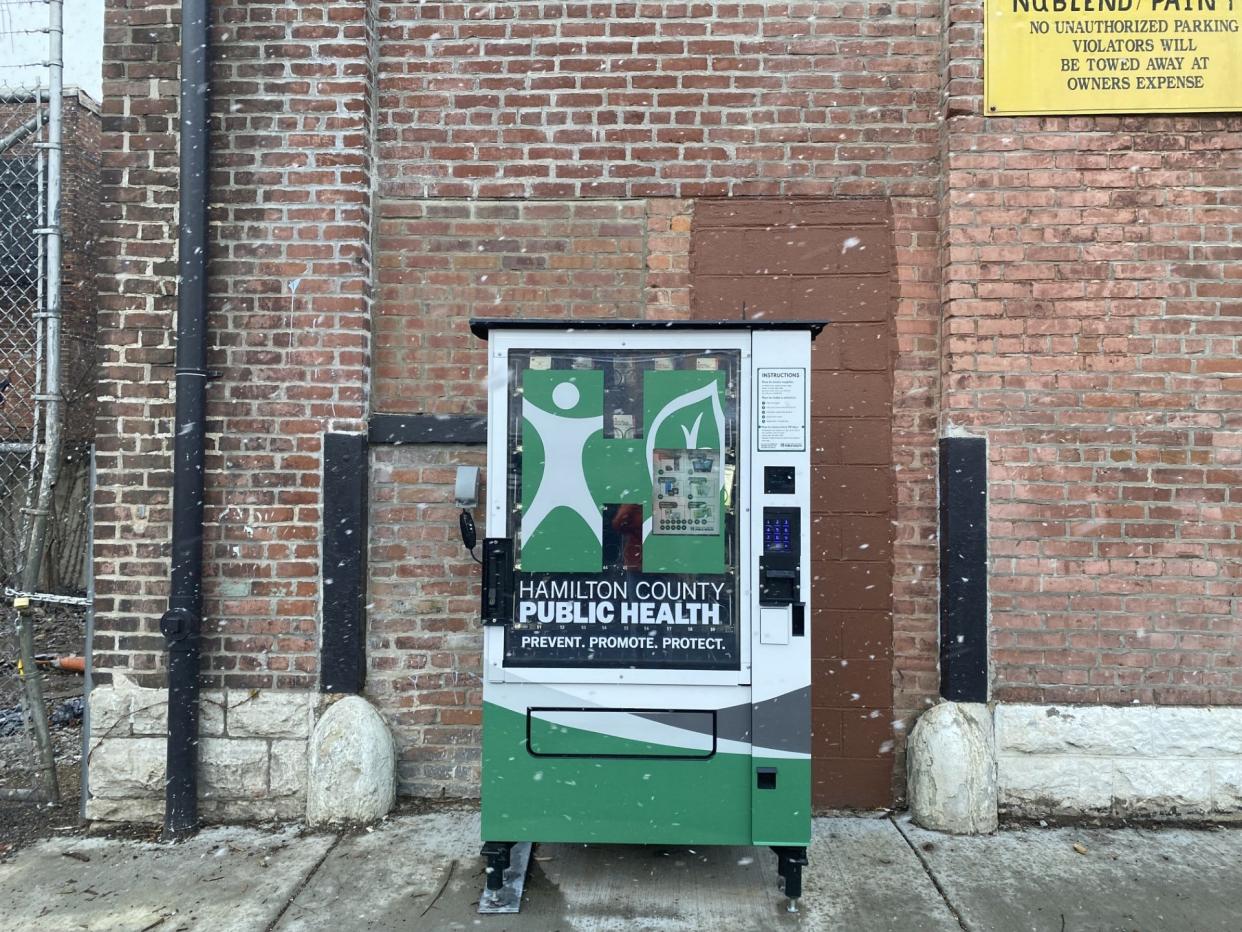
One innovative way to effectively lower the barrier to access harm reduction services is neighborhood vending machines. In December of 2023, in Cincinnati, Ohio, the Hamilton County Health Department installed two life-saving harm reduction vending machines on the streets where people need them.[3] One is located at a downtown Fire Station, and another is located in an alley near a NeighborHub Integrated Health Clinic. NeighborHub Health is a Federally Qualified Health Center (FQHC) exclusively focused on providing integrated medical and behavioral care to those who are homeless and/or living with HIV/AIDS.

These vending machines contain naloxone spray, fentanyl test strips, and condoms. Naloxone spray is used to treat suspected opioid overdoses. Fentanyl test strips empower substance abusers to know if the drugs they are using contain the deadly drug fentanyl in order to prevent death and overdoses. They are small strips of paper that can detect fentanyl in many different kinds and forms of drugs, whether they are injectable, powder, or pills.[4] Condoms are provided to prevent the spread of HIV and other infectious diseases. Substance abuse has been shown to result in people engaging in riskier sexual behavior. Thus, providing condoms along with harm-reduction supplies is a means of accessible, holistic public health intervention. 

Harm Reduction vending machine
Photo Source: Yahoo News

These two vending machines are additions to Ohio's first harm reduction machine, which was installed in Northside, a community in Cincinnati, in 2021. Caracole, a nonprofit HIV/AIDS organization in Cincinnati, operates and placed the machine outside of its office. This machine contains injection kits for safer drug injections, kits for safer substance smoking, safe sex kits, pregnancy tests, naloxone, bandages, and even containers with which to carry needles and syringes until they can be safely disposed of.[5]

Vending machines are examples of no-contact harm reduction. The vending machines are accessible 24/7 and do not require face-to-face contact. The supplies are free and are accessible via a code obtained by calling a special confidential number, which connects to a trained person who obtains non-identifying information and gives a code. Having on-contact harm reduction resources available on the street with 24/7 access increases accessibility. Some of those in need are uncomfortable with going into centers that may have the supplies or may be unable to get to them during hours of operation. Additionally, no-contact accessibility means that people can get what they need at all hours without judgment or fear of arrest such as sex workers and transient unhoused dealing with substance abuse.

A study published in the Journal of the American Pharmacists Association proved that the Caracole vending machine resulted in increased accessibility of harm reduction products and services and was associated with a lower countywide incidence of unintentional overdose death and HIV.[6] This is important to note since harm-reduction efforts in Hamilton County started in 2014 in response to increased HIV cases. In 2014, the Cincinnati Exchange Project dispensed sterile syringes to drug users to protect them from HIV and Hepatitis C. Vending machines are a practical addition to harm reduction strategies already in use, such as mobile health vans that travel to neighborhoods also providing safer drug use supplies, safe-sex supplies and information concerning healthcare services and treatment.

Harm reduction, in its various forms, is drug overdose and injury prevention, as well as HIV and infectious disease prevention. It should be supported in public policy to innovate and increase funding for modalities already in place, to educate the public and health professionals who sometimes demonize harm reduction efforts due to misinformation, and for research to create new pathways. Harm reduction acknowledges the dignity and humanity of those in need, improves public health outcomes, and can supportively lead people into substance abuse treatment and cessation.

[1] Sue, K., & Fiellin, D. A. (2021). Bringing Harm Reduction into Health Policy — Combating the Overdose Crisis. The New England Journal of Medicine, 384(19), 1781–1783. https://doi.org/10.1056/nejmp2103274

[2] SAMHSA.(2023). Harm Reduction. Retrieved from https://www.samhsa.gov/find-help/harm-reduction

[3] DeMio, T., Kim, R. (2024, January 3). Drugs, sex and harm reduction: New vending machines could reduce spread of HIV. Retrieved from https://news.yahoo.com/drugs-sex-harm-reduction-vending-033416611.html

[4] CDC. (2022, September 30). Fentanyl Test Strips: A Harm Reduction Strategy. Retrieved from https://www.cdc.gov/stopoverdose/fentanyl/fentanyl-test-strips.html

[5] DeMio, T. (2021, March 8). Ohio's first harm reduction vending machine helps promote safer sex, safer smoking, safer injection. Retrieved from https://www.cincinnati.com/story/news/2021/03/08/vending-machine-safer-sex-drug-use-supplies-overdose-hiv-prevention-ohio/4592675001/

[6] Arendt, D. (2023). Expanding the accessibility of harm reduction services in the United States: Measuring the impact of an automated harm reduction dispensing machine. Journal of the American Pharmacists Association, 63(1), 309–316. https://doi.org/10.1016/j.japh.2022.10.027

Disclaimer: Guest blogs do not necessarily reflect the views of the ADAP Advocacy Association, but rather they provide a neutral platform whereby the author serves to promote open, honest discussion about public health-related issues and updates.

Thursday, January 4, 2024

Our Commitment to Transparency, 2023

By: Brandon M. Macsata, CEO, ADAP Advocacy

One of the most important foundational values embodied in the advocacy done by ADAP Advocacy are the partnerships with all stakeholders working to end the HIV epidemic in the United States. Look no further than our mission's support statement: "ADAP Advocacy works with advocates, community, health care, government, patients, pharmaceutical companies and other stakeholders to raise awareness, offer patient educational programs, and foster greater community collaboration." Equally important is our commitment to transparency. We need more transparency in public policy, as well as public health. As an organization, ADAP Advocacy takes great pride in the partnerships we've formed over the years, and as such we make no apologies for the financial support afforded to fund our efforts. The 340B Drug Pricing Program provides ample evidence of what happens when there is a lack of transparency. Highlighting our values statements and our commitment to transparency goes hand-in-hand with our unwavering conviction that the voice of persons living with HIV/AIDS shall always be at the table and the center of the discussion.

Blocks showing the words, Trust / Truth
Photo Rights Purchased via iStock

Since our last transparency report in 2021, not much has changed. ADAP Advocacy still receives no taxpayer funding. We received no funding from the Ryan White HIV/AIDS Program, Medicaid, Medicare, HOPWA, or Veterans Affairs. Additionally, we receive no revenue from the lucrative 340B Program. All of our revenue is generated from individuals, corporations, foundations, and nonprofit organizations. Check out our Silver Transparency profile on Guidestar.

ADAP Advocacy has increasingly been engaging patient advocates on why reforming the 340B Program is in their best interests. The lack of accountability in the program and the near-zero transparency among the program's covered entities is mind-boggling, and that is an understatement. Our advocacy has led us to ask simple questions about where is all the money going, and who is actually being served who otherwise might not have received needed services and supports. Those efforts prompted us to examine the intersection between growing 340B revenues, increasing executive compensation, declining hospital charity care, and the explosion of the medical debt in this country. Upon releasing some of the examination's top-line findings, what would happen next epitomized the problems faced by those of us trying to put patients before providers.

Ever dealt with the media? They always have their angle, and it’s expected with interviews. But ya go into it with a smile, right? 

What followed with this so-called news "story" about our 340B examination resulted in nothing more than a classic "take down" piece from a publication financed by pro-hospital groups and well-financed lobbyists fueling anti-patient reforms! Despite the reporter being told our 340B examination was funded by general revenue dollars, his story attempted to still taint the findings with a "guilt by association" because drug manufacturers are among our advocacy partners and funders. Editor's Note: Since 2007, not once has a drug manufacturer attempted to attach strings or any quid pro quo to its funding either instructing us to support or oppose a single federal public policy initiative. Not once!

What’s funny is how our work was labeled as “drug industry backed” yet no mention of the hospital back or mega service provider backed opposition groups noted in the article. The woman questioning my intentions in the so-called news story has received a NINETY PERCENT (90%) increase in executive compensation since being name CEO in 2015. The reporter failed to mention that important factoid. I wonder how patients feel about that 90% pay raise or the disconnect between exploding 340B revenues and rise in CEO compensation, and patients still struggling. There is a darn good reason why on World AIDS Day, ADAP Advocacy sounded the alarm on the medical debt crisis facing consumers – including people living with HIV/AIDS (PLWHA).

A much more detailed summary of the 340B examination was provided by Marcus J. Hopkins, who serves on ADAP Advocacy's Ryan White Grantee 340B Patient Advisory Committee and conducted the data analysis. Upon Hopkins penning his guest blog, 340B Covered Entities’ Revenue Witnessed Huge Executive Compensation Increases, Alarming Charity Care Decreases, he was instructed by me to include the following transparency statement on me:

"At the request of ADAP Advocacy’s CEO, Brandon M. Macsata, to demonstrate transparency, we’re sharing some information about compensation paid to his firm, Purple Strategy Group, Inc. (PSG). PSG is paid a monthly management fee, which covers the work Brandon does on administrative, accounting, governance, marketing, and programs. The monthly fee is $8,000 per month, which has remained at that level since 2013 without an increase. Based on budget and net revenue year-end numbers, Brandon is also eligible to receive a performance bonus up to $6,500. Additionally, Brandon gives back to the organization annually, with his annual financial contributions ranging between $2,500 and $15,000+. No fringe benefits are paid, since Brandon is a 1099 contractor and not an employee. He is eligible to receive additional compensation for special projects that fall outside the scope of work, although most years there are no such projects."

Transparency is about not only talking the talk, but walking the walk. Ironically, upon further review of said publication, any reporting focused on 340B Program reform efforts gets labeled as “drug industry backed” in the story headline or opening paragraph. There doesn't appear to be a firewall between its "news" division and its advertisers, sadly enough.

Corporate Philanthropy
Photo Rights Purchased via iStock

In 2023, our revenue, as it will be reported to the Internal Revenue Service, was $359,226.70, derived from numerous sources — including corporate partnerships, event sponsorships, program sponsorships, scholarship fund donations (ranging from $5.00 to $5,000.00), third-party donors (i.e., PayPal Giving Fund), and miscellaneous donations. Approximately 75% (in 2022, it was 82%) were membership dues received from pharmaceutical manufacturers. That means nearly one-fourth of our membership funding (25%) came from non-industry partners. Among organizational donors to our restricted Scholarship Fund, 45% of the funding was derived from pharmaceutical manufacturers and 55% from non-industry partners. For our flagship ADAP Directory sponsorships, approximately 77% was support from pharmaceutical manufacturers and 23% from non-industry partners. Among registration fees, only 22% came from pharmaceutical manufacturers and 78% from non-industry partners. We also received several thousand dollars from individual donations, supporting either our general mission or specifically supporting our restricted Scholarship Fund. Our organization strives every single year to achieve greater funding diversification because it is consistent with a sound business model. Some years we do better than others.

Our ongoing 340B Project was funded entirely by pharmaceutical manufacturers, including AbbVie, Bristol-Myers Squibb, Genentech, Gilead Sciences, Johnson & Johnson Health Systems (Janssen Pharmaceuticals), Merck, and Novartis. Their support has never been a deeply held secret. And it is worth noting, again, our 340B examination on 340B revenues, executive compensation, charity care, and medical debt was funded by general revenues and not the 340B Project, although moving forward that will change. Another ongoing project financed entirely by pharmaceutical manufacturers is our Long-Acting Injectables Project with support from Gilead Sciences, Merck, and ViiV Healthcare.

That said with respect to general revenues (memberships, scholarship fund, directory sponsorships), our top five pharmaceutical funders this year were Merck (20.66), Gilead Sciences (18.08%), Janssen Pharmaceuticals (15.50%), ViiV Healthcare (12.91%), and Napo Pharmaceuticals (1.00%). Our top five non-industry funders were Magellan Rx Management (7.75%), Ramsell Corporation (7.75%), Walgreens (5.17%), Community Access National Network (2.58%), and the Partnership for Safe Medicines (1.00%). We generated financial support from nineteen (19) corporate entities.

In totality, our corporate donors included AbbVie, AIDS Alabama, Bender Consulting Services, Bristol-Myers Squibb, Community Access National Network, Genentech, Gilead Sciences, Janssen Pharmaceutical Companies of Johnson & Johnson, Magellan Rx Management, Maxor National Pharmacy Services Company, MedData Services, Merck, Napo Pharmaceuticals, Novartis, Partnership for Safe Medicines, Patient Access Network Foundation, Patient Advocate Foundation, Pharmaceutical Research and Manufacturers of America, Ramsell Corporation, ScriptGuideRx, ViiV Healthcare, and Walgreens.

Our top individual donor was yours truly. In 2023, I personally donated $1,355.00 to the organization (an amount less than previous years because I directed more of my personal donations to help the nonprofit nursery school where my son attends). All donations made to our scholarship fund are restricted in nature, and as such can only be used toward funding scholarships for people living with HIV/AIDS and/or their advocates.

Group of diverse crowd holding up heart shaped images
Photo Rights Purchased via iStock

ADAP Advocacy remains deeply committed to improving access to care for PLWHA. Every decision we make is made through the lens of the patient. When those interests align with the pharmaceutical industry, then so be it. In doing so, we're also not afraid to call out the hypocrisy behind the naysayers who question our intentions.

According to a survey Network for Good conducted among 3,000 donors, there are 7 reasons why donors give (and 1 reason they don’t). While the aforementioned survey solicited feedback from individuals, there are consistent ‘ideological sorting' motivations for giving among corporate donors and political donors. Donors give money to align themselves with causes they already support, and not the dogmatic 'vote-buying' hypotheses. There is plenty of research in this area, too.

It is important to remember that there is an inherent value in advocacy partnerships. We remain unapologetically pleased with the relationships we've built over the last 17 years since the organization's founding in 2007. We're thankful for the support from industry, and equally thankful for the support from our non-industry partners...which includes some individuals who give as little as five bucks!

Disclaimer: Guest blogs do not necessarily reflect the views of the ADAP Advocacy Association, but rather they provide a neutral platform whereby the author serves to promote open, honest discussion about public health-related issues and updates.