Thursday, January 27, 2022

What is 100-100-100?

By: Ranier Simons, ADAP Blog Guest Contributor

The ongoing Covid-19 pandemic is a glaring reminder of the importance of the global efforts to address other epidemics and pandemics. After over 30 years of such efforts, worldwide there has been success with polio. Wild poliovirus was virtually extinct in 2020 with only about 140 cases remaining.[1] However, two serious remaining global disease crises are HIV/AIDS and Hepatitis C (HCV).

In 2020, it was estimated that there were 37.7 million people living with HIV/AIDS, and an estimated 58 million people with chronic Hepatitis C.[2][3] The strongest two-pronged approach to fight both is testing and treatment. In 2014, UNAIDS, the Joint United Nations Programme on HIV/AIDS, came up with a target known as 90-90-90. The goal was to have 90% of all persons living with HIV/AIDS aware of their status, 90% of all diagnosed on sustained antiretroviral treatment, and for 90% of those on treatment to have an undetectable viral load by 2020. 

The WHO, World Health Organization, proposed a similar target for HCV in 2016. They pledged to globally eliminate HCV by 2030. This elimination included a target of 80% those with HCV to be in treatment, a 90% reduction in new infections, and a 65% reduction in liver-associated deaths as a result of hepatitis C.[4] 
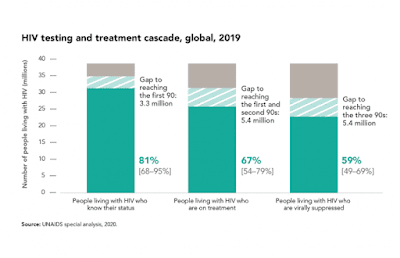
HIV testing and treatment cascade global, 2019
Photo Source: UNAIDS

The 90-90-90 goal was not met in 2020 and it is not likely that HCV will be eradicated by 2030. Were the goals too ambitious or was there something missing in the execution of the efforts? 

The focus has always been on testing and treatment. It is of the utmost importance to have widespread testing to identify those that need treatment in order to get them into treatment. However, what had previously been missing was discourse on barriers to testing and treatment. In 2021, the UNAIDS Global AIDS Strategy acknowledged the existence of structural barriers to HIV and HCV testing and services. 

The challenge has been that solving the problem of these hurdles has not been included in the system of testing and treatment. The structural hurdle of lack of fulfilment of basic needs should be a systemic part of treatment. Human nature prioritizes stable shelter, food, and safety over seeking out testing and adherence to treatment regimens.

This is especially true in the population of people who inject drugs (PWID). Intravenous drug users are 29% more at risk to contract HIV and 40% of new HCV infections worldwide.[5]

HIV 1 & 2 test, HCV test
Photo Source: Yahoo!

In response to understanding the importance of including the effective meeting of basic needs as part of disease prevention, a new target, 100-100-100 is being discussed in global health circles. It is initially being considered through the lens of PWID regarding HIV and HCV. The goal is to have stable housing for 100% of PWID who have housing instability, offering substance abuse treatment to 100% of PWID that desire treatment, and giving 100% of PWID access to harm reduction services.

Stable housing means safe and consistent shelter. It means having a stable place to eat and prepare meals. Having stable housing provides a place for self-care and identity.  Stress is lowered when one has a safe stable place to live as well allowing focus on other needs. A sense of community results from stable housing as well. When groups of PWID have stable housing, they can create a sense of belonging and care for each other communally. 

Having a stable place to live and rest also facilitates successful substance abuse treatment. Taking away stressors of basic survival allows a person to redirect their energies towards bettering their lives. Coupled with substance abuse treatment is harm reduction. Harm reduction services come in many forms.[6] Most importantly it is acknowledging the complicated etiology of drug use. It is the realization that drug use does happen, and it is necessary to help people along the continuum of complete abstinence from drug use to the other end of safer and “responsible” drug use starting at whichever stage PWID find themselves.

Reaching this 100-100-100 goal, along with aggressive strides toward testing and treatment, is the growing discourse that is providing hope towards the eradication of HIV and HCV. Removing the inequalities of lack of basic needs will help not just PWID but the greater population at large living with HIV and HCV as well.

[1] Kaiser Family Foundation. (2021, Oct 29). The U.S. Government and global polio efforts. Retrieved from https://www.kff.org/global-health-policy/fact-sheet/the-u-s-government-and-global-polio-efforts/
[2] UNIADS. Global HIV and AIDS statistics fact sheet. Retrieved from https://www.unaids.org/en/resources/fact-sheet
[3] World Health Organization. (2021, Jul 27). Hepatitis C. Retrieved from https://www.who.int/news-room/fact-sheets/detail/hepatitis-c
[4] World Health Organization. (‎2016)‎. Global health sector strategy on viral hepatitis 2016-2021. Towards ending viral hepatitis. World Health Organization. Retrieved from https://apps.who.int/iris/handle/10665/246177
[5] UNAIDS. (2017, Jan 1) 90–90–90: an ambitious treatment target to help end the AIDs epidemic. Retrieved from https://www.unaids.org/en/resources/documents/2017/90-90-90
[6] Principles of harm reduction. National Harm Reduction Coalition. Retrieved from https://harmreduction.org/about-us/principles-of-harm-reduction/ 

Disclaimer: Guest blogs do not necessarily reflect the views of the ADAP Advocacy Association, but rather they provide a neutral platform whereby the author serves to promote open, honest discussion about public health-related issues and updates.

Thursday, January 20, 2022

HIV and Covid-19 Breakthrough Infections

By: Ranier Simons, ADAP Blog Guest Contributor

Presently, there is a world-wide surge in Covid-19 infections. This surge not only includes unvaccinated people, but partially and fully vaccinated people as well. The Omicron variant, specifically, has proven to be responsible for a sizable spike in infections here in the United States. Constantly evolving research shows that Omicron embodies some ability to evade both protections from vaccination as well as natural immunity from previous Covid-19 infection.[1] Given that there has been an increase in breakthrough Covid-19 cases regardless of vaccination type, what are the implications for people who are fully vaccinated and living with HIV?

Covid-19 vaccine shot in the arm
Photo Source: McLaren

Developing data is showing that people with decreased immune function are at increased risk for Covid-19 breakthrough infection. One such study, by Sun et. al, specifically shows that people living with HIV, people on immunosuppressive drugs due to solid organ transplantation, and people with rheumatoid arthritis are at increased risk for breakthrough infection compared to those without any sort of compromised immune status.[2]

Examination of breakthrough Covid-19 infections, specifically, in the HIV-positive population is in an early stage. Thus, a large amount of data does not exist. However, there have been a few early studies that have given insight.

When discussing breakthrough Covid-19 cases it is important to define the lens of inquiry. Two major lanes of discourse are: discussions of the incidence of breakthrough cases and discussions of actual hospitalizations due to breakthrough cases. 

MedRxiv, the preprint server for health sciences, reports a longitudinal study regarding incidence of breakthrough cases. MedRxiv reports new medical research that has not yet been peer reviewed. Even though the study is not yet ready to be used in evidence-based practice, it still has great value.

The study, conducted by Coburn et. al, was done on a population of 109,599 subjects.[3] The subjects were selected from the Corona-Infectious-Virus Epidemiology Team (CIVET)-II cohort. This cohort consists of four different cohorts with subjects sourced from networked health systems and academic health centers. The purpose of the study was to compare breakthrough infections between those with HIV and those without. There were 31,840 people living with HIV and 77,759 that did not have HIV. The measured incidence of infection was taken 210 days after full vaccination.

The rate of breakthrough infection of fully vaccinated people is very small in relation to the number of people in the United States who are fully vaccinated. However, the study did conclude that the patients with HIV had a higher likelihood of breakthrough infection than those without HIV. The cumulative incidence was 2.8 percent and 2.1 percent, respectively. Additionally, the breakthrough infection risk was 41 percent higher in people living with HIV.

While this study population is not representative of the entire HIV-positive population of the country, there still is value in the result. Most importantly, the study did not find that there was a statistically significant difference in the breakthrough incidence of those with viral suppression compared with those with elevated viral loads or advanced HIV disease.

Along with incidence of breakthrough infection, it is important to explore actual hospitalizations due to breakthrough infections. Again, there currently is not a plethora of data specifically pinpointing hospitalization of HIV-positive individuals due to breakthrough infection. However, there is developing research that indicates hospitalizations as a result of breakthrough infections are more likely in people with co-morbidities.

It is complicated to research hospitalizations due to breakthrough infections because it hard to determine if a hospitalization is solely due to vaccine breakthrough or is due to another issue concurrent with the vaccine breakthrough infection. One promising analysis has shown that fully vaccinated people hospitalized with Covid-19 infections were more likely to be hospitalized because of other issues.[4]

Covid-19 blood test
Photo Source: Daily Maverick

Lo et. al analyzed data of 120,000 covid hospitalizations from Cosmos. Cosmos is a HIPPA-defined Limited Data Set of over 120 million patients. The data is medical record data from hundreds of hospitals and organizations that utilize EPIC electronic medical record system software.

The analysis compared Covid-19 breakthrough hospitalizations with unvaccinated Covid-19 hospitalizations. The purpose was to see if the two different groups were being treated for the same things. Common covid-related complication treatments include things like viral pneumonia diagnosis, dexamethasone treatment, respiratory failure diagnosis, and ventilator treatment.[5] The result of the analysis was that fewer people with breakthrough Covid-19 diagnosis had one or more of these complications as compared to the unvaccinated Covid-19 hospitalized patients. It was gleaned that the breakthrough Covid-19 hospitalizations were do more to primary diagnoses other than Covid-19.

The overall theme of all the ongoing scientific research is that while HIV-positive people have increased risk of breakthrough infections, vaccination is still extremely important and drastically reduces the likelihood of serious illness or death due to Covid-19. Seropositive individuals should get vaccinated as well as continue wearing effective masks and practicing all other precautions such as hand sanitation and other preventative measures. Vaccinated HIV-positive people should not be excessively fearful of breakthrough infections, just cautious and responsible in their behaviors and self care.

[1] Kupferschmidt, K., Vogel, G. How bad is Omicron? Some clues are emerging. Science, 374(6573), 1304-1305. https://doi.org/10.1126/science.acx9789
[2] Sally B Coburn, et al. (2021). COVID-19 infections post-1 vaccination by HIV status in the United States. medRxiv. doi: https://doi.org/10.1101/2021.12.02.21267182
[3] Sun, J. et. al. (2021). Association between immune dysfunction and COVID-19 breakthrough infection after SARS-CoV-2 Vaccination in the US. JAMA Intern Med. Published online December 28, 2021. doi:10.1001/jamainternmed.2021.7024
[4] Lo, J., Amin, K., Cotliar, D., Rae, M, Cox, C. (2021, Dec 15) Covid-19 breakthrough hospitalizations. Retrieved from https://www.healthsystemtracker.org/brief/characteristics-of-vaccinated-patients-hospitalized-with-covid-19-breakthrough-infections/
[5] Yek C, Warner S, Wiltz JL, et al. Risk Factors for Severe COVID-19 Outcomes Among Persons Aged ≥18 Years Who Completed a Primary COVID-19 Vaccination Series — 465 Health Care Facilities, United States, December 2020–October 2021. MMWR Morb Mortal Wkly Rep 2022;71:19–25. DOI: https://www.cdc.gov/mmwr/volumes/71/wr/mm7101a4.htm?s_cid=mm7101a4_w

Disclaimer: Guest blogs do not necessarily reflect the views of the ADAP Advocacy Association, but rather they provide a neutral platform whereby the author serves to promote open, honest discussion about public health-related issues and updates.

Thursday, January 13, 2022

Living with HIV & Making Heads or Tails Over Covid-19 Vaccinations

By: Brandon M. Macsata, CEO, ADAP Advocacy Association

The ongoing Covid-19 pandemic has been especially hard for people living with HIV/AIDS. Concerns over already being immunocompromised are only compounded by the social isolation from family, friends and colleagues. The economic and social impact has been profound for the HIV community.[1] For the long-term survivors among us, seeing Covid-19 wreak havoc brings back dark memories of the earliest days of the AIDS epidemic's fear, stigma and obituaries. Now forty years into one epidemic desperate for a cure (and vaccine), we've also witnessed the marvels of modern-day medicine with the advent of vaccines to protect against the novel coronavirus SARS-CoV2. Yet, too many people living with HIV/AIDS remain unvaccinated against Covid-19. While concerning for many of us, it is also important to understand the reasons behind their vaccine hesitancy. Doing so provides the best opportunity to educate and empower them.

What remains a definitive analysis on the intersection between HIV and Covid-19 is the summary published last year by the Kaiser Family Foundation, "Key Questions: HIV and Covid-19." According to the authors, "This analysis explores key questions around Covid-19 and HIV – what we know and what we are still learning."[2] Read it!

Covid-19 Vaccine
Photo Source: WAOW - ABC News 9

Among the reasons behind vaccine hesitation is fear of the unknown. Mistrust remains high in certain segments of the HIV community. Mistrust of the government. Mistrust of the pharmaceutical industry. Mistrust of the news media. And for good reason, because the HIV community has a long history of being dismissed, disparaged, and harmed by these institutions during the height of the AIDS crisis. The recent headlines blaming people living with HIV for variant development only furthers the distrust. Adding fuel to the fire is confusion over what to believe because sometimes the messaging offers conflicting conclusions. All of the science in the world, no matter how compelling is the data, might not be enough to sway the HIV community's vaccine hold-outs.

It is undeniable that Covid-19 has disproportionately impacted marginalized communities, including people living with HIV/AIDS. The University of Delaware found that among Delawareans living with HIV, "many reported a deep sense of isolation, declines in physical or mental health, increasing economic hardship and uneven access to health care." According to Tricia Wachtendorf, director of the University of Delaware-based Disaster Research Center, participants living with HIV were much more likely to use words like 'fear' or 'scared' when describing Covid-19, as opposed to 'anxious' or 'concerned" among the general population.[3]

The report findings shouldn't come as any surprise since people living with HIV more likely to get sick with, die from Covid-19. Prior to the Delta and Omicron variants, Penn State College of Medicine researchers had already sounded the alarm that people living with HIV should be prioritized to receive a Covid-19 vaccine. Their research concluded HIV increased the likelihood of Covid-19 infections by 24%, and a 78% higher risk of death.[4]

Yet, another study out of the University of California, San Francisco found that people with HIV had fewer — but more severe — SARS-CoV-2 infections than peers. That said, researchers suggested the lower infection rates could be driven by "greater caution and sheltering in place."[5]

Matthew A. Spinelli, MD, MAS, an assistant professor of medicine at the University of California, San Francisco summarized: “Although the data are mixed, people with HIV, particularly those at lower CD4 counts, are likely at a somewhat higher risk of severe Covid-19. Vaccination is an important step to protect from severe Covid-19.”[6]

The Centers for Disease Control & Prevention (CDC) has acknowledged that the effect of HIV infection on Covid-19 outcomes is unclear. The agency's own Morbidity and Mortality Weekly Report (MMWR) analyzed Covid-19 severity and Covid-19–associated deaths among hospitalized patients with HIV-infection in Zambia, which concluded: "HIV status alone was not significantly associated with severe Covid-19 at admission or during hospitalization or with Covid-19–associated death. However, among HIV-positive persons, those with severe HIV disease were more likely to develop severe Covid-19 and were at increased risk for Covid-19–associated death. Ensuring that persons maintain HIV disease control, including maintaining ART continuity and adherence, achieving viral suppression, and addressing and managing underlying medical conditions, could help reduce Covid-19–associated morbidity and mortality in sub-Saharan Africa."[7] 

Those findings were mirrored by a study by the All India Institute of Medical Sciences (AIIMS) in Delhi, which concluded people living with HIV/AIDS may be less susceptible to Covid-19. The AIIMS study indicates the seroprevalence of Covid-19 in people living with HIV/AIDS to be lower than the general population. However, researchers did caution that HIV-immunocompromised populations aren't necessarily at a lower risk for infections or hospitalizations.[8]

COVID-19 vaccines and HIV
Photo Source: British HIV Association

"Puzzling" is a word coined by TheBody's Larry Buhl when he posed the question, "Could People Living With HIV Have Worse Outcomes From Covid-19, Even if Vaccinated?" Buhl's analysis does an excellent job at conceptualizing many of the concerns expressed by people living with HIV/AIDS who question the need for the jab.[9] "If I'm medication adherent and undetectable, then how can I be immunocompromised," is one of the statements we often hear from certain circles in the HIV community. What makes this article particularly useful is how Buhl tackles vaccine safety and efficacy.

What we have learned over the last year is that nothing is for certain, evidenced by one study suggesting the Covid-19 vaccination is as effective for people living with HIV as those without,[10] and yet another study results are showing that some people living with HIV have lower than expected antibody levels after receiving the Pfizer or Moderna Covid-19 vaccines.[11] As we continue to educate people living with HIV/AIDS about the novel coronavirus SARS-CoV2, it is important to keep individual perspective in mind. It is easy to see how some unvaccinated peers view the ongoing pandemic through the sense of six of one, half a dozen of the other.

Ongoing education centers on HIV-positive patients should have no fear of Covid-19 vaccinations. “Interaction between ARVs (antiretroviral drugs) and Covid-19 vaccines has also been non-reactive, therefore it does not cause any harm to the patients,” says Kire Stojkovski, MD, a doctor at the Farr Institute. “It is therefore recommended for everyone to get vaccinated. Those patients with advanced (matured) HIV infections should be given an extra jab to make sure that they are well safeguarded from Covid-19.”[12]

We contend that getting vaccinated against Covid-19 is the best option for the HIV community. In fact, it is why last year we launched the #YourVaccineIsWaiting public awareness campaign. But there is no doubt still too many people living with HIV/AIDS are trying to make heads or tails over getting the jab. In fact, evidence suggests that the vaccination rates among our HIV-positive peers reflects rates among the general population.[13] There is never a bad time to educate someone about the benefits of being vaccinated against this virus, which has already taken 842,141 (as of January 11th) souls from us in the United States, alone.

[1] Waterfield, K.C., Shah, G.H., Etheredge, G.D. et al. Consequences of COVID-19 crisis for persons with HIV: the impact of social determinants of health. BMC Public Health 21, 299 (2021). https://doi.org/10.1186/s12889-021-10296-9
[2] Dawson, L., Kates, J. (2021, May 20). Key Questions: HIV and COVID-19. Kaiser Family Foundation. Retrieved online at https://www.kff.org/coronavirus-covid-19/issue-brief/key-questions-hiv-and-covid-19/ 
[3] Miller, Beth (2021, May 21). Living with HIV during a global pandemic. Medical Xpress. Retrieved online at https://medicalxpress.com/news/2021-05-hiv-global-pandemic.html
[4] Cox, Tracy (2021, May 11). People living with HIV more likely to get sick with, die from COVID-19. Medical Xpress. Retrieved online at https://medicalxpress.com/news/2021-05-people-hiv-sick-die-covid-.html
[5] Dreisbach, Eamon N. (2021, May 9). People with HIV had fewer — but more severe — SARS-CoV-2 infections than peers. Healio. Retrieved online at https://www.healio.com/news/infectious-disease/20210506/people-with-hiv-had-fewer-but-more-severe-sarscov2-infections-than-peers?utm_medium=social&utm_source=twitter&utm_campaign=sociallinks 
[6] Dreisbach, Eamon N. (2021, May 9). People with HIV had fewer — but more severe — SARS-CoV-2 infections than peers. Healio. Retrieved online at https://www.healio.com/news/infectious-disease/20210506/people-with-hiv-had-fewer-but-more-severe-sarscov2-infections-than-peers?utm_medium=social&utm_source=twitter&utm_campaign=sociallinks 
[7] Chanda D, Minchella PA, Kampamba D, et al. COVID-19 Severity and COVID-19–Associated Deaths Among Hospitalized Patients with HIV Infection — Zambia, March–December 2020. MMWR Morb Mortal Wkly Rep 2021;70:807–810. DOI: http://dx.doi.org/10.15585/mmwr.mm7022a2external
[8] Pandey, Sahil (2021, June 30). People living with HIV/AIDS may be less susceptible to COVID: AIIMS study. Yahoo Finance. Retrieved online at https://ca.finance.yahoo.com/news/people-living-hiv-aids-may-113113395.html?soc_src=social-sh&soc_trk=tw&tsrc=twtr
[9] Buhl, Larry (2021, July 6). Could People Living With HIV Have Worse Outcomes From COVID-19, Even if Vaccinated? The Body. Retrieved online at https://www.thebody.com/article/people-hiv-worse-outcomes-covid-19-vaccinated/?ic=700100 
[10] Cooper, Alex (2021, August 10). Study: COVID Vax as Effective for People With HIV as Those Without. Yahoo News. Retrieved online at https://news.yahoo.com/study-covid-vax-effective-people-183612408.html?soc_src=social-sh&soc_trk=tw&tsrc=twtr
[11] Guerrero, DesirĂ©e (2021, November 3). Do COVID-19 Vaccines Work as Good for People Living with HIV? Yahoo News. Retrieved online at https://news.yahoo.com/covid-19-vaccines-good-people-161826829.html?soc_src=social-sh&soc_trk=tw&tsrc=twtr

[12] Loria, Keith (2022, January 11). HIV Patients Should Have No Fear of COVID-19 Vaccinations. Managed Healthcare Executive. Retrieved online at https://www.managedhealthcareexecutive.com/view/hiv-patients-should-have-no-fear-of-covid-19-vaccinations. 
[13] Melville, Nancy A. (2021, December 27). COVID-19 Vaccinations in People With HIV Reflect General Rates Despite Higher Mortality Risk, Study Says. Medscape. Retrieved online at https://www.medscape.com/viewarticle/965585
 

Disclaimer: Guest blogs do not necessarily reflect the views of the ADAP Advocacy Association, but rather they provide a neutral platform whereby the author serves to promote open, honest discussion about public health-related issues and updates. 

Thursday, January 6, 2022

Our Patient Advocacy during the Covid-19 Pandemic's Uncertainty

By: Brandon M. Macsata, CEO, ADAP Advocacy Association

Over the last two years patient advocacy replaced face-to-face meetings with Zoom. It substituted highly-effective legislative fly-ins on Capitol Hill (and state legislatures) with unimpressive Twitter storms. And it left many organizations scrambling to find their place in this new world of uncertainty. The ADAP Advocacy Association isn't immune from the realities surrounding the Covid-19 pandemic, especially since we represent an immunocompromised constituency.

Meaning of a screeching halt in English a screeching halt a sudden stop by a vehicle that makes a long, loud, high noise that is unpleasant to hear: Eventually, the car came to a screeching halt.
Photo Source: Hearts in Service Blog

In March 2020, we suspended face-to-face advocacy literally as we were preparing to host the year's first HIV/AIDS Fireside Chat in Atlanta, Georgia. Our organization opted not to host Zoom meetings because the Fireside Chats have a sense of intimacy about them, but also because we quickly learned that many stakeholders were experiencing what was labeled "Zoom fatigue" at the time. That decision carried into last year, too. Aside from a series of the virtual patient support meetings held both in 2020 and 2021, we've sat (in)patiently waiting for this pandemic to subside.

Fortunately, some of our national partners stepped-up their advocacy game and hosted extremely impressive virtual conferences. Among them, HealthHIV and its SYNChronicity 2020 (SYNC 2020), and the Biotechnology Innovation Organization (BIO) and its 2020 Patient and Health Advocacy Digital Summit. The ADAP Advocacy Association opted to fund scholarships for advocates and patients living with HIV/AIDS to attend these events. 

But we're optimistic about returning to 'normal' this year!

The ADAP Advocacy Association has targeted June 2022 for the resumption of the HIV/AIDS Fireside Chats, and other patient advocacy events. That will, of course, largely depend on the ever-changing circumstances on the ground, evidenced by what is unfolding before our eyes with the Omicron variant. It is our goal to host a Fireside Chat in Atlanta over the summer, and then Chicago in the fall.

In the meantime, we will continue to focus on the intersection between HIV/AIDS and Covid-19. In 2020, we awarded Covid-19 community grants to community-based, nonprofit organizations addressing the pandemic's impact on marginalized communities living with HIV/AIDS. In 2021, we launched #YourVaccineIsWaiting public awareness campaign targeting marginalized groups living with HIV/AIDS. This year, we will invest more of our resources into monitoring how Covid-19 is impacting our community, as well as encouraging immunocompromised populations to get vaccinated...and boosted! Their lives depend on it, literally.

#YourVaccineIsWaiting

Finally, we're excited to welcome our new ADAP Blog Guest Contributor, Ranier Simons, MHI. Ranier prides himself on data science capabilities to drive better healthcare. He recently earned his Master of Healthcare Innovation Health Informatics from Arizona State University - Edson College of Nursing and Health Innovation.

Patient advocacy, as we knew it, came to a screeching halt in March 2020. Then in 2021, patient advocacy experienced a roller coaster ride of ups and downs. It is too early to know what 2022 will bring, but the ADAP Advocacy Association remains optimistic about the future of the patient advocacy environment, and we stand ready to respond accordingly. We look forward to you joining us in this endeavor, too!

Disclaimer: Guest blogs do not necessarily reflect the views of the ADAP Advocacy Association, but rather they provide a neutral platform whereby the author serves to promote open, honest discussion about public health-related issues and updates.

Thursday, December 9, 2021

Our Commitment to Transparency, 2021

By: Brandon M. Macsata, CEO, ADAP Advocacy Association

In April 2018, we highlighted our commitment to transparency in response to a report released by Kaiser Health News about the linkage between advocacy groups and the pharmaceutical industry, as if building broad-based coalitions was a bad thing?!?! It was true in 2018, and it remains true today that the ADAP Advocacy Association places a high value on transparency, as well as its solid working relationship with industry. In light of yet another "guilt-by-association" report, featured this time in Axios Vitals, we once again are called to our commitment to transparency.

Transparency
Photo Source: smallbusiness.co.uk

At the time some years ago, we said:

"Several weeks ago, an important question was posed in a report released by Kaiser Health News. The report — Patient Advocacy Groups Take In Millions From Drugmakers. Is There A Payback?  aimed to "expose Big Pharma’s ties to patient groups." It boasted about a national database of 1,215 patient advocacy organizations that received money from the drug companies who KHN tracked in 2015. The ADAP Advocacy Association was not among the organizations in the database, however. Our annual budget is probably so small that it didn't warrant the effort to include us.

So...let me save everyone the suspense. We proudly list our supporters on our website, and also make available information about our corporate partnership levels on our website. This information is exactly what we share with any potential funder of our organization, so there is no smoke and mirrors. We also proudly list all of our financial supporters in our Annual Report, which is also available on our website."

For us, not much as changed. The ADAP Advocacy Association still receives no taxpayer funding. We received no funding from the Ryan White HIV/AIDS Program, Medicaid, Medicare, or HOPWA. Additionally, we receive no revenue from the lucrative 340B Drug Pricing Program. All of our revenue is generated from individuals, corporations, foundations, and nonprofit organizations. 

In 2021, our revenue, as it will be reported to the Internal Revenue Service, was $239,932.22, was derived from numerous sources  including corporate partnerships, event sponsorships, program sponsorships, scholarship fund donations (ranging from $5.00 to $1,541.22), third-party donors (i.e., PayPal Giving Fund), and miscellaneous donations. Approximately 67.00% (in 2018, it was 68.61%) were charitable donations received from pharmaceutical manufacturers. That means nearly one-third of our funding (33.00%) came from non-industry partners. Our organization strives every single year to achieve greater funding diversification because it is consistent with a sound business model.

That said, our top five pharmaceutical funders this year were Gilead Sciences (14.59%), Merck (14.59%), Janssen Pharmaceuticals (12.50%), ViiV Healthcare (10.42%), and AbbVie (10.42%). Our top five non-industry funders were Magellan Rx Management (6.25%), Ramsell Corporation (4.17%), Walgreens (4.17%), Community Access National Network (2.29%), and Avita Pharmacy (2.08%). In total, we generated financial support from twenty-one (21) corporate entities (which is lower than usual because all in-person advocacy events were suspended due to the Covid-19 pandemic).

Our corporate donors included AbbVie, AIDS Alabama, Avita Pharmacy, Bender Consulting Services, Community Access National Network, Gilead Sciences, Janssen Pharmaceutical Companies of Johnson & Johnson, Magellan Rx Management, Maxor National Pharmacy Services Company, MedData Services, Merck, Napo Pharmaceuticals, North Carolina AIDS Action Network, Partnership for Safe Medicines, Patient Access Network Foundation, Patient Advocate Foundation, Pharmaceutical Research and Manufacturers of America, Ramsell Corporation, ScriptGuideRx, Theratechnologies, ViiV Healthcare, and Walgreens.

Our top individual donor was yours truly. This year, I personally donated $9,241.22 to the organization. All donations made to our scholarship fund are restricted in nature, and as such can only be used toward funding scholarships for people living with HIV/AIDS and/or their advocates.

Partnerships
Photo Source: Innovation Compounding

According to a survey Network for Good conducted among 3,000 donors, there are 7 reasons why donors give (and 1 reason they don’t). While the aforementioned survey solicited feedback from individuals, there are consistent ‘ideological sorting' motivations for giving among corporate donors and political donors. Donors give money to align themselves with causes they already support, and not the dogmatic 'vote-buying' hypotheses. There is plenty of research in this area, too.

It is important to remember that there is an inherent value in advocacy partnerships. We remain unapologetically pleased with the relationships we've built over the last 14 years since the organization's founding in 2007. We're thankful for the support from industry, and equally thankful for the support from our non-industry partners...which includes some individuals who give as little as five bucks!

Disclaimer: Guest blogs do not necessarily reflect the views of the ADAP Advocacy Association, but rather they provide a neutral platform whereby the author serves to promote open, honest discussion about public health-related issues and updates.

Thursday, December 2, 2021

UPDATED: National HIV/AIDS Strategy

By: Brandon M. Macsata, CEO, ADAP Advocacy Association

One of the signature domestic policy accomplishments under the Presidency of Barack Obama was the first-ever unveiling of a National HIV/AIDS Strategy in the United States. It might have been decades overdue, but it represented a significant paradigm shift in how public health addressed HIV in this country. On World AIDS Day 2021, President Joseph R. Biden, Jr. renewed the commitment made by his former boss with the release of the updated National HIV/AIDS Strategy for the United States 2022-2025. The news was received by the HIV community with applause.

ADAP Advocacy Association Tweet
Tweet by ADAP Advocacy Association

HealthHIV Tweet
Tweet by HealthHIV

HIV+Hepatitis Policy Institute Tweet
Tweet by HIV+ Hepatitis Policy Institute 

Prevention Access Campaign Tweet
Tweet by Prevention Access Campaign

LGBTQ+ Equality Caucus Tweet
Tweet by LGBTQ+ Equality Caucus

Upon issuing the Proclamation on World AIDS Day, 2021, President Biden referenced the updated Strategy by saying: 

"My Administration remains steadfast in our efforts to end the HIV epidemic, confront systems and policies that perpetuate entrenched health inequities, and build a healthier world for all people.  Earlier this year, I reinstated the White House Office of National AIDS Policy to coordinate our efforts to reduce the number of HIV infections across our Nation.  This week, my Administration is releasing an updated National HIV/AIDS Strategy to decrease health inequities in new diagnoses and improve access to comprehensive, evidence-based HIV-prevention tools. This updated strategy will make equity a cornerstone of our response and bring a whole-of-government approach to fighting HIV.

My budget request includes $670 million to support the Department of Health and Human Services’ Ending the HIV Epidemic in the U.S. Initiative — to reduce HIV diagnoses and AIDS-related deaths.  My Administration has also strengthened the Presidential Advisory Council on HIV/AIDS by adding members from diverse backgrounds who bring the knowledge and expertise needed to further our Nation’s HIV response."[1]

According to the updated Strategy, it sets forth bold targets for ending the HIV epidemic in the United States by 2030, including a 75% reduction in new HIV infections by 2025 and a 90% reduction by 2030.[2] It also aligns with the ongoing Ending the HIV Epidemic (EHE) in the United States.

The updated Strategy includes four pillars. They include preventing new HIV infections, improving HIV-related health outcomes of people living with HIV, reducing HIV-related disparities and health inequities, and achieving integrated, coordinated efforts that address the HIV epidemic among all partners and interested parties.[3]

Of particular interest to the ADAP Advocacy Association is addressing health disparities, namely because Black and Hispanic men are being left behind on the declining HIV rates in the United States.[4] The racial and ethnic health disparities are even more evident among men who have sex with men (MSM), according to the Centers for Disease Control & Prevention (CDC).[5]

The CDC's Vital Signs demonstrates the challenges with ongoing racial/ethnic differences in knowledge of status and HIV prevention and treatment outcomes among gay and bisexual men. Approximately one in five (1:5) Hispanic/Latinos and Black/African Americans are unaware of their status. Among gay and bisexual men who could benefit from PrEP, communities of color lag behind their white peers, and they also have lower rates of viral suppression. Additionally, HIV-related stigma disproportionate impacts Black/African American and Hispanic/Latino gay and bisexual men.[6]

Equally important is the updated Strategy emphasizing the importance of the ‘Undetectable equals Untransmissible’ message around HIV treatment as prevention. It reads: "Evidence has definitively shown that people with HIV who achieve and maintain an undetectable viral load by taking HIV medication as directed will not sexually transmit the virus to an HIV-negative partner." 

The ADAP Advocacy Association is among the 1,053 organizations from 105 countries have signed on to share the U=U message. Doing so has complemented our organization's efforts around promoting HIV medication adherence. Much work remains ahead of us, but it just got a bit easier with the updated Strategy.

The updated National HIV/AIDS Strategy is available online here.

[1] White House, The (2021, November 30). A Proclamation on World AIDS Day, 2021. Retrieved online at https://www.whitehouse.gov/briefing-room/presidential-actions/2021/11/30/a-proclamation-on-world-aids-day-2021/
[2] White House, The (2021, December 1). National HIV/AIDS Strategy 2022–2025. Retrieved online at https://www.whitehouse.gov/wp-content/uploads/2021/11/National-HIV-AIDS-Strategy.pdf?utm_campaign=wp_the_health_202&utm_medium=email&utm_source=newsletter&wpisrc=nl_health202
[3] White House, The (2021, December 1). National HIV/AIDS Strategy 2022–2025. Retrieved online at https://www.whitehouse.gov/wp-content/uploads/2021/11/National-HIV-AIDS-Strategy.pdf?utm_campaign=wp_the_health_202&utm_medium=email&utm_source=newsletter&wpisrc=nl_health202
[4] Firth, Shannon (2021, November 30). Black, Hispanic Men Left Behind on Declining HIV Rates in the U.S.. MedPage Today. Retrieved online at https://www.medpagetoday.com/hivaids/hivaids/95943?xid=nl_mpt_DHE_2021-12-01&eun=g1964022d0r&utm_source=Sailthru&utm_medium=email&utm_campaign=Daily%20Headlines%20Top%20Cat%20HeC%20%202021-12-01&utm_term=NL_Daily_DHE_dual-gmail-definition
[5] Centers for Disease Control & Prevention (November 2021). Vital Signs - HIV and Gay and Bisexual Men. U.S. Department of Health & Human Services. Retrieved online at https://www.cdc.gov/vitalsigns/hivgaybimen/index.html
[6] Centers for Disease Control & Prevention (November 2021). Vital Signs - HIV and Gay and Bisexual Men. U.S. Department of Health & Human Services. Retrieved online at https://www.cdc.gov/vitalsigns/hivgaybimen/index.html

Disclaimer: Guest blogs do not necessarily reflect the views of the ADAP Advocacy Association, but rather they provide a neutral platform whereby the author serves to promote open, honest discussion about public health-related issues and updates.  

Thursday, November 25, 2021

Giving Thanks

By: Brandon M. Macsata, CEO, ADAP Advocacy Association

In 2020, with the introduction of the coronavirus disease 2019 (COVID-19) into our daily lives, it was often said that 2021 would have to be better! It just had to be better, right? Well, life has a tendency of throwing curveballs and this year has been no exception. Arguably 2021 hasn't been much better than last year and in many ways it has been even worse (i.e., 386,233 people have died due to the virus, compared with last year's toll of 385,343).[1] That said, there remains much for which to be thankful...and it seems timely and appropriate to acknowledge them. Today is about giving thanks.

First and foremost, Bill Arnold. This Lion of the modern-day HIV/AIDS advocacy changed my life for the better, literally. Sure, losing him to the Heavens earlier this year has been painful but it also open to door to reflection. Rarely does the world introduce us to a kinder, more gentle, sincere and interesting fella. Bill's time honored stories were as much a staple to him as his notoriously famous fly fishing vest. I miss both. Bill was my colleague, my board co-chair, my client, my mentor...and most of all, my friend. But, I'm giving thanks for having known him!

Bill Arnold
Bill Arnold, 1938-2021

I'm also giving thanks to Phil, Elmer, Wanda, Jen, Eric, Lyne, Hilary, Lisa, Glen, Jennifer, Theresa, and Guy. As my board of directors, they embody a commitment to excellence. Without their leadership, support and vision the ADAP Advocacy Association wouldn't be the respected organization it is today. This collective group of folks have found a way to govern our group under unanimous consent, which speaks volumes to their character as individuals.

It is hard to imagine our efforts to promote and enhance the AIDS Drug Assistance Programs (ADAPs) would even be possible without our advocacy partners. We complement each other's work each and every day, and for that I'm giving thanks. Among them, Brian Hujdich and everyone at HealthHIV, and Bruce Richman and everyone at the Prevention Access Campaign ("Undetectable = Untransmittable" U=U campaign), and Shabbir Imber Safdar and everyone at the Partnership for Safe Medicines, and of course, Jeffrey R. Lewis and everyone at the Legacy Health Endowment

Our funders! It is also hard to imagine where we'd be without their ongoing support, financially and otherwise. Our organization has demonstrated that meaningful partnerships do exist between patient advocacy and the pharmaceutical industry. The dogmatic claims that industry funding is paramount to a bride are not only unfounded, they're also unhelpful to our collective efforts to improve access to care and treatment. Giving thanks to our industry, and non-industry funders, including AbbVie, AIDS Alabama, Avita Pharmacy, Community Access National Network, Gilead Sciences, Janssen Pharmaceutical Companies of Johnson & Johnson, Magellan Rx Management, Maxor National Pharmacy Services Company, MedData Services, Merck, Napo Pharmaceuticals, North Carolina AIDS Action Network, Partnership for Safe Medicines, Patient Access Network Foundation, Patient Advocate Foundation, PayPal Giving Fund, Pharmaceutical Research and Manufacturers of America, Ramsell Corporation, ScriptGuideRx, Theratechnologies, ViiV Healthcare, and Walgreens. Giving thanks to our small donors, too. You could donate to so many other charities, yet you choose to support us!

Your Vaccine Is Waiting

#YourVaccineIsWaiting. With the ongoing Covid-19 pandemic showing no sign of slowing down, we're giving thanks to the life-saving Pfizer-Biontech, Moderna, and Johnson & Johnson vaccinations, and to all of the people who made it possible. And to that end, additionally we're giving thanks to Josh Robbins, Tez Anderson, Jen Laws, Michelle Anderson, and Jonathan J. Pena, MSW for making possible our educational public service announcements! "Ya'll" (enter Josh's voice) did a great service to our community. 

As this pandemic has stretched to the limits the first responders and front-line healthcare workers we all too often take for granted, it must be said, THEY are the reason we are surviving the coronavirus. Giving thanks to all the pharmacists, physicians, surgeons, nurses, physician assistants, medical assistants, nursing aids, respiratory therapists, anesthesiologists, phlebotomist, behavioral health professionals, social workers, police officers, firemen (and women), and emergency medical technicians.

And most of all, I'm giving thanks to my three-year son, Sebastian. I'm proud to be your Pa Pa! Your presence in my life makes it a litter easier to cope with the craziness that surrounds us.

Sebastian

Finally, giving thanks to YOU for reading our blogs every week. Happy Thanksgiving!

[1] Musto, Julia (2021, November 23). US COVID-19 deaths in 2021 surpass 2020's toll. MSN News. Retrieved online at https://www.msn.com/en-us/news/us/us-covid-19-deaths-in-2021-surpass-2020s-toll/ar-AAR33qm?ocid=uxbndlbing

Disclaimer: Guest blogs do not necessarily reflect the views of the ADAP Advocacy Association, but rather they provide a neutral platform whereby the author serves to promote open, honest discussion about public health-related issues and updates.