Thursday, May 26, 2011

AIDS Drugs Take Backseat to Shrimp & Jell-O

As of today, there were 8,310 people living with HIV/AIDS in the United States on waiting list under the AIDS Drug Assistance Program, according to the National Alliance of State & Territorial AIDS Directors. Additionally, there are thousands more who have been adversely impacted by other "cost containment" measures at the state level restricting eligibility (aka, kicked off ADAP). One of the biggest reasons why the ADAP crisis has unfolded over the last two years has been insufficient federal funding, whereby the federal commitment has dropped from 74% of programmatic expenditures in 2005 to 49% in 2010. Sadly, as the lives of thousands of people living with HIV/AIDS hang in the balance, our federal government has funded numerous "pet projects" - including "such programs as Jell-O wrestling at the South Pole, testing shrimp’s exercise ability on a treadmill and a laundry-folding robot, all funded by the National Science Foundation" (Washington Times, 05/26/11).

According to a new Senate report requested by Sen. Tom Coburn (R-OK), over $3 billion was mismanaged by the NSF. That's billion with a "B". Meanwhile, HIV/AIDS advocates were requesting a paltry $126 million from the federal government last year to help alleviate the growing ADAP waiting lists. While Sen. Coburn has not always earned favor from the HIV/AIDS community, there have been other times when, as one of the Senate's only two licensed medical physicians, he has provided unquestionable leadership (including being an original co-sponsor of S.3401, which would have used unobligated stimulus funding to eliminate the ADAP waiting lists).

It has already been documented how the President's stimulus law funded countless of non-essential programs (Read: Mr. President, please “stimulate” the AIDS Drug Assistance Programs), yet the administration opposed using those same dollars to help the ADAP crisis. The Democratic-controlled Congress did little to nothing from 2009-2010 to help ADAP waiting list patients. And now, despite a small increase for ADAPs in the Fiscal Year 2010 federal appropriations law, Republicans in the House of Representatives are proposing to dismantle many of the safety-net programs designed to help people living with HIV/AIDS.

It begs the question, where is the leadership?

It is absurd to think that in the wealthiest nation on Earth, people living with HIV/AIDS are being forced to go without their life-saving medications, but $3 billion can be wasted on shrimp exercising and Jell-O wrestling, among other things. Make no mistake about it, BOTH political parties are to blame for funding these projects. Until the HIV/AIDS community in general, and specifically ADAP stakeholders rise up and demand accountability and funding for proven programs such as ADAP, we will continue to see more and more people living with HIV/AIDS pushed aside onto waiting lists.

Friday, May 13, 2011

2011 Annual ADAP Leadership Awards

There comes a time when reflection is necessary, especially during the most challenging times. To characterize the last two years as "challenging" for people living with HIV/AIDS - including those patients who rely on accessing treatment under the AIDS Drug Assistance Programs ("ADAPs") - would be an understatement, to say the least. Funding cuts...waiting lists...eligibility changes...and even death have reminded the HIV/AIDS community of the serious challenges they faced during the 1980s and early 1990s. Yet, they persevere and continue to fight and "act up" to protect their lives.

The ADAP Advocacy Association (aaa+) contends that ADAP has long embodied what successful HIV/AIDS programs should look like, not only because ADAP keeps people living with HIV/AIDS healthy, productive members of their communities, but also because ADAP represents a strong public health 'Return on Investment' to the taxpayers.” In light of the escalating ADAP crisis, aaa+ feels that it is important to step back and reflect on the good work being done on ADAP by so many leaders - especially since during times like these it is often easy to focus on the crisis itself.

With that in mind, on May 11th a call for nominations was issued for the aaa+ 2011 Annual ADAP Leadership Awards, which will recognize individual, community, government and corporate leaders who are working to improve access to care and treatment under the AIDS Drug Assistance Programs.

A Call for Nominations has been issued for the following awards:

• ADAP Champion of the Year (individual)

• ADAP Emerging Leader of the Year (individual)

• ADAP Corporate Partner of the Year

• ADAP Community Organization of the Year

• ADAP Lawmaker of the Year

• ADAP Social Media Campaign of the Year

• ADAP Grassroots Campaign of the Year

• ADAP Media Story of the Year


The awards will be presented during the 1st Annual ADAP Leadership Awards Dinner, being hosted by aaa+ on Wednesday, July 6th at 7:00 pm in Washington, DC. The dinner will be held in conjunction with its 4th Annual Conference, being held at the Westin Washington DC City Center on July 5-7th. Jeffrey Lewis, President & CEO of the Heinz Family Philanthropies will be the keynote speaker.

Clearly these awards won't eliminate the ADAP waiting lists, or restore much-needed fundings. But, what they will demonstrate is that the advocacy and activism does make a meaningful difference in the lives of people living with HIV/AIDS, further reminding all of us why we're in this fight TOGETHER!

Friday, May 6, 2011

Losing Access to ADAP: What It Means to be HIV-Positive

Checklists. Every individual and organization has one in some sort of fashion, including the U.S. government. Whether they are logged into memory or jotted on paper it lists tasks to be completed usually in a specific priority. At some point or another everyone has endured that feeling of accomplishment when one of these “To Do’s” has been fulfilled and crossed off the list. This week in America the government proved to its people that they could cross off a task in their own agenda by killing Osama bin Laden. The next task that the government should surge their efforts towards in the interest of its citizens here at home: addressing the ongoing AIDS Drug Assistance Program (“ADAP”) crisis and how the number of patients losing access to this much needed program is not only rising, but getting fiscally worse. It must be illustrated to those [with the power to solve this problem] on what it means to be HIV positive today and the consequences of ignoring this issue will result in a financial burden on all Americans.

Doctors, therapists and social workers endlessly explain to the HIV patient that exercise, a well-balanced diet, and a stress-free environment are not only beneficial, but also vital for keeping the virus from developing internally and taking over. Of course, none of these variables are possible unless the patient adheres to the life-saving medications that allow them to be productive in their lives and keeps them from a hospital bed. And up until the recent years even with new infections the fatality rate from AIDS-related complications has significantly decreased. Applause for this breakthrough goes not only towards the medications that have been discovered to keep HIV-positive individuals healthy, but most importantly to the Federal and State government-funded program, ADAP through Part B of the Ryan White Care Act. Without this program, some speculate that HIV/AIDS would triumph as the leading cause of death in the country. For thousands upon thousands of HIV-positive individuals nationwide this “payer of last resort” is the only access they have to receiving the medications and medical care needed for ongoing sustainment as well as preventing the spread of the virus to non-infected people.

With that said, there is a shared anxiety in the HIV/AIDS community at the fact that this program is in jeopardy beyond extreme measures. Although the community is grateful that the President has ordered an additional emergency $25M in funds to Ryan White in FY2010 and its been further ordered for the continuation of some funds in the FY2011 budget (when so many programs have been cut in other committees) it must be pleaded that it isn’t enough to keep ADAPs afloat for another year. The continuation of insufficient funding for this program will not only definitively throw more HIV-positive individuals on waiting lists in the most obvious manner (7,674 in 11 states as of 4/22/11) but more individuals will be rejected altogether. Sadly, it doesn’t stop there: Eleven states with waiting lists will soon turn to 20, or 30, and soon all states and U.S. Territories will fall into this trap. Will this problem be addressed then?

With an unstable economy still at large many Americans, especially HIV-positive individuals, find themselves working two jobs in an attempt to pay the bills and get ahead. One job has no insurance and the other job has an insurance plan that doesn’t cover the HIV medical necessities. An individual that fits this example will most likely not qualify for ADAP even if they make only $500 over the eligibility limits in their state. Consequently, two-thirds of their salaries go towards monthly prescriptions and medical costs. The remaining few extra dollars at the end of the week doesn’t always cover the rent, food and bills. Sooner or later a definite choice will have to be made as to what’s more of a priority to pay for- the roof over their head or for groceries or for another month’s supply of medications and overdue blood work. In other words, ending up on the streets, starving or allowing the virus to strengthen, spread within and onto others and ultimately take over both physically and financially for all? Let’s not forget the rising stress levels from working two jobs under the influence of a compromised immune system. In this lose-lose scenario the individual’s health deteriorates because of no exercise, poor diet and high stress. The only hope for this individual is to be accepted to the ADAP program - with a price to pay by giving up one job and slashing their income by more than half. At least in this case this person’s HIV medicine, blood work, and doctor visits (all covered by Ryan White programs) will be covered. But, what happens when they are thrown off the program because the State had run out of funds? Out comes the virus from its hideout ready to take on more victims and dollars from the taxpayers.

Finally, if all the recent talk about lowering the Federal Poverty Level (“FPL”) for the ADAP program in some states gets approved then the result sets HIV-positive individuals in danger of still making too much money- even on one salary. There is no question these people, who so desperately need the help, will get kicked off the ADAP program for sure. To utter it once more- poor diet, lack of exercise, increase in stress level, and hardly clinging on to what pills are left in the pill box- will the virus take over? The answer is YES, without question or argument. Thousands of Americans are victims to this and thousands more are already in danger of falling into this category under the same foreshadowing issue. Scarily, these “thousands” will turn to millions in the coming years if this topic is not addressed. Is that what it will take for the government to understand that HIV/ AIDS and the ADAP Program under Ryan White are once again situations that cannot continue to be overlooked?

This is a true story of what it’s like to be HIV-positive in this day in age. One can only pray that all the wonderful testimonies about how healthy individuals have become thanks to the progress in medications and treatment will not become a story of the past. When diagnosed with HIV its assured by so many that a full life expectancy is imminent. That may no longer be the case.

Access to ADAP is the treatment livelihood for countless Americans living with HIV/AIDS, and it needs to be a top public health priority in the government. “Fighting to survive” should never be on any HIV-positive person’s checklist in this day in age.

Blog by Christopher Myron, ADAP Advocacy Association member from New York City

Friday, April 29, 2011

To be 'eligible' or not to be 'eligible' - that is the question!

Webster’s New World College Dictionary defines the word eligible, eli·gible (el′i jə bəl), as an adjective to be 1) fit to be chosen; legally or morally qualified, 2) suitable or desirable, esp. for marriage or 3) Football allowed by the rules to catch a forward pass. The latter reference using a sports analogy is interesting, because imagine playing a game of football where half-way through the game the referees change the rules on you, making it harder for you and your team to win!

Now, consider these numbers: 99, 257, 89, 207.

Unfortunately, those are NOT just numbers - but rather they represent real people. They represent the numbers of people living with HIV/AIDS who one day were 'eligible' to receive services under the State's AIDS Drug Assistance Program ("ADAP"), then the next day were no longer eligible in Arkansas, Ohio, Utah and Virginia, respectively. Last time I checked, HIV-infection is a chronic disease if properly treated and AIDS is a life-threatening illness if not properly treated by anti-retroviral medications. By Arkansas, Ohio, Utah and Virginia changing their ADAP eligibility rules, did they send a message to these 652 people living with HIV/AIDS that their lives were no longer worth saving? Or maybe the States' actions were a way of saying to these people, "You are no longer suitable, or desirable."

These four states represented only the beginning of this emerging public health crisis, as other states are poised to follow their lead. A dangerous precedent has been set, and now numerous states are sliding down a very, very, very slippery slope.

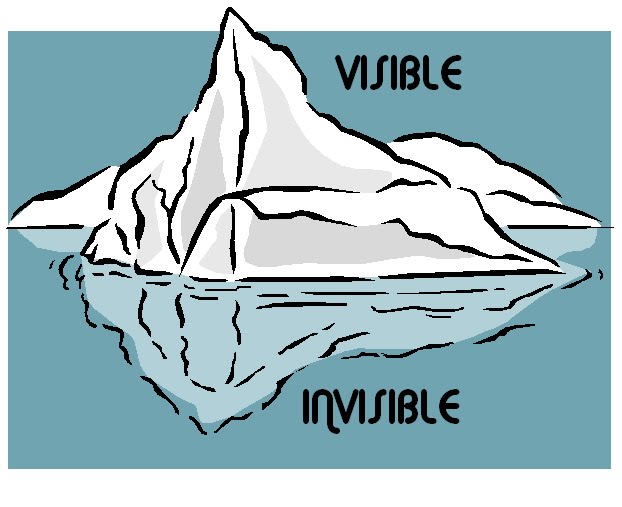
Late last year, a warning was issued by the ADAP Advocacy Association (aaa+) that the ADAP waiting lists were only the “Tip-of-the- Iceberg” as an increasing number of HIV/AIDS patients were being kicked-off programs as states were changing their eligibility criteria.

The "invisible" ADAP waiting lists had yet to truly emerge. It begs the question, how many people heeded that warning?

At that time, several states had changed their program eligibility, thereby making clients who would have otherwise been eligible to receive services no longer eligible for ADAP. Arkansas reduced its financial eligibility to 200% Federal Poverty Level ("FPL"), North Dakota reduced its financial eligibility to 300% FPL, Ohio reduced its financial eligibility to 300% FPL, South Carolina lowered its financial eligibility to 300% FPL and Utah reduced its financial eligibility to 250% FPL. With these changes, many people living with HIV/AIDS could be forced to choose between basic necessities and their anti-retroviral medications.

The Ohio Department of Health issued a Notice of Public Hearing in accordance with Chapter 119 of the Revised Code (R.C.) and by authority of R.C. 3701.241, the Director of the Ohio Department of Health (ODH), or his designee, will conduct a public hearing at the time and place listed above, to consider the proposal to rescind current O.A.C. rules 3701-44-01 to 3701-44-08; and to file new rules 3701-44-01 to 3701-44-04. These rules pertain to the Ryan White Part B program administered by ODH.

To read the entire public notice, visit http://www.registerofohio.state.oh.us/pdfs/phn/3701_NO_136139_20110420_1518.pdf.

Now, Florida's ADAP - which is in complete disarray and shambles from gross mismanagement - is attempting to restrict their program eligibility from 400% FPL to 200% FPL. If approved, then thousands of Floridians living with HIV/AIDS would be put at risk.

Changing the eligibility requirements is "penny wise, pound foolish" because any small savings achieved in the near term is eliminated by the long-term costs assumed over time.

“If you cut the eligibility from [the current] 400 percent of the federal poverty level to 200 percent of the federal poverty level, that takes out a large income range where people can work and advance in their careers, accept promotions and eventually leave the ADAP system,” Jesse Fry told the Florida Department of Health at a recent public hearing in Tallahassee, Florida (The Florida Independent, 04/27/11).

As if the growing ADAP waiting lists weren't bad enough, now the "tip-of-the-iceberg" is rearing its ugly head with vengeance. Hopefully people living with HIV/AIDS will be given rules for the game by the state, and the state will honor its commitment and stick to them! After all, living with HIV/AIDS is no game!

Friday, April 22, 2011

When will Washington come to the Rescue?


When President Barack Obama signed into law the Fiscal-Year 2011 appropriations law (H.R.1473), many programs didn't share the modest success achieved with the small funding increase for the AIDS Drug Assistance Programs ("ADAPs"). The law provides $885 million for ADAP. This is $25 million more than was obligated in FY10, after a $25 million transfer added supplemental funds to address waiting lists. The bill provides $8 million more than H.R.1 - which was the House-passed version. Whereas the ADAP Advocacy Association (aaa+) applauded the President and Congress for the small increase - especially since many other safety-net programs were cut or level-funded - it begs the question: How satisfied should ADAP stakeholders be with the result?

Yes, clearly we're grateful for the additional $48 million because it will alleviate the ongoing ADAP crisis, albeit temporarily. It was a grassroots victory more than a demonstration of leadership by the national HIV/AIDS organizations (including this one). But more needs to be done! More voices need to be heard! More people living with HIV/AIDS - especially those patients being directly impacted by the ADAP waiting lists - need to get involved!

At the time this blog is published, there are 7,885 people living with HIV/AIDS on ADAP waiting lists in 11 states. Among them, Arkansas with 56 people; Florida with 3,807 people; Georgia with 1,343 people; Idaho with 10 people; Louisiana with 894 people; Montana with 24 people; North Carolina with 178 people; Ohio with 341 people; South Carolina with 612 people; Virginia with 616 people; and Wyoming with 4 people. And that doesn't even include the "invisible waiting lists that stretch into the thousands of patients adversely impacted by other cost containment strategies.

Failure is NOT an option because lives hang in the balance.

In response, aaa+ – together with its Lead Sponsor AIDS Healthcare Foundation (“AHF”) and in coordination with the Community Access National Network (CANN) and Housing Works – is hosting its 2011 Annual Conference as an AIDS Drug Assistance Program Summit. This year’s conference theme is “ADAPs in Crisis: When will Washington come to the rescue,” which aims to assemble ADAP stakeholders from all of the various constituency groups – including patients, advocates, service providers, health care providers, pharmaceutical companies, allied health professionals, specialty pharmacies and others.

ADAPs are in crisis. The purpose is to identify key action steps to secure additional federal appropriations, programmatic reforms, and available public and private resources to alleviate the ongoing cost-containment strategies that are putting thousands of people living with HIV/AIDS on ADAP wait lists or program disenrollment.

Faced with the “Perfect Storm” that is being fueled by high unemployment, record number of uninsured, state budgetary cutbacks, high cost of medications and inadequate federal funding, there are a historic number of people being denied access to treatment. Without intervention from either the executive or legislative branch, several thousand people living with HIV/AIDS will be at risk of developing Opportunistic Infections (“OIs”), and thousands of others who are HIV-negative will be at greater risk of contracting the virus because their HIV-positive counterparts are more infectious when not taking Highly Active Anti-Retroviral Therapy (“HAART”). The conference provides an excellent opportunity to demonstrate the proven Return on Investment (“ROI”) of ADAPs.

To learn more, please visit http://www.adapadvocacyassociation.org/events.html.

Thursday, April 14, 2011

Has Darkness Fallen on the Sunshine State?

What was once revered by many in the HIV/AIDS community as a model state for the AIDS Drug Assistance Program (“ADAP”) – even to the point where many people living with HIV/AIDS fled their home state and moved to Florida where access to care and treatment was all but assured – has turned into a nightmare. High unemployment and inadequate federal/state funding, coupled with poor budgeting by the State Department of Health ("DOH") has led 3,967 Floridians living with HIV/AIDS to be placed on ADAP waiting lists, and that doesn’t even take into account the 6,500+ patients who were saved by a last-minute deal inked at the 11th hour with Welvista Pharmacy. And now, darkness seems to have befallen the Sunshine State as the state seeks to change its ADAP eligibility from 400% of the Federal Poverty Level (“FPL”) down to 200% FPL under the state's proposed Rule 64D-4.

What does that mean?

It means hundreds - if not thousands - of Floridians living with HIV/AIDS will be deemed ineligible for access to their live-saving medications under Part B of the Ryan White CARE Act. What the Florida Department of Health's Bureau of HIV/AIDS has proposed would be equivalent to playing in a basketball game, only to have the referee change the rules mid-way through the game in a manner that almost assure your team’s defeat. Except, what is happening in Florida is more than a game…it is a matter of life and death!

According to the AIDS Healthcare Foundation ("AHF"), Florida's Legislature is compelling DOH to hold workshops on Rule 64D-4. This rule concerns HIV/AIDS patient care services eligibility criteria, among which the income requirement is included - reducing the FPL income requirement from 400% FPL to 200% FPL. There is no alternative for these patients other than pharmaceutical Patient Assistance Programs ("PAPs"), which are not sustainable substitutes. The Legislature is trying to make a political statement that the ADAP waiting list can be effectively eliminated by lowering FPL eligibility. The change will not only throw off a massive amount of current ADAP clients, but also significantly reduce the wait list number. Florida would then no longer have the greatest wait list in the country and this action would set a precedent for other states to enact the same measure.

Making "cents" out of the mess

The math is simple. The Florida Legislature is trying to close the state's ADAP funding gap by balancing the budget on the backs of the very people the program is designed to help. With the high cost of the anti-HIV medications, access to care and treatment would be outside the reach for most of the Floridians living with HIV on currently on the state's ADAP waiting list.

"If you make $30,000 a year, you wouldn't qualify to ADAP," Carl Schmid of The AIDS Institute told the Florida Independent. "The drugs cost between $10,000 and $20,000 a year. You'd spend half your income on drugs" (04/11).

With the economic downturn, more Floridians are turning to ADAP for their anti-retroviral medications.

According to the National Alliance of State & Territorial AIDS Directors ("NASTAD"), in June 2009 there were 13,258 clients served on Florida’s ADAP. The Florida ADAP budget in fiscal year 2009 was $93,404,741 – of which $8,000,000 was the state contribution, or 9% of the total budget. In June 2009, drug expenditures totaled $5,747,226 with 27,992 prescriptions filled in Florida.1

In comparison to the previous year, there were 10,738 clients served by Florida’s ADAP in June 2008 – which represented a 23% increase. That same month, drug expenditures were $3,868,505 for 17,792 prescriptions filled, or increase of 49% and 57%, respectively.2

Considering that Florida only contributes about 9% toward its State ADAP (all other funding comes from the federal earmark and pharmaceutical company rebates), it is hard to imagine the Florida Legislature implementing more cost containment strategies. Then again, they did cut $2 million from the program two years ago - which many HIV/AIDS advocates contend helped to fuel the ongoing crisis in the Sunshine State.

So much for a safety net in Florida. But the Fat Lady isn't singing just yet...

The impending firestorm...

The proposed eligibility change has the state’s HIV/AIDS community up in arms. Don’t expect them to sit around quietly, either. The Department of Health has scheduled three public meetings in Tallahassee, Tampa and Miami, each of which will include a discussion of the proposed "changes to the Federal Poverty Level" as well as other issues about Drug Assistance Program eligibility. Expect nothing less than a firestorm in these three cities over the coming weeks. A massive mobilization effort is underway. Let's just hope that Florida's Legislature - as well as their newly-elected Governor - is listening.

Late last year, Florida had initiated the process of lowering its ADAP eligibility to 300% FPL (Rule Amendment No: 64D-4.002, F.A.C.), but it was halted when the Governor Rick Scott was sworn into office. His very first order of business as the state's new chief executive was to halt all pending regulatory actions, including the proposed rule impacting ADAP.

[Photo: Florida Governor Rick Scott]

Some HIV/AIDS advocates were totally blindsided when the new rule was proposed that called for even steeper eligibility restrictions. Yet others have been bracing for the worst. Florida, like many other states, finds itself in the midst of a fiscal mess; but rather than adopting policies based on what is often termed "shared sacrifice," Floridians living with HIV/AIDS appear to be the ones sacrificed under the proposed changes.

"And unfortunately, it may be for all Ryan White B funded programs....this really shouldn't be a surprise to anyone, as it was being proposed to lower it it to 300% of FPL before Governor Scott suspended rule making in the State," summarized David Brakebill, aaa+ member from Key West.

----

1 National Alliance of State & Territorial AIDS Directors, “National ADAP Monitoring Project Annual Report,” Summary Table I, p. 13, May 2010.

2 National Alliance of State & Territorial AIDS Directors, “National ADAP Monitoring Project Annual Report,” Summary Table II - Total Clients Enrolled/Served, Drug Expenditures, and Prescriptions Filled, June 2008 and June 2009, p. 14, May 2010.

Friday, April 8, 2011

HIV Employment Roundtable

On Friday, April 8th, U.S. Department of Labor Secretary Hilda Solis and DOL's Office of Disability Employment Policy ("ODEP") Assistant Secretary Kathy Martinez hosted an HIV Employment Roundtable. This Roundtable brought together a cross-section of government agency representatives, HIV/AIDS service providers, employers, researchers, advocates, and members of the HIV/AIDS community to discuss improving employment for people living with HIV/AIDS. Among the invitees were the ADAP Advocacy Association's CEO Brandon M. Macsata, as well as Board Members Anthony Jackson, community member, and Crosby Cromwell, Senior Manager - Constituent Relations for Walmart.


Among the invitees asked to share their personal stories was Mark Fischer of Washington, DC. Below is Mark's moving testimony:

Comments of Mark S. Fischer
U. S. DEPARTMENT OF LABOR – HIV/AIDS EMPLOYMENT ROUNDTABLE
Convened by Secretary Hilda Solis – April 8, 2011

I appreciate the invitation to speak to today and thank Secretary Solis and her staff for initiating this valuable HIV/AIDS Employment Roundtable that advances a much needed national dialog.

While my remarks today draw on my personal experience, I hope they will reveal a much larger, often unseen, picture and lead to action that meets crucial needs of those who cannot advocate for themselves.

Preparing these remarks has forced me to take a journey of recollection and reflection that has proven both painful and revealing for me.

Ten years ago last month, at the age of 51, I was forced out of a career position that represented the achievements of a lifetime of effort. While I have acquired a necessary sense of acceptance and done my best to move on, not a day goes by that I do not wish I could regain what was taken from me on that day . . . the financial independence, the sense of purpose, and the feeling of accomplishment that my job once gave me.

To put my loss in perspective, allow me to share a little about where I came from and how much I had managed to accomplish prior to losing my job.

I am a child of the great American immigrant experience whose ancestors arrived in the United States is a little over a century ago.

The first generation, my grandparents, were minimally educated. They supported themselves and their children through manual labor and the trades.

The second generation, my parents, both graduated high school. My mother also graduated from business college. My father worked in construction and my mother in business both before my I was born and after both my sister and I began attending school.

In the third generation, I was the first born on both sides of the family. Based on income, my family would be called low-income, working-class. What we lacked financially was more than made up by very devoted parents and high standards. We never wanted for food, clothing or shelter but luxury and waste were not possible. I began mowing lawns to earn spending money at age 12. I always had summer jobs and worked part time throughout college.

Education was stressed as the key to a better future. I attended high quality public schools in a working class neighborhood. Academically, I ranked in the top ten of a class of nearly 600, and achieved success as class president, newspaper editor, and the like. I earned early acceptance and need-based financial aid at Duke University where I received my Bachelor’s and Master’s degrees. To pay for graduate school, I taught school full time while attending classes at night and during the summer.

Over the next 30 years in the workforce, I worked whatever hours were needed to get the job done, showed initiative, took personal responsibility and, in return, regularly received praise, raises and promotions. My job and doing it well were a key part of who I was and how I saw myself. They gave me reason to envision a good future.

In 1998, I accepted a new position with the convention, meeting and special events firm where for ten years I had been a key player in creating major growth that transformed the company from a local small business to an enterprise with national operations serving top-rung clients from across the nation and around the world. As Director of Creative Services, I became the “hub” for company success, efficiency and profitability. I created program concept, designed proposal formats, developed specific components, selected suppliers, negotiated costs, established operating logistics, set selling prices and managed profitability. I felt that I finally had “the perfect job” based upon my interests, skills and experience. For the first year, I got glowing reviews and praise for my efforts. I was often required to work late to meet deadlines agreed to by others without my prior consent but I loved the work and I loved the success.

In 1999, the company President supported by the company owner began to make an issue of the fact that I was not at work promptly at 9:00 AM every day. The late hours I was forced to keep behalf of the company, my health needs and the side effects of my HIV meds, all known to them, did not seem to matter.

Near the end of 1999, I was unable to make an early morning departure to be a part of an out-of-town client presentation that was rescheduled at the last minute. Reaction was extremely negative and totally lacked any understanding of my health constraints. From there, my relationship with my two superiors deteriorated. The staff seemed to adopt a negative view of me that I believe was fed by my superiors. My work quality did not decline but the nitpicking and misrepresentation of facts grew. The strain on me was persistent and draining.

In early 2000, I missed four solid weeks of work as a result of physical and mental exhaustion caused by over a year of fighting to stay employed so I could meet my financial obligations and support my disabled partner.

Upon my return to work, despite the fact that I was 15 pounds lighter and noticeably pale, I was handed a 30-day to-do-list that was humanly impossible to fulfill. I was subjected to the supervision of a new part-time HR specialist who supervised nobody else, was re-evaluated using false information, and was called into an adversarial meeting with the company attorney, the owner, president and HR specialist without any prior notice.

Exactly 30 days after my return, shortly after the close of business, I was asked to meet with the owner and the attorney, again without prior notice. When I said that was not possible, they came into my office, verbally notified me of my termination, and told me to vacate my office immediately. They wanted me to leave without any of my belonging but I insisted on taking them with me. They had hired a security guard to escort me out. So, in about one hour, I packed up and left. By the time I got home, my voicemail message had been changed, my email account had been deleted and I no longer existed at that company.

I was offered the opportunity to receive three month’s severance pay and health insurance but only if I would sign a severance agreement that totally absolved the company and all staff any wrongdoing and relinquished all my rights to any legal recourse.

While the “official” reason for my termination was “reorganization”, plenty of undocumentable evidence pointed to the real reason . . . my health. I had been told that the premiums for my health coverage were extremely high, that younger people could be hired for less money, and more. It had been made clear that the realities of living with HIV were totally unrecognized or unimportant known to my superiors.

I eventually signed the separation agreement because I was exhausted and was advised by numerous credible sources that chances of successful recourse through EEOC or the courts were practically non-existent and would prove emotionally and financially devastating.

In a sad post script, the company that I helped to build and to triple its multi-million dollar revenues over a 12-year period failed and closed its doors within two years of my departure. While that reinforces my sense of self-worth, it does absolutely nothing to fill the void left by the loss of my career.

Then, and even sometimes now, that termination feels as if a major limb, perhaps two, was amputated from my body.

On the night I was terminated, my initial reasoned reaction to the loss of my job was that I would simply get another job.

However, by the next morning, exhaustion and anxiety set in. Soon, the massive challenge of mere financial survival pushed the job search out of the picture on a day-to-day basis.

Unbeknownst to me, between November 2000 and March 2001, my t-cell count had dropped from the high 300’s to 75.

I steadfastly resisted the idea that I should file for disability retirement but eventually was persuaded to do so only to be denied by Social Security.

I used up my 401K and profit sharing to pay bills.

In the end, I was forced to sell my house to avoid foreclosure and loss of my equity.

Just days after moving out of the house, I was diagnosed and hospitalized with pneumocystis carnii pneumonia . . . which was a blessing in disguise because it qualified me for SSDI.

However, while waiting for SSDI benefits to begin and even longer for Medicare eligibility, I consumed the profit from the sale of the house.

The total period required to secure disability income and establish full financial security took nearly five years. That included qualifying, being approved for, satisfying the waiting period, clearing the waiting list, or whatever else may be required for SSDI, Medicare, ADAP, TBRA (rent subsidy). Securing those essential support services is a massively time consuming endeavor that leaves time for little else.

Along the way, I made frustrating and futile attempts to use a vocational rehab system that is ill suited to the needs of a skilled experienced professional attempting to make an emotionally challenging career change.

I am now financially stable but that stability is totally dependent on external sources. My independent resources were totally depleted trying to survive the unjust separation from my job and its considerable aftermath.

I am a part of the first generation of HIV-infected people. I have no way of knowing what lies ahead. I am caught between my dreams and aspirations on one hand and a potentially grim and challenging future on the other. I want a job and all that comes with it. However, to maintain my health, I need certainty and stability more. Many people are shocked that I survived the challenges of the last ten years. I doubt that I could survive if I went back to work, relinquished my safety net of services, and then had a health crisis that forced me to run that grueling five-year gauntlet again.

For now, I have chosen to devote my considerable experience, ability, compassion, time and energy to helping those less blessed than I. My struggle made me realize that if a person with my education, sense of empowerment and experience often wanted to just give up, those less blessed must be suffering more and getting far less of what they need to survive. That is why I serve as Committee Chair and Executive Committee member of the Ryan White Planning Council for the Metropolitan Washington, DC EMA, have helped form and serve as the Vice President of Back to the Basics Please, a 501 c 3 devoted to connecting people to a full range of care that includes HIV, substance abuse and mental health regardless of where they live in the US, and support a wide variety of other community outreach programs.

There are no easy answers to my situation and certainly no one-size-fits-all solutions for all people living with HIV.

However, from my personal experience and my work with other People Living With HIV, I offer the following suggestions that I believe would improve the ability of HIV-positive people to retain or regain employment.

For those who are employed but dealing with side effects of HIV infection or HIV medications, the following support for their employment rights and assistance to employers are crucial.
1. EEOC defense of employment rights under ADA including highly publicized resources for assistance with grievances is essential. I applaud the EEOC for its recent commitment to doing so.

2. Availability of resources for employers that include training programs, “best practices” guidelines and accommodation prototypes or examples that will make compliance easier and more common.

3. Access to timely and effective mediation as an alternative to the time-consuming, cost-prohibitive option of taking formal legal action to resolve disputes in the courts will increase continued employment and keep highly competent, productive individuals in the workforce.

For those who have lost employment as a result of HIV-related illness or side effects of HIV medications and seek re-entry into the workforce, the following effective and appropriate resources are essential.

1. Mental health and employment counseling to address any damage that may have resulted from the previous loss of employment, to deal with any negative self-image issues related to being HIV-positive and to promote acceptance of any reduced work ability or career expectations that may exist. This support is crucial to job search and performance success.

2. Vocational rehabilitation counseling and assistance that are appropriate and targeted to the needs the specific HIV-positive person whose dreams and careers have been forcibly re-routed by a disease they never envisioned must be provided to give the individual the plan and the tools with which to move ahead. (My frustrations in this realm are a story that I haven’t the time to tell here.)

3. Employer education and assistance programs that “sell” the merits of hiring experienced competent people living with HIV, the effective ways of accommodating their needs, and allay unjustified employer fears are required to create an accepting environment in which an HIV-positive person can sell his or her attributes instead of having to defend his or her disease.

4. Employment resources for job seekers that include HIV-supportive companies are crucial to guide job seekers toward options that will be informed, respectful and supportive of their needs. While such a resource may not be adequate to meet the employment needs of all HIV-positive people, they will assist many, create success stories and demonstrate that hiring HIV-positive people is good for people, good for business and good for the bottom line.

5. Requalification for essential social services and the support “safety net” needs to be simplified and guaranteed for those who return to work, relinquish benefits and then face a health crisis that makes them unable to work. HIV/AIDS, while increasingly treatable still creates a uncertain and unpredictable path for those living with the disease. Each individual reacts differently to the infection and to treatment. As a result, the support service system needs to adapt to changing realities and in a timely and effective manner.

Those who were summarily separated from the source of their livelihood because their disease was inconvenient to their employer are understandably skeptical about trading financial stability for employment that can be terminated at will thereby repeating the nightmare from the past.

Those who lived in uncertainty and often desperation while they awaited access to essential life supporting services are justifiably anxious about risking access to their hard earned safety net if they return to work, relinquish services and then need them again.

Again, this is a complicated challenge with no easy solutions. I hope my comments will be of use as we seek to move forward. Thank you.